
Basic information
- Standard SMILES
I- InChIKey
XMBWDFGMSWQBCA-UHFFFAOYSA-N- Molecular formula
- HI
- Average molar mass
- 127.9124 g/mol
- Monoisotopic mass
- 127.91229803
Overview
Hydriodic acid appears as a colorless to yellow liquid with a pungent odor. Consists of a solution of hydrogen iodide in water. Fumes irritate the eyes and mucous membranes. Corrosive to metals and to tissue.
Names & identifiers
- Preferred name
- Hydrogen iodide
- IUPAC
- iodane
- English name
- Hydriodic acid
- Molecular formula
- HI
- Molecular weight
- 127.91
Names & synonyms
Hydriodic acidHYDROGEN IODIDEHydroiodic acid10034-85-2iodaneHyriodic acidAcido yodhidricoAcide iodhydriqueHydrogen iodide (HI)Anhydrous hydriodic acidHydrogen iodide, anhydrousIodure d'hydrogene anhydre
Show more names
Hydroiodic Acid 55% to 57% SolutionHydriodic acid, 57 wt.% solution in H2OHydriodic55-57 wt.%caswellno482cHydrideiodinehydrogen Hydrogeniodid
Yoduro de hidrogeno anhidro694C0EFT9QCHEBI:43451EPA Pesticide Chemical Code 046912DTXSID2044349RefChem:789094DTXCID0024349233-109-9
Database identifiers
- CAS
10034-85-2、14362-44-8、17144-19-3- PubChem CID
- 24841
- DTXSID
DTXSID2044349- ChEBI
CHEBI:24859- UNII
- 5D3DB66WM3、694C0EFT9Q
- EC Number
- 233-109-9
- Nikkaji
- J1.900.581J、J95.185D
Properties
Computed structural properties
- XLogP
- 0.9
- Topological polar surface area
- 0 Ų
- Hydrogen bond donors
- 1
- Hydrogen bond acceptors
- 0
- Rotatable bonds
- 0
- Heavy atoms
- 1
- Formal charge
- 0
- Complexity
- 0
Experimental & physicochemical properties
Chemical Classes
Toxic Gases & Vapors -> Acids, Inorganic
Corrosives
SpringerMaterials Propertiesphonon wavenumber
OdorAcrid
Density
5.66 g/L at 0 °C; 5.23 g/L at 25 °C
A solution of hydrogen iodide in water; marketed in various concentrations; 57% HI density: 1.7; 47% HI, density: 1.5; 10% HI, density: 1.1; colorless when freshly made, but rapidly turns yellowish or brown on exposure to light and air; miscible with water and alcohol; dissolves iodine; the azeotrope (56.9% HI) boils at 127 °C; density: 1.70; strong, corrosive acid; attacks natural rubber; 0.10 molar solution: pH 1.0 /Hydriodic acid/
5.66 @25 °C
Color/FormColorless gas; fumes in moist air
Solubility
Extremely soluble in water; 234 g/100 g water at 10 °C; 900 g/100 g water at 0 °C
Solubility in water, g/100ml at 20 °C: 42 (freely soluble)
Boiling Point
-35.1 °C at 760 mm Hg
Boiling point: -18.9 °C at 2 atm; 7.3 °C at 5 atm; 32.0 at 10 atm; 127.5 °C at 60 atm; decomposed by light; specific heat: 0.0545 cal/ g °C at 25 °C; forms an azeotrope with water /Hydrogen iodide/
-35.5 °C
-35.38 °C @760 [mm Hg]
Decomposition
WHEN HEATED TO DECOMPOSITION, IT EMITS HIGHLY TOXIC FUMES OF /HYDROGEN IODIDE/.
/IF/ ... DECOMP IN SIMPLE AQUEOUS SOLN ... FREE IODINE ... LIBERATED.
Melting Point
-50.8 °C
-50.8 °C
-50.8 °C
Vapor Density
4.4 (Air = 1)
Relative vapor density (air = 1): 4.4
Vapor Pressure
5,938 mm Hg at 25 °C
Vapor pressure, kPa at 20 °C: 733
5940 [mm Hg] @25 °C
Food Contact SubstancesFCS -> FDA Inventory of Food Contact Substances Listed in 21 CFR
Physicochemical properties
- Melting point
- -50.8 ° · -50.8°
- Boiling point
- 127 °C · 127 °C(lit.)
- Density
- 1.96 g/mL · 1.96 g/mL at 20 °C
- vapor pressure
- 721.8 kPa · 721.8kPa at 20℃
- Flash point
- 126 · 126-127°C
- storage temp.
- 2 · 2-8°C
- solubility
- 2 O; · very soluble in H2O; soluble in organic solvents
- form
- colorless or yellow gas
- pka
- -10 · -10(at 25℃)
- color
- Colorless to brown
- Odor
- Pungent odor
- PH Range
- 1 · 1
- PH
- 3.01 · 3.01(1 mM solution);2.04(10 mM solution);1.08(100 mM solution)
- Water Solubility
- soluble
- Specific Heat Capacity
- 0.23 J/ · Cp(gas): 0.23 J/(g·K), at 25℃
- Sensitive
- Hygroscopic
- Merck
- 14 · 14,4776
- Henry's Law Constant
- 2.5 · 2.5×10-1 mol/(m3Pa) at 25℃, Ordóñ (2012)
- Dielectric constant
- 3.4 · 3.4(-50℃)
- Stability
- Stable. Incompatible with bases, amines. Corrodes steel. May discolour on exposure to air and light.
- InChI
- 1S/HI/h1H
- InChIKey
- XMBWDFGMSWQBCA-UHFFFAOYSA-N
- SMILES
- I
- CAS DataBase Reference
- 10034 · 10034-85-2(CAS DataBase Reference)
- Indirect Additives used in Food Contact Substances
- HYDRIODIC ACID
- FDA 21 CFR
- 178.101 · 178.1010
- EWG's Food Scores
- 1 · 1
- FDA UNII
- 694 C0EFT9Q · 694C0EFT9Q
- NIST Chemistry Reference
- Hydrogen iodide(10034-85-2)
- EPA Substance Registry System
- Hydriodic acid (10034-85-2)
- UNSPSC Code
- 12352301 · 12352301
- NACRES
- 23 · NA.23
- Symbol(GHS)
- 5 · GHS05,GHS07,GHS08
- Signal word
- Danger
- Hazard statements
- 314 · H314-H370-H372-H335-H412-H290
- Precautionary statements
- 501 · P501-P273-P270-P260-P234-P271-P264-P280-P390-P308+P311-P303+P361+P353-P301+P330+P331-P363-P304+P340+P310-P305+P351+P338+P310-P403+P233-P406-P405
- Hazard Codes
- C
- Risk Statements
- 34 · 34-35
- Safety Statements
- 26 · 26-36/37/39-45-9
- RIDADR
- 1787 · UN 1787 8/PG II/III (HYDRIODIC ACID)
- WGK Germany
- -
- RTECS
- 3760000 · MW3760000
- F
- 8 · 8
- TSCA
- TSCA listed
- HazardClass
- 8 · 8
- PackingGroup
- II
- HS Code
- 28111990 · 28111990
- Storage Class
- 8 B · 8B - Non-combustible corrosive hazardous materials
- Hazard Classifications
- 2 Eye · Aquatic Chronic 2Eye Dam. 1Met. Corr. 1Skin Corr. 1B
- Hazardous Substances Data
- 10034 · 10034-85-2(Hazardous Substances Data)
- IDLA
- 45 ppm · 45 ppm (70 mg/m3)
- REACH Registrations
- Active
Safety & regulation
GHS classification
GHS Classification
Danger
H314: Causes severe skin burns and eye damage [Danger Skin corrosion/irritation]
P260, P264, P280, P301+P330+P331, P302+P361+P354, P304+P340, P305+P354+P338, P316, P321, P363, P405, and P501 (click each P-code to see the statement)
Danger
H280 (46.8%): Contains gas under pressure; may explode if heated [Warning Gases under pressure]
P260, P261, P264, P264+P265, P271, P280, P301+P330+P331, P302+P361+P354, P304+P340, P305+P354+P338, P316, P317, P321, P363, P403+P233, P405, P410+P403, and P501 (click each P-code to see the statement)
Hazard information
Hazards IdentificationToxic/poison by inhalation (TIH/PIH)
Regulatory Information
Chemical: Hydriodic acid
List I Chemical: A chemical specified by regulation that, in addition to legitimate uses, is used in manufacturing a controlled substance in violation of the Act and is important to the manufacture of a controlled substance. (21 eCFR 1310.02)
Hydriodic acid is listed on the EPA's Chemical Data Reporting (CDR) system. Manufacturers and importers of Hydriodic acid are required to report information about their production and use of this chemical to the EPA under the Toxic Substances Control Act (TSCA). (40 eCFR Part 711)
Status: Active Update: 16-01-2020 https://echa.europa.eu/registration-dossier/-/registered-dossier/30179
Hydriodic acid: Does not have an individual approval but may be used under an appropriate group standard
The New Jersey Worker and Community Right to Know Act requires public and private employers to provide information about hazardous substances at their workplaces. (N.J.S.A. 34:5A-1 et. seq.)
Other Safety InformationIMAP assessments - Hydriodic acid: Environment tier I assessment
DOT Label
Corrosive
Poison Gas Corrosive
Fire Hazards
Excerpt from ERG Guide 154 [Substances - Toxic and/or Corrosive (Non-Combustible)]:
Excerpt from ERG Guide 125 [Gases - Toxic and/or Corrosive]:
· Non-combustible, substance itself does not burn but may decompose upon heating to produce corrosive and/or toxic fumes.
· Some may burn but none ignite readily.
Not combustible. Gives off irritating or toxic fumes (or gases) in a fire.
Fire PotentialIgnites on contact with magnesium; perchloric acid; potassium + heat; potassium chlorate + heat; oxidants.
Health Hazards
Excerpt from ERG Guide 154 [Substances - Toxic and/or Corrosive (Non-Combustible)]:
Excerpt from ERG Guide 125 [Gases - Toxic and/or Corrosive]:
· TOXIC and/or CORROSIVE; inhalation, ingestion or skin contact with material may cause severe injury or death.
· TOXIC and/or CORROSIVE; may be fatal if inhaled, ingested or absorbed through skin.
Hazards Summary
Highly corrosive to skin; [Quick CPC] Inhalation exposures of 35 ppm can cause irritation of the throat, and higher exposures can cause laryngeal edema and pulmonary edema. [HSDB] When spilled in water, Acetyl iodide can release Hydrogen iodide. [ERG 2016] Decomposed by light; Anhydrous hydrogen iodide forms hydriodic acid when mixed with water; A strong irritant; [Merck Index] Evaporating liquid can cause frostbite; Corrosive to skin, eye, and respiratory tract; Inhalation may cause severe swelling of the throat and pulmonary edema; [ICSC] See Iodine for the TLV of Iodides.
DOT ID and Guide
1787 154
2197 125
Reactive Group
Acids, Strong Non-oxidizing
Acids, Strong Non-oxidizing
EC ClassificationSymbol: C; R: 35; S: (1/2)-9-26-36/37/39-45; Note: 5
UN ClassificationUN Hazard Class: 2.3; UN Subsidiary Risks: 8
Safety & protection
Fire Fighting
Excerpt from ERG Guide 154 [Substances - Toxic and/or Corrosive (Non-Combustible)]:
Excerpt from ERG Guide 125 [Gases - Toxic and/or Corrosive]:
In case of fire in the surroundings, use appropriate extinguishing media. In case of fire: keep cylinder cool by spraying with water.
First Aid Measures
Half-upright position. Artificial respiration may be needed. Refer immediately for medical attention.
Rinse skin with plenty of water or shower for at least 15 minutes. ON FROSTBITE: rinse with plenty of water, do NOT remove clothes. Refer immediately for medical attention.
Rinse with plenty of water (remove contact lenses if easily possible). Refer immediately for medical attention.
Accidental Release Measures
· CALL 911. Then call emergency response telephone number on shipping paper. If shipping paper not available or no answer, refer to appropriate telephone number listed on the inside back cover.
· ELIMINATE all ignition sources (no smoking, flares, sparks or flames) from immediate area.
· CALL 911. Then call emergency response telephone number on shipping paper. If shipping paper not available or no answer, refer to appropriate telephone number listed on the inside back cover.
· Do not touch or walk through spilled material.
First Aid
Excerpt from ERG Guide 154 [Substances - Toxic and/or Corrosive (Non-Combustible)]:
Excerpt from ERG Guide 125 [Gases - Toxic and/or Corrosive]:
General First Aid:
General First Aid:
Safe StorageFireproof if in building. Separated from metals and oxidants. Keep in a well-ventilated room.
Exposure Control and Personal Protection
· Wear positive pressure self-contained breathing apparatus (SCBA).
· Wear positive pressure self-contained breathing apparatus (SCBA).
TIH (Toxic Inhalation Hazard) - Term used to describe gases and volatile liquids that are toxic when inhaled. Some are TIH materials themselves, e.g., chlorine, and some release TIH gases when spilled in water, e.g., chlorosilanes. [ERG 2016].
Fire Fighting Procedures
If material involved in fire: Extinguish fire using agent suitable for type of surrounding fire. (Material itself does not burn or burns with difficulty.) Cool all affected containers with flooding quantities of water. Do not apply water to point of leak in tank car or container. Apply water from as far a distance as possible. Do not use water on material itself. If large quantities of combustibles are involved, use water in flooding quantities as spray and fog. Use water spray to knock-down vapors. /Hydrogen Iodide, anhyrous/
If material involved in fire: Extinguish fire using agent suitable for type of surrounding fire. (Material itself does not burn or burns with difficulty.) Use water in flooding quantities as spray and fog. Cool all affected containers with flooding quantities of water. Apply water from as far a distance as possible. /Hydriodic acid/
Storage Conditions
Hydroidic acid must be stored to avoid contact with strong acids (such as hydrochloric, sulfuric and nitric), chemically active metals (such as potassium, sodium, magnesium and zinc), and strong oxidizers (such as chlorine, bromine, and fluorine) since violent reactions occur. Store in tightly closed containers in a cool, well vented area away from heat and moisture. Protect storage containers from physical damage. Procedures for the handling, use and storage of cylinders should be in compliance with OSHA 1910.101 and 1910.169 as with the recommendations of the Compressed Gas Association.
MATERIALS THAT ARE TOXIC AS STORED OR THAT CAN DECOMPOSE INTO TOXIC COMPONENTS ... SHOULD BE STORED IN A COOL WELL VENTILATED PLACE, OUT OF THE DIRECT RAYS OF THE SUN, AWAY FROM AREAS OF HIGH FIRE HAZARD, & SHOULD BE PERIODICALLY INSPECTED. INCOMPATIBLE MATERIALS SHOULD BE ISOLATED. ...
Keep protected from light and air, preferably not above 3 °C.
Cleanup Methods
Evacuate and restrict persons not wearing protective equipment from area of spill or leak until cleanup is complete. Remove all ignition sources. Ventilate area of spill or leak. Neutralize with chemically basic substances such as sodium bicarbonate, soda ash, or slaked lime. Absorb liquids in vermiculite, dry sand, earth, peat, carbon, or a similar material and deposit in sealed containers. Keep this chemical out of confined spaces, such as a sewer, because of the possibility of an explosion, unless the sewer is designed to prevent the build up of explosive concentrations. It may be necessary to contain and dispose of this chemical as a hazardous waste. If material or contaminated runoff enters waterways, notify downstream users of potentially contaminated waters. Contact your Department of Environmental Protection or your regional office of the federal EPA for specific recommendations. If employees are required to clean-up spills, they must be properly trained and equipped. OSHA 1910.120(q) may be applicable.
Nonfire Spill Response
Excerpt from ERG Guide 154 [Substances - Toxic and/or Corrosive (Non-Combustible)]:
Excerpt from ERG Guide 125 [Gases - Toxic and/or Corrosive]:
Disposal Methods
SRP: At the time of review, criteria for land treatment or burial (sanitary landfill) disposal practices are subject to significant revision. Prior to implementing land disposal of waste residue (including waste sludge), consult with environmental regulatory agencies for guidance on acceptable disposal practices.
Add slowly to a large amount of soda ash and slaked lime in solution with stirring. Flush resulting solution to a sewer.
Spillage DisposalPersonal protection: complete protective clothing including self-contained breathing apparatus. Ventilation.
Toxicology
Adverse EffectsDermatotoxin - Skin burns.
Exposure RoutesSerious local effects by all routes of exposure.
Signs and Symptoms
Cough. Sore throat. Burning sensation behind the breastbone. Shortness of breath. Laboured breathing.
Redness. Pain. Skin burns. Blisters. ON CONTACT WITH LIQUID: FROSTBITE.
Redness. Pain. Severe burns.
Medical SurveillanceBefore beginning employment and at regular times after that, for those with frequent or potentially high exposures, the following are recommended: lung function tests, chest x-ray following acute overexposure, kidney function tests.
Human Toxicity Excerpts
/SIGNS AND SYMPTOMS/ Long term exposure: Chronic exposure can cause injury to kidneys and spleen, hypotension, palpitation, ataxia and weakness. Very irritating substances may cause lung damage. Prolonged absorption of /hydriodic acid/ can cause skin rash. headache, irritation of mucous membranes with running nose.
/SIGNS AND SYMPTOMS/ Edema of the glottis necessitating tracheotomy has occurred.
/SIGNS AND SYMPTOMS/ Inhalation of hydrogen iodide causes irritation of the upper respiratory tract, and a concentration of about 35 ppm causes irritation of the throat after short exposure. More severe exposures result in pulmonary edema, and often in laryngeal edema.
/SIGNS AND SYMPTOMS/ /If/ ... decomposition in simple aqueous soln ... free iodine ... liberated and if taken internally ... it is irritating to the alimentary tract.
For more Human Toxicity Excerpts (Complete) data for HYDROGEN IODIDE (8 total), please visit the HSDB record page.
Probable Routes of Human Exposure(NOES Survey 1981-1983) has statistically estimated that 8,545 workers (2,191 of these are female) are potentially exposed to hydrogen iodide in the US(1).
Antidote and Emergency Treatment
Basic treatment: Establish a patent airway (oropharyngeal or nasopharyngeal airway, if needed). Suction if necessary. Watch for signs of respiratory insufficiency and assist respirations if needed. Administer oxygen by nonrebreather mask at 10 to 15 L/min. Monitor for pulmonary edema and treat if necessary ... . Monitor for shock and treat if necessary ... . For eye contamination, flush eyes immediately with water. Irrigate each eye continuously with 0.9% saline (NS) during transport ... . Do not use emetics. Activated charcoal is not effective. For ingestion, rinse mouth and administer 5 ml/kg up to 200 ml of water for dilution if the patient can swallow, has a strong gag reflex, and does not drool ... . Do not attempt to neutralize because of exothermic reaction. Cover skin burns with dry, sterile dressings after decontamination ... . /Inorganic acids and related compounds/
Advanced treatment: Consider orotracheal or nasotracheal intubation for airway control in the patient who is unconscious, has severe pulmonary edema, or is in severe respiratory distress. Early intubation, at the first sign of upper airway obstruction, may be necessary. Positive-pressure ventilation techniques with a bag valve mask device may be beneficial. Consider drug therapy for pulmonary edema ... . Consider administering a beta agonist such as albuterol for severe bronchospasm ... . Monitor cardiac rhythm and treat arrhythmias as necessary ... . Start IV administration of D5W /SRP: "To keep open", minimal flow rate/. Use 0.9% saline (NS) or lactated Ringer's(LR) if signs of hypovolemia are present. For hypotension with signs of hypovolemia, administer fluid cautiously. Consider vasopressors if patient is hypotensive with a normal fluid volume. Watch for signs of fluid overload ... . Use proparacaine hydrochloride to assist eye irrigation ... . /Inorganic acids and related compounds/
Basic treatment: Establish a patent airway (oropharyngeal or nasopharyngeal airway, if needed). Suction if necessary. Watch for signs of respiratory insufficiency and assist ventilations if necessary. Administer oxygen by nonrebreather mask at 10 to 15 L/min. Monitor for pulmonary edema and treat if necessary ... . Monitor for shock and treat if necessary ... . For eye contamination, flush eyes immediately with water. Irrigate each eye continuously with 0.9% saline (NS) during transport ... . Do not use emetics. For ingestion, rinse mouth and administer 5 ml/kg up to 200 ml of water for dilution if the patent can swallow, has a strong gag reflex, and does not drool. Administer activated charcoal ... . Cover skin burns with dry sterile dressings after decontamination ... . /Iodine and related compounds/
Advanced treatment: Consider orotracheal or nasotracheal intubation for airway control in the patient who is unconscious, has severe pulmonary edema, or is in severe respiratory distress. Positive-pressure ventilation techniques with a bag valve mask device may be beneficial. Consider drug therapy for pulmonary edema ... . Monitor cardiac rhythm and treat arrhythmias if necessary ... . Start IV administration of D5W /SRP: "To keep open", minimal flow rate/. Use 0.9% saline (NS) or lactated Ringer's (LR) if signs of hypovolemia are present. For hypotension with signs of hypovolemia, administer fluid cautiously. Consider vasopressors if patient is hypotensive with a normal fluid volume. Watch for signs of fluid overload ... . Use proparacaine hydrochloride to assist eye irrigation ... . /Iodine and related compounds/
Regulatory information
FIFRA Requirements
Residues of the following chemical substances are exempted from the requirement of a tolerance when used in accordance with good manufacturing practice as ingredients in an antimicrobial pesticide formulation, provided that the substance is applied on a semi-permanent or permanent food-contact surface (other than being applied on food packaging) with adequate draining before contact with food. ... (b) The following chemical substances when used as ingredients in an antimicrobial pesticide formulation may be applied to: Dairy processing equipment, and food-processing equipment and utensils. Hydriodic acid is included on this list. Limit: When ready for use, the total end-use concentration of all iodide-producing chemicals is not to exceed 25 ppm of titratable iodine. /Hydriodic acid/
Residues of the following chemical substances are exempted from the requirement of a tolerance when used in accordance with good manufacturing practice as ingredients in an antimicrobial pesticide formulation, provided that the substance is applied on a semi-permanent or permanent food-contact surface (other than being applied on food packaging) with adequate draining before contact with food. ... (c) The following chemical substances when used as ingredients in an antimicrobial pesticide formulation may be applied to: Food-processing equipment and utensils. hydriodic acid is included on this list. Limit: When ready for use, the total end-use concentration of all iodide-producing chemicals in the solution is not t exceed 25 ppm of titratable iodine. /Hydriodic acid/
DHS Chemicals of Interest (COI)
Hydrogen iodide, anhydrous
95.33
500
Weapons of Mass Effect chemical material that, if stolen or diverted, can be converted into weapons using simple chemistry, equipment, or techniques.
Safety data
- F
- 8
- wgk
- -
- IDLA
- 45 ppm (70 mg/m3)
- tsca
- TSCA listed
- rtecs
- MW3760000
- ridadr
- UN 2197 2.3 (HYDROGEN IODIDE, ANHYDROUS)
- hs_code
- 28111990
- risk_code
- 34-35
- Signal word
- Danger
- Symbol(GHS)
- GHS05,GHS07,GHS08
- hazard_code
- C
- safety_code
- 26-36/37/39-45-9
- hazard_class
- 8
- Storage Class
- 8B - Non-combustible corrosive hazardous materials
- packing_group
- II
- Hazard statements
- H314-H370-H372-H335-H412-H290
- REACH Registrations
- Active
- Hazard Classifications
- Aquatic Chronic 2Eye Dam. 1Met. Corr. 1Skin Corr. 1B
- Precautionary statements
- P501-P273-P270-P260-P234-P271-P264-P280-P390-P308+P311-P303+P361+P353-P301+P330+P331-P363-P304+P340+P310-P305+P351+P338+P310-P403+P233-P406-P405
- Hazardous Substances Data
- 10034-85-2(Hazardous Substances Data)
Chemistry & industry
Pharmacology
Mechanism of Action... Believed to act reflexly by irritating the gastric mucosa, which in turn, stimulates resp tract secretion. /Hydriodic acid syrup/
Absorption, Distribution and ExcretionThe iodide ion is excreted in part by the bronchial glands. ... /Hydriodic acid syrup/
Uses & manufacturing
Uses
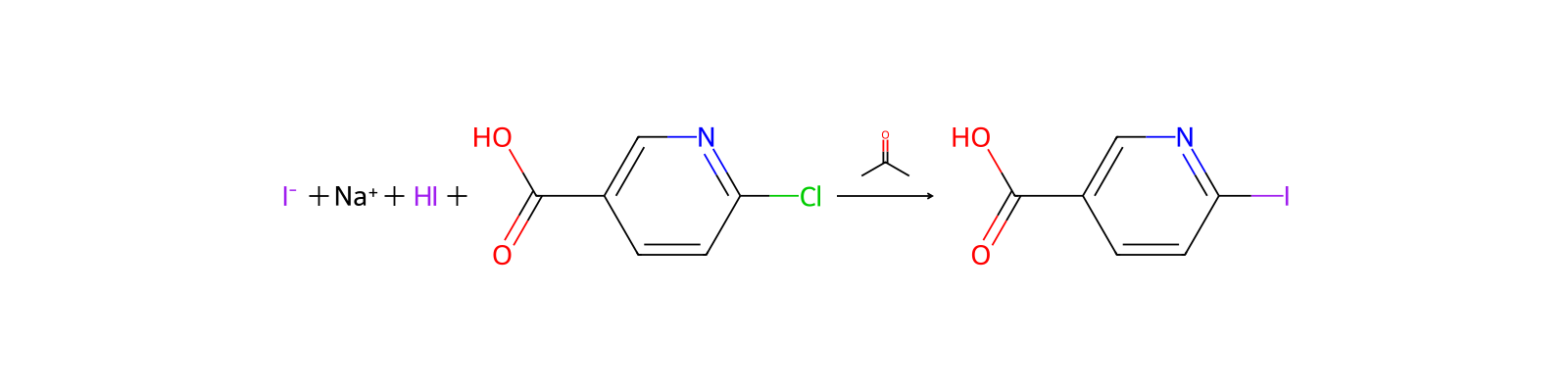
Used as a reducing agent and in laboratory analysis; Used to produce pharmaceuticals, disinfectants, and other chemicals; [HSDB]
For hydriodic acid (USEPA/OPP Pesticide Code: 46912) there are 0 label matches. /SRP: Not registered for current use in the U.S., but approved pesticide uses may change periodically and so federal, state and local authorities must be consulted for currently approved uses./
Reducing agent, manufacture of inorganic iodides, pharmaceuticals, disinfectants. The 57% acid is also used for analytical purposes, such as methoxyl determinations. /Hydriodic acid/
FORMERLY USED FOR ITS EXPECTORANT ACTION IN CHRONIC BRONCHITIS & BRONCHIAL ASTHMA TO LIQUEFY THICK, TENACIOUS SPUTUM. /HYDRIODIC ACID, SYRUP/
Preparation of iodine salts, organic preparations, analytical reagent, disinfectant, and pharmaceuticals. /Hydriodic acid/
For more Uses (Complete) data for HYDROGEN IODIDE (6 total), please visit the HSDB record page.
U.S. Production
2023: 550,000 - <700,000 lb
(1972) GREATER THAN 4.54X10+5 G
(1975) GREATER THAN 4.54X10+5 G
Consumer UsesOther
Industry UsesLaboratory chemicals
Methods of Manufacturing
Prepared by absorption of hydrogen iodide gas in water or by the action of iodine on hydrogen sulfide. /Hydriodic acid/
Prepared by catalytic reaction of iodine and hydrogen or concentrated hydriodic acid solutions with phosphorous pentoxide. /Hydrogen iodide gas/
Hydroiodic acid is the colorless solution formed when hydrogen iodide gas dissolves in water. It is prepared by reaction of iodine with hydrogen sulfide or hydrazine, or by an electrolytic method. Typically commercial hydroiodic acid contains 40-55% HI.
By catalytic union of the elements. Also prepd by treating concn hydriodic acid soln with phosphorus pentoxide. /Hydrogen iodide gas/
... /Hydrogen iodide gas/ cannot be prepared using strong acids because it is readily oxidized; therefore, it must be prepared from a weak acid and iodine, or by the hydrolysis of certain iodides. Hydriodic acid is the colorless solution formed when hydrogen iodide gas dissolves in water, and at commercial strength, typically contains 47% hydrogen iodide.
Formulations/Preparations
HYDRIODIC ACID SYRUP /AN EXPECTORANT/ CONTAINS APPROX 1.4% HYDRIODIC ACID ... /HYDRIODIC ACID SYRUP; FORMER/
Commercial aqueous hydrogen iodide solution contains 40-55 wt% hydrogen iodide
Forms colorless liquid at atmospheric pressure when cooled with dry ice & ether or other cooling mixture /Hydrogen iodide gas/
A solution of hydrogen iodide in water.
Grades: Technical, 47%; NF, diluted 10% /Hydriodic acid/
DEA Listed Chemicals
Hydriodic Acid
A chemical specified by regulation that, in addition to legitimate uses, is used in manufacturing a controlled substance in violation of the Act and is important to the manufacture of a controlled substance. (21 eCFR 1310.02)
General Manufacturing Information
Agriculture, Forestry, Fishing and Hunting
Hydriodic acid: ACTIVE
Applications
Uses1. Used for producing organic iodide. As general reagents and pharmaceutical intermediates. 2. Used as the analysis reagents, also used in the preparation of the iodide. 3. Used as a reducing agent, also used in the synthesis of alkyl iodine and other alkyl iodide. 4. Used for Determination of methoxy, ethoxy and selenium, dissolution of acid-insoluble inorganic substance, such as an alkaline earth metal sulfate and mercury iodide and so on. Used as a reducing agent. Used for the preparation of iodide. 5. Used for Determination of methoxy, dissolution of acid-insoluble (especially hot) inorganic substance, such as an alkaline earth metal sulfate and mercury iodide and so on. Used as a reducing agent.
Description‘Iodine’ is derived from iodes, a Greek word meaning violet. It is a member of the halide family and hydrogen iodide is considered a strong acid.
UsesHydriodic acid is used in the manufactureof iodides, as a reducing agent, and indisinfectants and pharmaceuticals.
UsesHydriodic acid (HI) is a colorless solution formed when hydrogen iodide gas is dissolved in water, commercially of strength 10% HI, frequently colored brown by iodine. There is a maximum constant boiling point 127 °C (774 mm) at 57% HI (distillate) for mixtures of hydriodic acid and water. Hydriodic acid is used in the preparation of iodides, and as an important reagent in organic chemistry.
UsesReducing agent, manufacture of inorganic iodides, pharmaceuticals, disinfectants. The 57% acid is also used for analytical purposes, such as methoxyl determinations.
General DescriptionA colorless to yellow liquid with a pungent odor. Consists of a solution of hydrogen iodide in water. Fumes irritate the eyes and mucous membranes. Corrosive to metals and to tissue. It is prepared by the reaction of iodine and hydrosulfuric acid or by the reaction of phosphorus plus iodine plus water followed by distillation. Concentrated hydroiodic acid reacts with the oxygen of the air to form free iodine, which gives a brownish color to the solution. It also gives an idea of the reducing nature of this acid. It is an important reagent in organic chemistry and is used commercially in the preparation of iodides.
Preparation methods
PreparationHydrogen iodide is prepared by direct combination of hydrogen and iodinevapor in the presence of platinum catalyst: H2 + I2 → 2HI The compound is produced in commercial scale by reaction of iodine withhydrazine or hydrogen sulfide: 2I2 + N2H4 → 4HI + N2 I2 + H2S → 2HI + S Hydriodic acid may be prepared by dissolving hydrogen iodide gas in water.The acid also may be obtained by electrolysis of iodine solution or by passinghydrogen sulfide into a suspension of iodine in water and boiling to expelexcess sulfide. After boiling, the precipitated sulfur is removed by filtrationthrough fritted glass plate or glass wool. Hydriodic acid in small quantities may be prepared by adding water care-fully to a solid mixture of red phosphorus and iodine. Technical grade hydriodic acid is a 47% HI solution and usually has abrown color due to the presence of free iodine, produced by air oxidation of HI.Hydriodic acid should be stored in the dark to prevent photochemical decom-position, and free from air to prevent oxidation. The addition of 1.5%hypophosphorus acid (H3PO2) prevents oxidative decomposition. Hydriodic acid also is commercially sold at 57% (azeotropic concentration)and 10% aqueous solutions.
Upstream & downstream products
Upstream raw materials
Downstream products
Suppliers50 total
国药集团化学试剂有限公司86-21-63210123 · [email protected]
上海阿拉丁生化科技股份有限公司400-6206333 13167063860 · [email protected]
上海伟聂化工科技有限公司13046668259 · [email protected]
合肥翰刚医药科技有限公司+8618062405514 · [email protected]
河北展药生物科技有限公司15369953316 +8615369953316 · [email protected]
上海迈瑞尔生化科技有限公司4006356688 18621169109 · [email protected]
阿法埃莎(中国)化学有限公司400-6106006 · [email protected]
安耐吉化学&3A(安徽泽升科技股份有限公司)400-0056266 · [email protected]
武汉卡诺斯科技有限公司027-83238443 15327105076 · [email protected]
上海瀚鸿科技股份有限公司021-54306202 13764082696 · [email protected]
河北缤享新材料科技有限公司+8618633865755 · [email protected]
山东洛克化工有限公司17653113209 13065062079 · [email protected]
上海景颜化工科技有限公司13817811078 · [email protected]
池州捷峰生物科技有限公司0566-8928158 · [email protected]
山东西亚化学有限公司13355009207 13355009207 · [email protected]
武汉盈邦医药有限公司+86-13296627870; +86-13971566811 · [email protected]
玛雅试剂+86 (573) 82222445 (0)18006601000 452520369 · [email protected]
HONG KONG IPURE BIOLOGY CO.,LIMITED86 18062405514 18062405514 · [email protected]
四川库利南科技有限公司400-1166-196 18981987031 · [email protected]
天津希恩思生化科技有限公司400 638 7771 · [email protected]
河南萬象化工有限公司(优势生产供应!)0371-56669001 13949088811 · [email protected]
南京维奥化工有限公司Please Send Email 18652950785 · [email protected]
南京化学试剂股份有限公司025-58369808 17895012682 · [email protected]
斯百全化学(上海)有限公司021-021-021-67601398-809-809-809 15221380277 · [email protected]
艾科试剂4008-755-333 18080918076 · [email protected]
赛默飞世尔科技(中国)有限公司800-810-5118 · [email protected]
北京伊诺凯科技有限公司400-810-7969 010-59572699 · [email protected]
上海特伯化学科技有限公司+86-21-60341587 · [email protected]
TOKYO CHEMICAL INDUSTRY CO., LTD.03-36680489 · [email protected]
TCI Europe320-37350700 · [email protected]
深圳康特腾科技有限公司86-0755-86635001 · [email protected]
上海睿升化工科技有限公司+86-021-50935922
北京环宇世纪化学科技有限公司hysj_bj.com
上海将来实业股份有限公司400-0066400 13621662912 · [email protected]
上海将来实业股份有限公司021-61552785 · [email protected]
HBCChem, Inc.+1-510-219-6317 · [email protected]
日照力德士化工有限公司010-51268198 · [email protected]
美岚实业(上海)有限公司021-58958189 · [email protected]
上海爱蝶实业有限公司021-58957966 18930537195 · [email protected]
成都零六生物科技有限公司400-1166-196 13458535857 · [email protected]
广拓化学(上海)有限公司021-60899189-8001 18918189673 · [email protected]
上海御略医药科技有限公司021-60345187 13671753212 · [email protected]
上海德榜化工有限公司021-61531158 · [email protected]
上海麦克林生化科技股份有限公司15221275939 15221275939 · [email protected]
杭州杰恒化工有限公司0571-87396432 · [email protected]
上海嵩爰化工科技有限公司010-1234567 18521000990 · [email protected]
成都润泽本土化工有限公司13096311329 028-88469284 616445927 · [email protected]
池州凯隆进出口贸易有限公司[email protected]
Sigma-Aldrich西格玛奥德里奇(上海)贸易有限公司021-61415566 800-8193336 · [email protected]
成都瑞欧克科技有限公司028-64353063 · [email protected]
Additional notes
Definitionhydrogen iodide: A colourless gas,HI; m.p. –51°C; b.p. –35.38°C. It canbe made by direct combination ofthe elements using a platinum catalyst.It is a strong acid dissociating extensivelyin solution (hydroiodic acid or hydriodic acid). It is also a reducingagent.
Related reactions
1,957 records


Linked notes
Loading…