HomeMCPWorkbenchSkills
HomeWorkbenchNotificationsMe
llms.txt · MCP GuidePrivacy Policy · Terms of Service · Supportv1.8.3
  1. Home
  2. /Compound

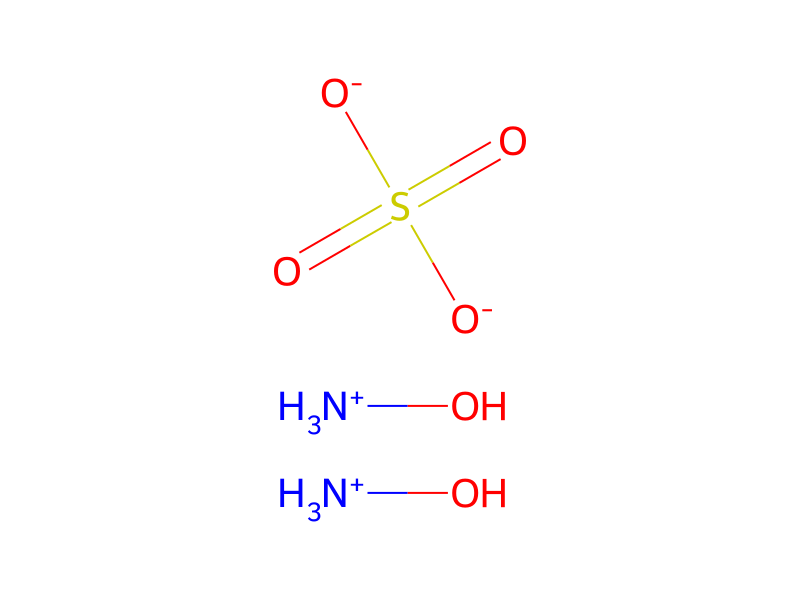
Hydroxylamine sulfate

HCID 24846
New reaction
Print
Basic informationOverviewNames & identifiersPropertiesSafety & regulationChemistry & industryRelated reactionsCompound notes
Substructure searchFind similar structures

Basic information

CAS
10039-54-0
Standard SMILES
O=S(=O)([O-])[O-].[NH3+]O.[NH3+]O
InChIKey
VGYYSIDKAKXZEE-UHFFFAOYSA-L
Molecular formula
(NH2OH)2.H2SO4
Average molar mass
164.14 g/mol
Monoisotopic mass
164.01030715

Overview

Hydroxylamine sulfate is a colorless crystalline solid. Contact may cause severe irritation to skin, eyes, and mucous membranes. May be toxic by ingestion.

Names & identifiers

Preferred name
Hydroxylamine sulfate
IUPAC
hydroxyazanium;sulfate
English name
Hydroxylamine sulfate
Molecular formula
H2O4S.2H3NO
Molecular weight
164.14

Names & synonyms

Hydroxylammonium sulfateOxammonium sulfateHydroxylamine sulfate (2:1)Bis(hydroxylamine) sulfateHydroxylamine sulphateHydroxylamine, sulfateHydroxylamine neutral sulfateBis(hydroxylammonium) sulphateHydroxylammoniumsulfatLANASANE LABDTXSID202542449KP498D4O
Show more names
HASHYDROXYLAMMONIUM SULPHATEHydroxyamine sulfateHydroxylammoniumHuHAS1amine suLHA synthase 1
hydroxyl ammonium sulfateBIS(HYDROXYLAMMONIUM) SULFATEEINECS 233-118-8UN2865UNII-49KP498D4ODTXCID505424HYDROXYLAMINE SULFATE [MI]EC 233-118-8

Database identifiers

CAS
10039-54-0
PubChem CID
24846
DTXSID
DTXSID2025424
UNII
49KP498D4O
EC Number
233-118-8

Properties

Computed structural properties

Topological polar surface area
184 Ų
Hydrogen bond donors
4
Hydrogen bond acceptors
6
Rotatable bonds
0
Heavy atoms
9
Formal charge
0
Complexity
64.2

Experimental & physicochemical properties

Chemical Classes · 2 items

Nitrogen Compounds -> Hydroxylamines

Corrosives

CosmeticsAntioxidant
LogP-3.6
Density · 2 items

greater than 1 at 68 °F (USCG, 1999)

1.88 g/cm³

Solubility · 2 items

greater than or equal to 100 mg/mL at 70 °F (NTP, 1992)

Solubility in water, g/100ml at 20 °C: 58.7

Decomposition120 °C
Melting Point · 2 items

338 °F (decomposes) (NTP, 1992)

170 °C

Food Contact SubstancesFCS -> FDA Inventory of Food Contact Substances Listed in 21 CFR
Physical Description · 4 items

Hydroxylamine sulfate is a colorless crystalline solid. Contact may cause severe irritation to skin, eyes, and mucous membranes. May be toxic by ingestion.

Safety & regulation

Safety information is for reference only and does not replace the supplier’s Safety Data Sheet (SDS), applicable regulations, or professional assessment.

GHS classification

GHS Classification · 6 items

Warning

H290: May be corrosive to metals [Warning Corrosive to Metals]

P203, P234, P260, P261, P264, P264+P265, P270, P272, P273, P280, P301+P317, P302+P352, P305+P351+P338, P317, P318, P319, P321, P330, P332+P317, P333+P317, P337+P317, P362+P364, P390, P391, P405, P406, and P501 (click each P-code to see the statement)

Warning

H290 (97.9%): May be corrosive to metals [Warning Corrosive to Metals]

P203, P234, P260, P261, P264, P264+P265, P270, P272, P273, P280, P301+P317, P302+P352, P305+P351+P338, P317, P318, P319, P321, P330, P332+P317, P333+P317, P337+P317, P362+P364, P390, P391, P405, P406, and P501 (click each P-code to see the statement)

Hazard information

Regulatory Information · 5 items

Chemical: Hydroxylamine, sulfate (2:1) (salt)

Hydroxylamine, sulfate (2:1) is listed on the EPA's Chemical Data Reporting (CDR) system. Manufacturers and importers of Hydroxylamine, sulfate (2:1) are required to report information about their production and use of this chemical to the EPA under the Toxic Substances Control Act (TSCA). (40 eCFR Part 711)

REACH registered substance: Bis(hydroxylammonium) sulphate (EC: 233-118-8)

Hydroxylamine sulphate: Does not have an individual approval but may be used under an appropriate group standard

The New Jersey Worker and Community Right to Know Act requires public and private employers to provide information about hazardous substances at their workplaces. (N.J.S.A. 34:5A-1 et. seq.)

Other Safety InformationIMAP assessments - Hydroxylamine and its salts: Human health tier II assessment
DOT LabelCorrosive
Fire Hazards · 3 items

Special Hazards of Combustion Products: Sulfuric acid fumes may form in fires. (USCG, 1999)

Chemistry & industry

Uses & manufacturing

Uses · 2 items

Used as a reducing agent in photography, an antioxidant for fatty acids and soaps, and a dehairing agent for hides; [Merck Index] Used mainly as an intermediate for cyclohexanone oxime or caprolactum; Also used as an intermediate (pharmaceuticals, insecticides, herbicides, and artificial sweeteners), photographic developer, vulcanizing accelerator, antioxidant for natural rubber, and inhibitor in plastic polymerizations; Other uses are surface treatment of steel, separation of uranium and plutonium, electroplating of metals and plastics, and fixing textile dyes; [EU Risk Assessment]

Steel Producing [Category: Industry]

U.S. Production2023: 500,000,000 - <1,000,000,000 lb
Consumer UsesNot Known or Reasonably Ascertainable
Industry UsesChelating agent
Use ClassificationCosmetics -> Antioxidant
General Manufacturing Information · 2 items

All Other Chemical Product and Preparation Manufacturing

Hydroxylamine, sulfate (2:1): ACTIVE

Applications · 5 items

UsesHydroxylammonium sulfate is a reducing agent in photography; catalyst, swelling agent, and copolymerization inhibitor in polymerization processes; in chemical synthesis; as a textile chemieal; as an oxidation inhibitor; in making oximes for paints and varnishes; in rustproofing; in nondiscoloring short -stoppers for synthetic rubbers; for unhairing hides; in biological and biochemical research; as a purification agent for aldehydes and ketones; converts aldehydes and ketones to oximes and acid chlorides to hydroxamic acids.

UsesHydroxylamine sulfate may be used to prepare highly sensitive cellulose tape, used for the detection of formaldehyde gas. It may be used in the quantitative determination of perchlorate in biological fluids by spectrophotometric methods .

Related reactions

24 records
New reaction record
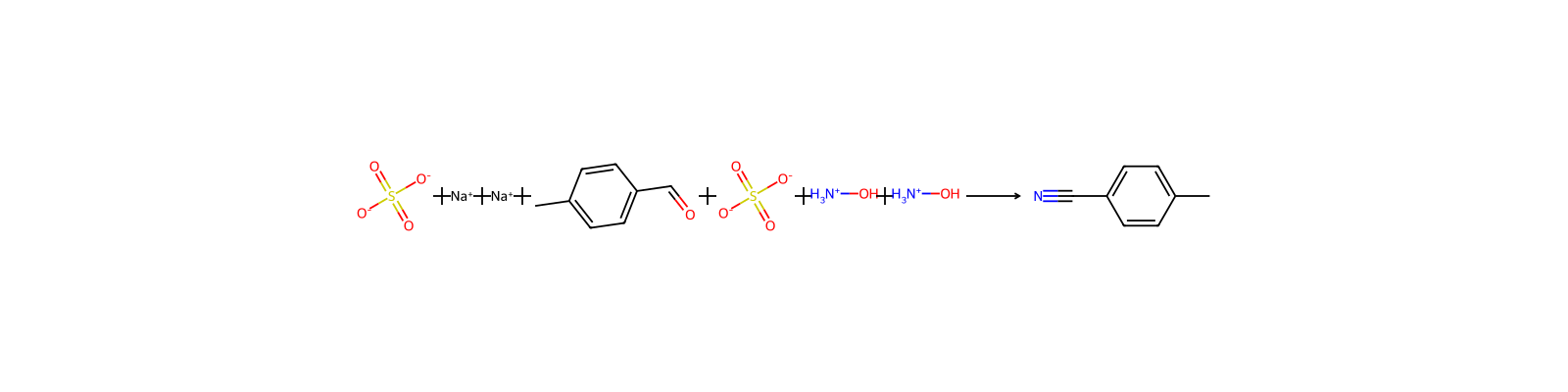
HRID 53401 reaction equation
HRID 53401As reactant
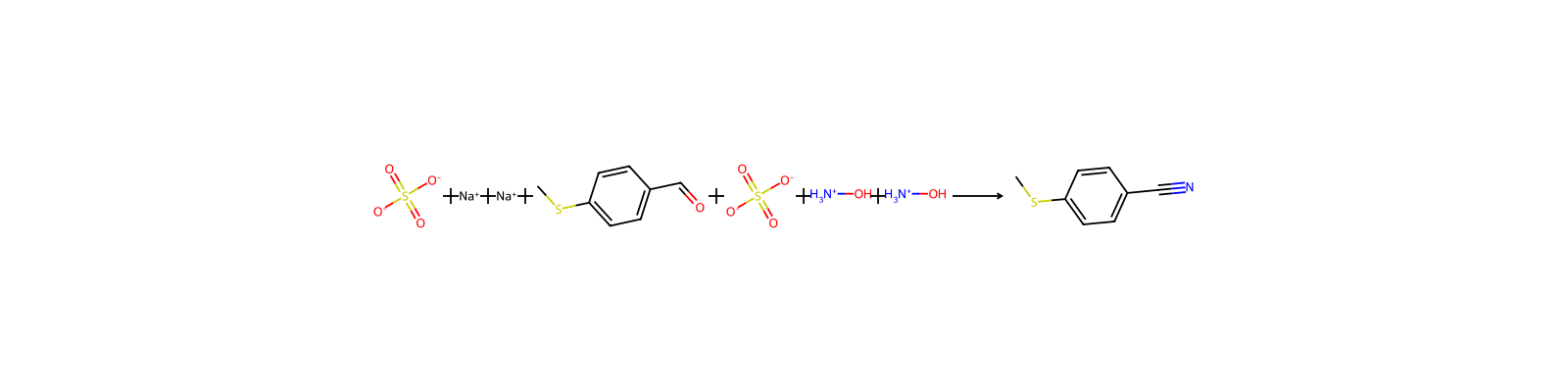
HRID 53402 reaction equation
HRID 53402As reactant
HRID 53403 reaction equation
HRID 53403As reactant
HRID 53404 reaction equation
HRID 53404As reactant
HRID 53405 reaction equation
HRID 53405As reactant
HRID 339296 reaction equation
HRID 339296As product
HRID 429526 reaction equation
HRID 429526As reactant
HRID 461618 reaction equation
HRID 461618As reactant
PreviousPage 1 of 3

Compound notes

On this pageBasic informationOverviewNames & identifiersPropertiesSafety & regulationChemistry & industryRelated reactionsCompound notes

Liquid; Other Solid; Liquid; Dry Powder; Liquid; Large Crystals; Dry Powder

Solid; [Merck Index] White odorless solid; [CHRIS] Colorless crystals; [Sigma-Aldrich MSDS]

WHITE CRYSTALS OR POWDER.

Physicochemical properties

Melting point
170 °C · 170 °C (dec.)(lit.)
Boiling point
56.5 ℃ · 56.5℃
Density
1.86 · 1.86
bulk density
1100 kg/m3 · 1100kg/m3
vapor pressure
0.001 Pa · 0.001Pa at 20℃
storage temp.
-20 °C · -20°C
solubility
water: soluble(lit.)
form
Crystals
color
White
PH
3.6 · 3.6 (10g/l, H2O, 20℃)
biological source
mouse
Water Solubility
329 g/L · 329 g/L (20 ºC)
Sensitive
Hygroscopic
Merck
14 · 14,4828
Stability
Stable, but may be an explosion hazard - do not heat. May decompose explosively in the presence of alkalies. Air sensitive. Hygroscopic. Incompatible with copper, copper alloys, strong oxidising agents, strong bases, nitrites.
Cosmetics Ingredients Functions
ANTIOXIDANT
InChI
1S/2H3NO.H2O4S/c2*1-2;1-5(2,3)4/h2*2H,1H2;(H2,1,2,3,4)
InChIKey
VRXOQUOGDYKXFA-UHFFFAOYSA-N
SMILES
NO.NO.OS(O)(=O)=O
LogP
-1.031 · -1.031 (est)
CAS DataBase Reference
10039 · 10039-54-0(CAS DataBase Reference)
Indirect Additives used in Food Contact Substances
HYDROXYLAMINE SULFATE
FDA 21 CFR
175.105 · 175.105
EWG's Food Scores
2 · 2-5
FDA UNII
49 KP498D4O · 49KP498D4O
EPA Substance Registry System
Hydroxylamine sulfate (2:1) (10039-54-0)
UNSPSC Code
12352301 · 12352301
NACRES
41 · NA.41
Symbol(GHS)
5 · GHS05,GHS07,GHS08,GHS09
Signal word
Danger
Hazard statements
302 · H302+H312-H315-H319-H371-H370-H373-H317-H351-H400-H290
Precautionary statements
501 · P501-P273-P272-P260-P270-P202-P234-P201-P264-P280-P390-P391-P337+P313-P305+P351+P338-P308+P311-P362+P364-P333+P313-P301+P312+P330-P302+P352+P312-P406-P405
target organs
Blood
Hazard Codes
Xn,N,E
Risk Statements
22 · 22-36/38-43-48/22-50-40-21/22-2
Safety Statements
22 · 22-24-37-61-36/37
RIDADR
2865 · UN 2865
WGK Germany
3 · 3
RTECS
5425000 · NC5425000
F
21 · 21
TSCA
TSCA listed
HazardClass
8 · 8
PackingGroup
III
HS Code
28251000 · 28251000
Storage Class
4.1 A · 4.1A - Other explosive hazardous materials
Hazard Classifications
4 DermalAcute · Acute Tox. 4 DermalAcute Tox. 4 OralAquatic Acute 1Carc. 2Eye Irrit. 2Met. Corr. 1Skin Irrit. 2Skin Sens. 1STOT RE 2 Oral
Toxicity
50 orally · LD50 orally in Rabbit: 842 mg/kg LD50 dermal Rabbit 1500 - 2000 mg/kg
REACH Registrations
Active
Limited Quantities
5 L · 5.0 L (1.3 gallons) (liquid) or 5.0 kg (11 lbs) (solid)
Excepted Quantities
Max Inner Pack (30g or 30ml) and Max Outer Pack (1Kg or 1L)

· Non-combustible, substance itself does not burn but may decompose upon heating to produce corrosive and/or toxic fumes.

Combustible. Gives off irritating or toxic fumes (or gases) in a fire.

Health Hazards · 2 items

Inhalation of dust or ingestion may cause systemic poisoning characterized by cyanosis, methemoglobinemia, convulsions, and coma. Contact with eyes or skin causes irritation. (USCG, 1999)

· TOXIC and/or CORROSIVE; inhalation, ingestion or skin contact with material may cause severe injury or death.

Hazards Summary · 1 item

A skin irritant; May cause methemoglobinemia, cyanosis, convulsions, hypotension, and coma; [Merck Index] A strong reducing agent; A skin and eye irritant; May cause skin sensitization; May induce methemoglobinemia; Long term or repeated exposure may cause anemia; Can be absorbed through skin; [ICSC] May cause severe skin, eye, and mucous membrane irritation; [CAMEO] A skin and eye irritant; May cause cyanosis, methemoglobinemia, convulsions, and coma; [CHRIS] May explode by shock, friction, fire, or other source of ignition; Reports of occupational contact dermatitis; [ToxPlanet: EU Risk Assessment] Causes irritation or corrosive injuries to skin, eyes, and mucous membranes; [NTP] A skin and strong eye irritant; May cause skin sensitization; Harmful by ingestion; Targets the blood and CNS; [Sigma-Aldrich MSDS] See Hydroxylamine and Hydroxylamine hydrochloride.

DOT ID and Guide2865 154
Reactive GroupSalts, Acidic
EC ClassificationSymbol: Xn, N; R: 22-36/38-43-48/22-50; S: (2)-22-24-37-61
UN ClassificationUN Hazard Class: 8; UN Pack Group: III
Reactivity ProfileSulfuric acid fumes may form in fires (USCG, 1999). Solid hydroxylamine sulfate explodes when heated to 170 °C [Chem. Process 26:30(1963)]. Sodium ignites on contact with hydroxylamine. (Mellor, 1940, Vol. 8, 292.)
Chemical Dangers · 1 item

Decomposes on contact with hot surfaces or flames. This produces corrosive fumes of sulfur oxides. The solution in water is a medium strong acid. The substance is a strong reducing agent. It reacts violently with oxidants, powdered metals, nitrates, nitrites and heavy metal salts.

Safety & protection

Fire Fighting · 2 items

Excerpt from ERG Guide 154 [Substances - Toxic and/or Corrosive (Non-Combustible)]:

Use water in large amounts, powder, alcohol-resistant foam, carbon dioxide. In case of fire: keep drums, etc., cool by spraying with water.

First Aid Measures · 4 items

Fresh air, rest. Refer for medical attention.

Remove contaminated clothes. Rinse skin with plenty of water or shower. Refer for medical attention .

First rinse with plenty of water for several minutes (remove contact lenses if easily possible), then refer for medical attention.

Rinse mouth. Give a slurry of activated charcoal in water to drink. Induce vomiting (ONLY IN CONSCIOUS PERSONS!). Refer for medical attention .

Accidental Release Measures · 2 items

· CALL 911. Then call emergency response telephone number on shipping paper. If shipping paper not available or no answer, refer to appropriate telephone number listed on the inside back cover.

· ELIMINATE all ignition sources (no smoking, flares, sparks or flames) from immediate area.

First Aid · 2 items

EYES: First check the victim for contact lenses and remove if present. Flush victim's eyes with water or normal saline solution for 20 to 30 minutes while simultaneously calling a hospital or poison control center. Do not put any ointments, oils, or medication in the victim's eyes without specific instructions from a physician. IMMEDIATELY transport the victim after flushing eyes to a hospital even if no symptoms (such as redness or irritation) develop.

General First Aid:

Safe StorageSeparated from oxidants, nitrates, nitrites and combustible substances.
Exposure Control and Personal Protection· Wear positive pressure self-contained breathing apparatus (SCBA).
Nonfire Spill ResponseExcerpt from ERG Guide 154 [Substances - Toxic and/or Corrosive (Non-Combustible)]:
Spillage Disposal · 1 item

Personal protection: P2 filter respirator for harmful particles. Sweep spilled substance into covered containers. Carefully collect remainder. Then store and dispose of according to local regulations. Do NOT let this chemical enter the environment.

Isolation and Evacuation · 2 items

Excerpt from ERG Guide 154 [Substances - Toxic and/or Corrosive (Non-Combustible)]:

Immediate precautionary measure

Eye PreventionWear safety spectacles or eye protection in combination with breathing protection.
Fire PreventionNO open flames.
Inhalation RiskA harmful concentration of airborne particles can be reached quickly when dispersed.

Toxicology

Adverse EffectsMethemoglobinemia - The presence of increased methemoglobin in the blood; the compound is classified as secondary toxic effect
Exposure RoutesThe substance can be absorbed into the body by inhalation of its aerosol, through the skin and by ingestion.
Signs and Symptoms · 4 items

See Ingestion.

MAY BE ABSORBED! Redness.

Redness. Pain.

Blue lips, fingernails and skin. Confusion. Convulsions. Dizziness. Headache. Nausea. Unconsciousness.

ICSC Environmental DataThe substance is toxic to aquatic organisms.

Safety data

F
21
wgk
3
tsca
TSCA listed
rtecs
NC5425000
ridadr
UN 2865
hs_code
28251000
Toxicity
LD50 orally in Rabbit: 842 mg/kg LD50 dermal Rabbit 1500 - 2000 mg/kg
risk_code
22-36/38-43-48/22-50-40-21/22-2
Signal word
Danger
Symbol(GHS)
GHS05,GHS07,GHS08,GHS09
hazard_code
Xn,N,E
safety_code
22-24-37-61-36/37
hazard_class
8
Storage Class
4.1A - Other explosive hazardous materials
packing_group
III
target organs
Blood
Hazard statements
H302+H312-H315-H319-H371-H370-H373-H317-H351-H400-H290
Limited Quantities
5.0 L (1.3 gallons) (liquid) or 5.0 kg (11 lbs) (solid)
Excepted Quantities
Max Inner Pack (30g or 30ml) and Max Outer Pack (1Kg or 1L)
REACH Registrations
Active
Hazard Classifications
Acute Tox. 4 DermalAcute Tox. 4 OralAquatic Acute 1Carc. 2Eye Irrit. 2Met. Corr. 1Skin Irrit. 2Skin Sens. 1STOT RE 2 Oral
Precautionary statements
P501-P273-P272-P260-P270-P202-P234-P201-P264-P280-P390-P391-P337+P313-P305+P351+P338-P308+P311-P362+P364-P333+P313-P301+P312+P330-P302+P352+P312-P406-P405

UsesAs reducing agent in photography; in synthetic and analytical chemistry; to purify aldehydes and ketones. As antioxidant for fatty acids and soaps. As dehairing agent for hides.

UsesUsed as to purify aldehydes and ketones; reagent for mercury and silver detection in water; reducing agent.

General DescriptionColorless crystalline solid. Contact may cause severe irritation to skin, eyes, and mucous membranes. May be toxic by ingestion.

Preparation methods

PreparationHydroxylamine sulfate may be prepared by mixing stoichiometric amountsof hydroxylamine and sulfuric acid. It also may be prepared by electrolytical-ly reducing an aqueous solution of ammonium sulfate.

Upstream & downstream products

Upstream raw materials

EthanolAmmonium bisulfite2-Butanone oximeSulfur dioxide2-ButanoneAcetone oximeAmmonium sulfateSulfuric acid

Downstream products

Ethoxyamine hydrochloride3-(4-Nitro-phenyl)-isoxazol-5-ylamine3-tert-Butylisoxazol-5-amineLead sulfate tribasic4-Hydroxyphthalazine-1-carboxylicacidMethomyl5-Amino-3-(4-methoxyphenyl)isoxazole3-Isopropylisoxazol-5-amine2-Azacyclooctanone3-(3-Nitrophenyl)propionic acid3-Chloro-4,4-dimethylpent-2-enenitrileLinuron2-Butanone oximeAcetaldoximeLevofloxacin3,4-Dichlorophenyl hydroxy ureaCycloheptanone oximeBenzohydroxamic acid5-Methylisoxazole-3-carbonyl chlorideALDICARB-OXIMEMethyl 3-amino-5-(tert-butyl)thiophene-2-carboxylate4-PyridinealdoximeCaprolactam3-Amino-5-(tert-butyl)thiophene-2-carboxamide