

Basic information
- CAS
17973-86-3- Standard SMILES
Brc1ccc(Br)nn1- InChIKey
VQAFMTSSCUETHA-UHFFFAOYSA-N- Molecular formula
- C4H2Br2N2
- Average molar mass
- 237.88 g/mol
- Monoisotopic mass
- 235.85847226
Names & identifiers
- Preferred name
- 3,6-Dibromopyridazine
- IUPAC
- 3,6-dibromopyridazine
- English name
- 3,6-Dibromopyridazide
- Molecular formula
- C4H2Br2N2
- Molecular weight
- 237.88
Names & synonyms
3,6-dibromopyridazineDTXSID70290072RefChem:487509DTXCID40241218687-847-517973-86-33,6-DibromopyridazidePyridazine, 3,6-dibromo-MFCD002339473,6-dibromo-pyridazine3,6-Dibromo pyridazineCS-W019835
Show more names
3,6-Dibromo-1,2-diazine3,6-Dibromopyridazine ,97%3,6-Dibromopyridazine, CAS 17973-86-33,6-Dibromopyridazide ISO 9001:2015 REACH
PS-4502AC-25272HY-59234SY009350EN300-87121BCP19349NSC66366AM20090061
Database identifiers
- CAS
17973-86-3- PubChem CID
- 248852
- DTXSID
DTXSID70290072- EC Number
- 687-847-5
- Nikkaji
- J2.380.591J
Properties
Computed structural properties
- XLogP
- 1.9
- Topological polar surface area
- 25.8 Ų
- Hydrogen bond donors
- 0
- Hydrogen bond acceptors
- 2
- Rotatable bonds
- 0
- Heavy atoms
- 8
- Formal charge
- 0
- Complexity
- 68.4
Physicochemical properties
- Melting point
- 116 °C · 116 °C
- Boiling point
- 327.5 · 327.5±22.0 °C(Predicted)
- Density
- 2 · 2+-.0.06 g/cm3(Predicted)
- storage temp.
- Keep in dark place,Sealed in dry,Room Temperature
- pka
- -1.18 · -1.18±0.10(Predicted)
- form
- Solid
- color
- White to pale yellow
- InChI
- InChI=1S/C4H2Br2N2/c5-3-1-2-4(6)8-7-3/h1-2H
- InChIKey
- VQAFMTSSCUETHA-UHFFFAOYSA-N
- SMILES
- C1(Br)=NN=C(Br)C=C1
- UNSPSC Code
- 12352100 · 12352100
- NACRES
- 22 · NA.22
- Symbol(GHS)
- 7 · GHS07
- Signal word
- Warning
- Hazard statements
- 302 · H302-H315-H319-H335
- Precautionary statements
- 261 · P261-P264-P270-P301+P312-P302+P352-P305+P351+P338
Safety & regulation
Safety information is for reference only and does not replace the supplier’s Safety Data Sheet (SDS), applicable regulations, or professional assessment.
GHS classification
GHS Classification
Warning
H302 (97.6%): Harmful if swallowed [Warning Acute toxicity, oral]
P261, P264, P264+P265, P270, P271, P280, P301+P317, P302+P352, P304+P340, P305+P351+P338, P319, P321, P330, P332+P317, P337+P317, P362+P364, P403+P233, P405, and P501 (click each P-code to see the statement)
Aggregated GHS information provided per 42 reports by companies from 5 notifications to the ECHA C&L Inventory. Each notification may be associated with multiple companies.
Hazard information
Hazard Classes and CategoriesAcute Tox. 4 (97.6%)
Safety data
- wgk
- 3
- hs_code
- 29339900
- risk_code
- 36/37/38-20/21/22-22
- Signal word
- Warning
- Symbol(GHS)
- GHS07
- hazard_code
- Xn
- hazard_note
- Harmful
- safety_code
- 26-36/37/39-22-37/39-36/37-24/25
- Storage Class
- 11 - Combustible Solids
- target organs
- Respiratory system
- Hazard statements
- H302-H315-H319-H335
- Hazard Classifications
- Acute Tox. 4 OralEye Irrit. 2Skin Irrit. 2STOT SE 3
- Precautionary statements
- P261-P264-P270-P301+P312-P302+P352-P305+P351+P338
Chemistry & industry
Applications
Uses3,6-dibromopyridazine is an important intermediate in organic synthesis. It is mainly used in pharmaceutical intermediates, organic synthesis, organic solvents, and can also be used in dye production, pesticide production and perfumery.
Preparation methods
Preparation3,6-dibromopyridazine for Synthesis: A mixture of maleic hydrazide (1.1 g, 10 mmol) and PBr5 (4.7 g, 11 mmol) was heated at 100 °C until no more white fumes of hydrogen bromide were produced (~2 h). After cooling, the orange residue was poured into ice water and the resulting mixture was extracted with CH2Cl2 (3 x 20 mL). The organic layer was washed with saturated aqueous NaHCO3, dried over MgSO4, filtered and concentrated. The crude product was purified by flash column chromatography on silica gel (CH2Cl2) to give 3,6-dibromopyridazine as a white solid (1.20 g, 50%).
Upstream & downstream products
Upstream raw materials
Downstream products
Suppliers
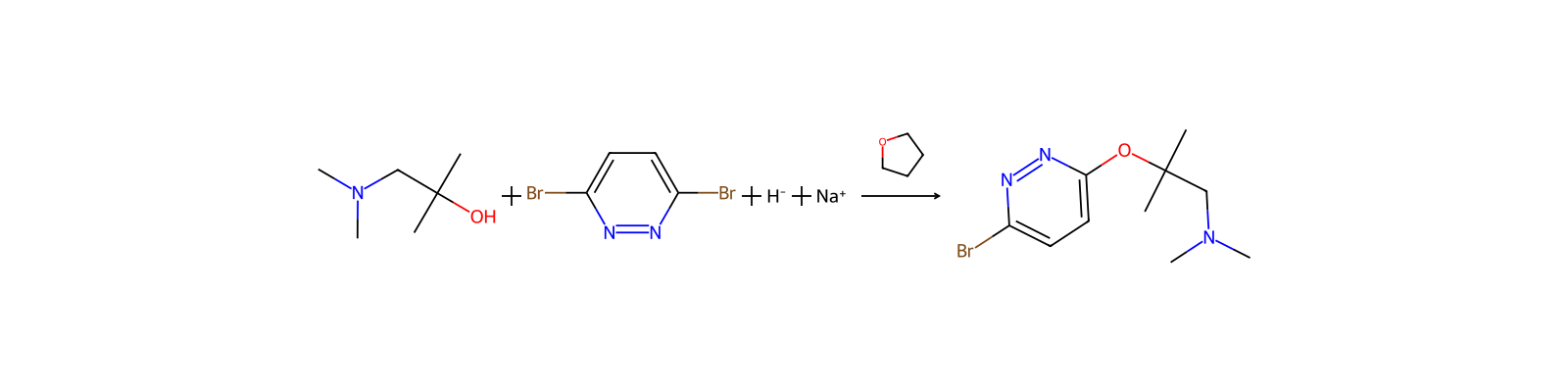
Related reactions
30 records




Compound notes
Loading…