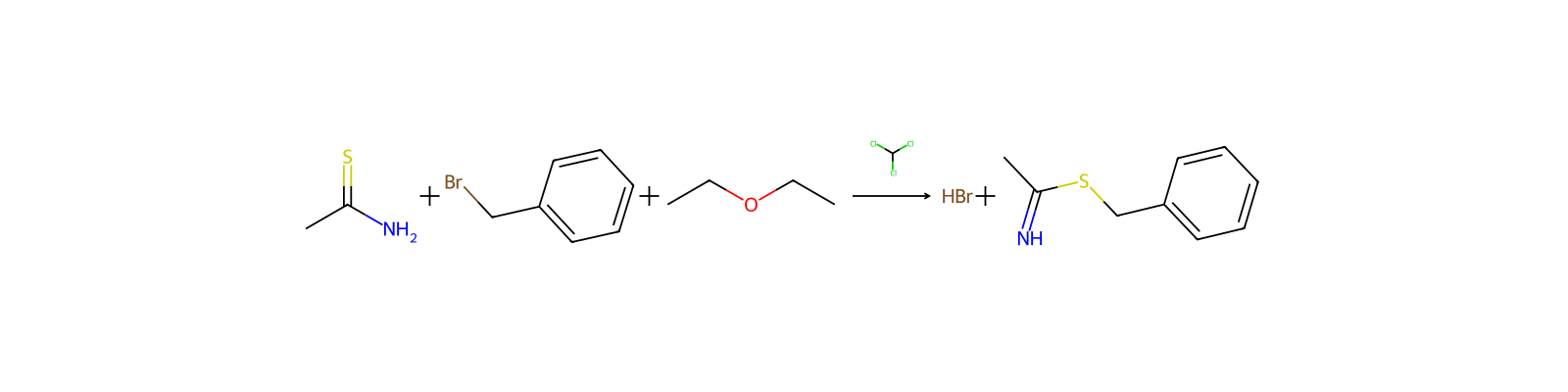
HRID 8928As reactant
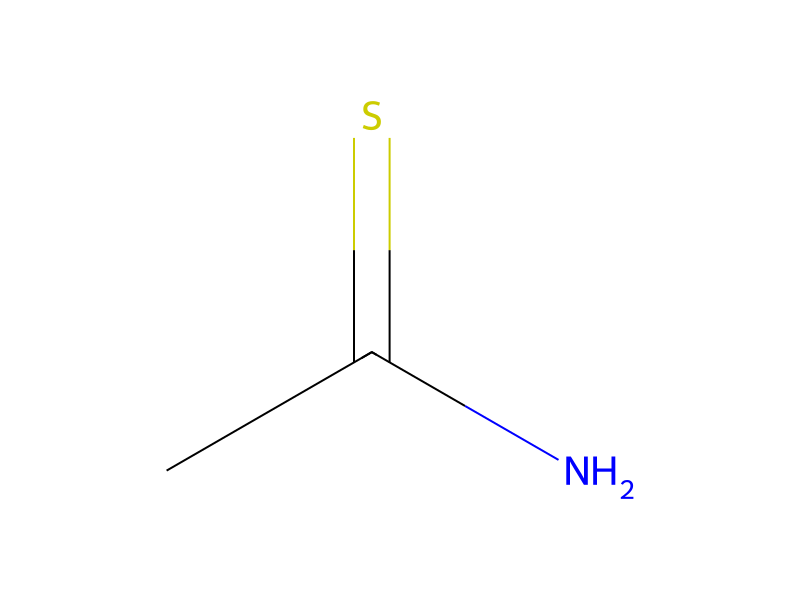
62-55-5CC(N)=SYUKQRDCYNOVPGJ-UHFFFAOYSA-NThioacetamide can cause cancer according to an independent committee of scientific and health experts.
62-55-5、65680-21-9DTXSID9021340CHEMBL38737CHEBI:32497Other Classes -> Sulfur Compounds
Carcinogens
log Kow = -0.26
-0.46/-0.36
-0.26
Crystals from benzene
Colorless leaflets
Yellow tablets
CRYSTALS FROM ALC, PLATES FROM ETHER
5 to 10 mg/mL at 68 °F (NTP, 1992)
In ethanol 26.4 g/100 g; sparingly sol in ether
Miscible in benzene
MISCIBLE IN PETROLEUM ETHER
In water, 1.63X10+5 mg/l @ 25 °C.
Solubility in water: good
Safety information is for reference only and does not replace the supplier’s Safety Data Sheet (SDS), applicable regulations, or professional assessment.
Danger
H302: Harmful if swallowed [Warning Acute toxicity, oral]
P203, P264, P264+P265, P270, P273, P280, P301+P317, P302+P352, P305+P351+P338, P318, P321, P330, P332+P317, P337+P317, P362+P364, P405, and P501 (click each P-code to see the statement)
Danger
H302 (100%): Harmful if swallowed [Warning Acute toxicity, oral]
P203, P264, P264+P265, P270, P273, P280, P301+P317, P302+P352, P305+P351+P338, P318, P321, P330, P332+P317, P337+P317, P362+P364, P405, and P501 (click each P-code to see the statement)
Chemical: Ethanethioamide
Hazard Traits - Carcinogenicity
REACH registered substance: Thioacetamide (EC: 200-541-4)
Thioacetamide: Does not have an individual approval but may be used under an appropriate group standard
The New Jersey Worker and Community Right to Know Act requires public and private employers to provide information about hazardous substances at their workplaces. (N.J.S.A. 34:5A-1 et. seq.)
Flash point data on this compound are not available; it is probably combustible. (NTP, 1992)
Combustible.
SYMPTOMS: The symptoms following exposure to this compound may include skin and eye irritation, liver damage, fatigue, nausea, eczema, central nervous system depression, acidosis, vomiting, respiratory depression, hypotension, unconsciousness, tremors, convulsions, anorexia and conjunctivitis.
Multiple injections of thioacetamide ... decrease the synthesis of cytochrome p450b and the amounts of its translatable mRNA.
A factor was isolated from /thioacetamide-induced/ fibrogenic rat liver which stimulates collagen synthesis in cultured fibrolblasts without affecting their rate of proliferation.
Altered transport of nuclear RNA sequences is an early response to carcinogens. Nuclear envelopes were isolated and assayed for nucleoside triphosphatase (NTPase) activity, on the premise that this enzymatic activity participates in RNA transport. A common feature of the action of ... thioacetamide ... at low doses without significant toxicity, was to increase nuclear envelopes NTPase activity and to increase RNA transport, as assessed by the appearance of rapiidly labeled RNA in the cytoplasm and by in vitro assay. The increases in NTPase were specific for the nuclear envelope fraction, and early toxic effects of higher doses initially masked the increases. The induced increases in nuclear envelope NTPase were long-lived. In contrast, increases in nuclear envelope NTPase were observed only during the regenerative phase of carbon tetrachloride intoxication; the CCl4-induced increase was short-lived and returned promptly to control levels. These changes in NTPase activity were not associated with parallel changes in phosphorylation/dephosphorylation of nuclear envelope proteins. Increases in nuclear envelope NTPase and alterations in RNA transport, without attendant nuclear replication, may relate to altered nuclear RNA restriction. This change in a regulatory phenomenon may make these cells more susceptible to further modification, potentially playing a role in the initiation phase of carcinogenesis.
...THIOACETAMIDE IS METABOLIZED IN VIVO TO ACETAMIDE WHICH IS ITSELF CARCINOGENIC...ACETAMIDE IS THEN HYDROLYZED TO ACETATE...
THIOACETAMIDE, A PRE- OR PROCARCINOGEN, MUST UNDERGO BIOCHEMICAL METABOLIC ACTIVATION BY HOST. /FROM TABLE/
HEPATOTOXICITY OF THIOACETAMIDE MAY BE MEDIATED BY ITS METAB TO THIOACETAMIDE SULFINE WHICH IN TURN, IS METABOLIZED TO AN ULTIMATE TOXIC METABOLITE.
THIOACETAMIDE IS OXIDIZED TO THIOACETAMIDE S-OXIDE BY RAT LIVER MICROSOMES & BY A MIXED-FUNCTION OXIDASE SYSTEM.
For more Metabolism/Metabolites (Complete) data for THIOACETAMIDE (9 total), please visit the HSDB record page.


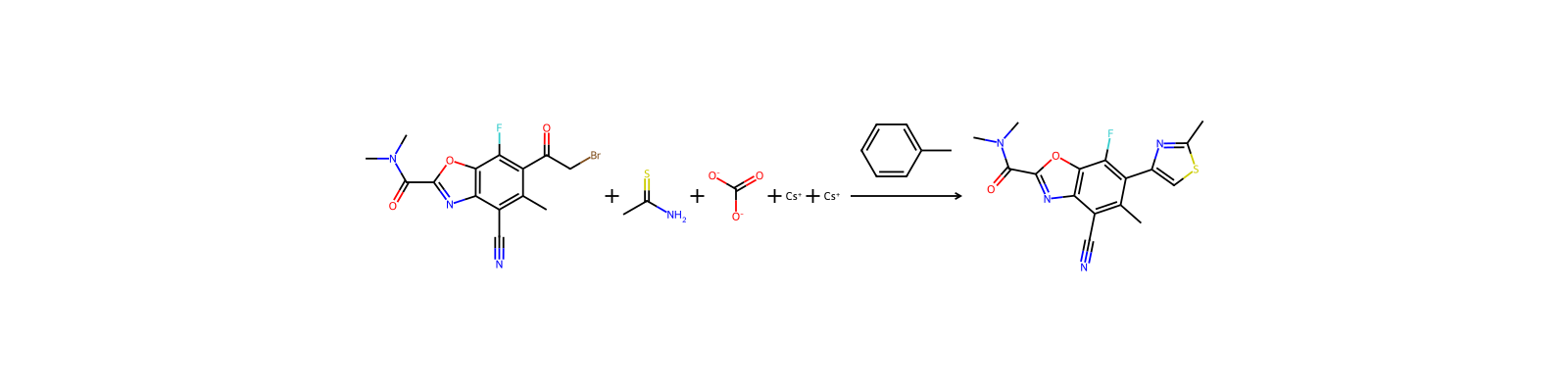
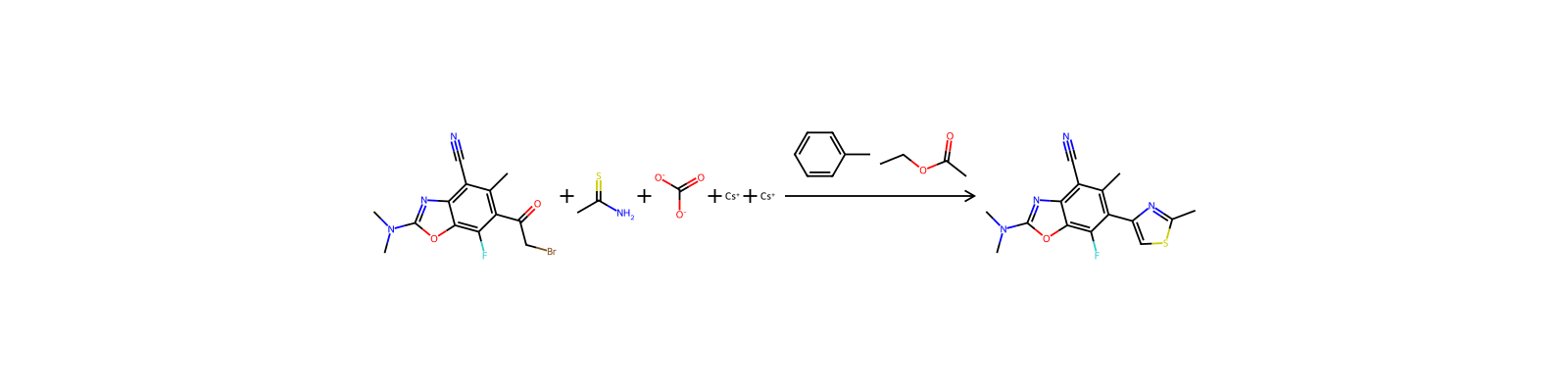


234 to 237 °F (NTP, 1992)
113-114 °C
113-116 °C
115.5 °C
Thioacetamide appears as white crystals with a mercaptan odor.
Colorless solid; [ICSC] Colorless or yellow solid with a mild odor of mercaptans; [HSDB] White solid; [CAMEO] Colorless crystalline solid with an odor of rotten eggs; [Alfa Aesar MSDS]
COLOURLESS CRYSTALS WITH CHARACTERISTIC ODOUR.
Reports of degenerative liver changes following ingestion of the juice of oranges dipped for 2-5 seconds in 5% solution; Cirrhosis and other adverse changes (including tumors) of the liver observed in rats, mice, and dogs in feeding studies; [HSDB] May cause liver injury; A possible human carcinogen; [ICSC] A skin and eye irritant; [eChemPortal: ESIS] A skin and strong eye irritant; [Alfa Aesar MSDS]
REVIEW:[NEAL RA, HALPERT J; TOXICOLOGY OF THIONO-SULFUR COMPOUNDS; ANNU REV PHARMACOL TOXICOL 22: 321 (1982)]
National Toxicology Program. Eleventh Report on Carcinogens (2005). The Report on Carcinogens is an informational scientific and public health document that identifies and discusses substances (including agents, mixtures, or exposure circumstances) that may pose a carcinogenic hazard to human health. Thioacetamide (62-55-5) is listed as reasonably anticipated to be a human carcinogen.[Available from, as of July 31, 2009: http://ntp.niehs.nih.gov/ntp/roc/eleventh/profiles/s172thio.pdf]
U218; As stipulated in 40 CFR 261.33, when thioacetamide, as a commercial chemical product or manufacturing chemical intermediate or an off-specification commercial chemical product or a manufacturing chemical intermediate, becomes a waste, it must be managed according to Federal and/or State hazardous waste regulations. Also defined as a hazardous waste is any residue, contaminated soil, water, or other debris resulting from the cleanup of a spill, into water or on dry land, of this waste. Generators of small quantities of this waste may qualify for partial exclusion from hazardous waste regulations (40 CFR 261.5).
Fires involving this chemical should be controlled with a dry chemical, carbon dioxide, or Halon extinguisher. (NTP, 1992)
Use water spray, powder, alcohol-resistant foam, carbon dioxide.
Fresh air, rest.
Remove contaminated clothes. Rinse skin with plenty of water or shower.
First rinse with plenty of water for several minutes (remove contact lenses if easily possible), then refer for medical attention.
Rinse mouth.
EYES: First check the victim for contact lenses and remove if present. Flush victim's eyes with water or normal saline solution for 20 to 30 minutes while simultaneously calling a hospital or poison control center. Do not put any ointments, oils, or medication in the victim's eyes without specific instructions from a physician. IMMEDIATELY transport the victim after flushing eyes to a hospital even if no symptoms (such as redness or irritation) develop.
PRECAUTIONS FOR "CARCINOGENS": Storage site should be as close as practical to lab in which carcinogens are to be used, so that only small quantities required for ... expt need to be carried. Carcinogens should be kept in only one section of cupboard, an explosion-proof refrigerator or freezer (depending on chemicophysical properties ...) that bears appropriate label. An inventory ... should be kept, showing quantity of carcinogen & date it was acquired ... Facilities for dispensing ... should be contiguous to storage area. /Chemical Carcinogens/
PRECAUTIONS FOR "CARCINOGENS": A high-efficiency particulate arrestor (HEPA) or charcoal filters can be used to minimize amt of carcinogen in exhausted air ventilated safety cabinets, lab hoods, glove boxes or animal rooms ... Filter housing that is designed so that used filters can be transferred into plastic bag without contaminating maintenance staff is avail commercially. Filters should be placed in plastic bags immediately after removal ... The plastic bag should be sealed immediately ... The sealed bag should be labelled properly ... Waste liquids ... should be placed or collected in proper containers for disposal. The lid should be secured & the bottles properly labelled. Once filled, bottles should be placed in plastic bag, so that outer surface ... is not contaminated ... The plastic bag should also be sealed & labelled. ... Broken glassware ... should be decontaminated by solvent extraction, by chemical destruction, or in specially designed incinerators. /Chemical Carcinogens/
SMALL SPILLS AND LEAKAGE: If a spill of this chemical occurs, FIRST REMOVE ALL SOURCES OF IGNITION, then you should dampen the solid spill material with acetone and transfer the dampened material to a suitable container. Use absorbent paper dampened with acetone to pick up any remaining material. Seal your contaminated clothing and the absorbent paper in a vapor-tight plastic bag for eventual disposal. Solvent wash all contaminated surfaces with acetone followed by washing with a soap and water solution. Do not reenter the contaminated area until the Safety Officer (or other responsible person) has verified that the area has been properly cleaned.
At the time of review, criteria for land treatment or burial (sanitary landfill) disposal practices are subject to significant revision. Prior to implementing land disposal of waste residue (including waste sludge), consult with environmental regulatory agencies for guidance on acceptable disposal practices.
Thioacetamide is a potential candidate for incineration. Recommended incineration types: Rotary kiln with a temperature range 820 to 1600 °C and a residence time of hours; Fluidized bed with a temperature range 840 to 1800 °C and a residence time of several seconds or longer.
PRECAUTIONS FOR "CARCINOGENS": There is no universal method of disposal that has been proved satisfactory for all carcinogenic compounds & specific methods of chem destruction ... published have not been tested on all kinds of carcinogen-containing waste. ... summary of avail methods & recommendations ... /given/ must be treated as guide only. /Chemical Carcinogens/
PRECAUTIONS FOR "CARCINOGENS": ... Incineration may be only feasible method for disposal of contaminated laboratory waste from biological expt. However, not all incinerators are suitable for this purpose. The most efficient type ... is probably the gas-fired type, in which a first-stage combustion with a less than stoichiometric air:fuel ratio is followed by a second stage with excess air. Some ... are designed to accept ... aqueous & organic-solvent solutions, otherwise it is necessary ... to absorb soln onto suitable combustible material, such as sawdust. Alternatively, chem destruction may be used, esp when small quantities ... are to be destroyed in laboratory. /Chemical Carcinogens/
For more Disposal Methods (Complete) data for THIOACETAMIDE (7 total), please visit the HSDB record page.
Personal protection: complete protective clothing including self-contained breathing apparatus. Sweep spilled substance into covered containers. If appropriate, moisten first to prevent dusting. Carefully collect remainder. Then store and dispose of according to local regulations.
VENTILATION CONTROL: BASIC VENTILATION METHODS ARE LOCAL EXHAUST VENTILATION & DILUTION OR GENERAL VENTILATION.
PRECAUTIONS FOR "CARCINOGENS": Smoking, drinking, eating, storage of food or of food & beverage containers or utensils, & the application of cosmetics should be prohibited in any laboratory. All personnel should remove gloves, if worn, after completion of procedures in which carcinogens have been used. They should ... wash ... hands, preferably using dispensers of liq detergent, & rinse ... thoroughly. Consideration should be given to appropriate methods for cleaning the skin, depending on nature of the contaminant. No standard procedure can be recommended, but the use of organic solvents should be avoided. Safety pipettes should be used for all pipetting. /Chemical Carcinogens/
PRECAUTIONS FOR "CARCINOGENS": In animal laboratory, personnel should remove their outdoor clothes & wear protective suits (preferably disposable, one-piece & close-fitting at ankles & wrists), gloves, hair covering & overshoes. ... Clothing should be changed daily but ... discarded immediately if obvious contamination occurs ... /also,/ workers should shower immediately. In chemical laboratory, gloves & gowns should always be worn ... however, gloves should not be assumed to provide full protection. Carefully fitted masks or respirators may be necessary when working with particulates or gases, & disposable plastic aprons might provide addnl protection. If gowns are of distinctive color, this is a reminder that they should not be worn outside of lab. /Chemical Carcinogens/
PRECAUTIONS FOR "CARCINOGENS": ... Operations connected with synth & purification ... should be carried out under well-ventilated hood. Analytical procedures ... should be carried out with care & vapors evolved during ... procedures should be removed. ... Expert advice should be obtained before existing fume cupboards are used ... & when new fume cupboards are installed. It is desirable that there be means for decreasing the rate of air extraction, so that carcinogenic powders can be handled without ... powder being blown around the hood. Glove boxes should be kept under negative air pressure. Air changes should be adequate, so that concn of vapors of volatile carcinogens will not occur. /Chemical Carcinogens/
For more Preventive Measures (Complete) data for THIOACETAMIDE (10 total), please visit the HSDB record page.
DISTRIBUTION OF PU /SRP: plutonium/ IN RATS WAS INFLUENCED BY ORAL ADMIN OF THIOACETAMIDE (300 MG/KG). RATS INJECTED IP WITH PLUTONIUM CITRATE RETAINED 71.5 & 23.6% OF RECOVERED ACTIVITY IN THE CARCASS & LIVER, RESPECTIVELY, WHEREAS RATS WHICH HAD BEEN TREATED WITH THIOACETAMIDE 24 HR PREVIOUSLY CONTAINED 35.8 & 59.5% OF THE PU IN THE CARCASS & LIVER RESPECTIVELY.
PHENOBARBITAL PRETREATMENT POTENTIATED HEPATIC NECROSIS PRODUCED BY THIOACETAMIDE.
ADRENALECTOMY PROTECTED RATS AGAINST THE HEPATOTOXIC ACTION OF THIOACETAMIDE INJECTED IP AT 200 MG/KG BW. THIS PROTECTIVE EFFECT COULD BE REVERSED BY HYDROCORTISONE GIVEN TWICE DAILY INTRAPERITONEALLY AT 0.5 TO 2.5 MG/RAT.
STROPHANTHIN-G PROTECTED RATS AGAINST LIVER NECROSIS CAUSED BY THIOACETAMIDE.
For more Interactions (Complete) data for THIOACETAMIDE (10 total), please visit the HSDB record page.
TERRESTRIAL FATE: Based on a classification scheme(1), an estimated Koc value of 17(SRC), determined from an log Kow of -0.26(2) and a regression-derived equation(3), indicates that thioacetamide is expected to have very high mobility in soil(SRC). Volatilization of thioacetamide from moist soil surfaces is expected to be an important fate process(SRC) given an estimated Henry's Law constant of 6.4X10⁻⁶ atm-cu m/mole(SRC), using a fragment constant estimation method(4). The potential for volatilization of thioacetamide from dry soil surfaces may exist(SRC) based upon an estimated vapor pressure of 15 mm Hg(SRC), determined from a fragment constant method(5). Thioacetamide was not biodegraded by activated sludge after 5 days(6), and therefore may be resistant to biodegradation in soil(SRC).
AQUATIC FATE: Based on a classification scheme(1), an estimated Koc value of 17(SRC), determined from an log Kow of -0.26(2) and a regression-derived equation(3), indicates that thioacetamide is not expected to adsorb to suspended solids and sediment(SRC). Volatilization from water surfaces is expected(3) based upon an estimated Henry's Law constant of 6.4X10⁻⁴ atm-cu m/mole(SRC), developed using a fragment constant estimation method(4). Using this Henry's Law constant and an estimation method(3), volatilization half-lives for a model river and model lake are 3 days and 39 days, respectively(SRC). According to a classification scheme(5), an estimated BCF of 3(SRC), from its log Kow(2) and a regression-derived equation(6), suggests the potential for bioconcentration in aquatic organisms is low(SRC). Thioacetamide was not biodegraded by activated sludge after 5 days(7), and therefore may be resistant to biodegradation in aqueous systems(SRC).
ATMOSPHERIC FATE: According to a model of gas/particle partitioning of semivolatile organic compounds in the atmosphere(1), thioacetamide, which has an estimated vapor pressure of 15 mm Hg at 25 °C(SRC), determined from a fragment constant method(2), is expected to exist solely as a vapor in the ambient atmosphere(SRC). Vapor-phase thioacetamide is degraded in the atmosphere by reaction with photochemically-produced hydroxyl radicals(SRC); the half-life for this reaction in air is estimated to be 18 hours(SRC), calculated from its rate constant of 21X10-12 cu cm/molecule-sec at 25 °C(SRC) determined using a structure estimation method(3).
PRECAUTIONS FOR "CARCINOGENS": Whenever medical surveillance is indicated, in particular when exposure to a carcinogen has occurred, ad hoc decisions should be taken concerning ... /cytogenetic and/or other/ tests that might become useful or mandatory. /Chemical Carcinogens/
The Koc of thioacetamide is estimated as 17(SRC), using a log Kow of -0.26(1) and a regression-derived equation(2). According to a classification scheme(3), this estimated Koc value suggests that thioacetamide is expected to have very high mobility in soil(SRC).
Thioacetamide
Group 2B: Possibly carcinogenic to humans
Volume 7: (1974) Some Anti-thyroid and Related Substances, Nitrofurans and Industrial Chemicals
1987
1987
An estimated BCF of 3 was calculated for thioacetamide(SRC), using a log Kow of -0.26(1) and a regression-derived equation(2). According to a classification scheme(3), this BCF suggests the potential for bioconcentration in aquatic organisms is low(SRC).
U218; As stipulated in 40 CFR 261.33, when thioacetamide, as a commercial chemical product or manufacturing chemical intermediate or an off-specification commercial chemical product or a manufacturing chemical intermediate, becomes a waste, it must be managed according to Federal and/or State hazardous waste regulations. Also defined as a hazardous waste is any residue, contaminated soil, water, or other debris resulting from the cleanup of a spill, into water or on dry land, of this waste. Generators of small quantities of this waste may qualify for partial exclusion from hazardous waste regulations (40 CFR 261.5).
Persons in charge of vessels or facilities are required to notify the National Response Center (NRC) immediately, when there is a release of this designated hazardous substance, in an amount equal to or greater than its reportable quantity of 10 lb or 4.54 kg. The toll free number of the NRC is (800) 424-8802; In the Washington D.C. metropolitan area (202) 426-2675. The rule for determining when notification is required is stated in 40 CFR 302.4 (section IV. D.3.b).
WHEN 5 MG (3)H-THIOACETAMIDE WERE ADMIN ORALLY IN DIET TO MALE ALBINO RATS... RADIOACTIVITY WAS FOUND IN ALL ORGANS EXAMINED (LIVER, KIDNEY & ADRENAL GLAND) & WAS HIGHEST IN LIVER.
WHOLE-BODY AUTORADIOGRAPHY SHOWED THAT AN IV DOSE OF ANTITHYROID AGENT, (35)S-THIOACETAMIDE, WAS TAKEN UP IN LIVER, KIDNEYS (MEDULLA), HEART MUSCLE, HARDERIAN GLANDS, SPLEEN, LYMPH NODES, & GI TRACT OF RATS. ABOUT 80% WAS EXCRETED IN 24-HR URINE.
THE DISTRIBUTION OF LABELED THIOACETAMIDE WAS STUDIED AS A FUNCTION OF TIME IN LIVER, KIDNEYS, PLASMA, AND MUSCLE OF RATS. THE DEVELOPMENT OF CENTRILOBULAR HEPATIC NECROSIS WAS FIRST OBSERVED 6 HOURS AFTER PEAK PLASMA LEVELS OF THIOACETAMIDE-S-OXIDE WERE OBTAINED (9 HOURS AFTER ADMINISTRATION OF THIOACETAMIDE).
Used as a replacement for gaseous hydrogen sulfide in qualitative analysis; Used formerly as a stabilizer of motor fuel containing tetraethyl lead and mordant of seed grain (combined with mercury); [HSDB]
Petroleum Production and Refining [Category: Industry]
As replacement for gaseous hydrogen sulfide in qualitative analysis.
The addition of thioacetamide to 1,4-benzoquinone produces modest yields of 2-substituted 3a-Hydroxy-1,3-benzothiazol-6(3aH)-ones.
Stabilizer of motor fuel containing tetraethyl lead ... mordant of seed grain in combination with mercury /Former use/
(1977) AT LEAST 4.54X10+5 G
(1982) NO EVIDENCE OF COMMERCIAL PRODN IN U.S.
Uses1. It can be used for the production of catalysts, stabilizers, polymerization inhibitors, electroplating additives, photographic chemicals, pesticides, dyeing auxiliary and processing agents. It can be also used as polymer curing agents, crosslinking agents, rubber additives and pharmaceutical raw materials. 2. It can be also used as vulcanizing agent and crosslinking agent of polymer, rubber additives, pharmaceutical raw materials, etc. 3. It can be also used as analytical reagents.
DescriptionThioacetamide (TAA) is not known to occur in nature. It is prepared by heating ammonium acetate and aluminum sulfide.
UsesSulfide generation
UsesSubstitute for H2S in laboratory qualitative analyses.
UsesThioacetamide is a carcinogen, a hepatotoxicant. Thioacetamide induces acute chronic liver injury through the activation of protein synthesis of RNA, DNA, and gamma-glutamyl transpeptitase. Thioacetamide has been used in the synthesis of [emailprotected] nano-array core-shell structure.
UsesIt is used as an intermediate in organicsynthesis.
General DescriptionThioacetamide occurs as a colorless leaf-like material with aslight Sulfur-like odor. It is used as a substitute for HydrogenSulfide in the laboratory and as a stabilizer of motor fuel.
DefinitionChEBI: Thioacetamide is a thiocarboxamide consiting of acetamide having the oxygen replaced by sulfur. It has a role as a hepatotoxic agent. It is functionally related to an acetamide.