
Basic information
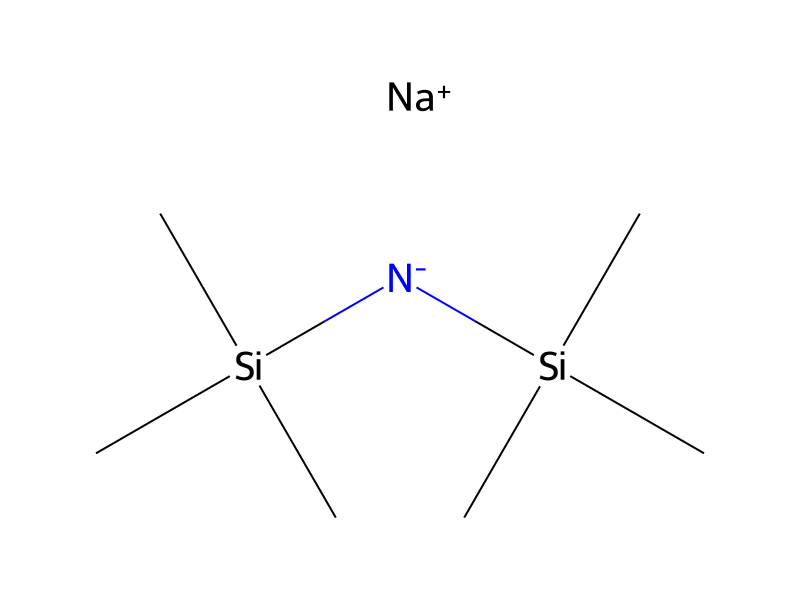
- Standard SMILES
C[Si](C)(C)[N-][Si](C)(C)C.[Na+]- InChIKey
WRIKHQLVHPKCJU-UHFFFAOYSA-N- Molecular formula
- C6H18NNaSi2
- Average molar mass
- 183.37 g/mol
- Monoisotopic mass
- 183.08754693
Names & identifiers
- Preferred name
- Sodium bis(trimethylsilyl)amide
- IUPAC
- sodium bis(trimethylsilyl)azanide
Names & synonyms
Sodium bis(trimethylsilyl)amideN-SodiohexamethyldisilazaneEINECS 213-983-8Silanamine, 1,1,1-trimethyl-N-(trimethylsilyl)-, sodium saltDTXSID5061451EC 213-983-8Silanamine, 1,1,1-trimethyl-N-(trimethylsilyl)-, sodium salt (1:1)NSodiohexamethyldisilazaneRefChem:887345DTXCID9033052Silanamine, 1,1,1trimethylN(trimethylsilyl), sodium salt213-983-8
Show more names
1070-89-9NaHMDSHexamethyldisilazane sodium saltsodium;bis(trimethylsilyl)azanideC6H18NNaSi2MFCD00009835sodium hexamethyldisilazanes14980
Database identifiers
- CAS
1070-89-9- PubChem CID
- 2724254
- DTXSID
DTXSID5061451- UNII
- X9ZJB79YER
- EC Number
- 213-983-8
- Nikkaji
- J364.613K
Properties
Computed structural properties
- Topological polar surface area
- 1 Ų
- Hydrogen bond donors
- 0
- Hydrogen bond acceptors
- 1
- Rotatable bonds
- 2
- Heavy atoms
- 10
- Formal charge
- 0
- Complexity
- 80
Experimental & physicochemical properties
Physical DescriptionOff-white odorless crystals; [Alfa Aesar MSDS]
Safety & regulation
GHS classification
GHS Classification
Danger
H302 (63.4%): Harmful if swallowed [Warning Acute toxicity, oral];H312 (63.8%): Harmful in contact with skin [Warning Acute toxicity, dermal];H314 (100%): Causes severe skin burns and eye damage [Danger Skin corrosion/irritation];H318 (64.3%): Causes serious eye damage [Danger Serious eye damage/eye irritation];H332 (63.4%): Harmful if inhaled [Warning Acute toxicity, inhalation];H412 (63.8%): Harmful to aquatic life with long lasting effects [Hazardous to the aquatic environment, long-term hazard]
P260, P261, P264, P264+P265, P270, P271, P273, P280, P301+P317, P301+P330+P331, P302+P352, P302+P361+P354, P304+P340, P305+P354+P338, P316, P317, P321, P330, P362+P364, P363, P405, and P501 (click each P-code to see the statement)
Aggregated GHS information provided per 235 reports by companies from 11 notifications to the ECHA C&L Inventory. Each notification may be associated with multiple companies.;Information may vary between notifications depending on impurities, additives, and other factors. The percentage value in parenthesis indicates the notified classification ratio from companies that provide hazard codes. Only hazard codes with percentage values above 10% are shown. For more detailed information, please visit ECHA C&L website.
Hazard information
Regulatory Information
Status: Active Update: 17-11-2022 https://echa.europa.eu/registration-dossier/-/registered-dossier/11731
Silanamine, 1,1,1-trimethyl-N-(trimethylsilyl)-, sodium salt: Does not have an individual approval but may be used under an appropriate group standard
Hazards SummaryReacts violently with water evolving extremely flammable gases; Causes burns; Inhalation may cause corrosive injuries to upper respiratory tract and lungs; [Alfa Aesar MSDS]
Hazard Classes and CategoriesAcute Tox. 4 (63.4%);Acute Tox. 4 (63.8%);Skin Corr. 1B (100%);Eye Dam. 1 (64.3%);Acute Tox. 4 (63.4%);Aquatic Chronic 3 (63.8%)
Safety & protection
Protective Action Criteria (PAC)
30 [mg/m3]
330 [mg/m3]
2000 [mg/m3]
Toxicology
Adverse EffectsDermatotoxin - Skin burns.;Toxic Pneumonitis - Inflammation of the lungs induced by inhalation of metal fumes or toxic gases and vapors.
Regulatory information
Regulatory Information
Status: Active Update: 17-11-2022 https://echa.europa.eu/registration-dossier/-/registered-dossier/11731
Silanamine, 1,1,1-trimethyl-N-(trimethylsilyl)-, sodium salt: Does not have an individual approval but may be used under an appropriate group standard
Chemistry & industry
Uses & manufacturing
General Manufacturing InformationSilanamine, 1,1,1-trimethyl-N-(trimethylsilyl)-, sodium salt (1:1): ACTIVE
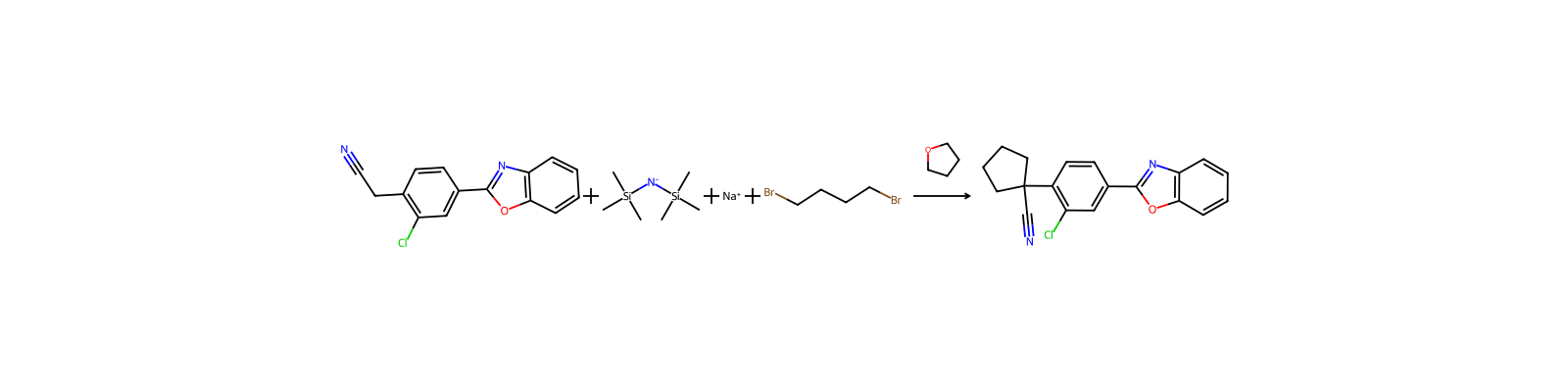
Related reactions
2,715 records




Linked notes
Loading…