Reaction equation

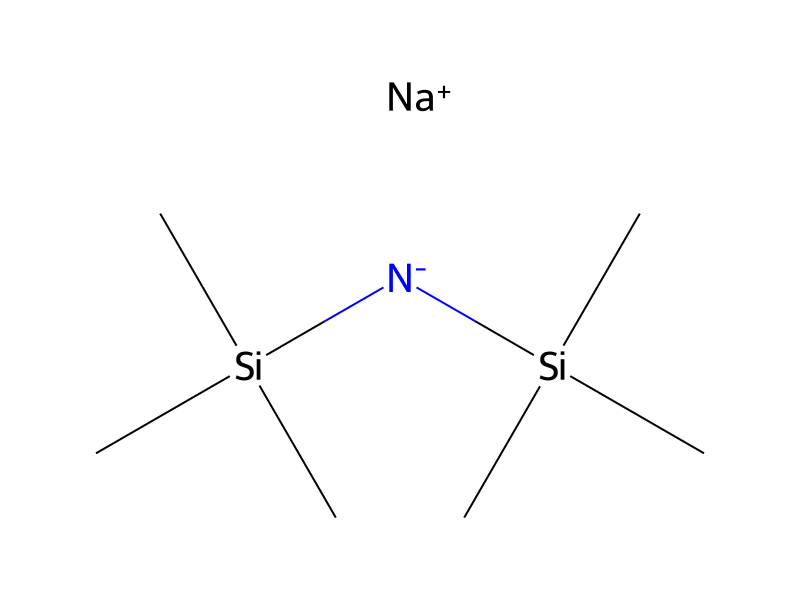
[Br:1][C:2]1[CH:3]=[C:4]([CH2:8][OH:9])[CH:5]=[N:6][CH:7]=1.C[Si]([N-][Si](C)(C)C)(C)C.[Na+].I[CH2:21][CH3:22].CN(C=O)C>C1COCC1.[Cl-].[Na+].O>[Br:1][C:2]1[CH:3]=[C:4]([CH2:8][OH:9])[CH:5]=[N:6][CH:7]=1.[Br:1][C:2]1[CH:7]=[N:6][CH:5]=[C:4]([CH2:8][O:9][CH2:21][CH3:22])[CH:3]=1Participants
Reactant 4



Product 2

Reagents, catalysts & solvents 2


Procedure
(5-Bromopyridin-3-yl)methanol was prepared according to the published procedure (Zhang, N. et al, J. Med. Chem., 45, 2832–2840 (2002)). A solution of (5-bromopyridin-3-yl)methanol (7.39 g, 39.3 mmol) in THF was cooled to 0° C. Sodium bis(trimethylsilyl)amide (39.3 mL of a 1.0 M solution in THF) was added, and the reaction was stirred for 20 minutes. Iodoethane (3.46 mL, 43.2 mmol) and DMF were added, and the reaction was allowed to warm to ambient temperature and stirred overnight. Brine was added, and the aqueous layer was extracted twice with hexanes. The combined organic fractions were concentrated under reduced pressure, and the residue was purified by HPFC (eluting with hexanes:ethyl acetate in a gradient from 100:0 to 70:30) to provide 5.11 g of 3-bromo-5-ethoxymethylpyridine as a colorless oil.
Workup
- stirringstirred overnight
- extractionthe aqueous layer was extracted twice with hexanes
- concentrationThe combined organic fractions were concentrated under reduced pressure
- customthe residue was purified by HPFC (
- washeluting with hexanes
Sources & evidence
- ORD record
- ord-db1f569af9f74fb396843cd058260599
- Source dataset
- uspto-grants-2006_08
- Patent number
- US07091214B2
Linked notes
Loading…