Basic information
- Standard SMILES
OC(c1ccccc1)(c1ccccc1)[C@@H]1CCCN1- InChIKey
OGCGXUGBDJGFFY-INIZCTEOSA-N- Molecular formula
- C17H19NO
- Average molar mass
- 253.34 g/mol
- Monoisotopic mass
- 253.14666423
Names & identifiers
- Preferred name
- 2-Pyrrolidinemethanol, alpha,alpha-diphenyl-, (S)-
- IUPAC
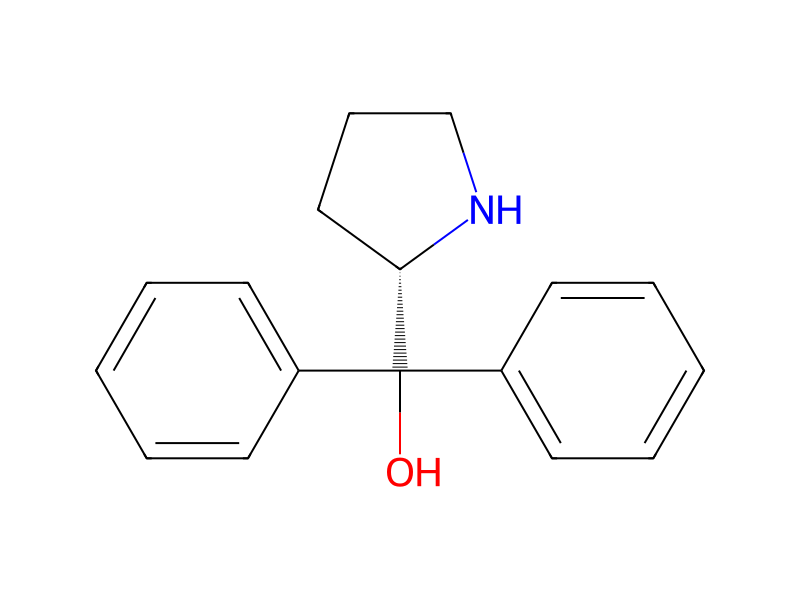
- diphenyl-[(2S)-pyrrolidin-2-yl]methanol
- English name
- (S)-(-)-α,α-Diphenyl-2-pyrrolidinemethanol
- Molecular formula
- C17H19NO
- Molecular weight
- 253.34
Names & synonyms
112068-01-6(S)-(-)-alpha,alpha-Diphenyl-2-pyrrolidinemethanolalpha,alpha-Diphenyl-L-prolinolK3HE3KC32M(S)-alpha,alpha-Diphenylprolinol(-)-alpha,alpha-Diphenylprolinol(2S)-alpha,alpha-Diphenyl-2-pyrrolidinemethanol(s)-alpha,alpha-diphenylpyrrolidinemethanol(-)-alpha,alpha-Diphenyl-2-pyrrolidinemethanol2-Pyrrolidinemethanol, alpha,alpha-diphenyl-, (2S)-2-Pyrrolidinemethanol, alpha,alpha-diphenyl-, (S)-.ALPHA.,.ALPHA.-DIPHENYL-L-PROLINOL
Show more names
(S)-DIPHENYLPROLINOL(S)-DIPHENYL(PYRROLIDIN-2-YL)METHANOLSDPPDiphenyl(2-pyrrolidinyl)methanol(S)-(-)-2-(DIPHENYLHYDROXYMETHYL)PYRROLIDINEalpha,alpha-DiphenylNebivolol Impurity 49Dextrodiphenylprolinol
(S)-.ALPHA.,.ALPHA.-DIPHENYLPROLINOL(-)-.ALPHA.,.ALPHA.-DIPHENYLPROLINOL(S)-.ALPHA.,.ALPHA.-DIPHENYLPYRROLIDINEMETHANOL(-)-.ALPHA.,.ALPHA.-DIPHENYL-2-PYRROLIDINEMETHANOL(2S)-.ALPHA.,.ALPHA.-DIPHENYL-2-PYRROLIDINEMETHANOL2-PYRROLIDINEMETHANOL, .ALPHA.,.ALPHA.-DIPHENYL-, (2S)-2-PYRROLIDINEMETHANOL, .ALPHA.,.ALPHA.-DIPHENYL-, (S)-RefChem:483466
Database identifiers
- CAS
112068-01-6- PubChem CID
- 2724899
- DTXSID
DTXSID50369275- UNII
- K3HE3KC32M
- EC Number
- 601-153-1
- Nikkaji
- J370.862D
Properties
Computed structural properties
- XLogP
- 2.7
- Topological polar surface area
- 32.3 Ų
- Hydrogen bond donors
- 2
- Hydrogen bond acceptors
- 2
- Rotatable bonds
- 3
- Heavy atoms
- 19
- Formal charge
- 0
- Complexity
- 261
Physicochemical properties
- Melting point
- 77 · 77-80 °C(lit.)
- alpha
- -59 · -59 º (c=3, methanol 25 ºC)
- Boiling point
- 396.54 °C · 396.54°C (rough estimate)
- Density
- 1.0078 · 1.0078 (rough estimate)
- refractive index
- -66.5 ° · -66.5 ° (C=3, CHCl3)
- storage temp.
- Inert atmosphere,Room Temperature
- solubility
- Soluble in chloroform.
- form
- powder
- pka
- 13.15 · 13.15±0.29(Predicted)
- color
- white to off white ., crystal
- optical activity
- 20 · [α]20/D 67°, c = 3 in chloroform
- Merck
- 14 · 14,155
- BRN
- 17103 · 17103
- InChI
- 1S/C17H19NO/c19-17(16-12-7-13-18-16,14-8-3-1-4-9-14)15-10-5-2-6-11-15/h1-6,8-11,16,18-19H,7,12-13H2/t16-/m0/s1
- InChIKey
- OGCGXUGBDJGFFY-INIZCTEOSA-N
- SMILES
- OC([C@@H]1CCCN1)(c2ccccc2)c3ccccc3
- CAS DataBase Reference
- 112068 · 112068-01-6(CAS DataBase Reference)
- FDA UNII
- 3 HE3KC32M · K3HE3KC32M
- NIST Chemistry Reference
- -1 · S-(-)-1,1-diphenylprolinol(112068-01-6)
- UNSPSC Code
- 12352005 · 12352005
- NACRES
- 22 · NA.22
- Symbol(GHS)
- 7 · GHS07
- Signal word
- Warning
- Hazard statements
- 315 · H315-H319-H335
- Precautionary statements
- 261 · P261-P264-P271-P280-P302+P352-P305+P351+P338
- target organs
- Respiratory system
- PPE
- 95 · dust mask type N95 (US), Eyeshields, Gloves
- Hazard Codes
- Xi
- Risk Statements
- 36 · 36/37/38
- Safety Statements
- 26 · 26-37/39-24/25-36
- WGK Germany
- 3 · 3
- F
- 10 · 10-34
- TSCA
- No
- HS Code
- 29339900 · 29339900
- Storage Class
- 11 · 11 - Combustible Solids
- Hazard Classifications
- 2 Skin · Eye Irrit. 2Skin Irrit. 2STOT SE 3
Safety & regulation
GHS classification
GHS Classification
Warning
H315 (100%): Causes skin irritation [Warning Skin corrosion/irritation];H319 (100%): Causes serious eye irritation [Warning Serious eye damage/eye irritation];H335 (95.7%): May cause respiratory irritation [Warning Specific target organ toxicity, single exposure; Respiratory tract irritation]
P261, P264, P264+P265, P271, P280, P302+P352, P304+P340, P305+P351+P338, P319, P321, P332+P317, P337+P317, P362+P364, P403+P233, P405, and P501 (click each P-code to see the statement)
Aggregated GHS information provided per 47 reports by companies from 7 notifications to the ECHA C&L Inventory. Each notification may be associated with multiple companies.;Information may vary between notifications depending on impurities, additives, and other factors. The percentage value in parenthesis indicates the notified classification ratio from companies that provide hazard codes. Only hazard codes with percentage values above 10% are shown. For more detailed information, please visit ECHA C&L website.
Hazard information
Hazard Classes and CategoriesSkin Irrit. 2 (100%);Eye Irrit. 2 (100%);STOT SE 3 (95.7%)
Safety data
- F
- 10-34
- PPE
- dust mask type N95 (US), Eyeshields, Gloves
- wgk
- 3
- tsca
- No
- hs_code
- 29339900
- risk_code
- 36/37/38
- Signal word
- Warning
- Symbol(GHS)
- GHS07
- hazard_code
- Xi
- safety_code
- 26-37/39-24/25-36
- Storage Class
- 11 - Combustible Solids
- target organs
- Respiratory system
- Hazard statements
- H315-H319-H335
- Hazard Classifications
- Eye Irrit. 2Skin Irrit. 2STOT SE 3
- Precautionary statements
- P261-P264-P271-P280-P302+P352-P305+P351+P338
Chemistry & industry
Applications
Usessuzuki reaction
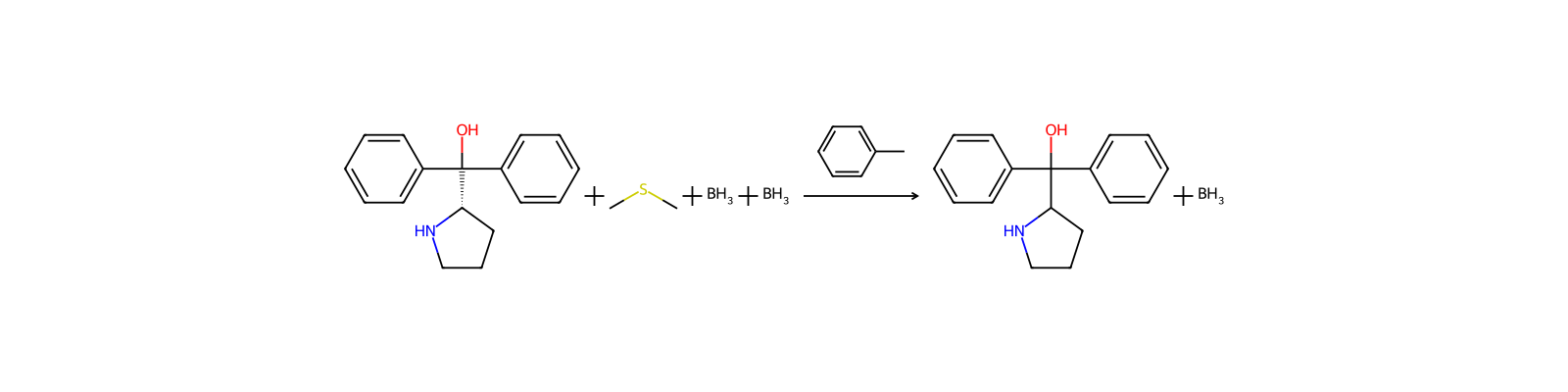
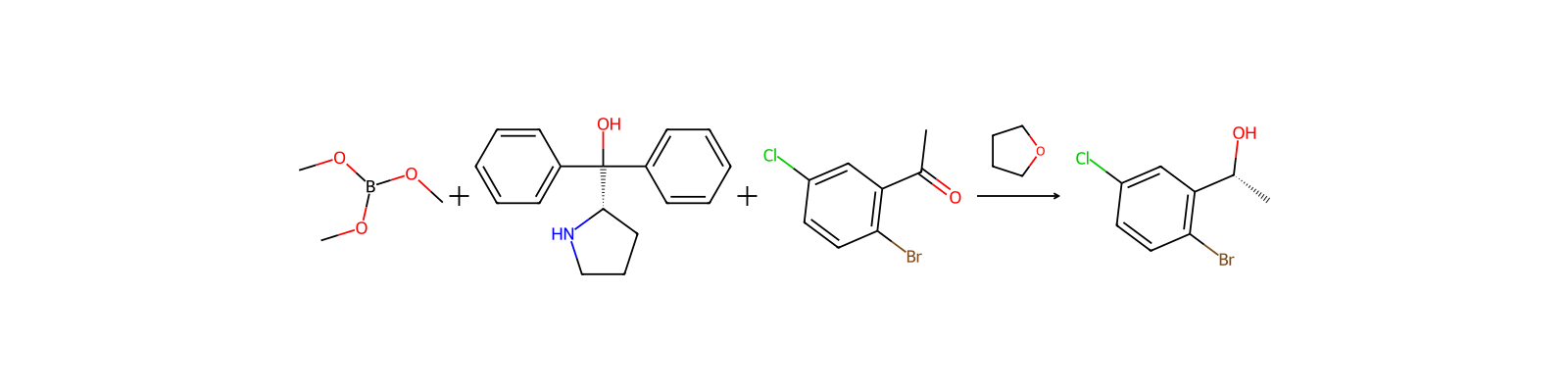
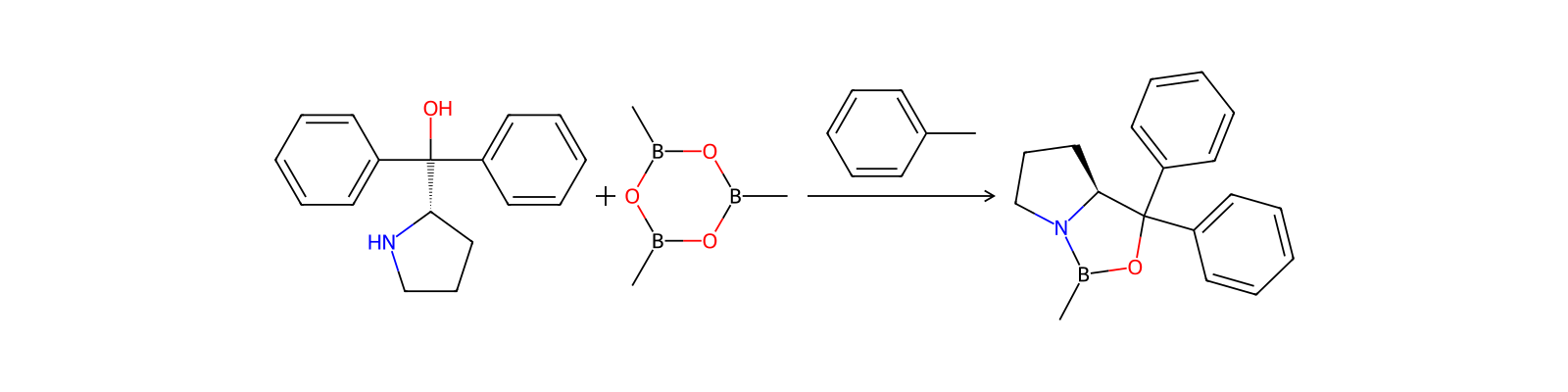
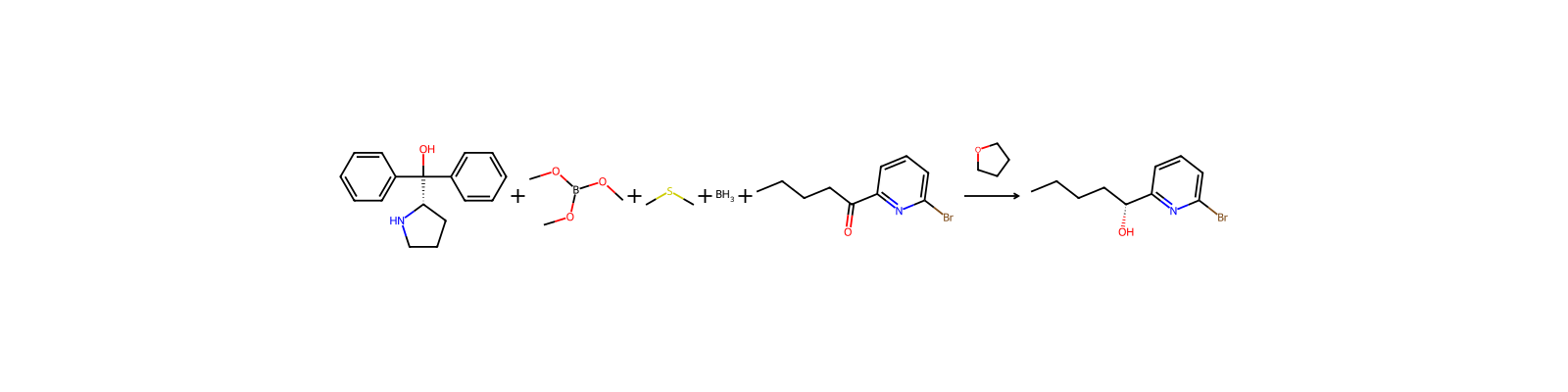
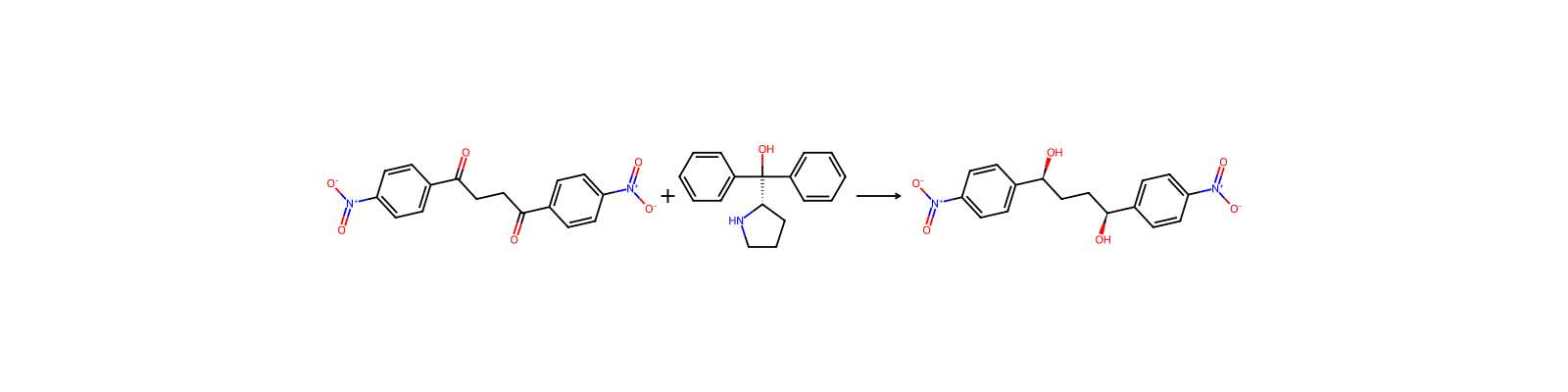
Uses(S)-(-)-α,α-Diphenyl-2-pyrrolidinemethanol is used to prepare the corresponding oxazaborolidines for the borane-mediated asymmetric reduction of ketones.
General Description(S)-(-)-α,α-Diphenyl-2-pyrrolidinemethanol is a bifunctional organocatalyst.
Preparation methods
PreparationInto a four-necked flask, add tetrahydrofuran, L-proline methyl ester hydrochloride, and phenyl magnesium chloride (dissolved in tetrahydrofuran) solution was added dropwise from a constant pressure dropping funnel, and the addition was completed in about 4 hours, and then stirred at 10-15°C for 3 hours. Add water, adjust the pH to 5-6 with 10% ammonium chloride aqueous solution, extract with dichloromethane, extract the aqueous layer twice with dichloromethane each time, and obtain the organic phase. Wash once with saturated sodium chloride aqueous solution. The organic phase was dried with anhydrous sodium sulfate for 4 hours and filtered. The obtained organic phase was distilled under reduced pressure to distill dichloromethane and tetrahydrofuran to obtain light yellow oily (S)-(-)-α,α-Diphenyl-2-pyrrolidinemethanol, yield 86.6%.
Upstream & downstream products
Upstream raw materials
Suppliers50 total
梯希爱(上海)化成工业发展有限公司021-67121386 · [email protected]
衢州润东化工有限公司0570-8789886 18892685668 · [email protected]
上海阿拉丁生化科技股份有限公司400-6206333 13167063860 · [email protected]
INTATRADE GmbH+49 3493/605464 · [email protected]
T&W GROUP021-61551611 13296011611 · [email protected]
北京安司莫森技术有限公司010-82954736 13391601435 · [email protected]
韶远科技(上海)有限公司021-50795510 4000665055 · [email protected]
科瑞迪化学400-821-5857 021-64326257 · [email protected]
上海迈瑞尔生化科技有限公司4006356688 18621169109 · [email protected]
阿法埃莎(中国)化学有限公司400-6106006 · [email protected]
太原市瑞和丰科贸有限公司+86 351 7031519 · [email protected]
安耐吉化学&3A(安徽泽升科技股份有限公司)400-0056266 · [email protected]
上海柏卡化学技术有限公司400-026-1533/(021) 6478-0600 · [email protected]
上海瀚鸿科技股份有限公司021-54306202 13764082696 · [email protected]
上海相辉医药科技有限公司13761987713 · [email protected]
上海景颜化工科技有限公司13817811078 · [email protected]
嘉兴市艾森化工有限公司0573-85285100 18627885956 · [email protected]
南京哈柏医药科技有限公司13376080562 13376090521 · [email protected]
Pure Chemistry Scientific Inc.001-857-928-2050 or 1-888-588-9418 · [email protected]
上海隆盛化工有限公司58099637 13585536065 · [email protected]
上海攀鸿化工科技有限公司021-56491756 13512199871 · [email protected]
杭州东帆化学有限公司86-0571-85151182
孝感深远化工有限公司15527621225; 15527621225 · [email protected]
山东西亚化学有限公司13355009207 13355009207 · [email protected]
大赛璐药物手性技术(上海)有限公司021-50460086-9 15921403865 · [email protected]
四川库利南科技有限公司400-1166-196 18981987031 · [email protected]
skychemical Co.Ltd021-20958197 20965099 · [email protected]
天津希恩思生化科技有限公司400 638 7771 · [email protected]
湖南汇百侍生物科技有限公司0731-85526065 13308475853 · [email protected]
上海迪外化工科技有限公司021-61551100
斯芬克司药物研发(天津)股份有限公司022-66211289-843 13672102692 · [email protected]
百盛HK进出口有限公司+86-18068513926
河南多贝化工有限公司0370-2785118 17550508557 · [email protected]
上海思域化工科技有限公司86-21-34053660 · [email protected]
赛默飞世尔科技(中国)有限公司800-810-5118 · [email protected]
北京伊诺凯科技有限公司400-810-7969 010-59572699 · [email protected]
江苏艾康生物医药研发有限公司025-66113011 13913916777 · [email protected]
TCI AMERICA800-4238616 · [email protected]
TOKYO CHEMICAL INDUSTRY CO., LTD.03-36680489 · [email protected]
TCI Europe320-37350700 · [email protected]
上海贤鼎生物科技有限公司4009209199 · [email protected]
天津思博宁医药科技有限公司0086-22-60330256
深圳振强药物研发有限公司0755-66853366 13670046396 · [email protected]
深圳康特腾科技有限公司86-0755-86635001 · [email protected]
越林试剂021-62960152 · [email protected]
上海睿升化工科技有限公司+86-021-50935922
蚌埠中实化学技术有限公司+86-0552-4929304 +86-18055277008 · [email protected]
广州爱纯医药科技有限公司020-39119399 18927568969 · [email protected]
无锡中坤生化科技有限公司+86 0510-85629785
上海汇凯化学科技有限公司021-61995394 18916691159 · [email protected]
Related reactions
21 records



Linked notes
Loading…