HomeMCPWorkbenchSkills
HomeWorkbenchNotificationsMe
llms.txt · MCP GuidePrivacy Policy · Terms of Service · Supportv1.8.3
  1. Home
  2. /Compound

Lithium hexamethyldisilazane

HCID 2733832
New reaction
Print
Basic informationOverviewNames & identifiersPropertiesSafety & regulationChemistry & industryRelated reactionsCompound notes
Substructure searchFind similar structures

Basic information

CAS
4039-32-1
Standard SMILES
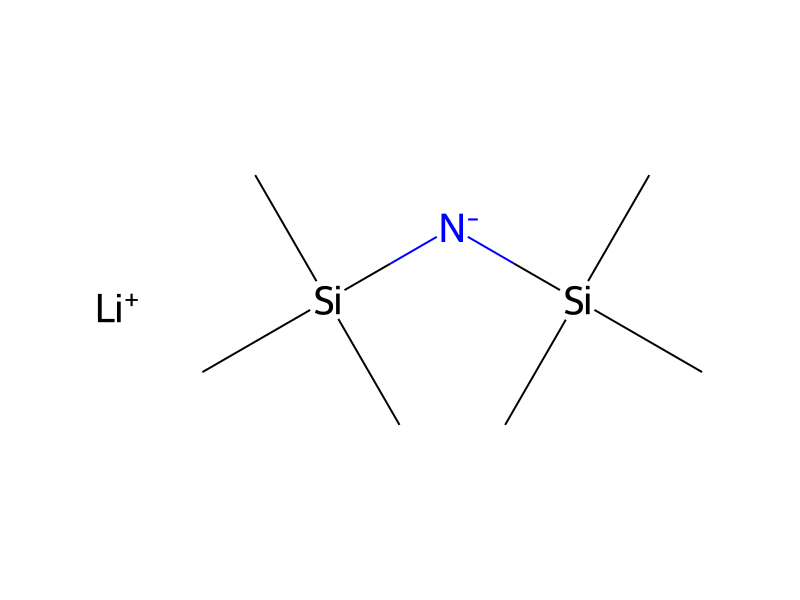
C[Si](C)(C)[N-][Si](C)(C)C.[Li+]
InChIKey
YNESATAKKCNGOF-UHFFFAOYSA-N
Molecular formula
C6H18LiNSi2
Average molar mass
167.4 g/mol
Monoisotopic mass
167.11378108

Overview

See also: Hexamethyldisilazane (annotation moved to); Lithium bis(trimethylsilyl)amide (annotation moved to).

Names & identifiers

Preferred name
Lithium hexamethyldisilazane
IUPAC
lithium bis(trimethylsilyl)azanide
English name
Lithium bis(trimethylsilyl)amide
Molecular formula
C6H18LiNSi2
Molecular weight
167.33

Names & synonyms

Lithium HexamethyldisilazideLiHMDSLHMDSLithium hexamethyldisilazaneHexamethyldisilazane lithium saltN-Lithiohexamethyldisilazanelithium;bis(trimethylsilyl)azanideUNII-RC4N1I108MRC4N1I108MLithium tris(trimethylsilyl)amineLiN(SiMe3)2lithiohexamethyldisilazane
Show more names
LiHDMSLithium 1,1,1,3,3,3-hexamethyldisilazideLithium bis(trimethylsilyl)amide solutionLiHMDS(1M)HMDS LiLiHMDS 1M in THF
EINECS 223-725-6Silanamine, 1,1,1-trimethyl-N-(trimethylsilyl)-, lithium saltNSC 252161lithium hexamethyldisilazanideEC 223-725-6Lithium bis-(trimethylsilyl)amideHexamethyldisilazane lithium salt 1M in THFSilanamine, 1,1,1-trimethyl-N-(trimethylsilyl)-, lithium salt (1:1)

Database identifiers

CAS
4039-32-1
PubChem CID
2733832
DTXSID
DTXSID2044426

Properties

Computed structural properties

Topological polar surface area
1 Ų
Hydrogen bond donors
0
Hydrogen bond acceptors
1
Rotatable bonds
2
Heavy atoms
10
Formal charge
0
Complexity
80.9

Physicochemical properties

Melting point
73 °C · 73°C
Boiling point
55 · 55-56 °C
Density
0.86 g/mL · 0.860 g/mL at 25 °C (lit.)
refractive index
20 · n20/D 1.425(lit.)
Flash point
48 °F · 48 °F
storage temp.
30 °C · Store below +30°C.
solubility
hydrolysis
form
Powder
color
White
Specific Gravity
0.716 · 0.716
Water Solubility
hydrolysis
Sensitive
Air & Moisture Sensitive
Hydrolytic Sensitivity
8 · 8: reacts rapidly with moisture, water, protic solvents
BRN
3567910 · 3567910
Major Application
battery precursorscatalystsmaterial synthesis precursor
InChI
1S/C6H18NSi2.Li/c1-8(2,3)7-9(4,5)6;/h1-6H3;/q-1;+1

Safety & regulation

Safety information is for reference only and does not replace the supplier’s Safety Data Sheet (SDS), applicable regulations, or professional assessment.

Safety data

F
10-23
wgk
3
tsca
TSCA listed
ridadr
UN 2925 4.1/PG 2
hs_code
29319090
risk_code
11-34-48/20-63-65-67-51/53-35-20-62-14-40-37-19
Signal word
Danger
Symbol(GHS)
GHS02,GHS05
hazard_code
F,C,N
safety_code
9-16-26-29-33-36/37/39-45-61-62-57-43
hazard_class
4.3
Storage Class
4.2 - Pyrophoric and self-heating hazardous materials
packing_group
II
Hazard statements
H228-H251-H314
Limited Quantities
1.0 L (0.3 gallon) (liquid)
Excepted Quantities
Max Inner Pack (30g or 30ml) and Max Outer Pack (500g or 500ml)
REACH Registrations
Active
Hazard Classifications
Eye Dam. 1Flam. Sol. 1Self-heat. 1Skin Corr. 1B
Precautionary statements
P210-P235-P260-P280-P303+P361+P353-P305+P351+P338

Chemistry & industry

Applications · 4 items

UsesLithium bis(trimethylsilyl)amide is used as nonnucleophilic base to generate kinetic ketone and ester enolates. It is considerably more selective than LDA and undesired reductions (e.g., of nonenolizable ketones observed in the case of LDA) can be avoided by using LHMDS.

UsesLithium Hexamethyldisilazide is widely used as strong nonnucleophilic base

UsesLithium bis(trimethylsilyl)amide is a base used in preparation of dienes and enolates. It is used to catalyze the addition of phosphine P-H bonds to carbodiimides leading to phosphaguanidines. Lithium bis(trimethylsilyl)amide is also used in a novel three-step synthesis of disubstituted 1,2,5-thiadiazoles.

General DescriptionThis product, 0.5 M in 2-methyltetrahydrofuran aligns with Safer Solvents and Auxiliaries, Use of Renewable Feedstocks and Inherently Safer Chemistry for Accident Prevention.

Preparation methods

PreparationIt is conveniently prepared by the reaction of hexamethyldisilazane with n-butyllithium in hexane. For most uses the hexane is then evaporated and replaced with THF.
Upstream & downstream products

Upstream raw materials

TetrahydrofuranHexamethyldisilazanen-Butyllithium

Downstream products

Methyl-2-chlorooxazole-5-carboxylateN-(Trimethylsilyl)-2,2-dimethylpropane-1-imineo-(Trimethylsilyl)phenol

Related reactions

7,122 records
New reaction record
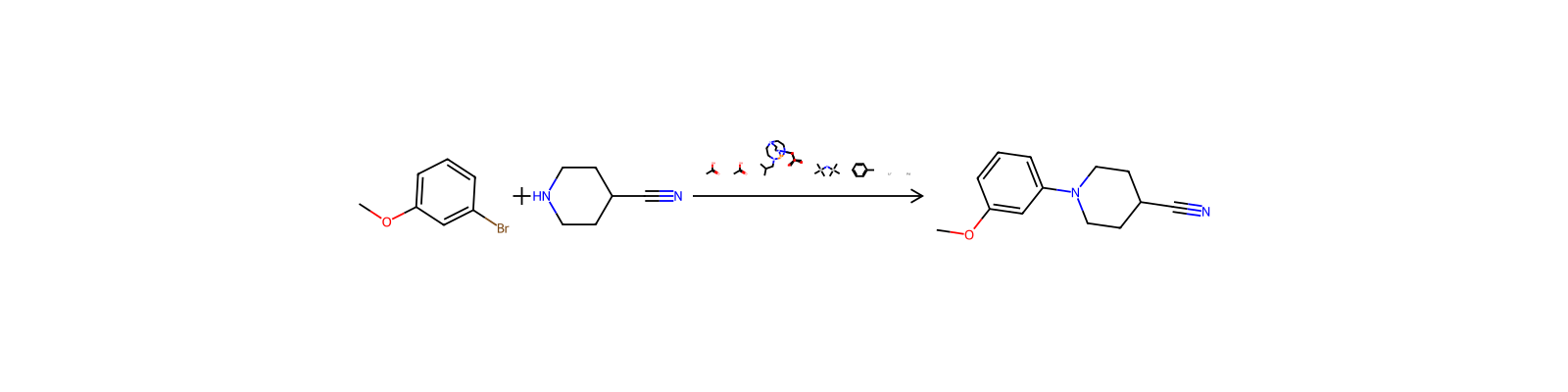
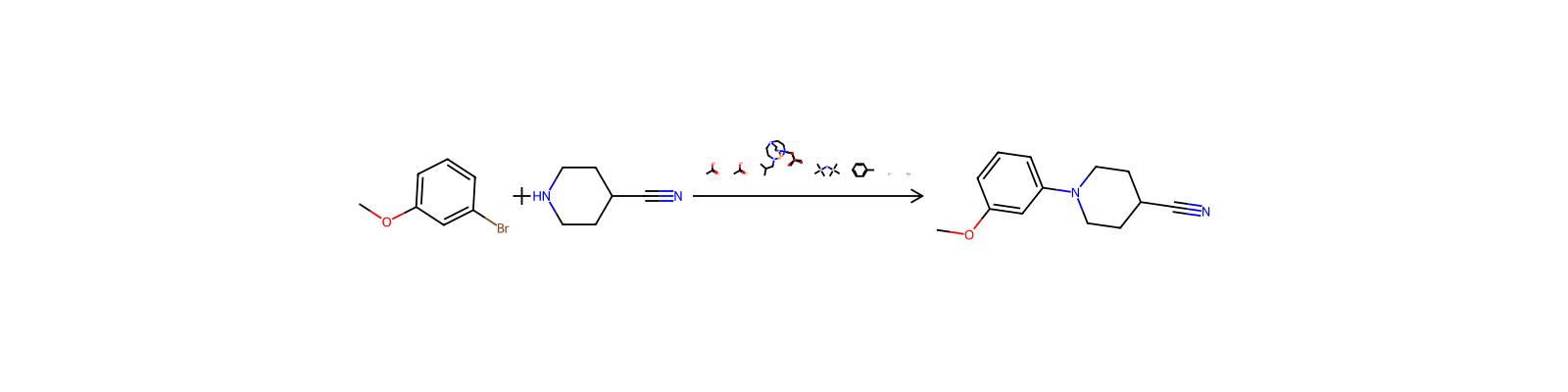
HRID 243 reaction equation
HRID 243As reagent
HRID 295 reaction equation
HRID 295As reagent
HRID 296 reaction equation
HRID 296As reagent
HRID 297 reaction equation
HRID 297As reagent
HRID 552 reaction equation
HRID 552As reagent
HRID 555 reaction equation
HRID 555As reagent
HRID 590 reaction equation
HRID 590As reagent
HRID 1199 reaction equation
HRID 1199As reactant
PreviousPage 1 of 891

Compound notes

On this pageBasic informationOverviewNames & identifiersPropertiesSafety & regulationChemistry & industryRelated reactionsCompound notes
UNII
RC4N1I108M
Nikkaji
J364.684J
InChIKey
YNESATAKKCNGOF-UHFFFAOYSA-N
SMILES
[Li]N([Si](C)(C)C)[Si](C)(C)C
CAS DataBase Reference
4039 · 4039-32-1(CAS DataBase Reference)
FDA UNII
4 N1I108M · RC4N1I108M
EPA Substance Registry System
1 · Silanamine, 1,1,1-trimethyl-N-(trimethylsilyl)-, lithium salt (4039-32-1)
UNSPSC Code
12352111 · 12352111
NACRES
22 · NA.22
Symbol(GHS)
2 · GHS02,GHS05
Signal word
Danger
Hazard statements
228 · H228-H251-H314
Precautionary statements
210 · P210-P235-P260-P280-P303+P361+P353-P305+P351+P338
Hazard Codes
F,C,N
Risk Statements
11 · 11-34-48/20-63-65-67-51/53-35-20-62-14-40-37-19
Safety Statements
9 · 9-16-26-29-33-36/37/39-45-61-62-57-43
RIDADR
2925 · UN 2925 4.1/PG 2
WGK Germany
3 · 3
F
10 · 10-23
TSCA
TSCA listed
HazardClass
4.3 · 4.3
PackingGroup
II
HS Code
29319090 · 29319090
Storage Class
4.2 · 4.2 - Pyrophoric and self-heating hazardous materials
Hazard Classifications
1 Flam · Eye Dam. 1Flam. Sol. 1Self-heat. 1Skin Corr. 1B
REACH Registrations
Active
Limited Quantities
1 L · 1.0 L (0.3 gallon) (liquid)
Excepted Quantities
Max Inner Pack (30g or 30ml) and Max Outer Pack (500g or 500ml)
3-Iodopropan-1-ol
Nonamethyltrisilazane
tert-Butoxytrimethylsilane
Trimethyl(phenoxy)silane
1,3,2-Dioxaborolane-2-methanamine, 4,4,5,5-tetramethyl-N,N-bis(trimethylsilyl)-