

Basic information
- Standard SMILES
Cc1ccc(CC(=O)Cl)cc1- InChIKey
QDZAWVLWIMOXJT-UHFFFAOYSA-N- Molecular formula
- C9H9ClO
- Average molar mass
- 168.62 g/mol
- Monoisotopic mass
- 168.0341926
Names & identifiers
- Preferred name
- 2-(4-Methylphenyl)acetyl chloride
- IUPAC
- 2-(4-methylphenyl)acetyl chloride
- English name
- P-TOLYL-ACETYL CHLORIDE
- Molecular formula
- C9H9ClO
- Molecular weight
- 168.62
Names & synonyms
2-(4-methylphenyl)acetyl chlorideRefChem:458128673-227-135675-44-6P-Tolyl-Acetyl Chloridep-tolylacetyl chloridep-Tolyl-acetylchlorideMFCD00018813(4-methylphenyl)acetyl chloride4-methyl-phenyl-acetyl chloridestarbld00166734-methylphenylacetylchloride
Show more names
p-Tolylacetylchloride,97+%Benzeneacetyl chloride, 4-methyl-
2-(p-tolyl)acetyl chloridep-methylphenylacetyl chloride2-(4-tolyl)acetyl chloride4-methylphenylacetyl chlorideSCHEMBL657538DTXSID90375274QDZAWVLWIMOXJT-UHFFFAOYSA-N2-(4-methylphenyl) acetylchloride
Database identifiers
- CAS
35675-44-6- PubChem CID
- 2760634
- DTXSID
DTXSID90375274- EC Number
- 673-227-1
- Nikkaji
- J1.181.608H
Properties
Computed structural properties
- XLogP
- 2.8
- Topological polar surface area
- 17.1 Ų
- Hydrogen bond donors
- 0
- Hydrogen bond acceptors
- 1
- Rotatable bonds
- 2
- Heavy atoms
- 11
- Formal charge
- 0
- Complexity
- 136
Physicochemical properties
- Boiling point
- 115 ℃/7.5mm · 115℃/7.5mm
- form
- Liquid
- color
- Pink
- Sensitive
- Moisture Sensitive
- UNSPSC Code
- 12352200 · 12352200
- Symbol(GHS)
- 5 · GHS05
- Signal word
- Danger
- Hazard statements
- 314 · H314-H318
- Precautionary statements
- 260 h-P301+P330+P331-P303+P361+P353-P305+P351+P338-P405-P501a · P260h-P301+P330+P331-P303+P361+P353-P305+P351+P338-P405-P501a
- Hazard Codes
- Xn
- Risk Statements
- 22 · 22
- RIDADR
- 3265 · UN3265
- HazardClass
- 8 · 8
- Limited Quantities
- 5 L · 5.0 L (1.3 gallons) (liquid) or 5.0 kg (11 lbs) (solid)
- Excepted Quantities
- Max Inner Pack (30g or 30ml) and Max Outer Pack (1Kg or 1L)
Safety & regulation
GHS classification
GHS Classification
Danger
H290 (16.7%): May be corrosive to metals [Warning Corrosive to Metals];H302 (50%): Harmful if swallowed [Warning Acute toxicity, oral];H312 (16.7%): Harmful in contact with skin [Warning Acute toxicity, dermal];H314 (83.3%): Causes severe skin burns and eye damage [Danger Skin corrosion/irritation];H318 (50%): Causes serious eye damage [Danger Serious eye damage/eye irritation];H332 (16.7%): Harmful if inhaled [Warning Acute toxicity, inhalation];H335 (16.7%): May cause respiratory irritation [Warning Specific target organ toxicity, single exposure; Respiratory tract irritation]
P234, P260, P261, P264, P264+P265, P270, P271, P280, P301+P317, P301+P330+P331, P302+P352, P302+P361+P354, P304+P340, P305+P354+P338, P316, P317, P319, P321, P330, P362+P364, P363, P390, P403+P233, P405, P406, and P501 (click each P-code to see the statement)
Aggregated GHS information provided per 6 reports by companies from 5 notifications to the ECHA C&L Inventory. Each notification may be associated with multiple companies.;Information may vary between notifications depending on impurities, additives, and other factors. The percentage value in parenthesis indicates the notified classification ratio from companies that provide hazard codes. Only hazard codes with percentage values above 10% are shown. For more detailed information, please visit ECHA C&L website.
Hazard information
Hazard Classes and CategoriesMet. Corr. 1 (16.7%);Acute Tox. 4 (50%);Acute Tox. 4 (16.7%);Skin Corr. 1B (83.3%);Eye Dam. 1 (50%);Acute Tox. 4 (16.7%);STOT SE 3 (16.7%)
Safety data
- ridadr
- UN3265
- risk_code
- 22
- Signal word
- Danger
- Symbol(GHS)
- GHS05
- hazard_code
- Xn
- hazard_class
- 8
- Hazard statements
- H314-H318
- Limited Quantities
- 5.0 L (1.3 gallons) (liquid) or 5.0 kg (11 lbs) (solid)
- Excepted Quantities
- Max Inner Pack (30g or 30ml) and Max Outer Pack (1Kg or 1L)
- Precautionary statements
- P260h-P301+P330+P331-P303+P361+P353-P305+P351+P338-P405-P501a
Chemistry & industry
Applications
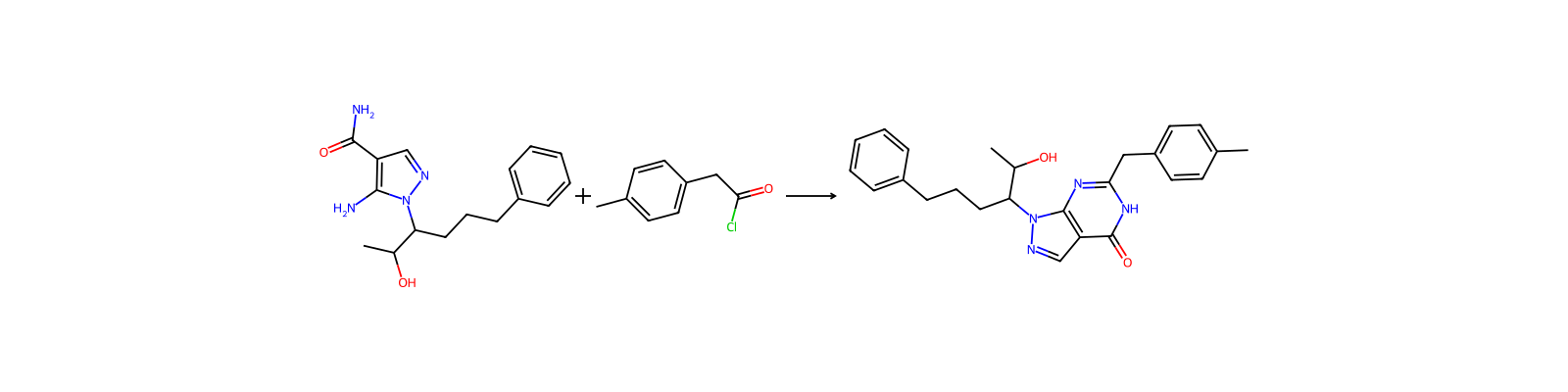
UsesP-tolyl-acetyl chloride is an organic synthesis intermediate, mainly used in the field of pharmaceutical research and development.
Upstream & downstream products
Upstream raw materials
Suppliers16 total
南京世洲生物科技有限公司025-025-85560043 17301488900 · [email protected]
安耐吉化学&3A(安徽泽升科技有限公司)021-58432009 400-005-6266 · [email protected]
武汉凯威斯科技有限公司86-027-67849912 · [email protected]
常州康瑞医药科技有限公司+86-0519-85485169 +86-13961161173 · [email protected]
上海鑫圭生物科技有限公司15121041756 · [email protected]
阳谷荣科商贸有限公司15863541132 · [email protected]
HANGZHOU LEAP CHEM CO., LTD.+86-571-87711850 +86-15355479329 · [email protected]
菏泽星达医药科技有限公司13583079096 · [email protected]
Nanjing discovery pharma Technology Co., Ltd+86-18651673534 · [email protected]
山东煜昌药业有限公司531-87153728 13805401165 · [email protected]
北京百灵威科技有限公司18210857532 18210857532 · [email protected]
DAYANG CHEM (HANGZHOU) CO.,LTD+86-88938639 +86-17705817739 · [email protected]
南京迪斯卡瑞医药科技有限公司18651673534 18651673534 · [email protected]
珠海奥博凯生物医药技术有限公司400-0628126 · [email protected]
南京世洲生物科技有限公司18351873721 · [email protected]
上海信旗医药科技有限公司+86-21-54098501 · [email protected]
Related reactions
10 records


Linked notes
Loading…