
Cinoxacin

Basic information
- CAS
28657-80-9- Standard SMILES
CCn1nc(C(=O)O)c(=O)c2cc3c(cc21)OCO3- InChIKey
VDUWPHTZYNWKRN-UHFFFAOYSA-N- Molecular formula
- C12H10N2O5
- Average molar mass
- 262.22 g/mol
- Monoisotopic mass
- 262.05897142
Overview
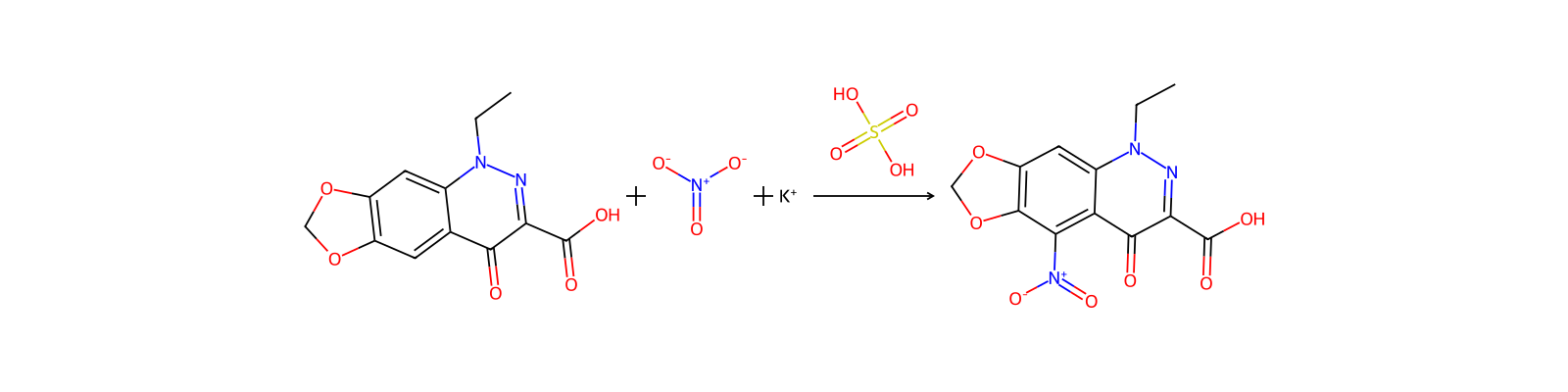
Cinoxacin is a member of the class of cinnolines that is 6,7-methylenedioxycinnolin-4(1H)-one bearing an ethyl group at position 1 and a carboxylic acid group at position 3. An analogue of oxolinic acid, it has similar antibacterial actions. It was formerly used for the treatment of urinary tract infections. It has a role as an antiinfective agent and an antibacterial drug. It is an oxo carboxylic acid, an oxacycle and a member of cinnolines.
Names & identifiers
- Preferred name
- Cinoxacin
- IUPAC
- 1-ethyl-4-oxo-[1,3]dioxolo[4,5-g]cinnoline-3-carboxylic acid
- English name
- CINOXACIN
- Molecular formula
- C12H10N2O5
- Molecular weight
- 262.22
Names & synonyms
cinoxacin28657-80-9CinobacCinoxacinoCinoxacineCinoxacinumLilly 64716DTXSID8022822[1,3]Dioxolo[4,5-g]cinnoline-3-carboxylic acid, 1-ethyl-1,4-dihydro-4-oxo-1-ethyl-4-oxo-[1,3]dioxolo[4,5-g]cinnoline-3-carboxylic acid1-Ethyl-6,7-methylenedioxy-4(1H)-oxocinnoline-3-carboxylic acid1-Ethyl-1,4-dihydro-4-oxo[1,3]dioxolo[4,5-g]cinnoline-3-carboxylic acid
Show more names
Cinoxacin Solution in Methanol/DMSO, 1000μg/mL1-ethyl-4-oxo-1,4-dihydro-[1,3]dioxolo[4,5-g]cinnoline-3-carboxylic acidCompound 64716Cinoxacin (200 mg)Cinoxacin (CinobacTIMTEC-BB SBB003082
LMK22VUH23NSC-304467CHEBI:37161-Ethyl-1,4-dihydro-4-oxo(1,3)dioxolo(4,5-g)cinnoline-3-carboxylic acid1-ethyl-4-oxo-1H,4H,7H-[1,3]dioxolo[4,5-g]cinnoline-3-carboxylic acidDTXCID202822ClinoxacinAzolinic Acid
Database identifiers
- CAS
Properties
Computed structural properties
- XLogP
- 2.1
- Topological polar surface area
- 88.4 Ų
- Hydrogen bond donors
- 1
- Hydrogen bond acceptors
- 7
- Rotatable bonds
- 2
- Heavy atoms
- 19
- Formal charge
- 0
- Complexity
- 449
Experimental & physicochemical properties
Drugs
Pharmaceuticals -> Listed in ZINC15
Pharmaceuticals -> Antibiotics
LogP
1.5
0.84
Solubility
9.61e-01 g/L
36.7 [ug/mL] (The mean of the results at pH 7.4)
Human Drugs
FDA approved drugs -> Active ingredient
FDA approved drugs -> Active ingredient
Endocrine DisruptorsPotential endocrine disrupting compound
Melting Point
261-262
261 °C
Physical DescriptionSolid
Dissociation Constants4.7
Collision Cross Section
160.87 Ų [M+K]+ [CCS Type: TW; Method: calibrated with polyalanine and drug standards]
Safety & regulation
Safety information is for reference only and does not replace the supplier’s Safety Data Sheet (SDS), applicable regulations, or professional assessment.
GHS classification
GHS Classification
Warning
H315 (100%): Causes skin irritation [Warning Skin corrosion/irritation]
P261, P264, P264+P265, P271, P280, P302+P352, P304+P340, P305+P351+P338, P319, P321, P332+P317, P337+P317, P362+P364, P403+P233, P405, and P501 (click each P-code to see the statement)
The GHS information provided by 1 company from 1 notification to the ECHA C&L Inventory.
Hazard information
Other Safety InformationIMAP assessments - 1,3-Dioxolo[4,5-g]cinnoline-3-carboxylic acid, 1-ethyl-1,4-dihydro-4-oxo-: Environment tier I assessment
Hazard Classes and CategoriesSkin Irrit. 2 (100%)
Toxicology
EPA Human Health Benchmarks for Pharmaceuticals
Cinoxacin
5.8
24.7
For preventive therapy, a single dose of 250 mg at bedtime for up to 5 months has been shown to be effective in women with a history of recurrent urinary tract infections.
Data used to generate the benchmarks include the following: Lowest Daily Dose (LDD): 250 mg/day, Lowest Therapeutic Dose (LTD): 3.1 mg/kg-day, and Screening Dose: 0.001 mg/kg-day.
23-Jun-99
Safety data
- PPE
- Eyeshields, Gloves, type N95 (US)
- wgk
- 2
- rtecs
- JI4640000
- Toxicity
- LD50 in rats (mg/kg): 4160 orally; 900 i.v. (Narama)
Chemistry & industry
Pharmacology
ATC Code
J - Antiinfectives for systemic use
QJ - Antiinfectives for systemic use
Protein Binding60 to 80%
Pharmacodynamics
Cinoxacin is a synthetic antibacterial agent with <i>in vitro</i> activity against many gram-negative aerobic bacteria, particularly strains of the Enterobacteriaceae family. Cinoxacin inhibits bacterial deoxyribonucleic acid (DNA) synthesis, is bactericidal, and is active over the entire urinary pH range. Cross resistance with nalidixic acid has been demonstrated.
Mechanism of Action
Evidence exists that cinoxacin binds strongly, but reversibly, to DNA, interfering with synthesis of RNA and, consequently, with protein synthesis. It appears to also inhibit DNA gyrase. This enzyme is necessary for proper replicated DNA separation. By inhibiting this enzyme, DNA replication and cell division is inhibited.
Biological Half-LifeWhile the mean serum half-life is 1.5 hours, the half-life may exceed 10 hours in case of renal impairment.
Metabolism/MetabolitesHepatic, with approximately 30-40% metabolized to inactive metabolites.
MeSH Pharmacological Classification
Substances that prevent infectious agents or organisms from spreading or kill infectious agents in order to prevent the spread of infection.
Compounds that inhibit the activity of DNA TOPOISOMERASE II. Included in this category are a variety of ANTINEOPLASTIC AGENTS which target the eukaryotic form of topoisomerase II and ANTIBACTERIAL AGENTS which target the prokaryotic form of topoisomerase II.
Absorption, Distribution and ExcretionRapidly absorbed after oral administration. While concurrent food intake may delay the drug absorption, the total drug absorption is not affected.
Suppliers
Loading…
Open inquiries
Loading…
Related reactions
2 records
Compound notes
Loading…