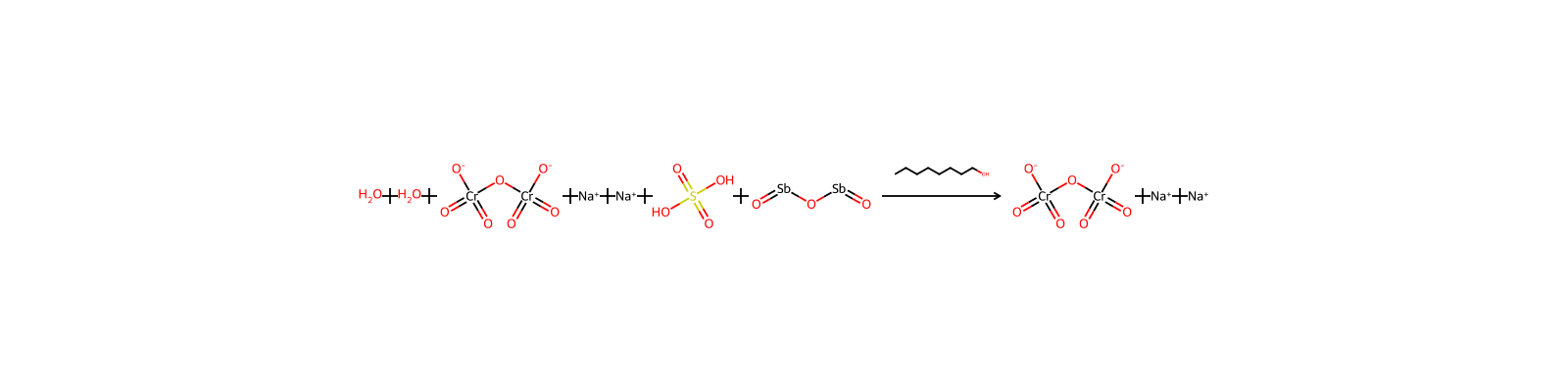
HRID 255397As reactant

1309-64-4[O]=[Sb][O][Sb]=[O]ADCOVFLJGNWWNZ-UHFFFAOYSA-NAntimony trioxide is the chemical compound with the formula Sb2O3. It is the most important commercial compound of antimony. It is found in nature as the minerals valentinite and senarmontite. Antimony is a metallic element with the chemical symbol Sb and atomic number 51. Small amounts of antimony are found in the earth's crust. (L741, L760)
Plastics -> Polyolefin-I; Polyolefin-II; PVC (soft); ABS; PA
Plastics -> Flame retardants
Safety information is for reference only and does not replace the supplier’s Safety Data Sheet (SDS), applicable regulations, or professional assessment.
Following oral exposure to antimony, administer charcoal as a slurry (240 mL water/30 g charcoal). Following inhalation exposure, move patient to fresh air. Monitor for respiratory distress. If cough or difficulty breathing develops, evaluate for respiratory tract irritation, bronchitis, or pneumonitis. Administer oxygen and assist ventilation as required. Treat bronchospasm with inhaled beta2 agonist and oral or parenteral corticosteroids. In case of eye exposure, irrigate exposed eyes with copious amounts of room temperature water for at least 15 minutes. Following dermal exposure, remove contaminated clothing and wash exposed area thoroughly with soap and water. A physician may need to examine the area if irritation or pain persists. (T36)
Dermal exposure to antimony can cause antimony spots (papules and pustules around sweat and sebaceous glands). Antimony poisoning can also lead to pneumoconiosis. Alterations in pulmonary function and other effects including chronic bronchitis, chronic emphysema, inactive tuberculosis, pleural adhesions, and irritation can result from inhalation of antimony. Increased blood pressure can also result from antimony poisoning. Myocardial depression, vasodilation and fluid loss may cause shock with hypotension, electrolyte disturbances and acute renal failure. Cerebral oedema, coma, convulsions, and death are possible. (L741)
The inhalation data suggest that the myocardium is a target of antimony toxicity. It is possible that antimony affects circulating glucose by interfering with enzymes of the glycogenolysis and gluconeogenesis pathways. The mechanism of action of antimony remains unclear. However, some studies suggest that antimony combines with sulfhydryl groups including those in several enzymes important for tissue respiration. The antidotal action of BAL depends on its ability to prevent or break the union between antimony and vital enzymes. Moreover, the The cause of death is believed to be essentially the same as that in acute arsenic poisoning. Antimony trioxide poisoning can lead to increased serum alanine aminotransferase and aspartate aminotransferase activities. The mechanism of action of antimony trioxide remains unclear (T18, L741, A238)
Antimony is widely distributed throughout the body. The hair and skin contain the highest levels of antimony. The adrenal glands, lung, large intestine, trachea, cerebellum, and kidneys also contain relatively high levels of antimony. Blood is the main vehicle for the transport of absorbed antimony to various tissue compartments of the body. Antimony is a metal and, therefore, does not undergo catabolism. Antimony can covalently interact with sulfhydryl groups and phosphate, as well as numerous reversible binding interactions with endogenous ligands (e.g., proteins). It is not known if these interactions are toxicologically significant. Antimony is excreted via the urine and feces. Some of the fecal antimony may represent unabsorbed antimony that is cleared from the lung via mucociliary action into the esophagus to the gastrointestinal tract. (L741)
Plastics -> Typical concentration range in plastic materials -> 8%
Breathing air, drinking water, and eating foods that contain antimony. Exposure can also occur through dermal or skin contact (L741).
Plastics -> Flame retardants
Plastics -> Polymer Type -> Polyolefin-I; Polyolefin-II; PVC (soft); ABS; PA
UsesIndustry Applications Benefit Flame retardant synergist Production of plastics, rubber, textiles, adhesives, fiberglass & paper Combination with halogenated materials,helping to form less flammable chars Chemical manufacture Production of other antimony compounds Source of antimony PET resin manufacture Used as polymerisation catalyst Paints Fire retardant paints Flame retardant synergist,white coloring agent Pigment White pigment Appears as white or gray in color Yellow pigments Used with other substance Tio2 pigments Used sa a coating Glass Fining agent or as degasser Remove color and bubbles Ceramics and enamels Opacifier Increase enamel opacity and surface gloss Automotive brake linings Frictional additive Source of antimony, which can increasing the friction factor Semi-conductors, Additive Source of antimony


1309-64-4DTXSID4023880Abdominal pain, vomiting, diarrhea can result from inhalation of antimony. Dyspnea, headache, vomiting,cough, conjunctivitis, and bloody purulent discharge from nose can result from inhalation exposure. Skin or eye contact can cause pain and redness of the exposed surface. (T64, L741)
DescriptionThis hard shiny metal is often alloyed to other elements. It is used in various industrial fields, such as those making or using batteries, printing machines, bearing, textiles, and ceramics. It caused positive patch test reactions in two workers in a ceramics industry.
OccurrenceAntimony trioxide occurs in nature as minerals, valentinite [1317-98-2] and senarmontinite [12412-52-1]. It is used as a flame retardant in fabrics; as an opacifier in ceramics, glass and vitreous enamels; as a catalyst; as a white pigment in paints; as a mortar in the manufacture of tartar emetic; and in the production of metallic antimony.
UsesAntimony oxide, Sb2O3, is a nonreactive white pigment prepared from metallic antimony using a similar technique to that used for the preparation of zinc oxide. Antimony oxide is widely used in the preparation of fire retardant paint in conjunction with chlorine containing resins. On exposure to fire, the chlorine gas liberated by decomposition of the resin component of the paint film reacts with the antimony oxide to produce a vapor of antimony chloride that blankets the flames. Antimony oxide is also used to modify the heavy chalking characteristics of anatase form of titanium oxide.
UsesAntimony Trioxide (commonly referred to as antimony oxide), Sb2O3 is used to impart flame retardancy to plastics. Although antimony trioxide is found in nature, it is too impure to be used. Flameretardant grades of antimony oxides are manufactured from either antimony metal or the sulfide ore by oxidation in air at 600–800 °C. The particle size and chemical reactivity is determined by the processing conditions, enabling the production of several different grades. Antimony trioxide is from 99.0–99.9 wt % Sb2O3. The remainder consists of 0.4–0.01 wt % arsenic; 0.4–0.01, lead; 0.1–0.0001, iron; 0.005–0.0001, nickel; and 0.01–0.0001, sulfates. It is insoluble in water and the loss on drying at 110 °C is 0.1 wt % max. Antimony trioxide has been used as a white pigment since ancient times. The pigmentation from antimony oxide in plastics can be controlled and adjusted by the judicious selection of a Sb2O3 grade having a specific particle size. The product with the smallest particle size and the narrowest particle-size range imparts the whitest color and highest opacity. Translucent plastics can be made by using low tint grades with relatively large particles.
Usesmanufacture of tartar emetic; as paint pigment; in enamels and glasses; as mordant; in flame-proofing canvas.
General DescriptionDiantimony trioxide is a white crystalline solid. Diantimony trioxide is insoluble in water. The primary hazard is the threat to the environment. Immediate steps should be taken to limit its spread to the environment. Diantimony trioxide is used to fireproof fabrics, paper and plastics, as a paint pigment and for many other uses.
PreparationAntimony trioxide is obtained by roasting stibnite:2 Sb2S3 + 9 O2 → 2Sb2O3 + 6SO2Temperature and air feed is carefully controlled in the process to suppress any formation of antimony tetroxide (Sb2O4). Antimony trioxide is separated from any arsenic trioxide (As2O3) that may be present as an impurity by volatilization, as the latter is much more volatile than the former. It may be also prepared by alkaline hydrolysis of antimony trichloride and subsequent dehydration of hydrous oxide under controlled heating (rapid or vigorous heating may partially oxidize Sb(III) to Sb(V).Antimony trioxide also may be made by heating the metallic element with oxygen or air. The volatilizing trioxide is condensed and collected.
DefinitionA white insoluble solid. It is an amphoteric oxide with a strong tendency to act as a base. It can be prepared by direct oxidation by air, oxygen, or steam and is formed when antimony(III) chloride is hydrolyzed by excess boiling water.