Clofibric Acid
HCID 2797
Completing data — refresh the page later to see the latest
Basic information
- CAS
882-09-7- Standard SMILES
CC(C)(Oc1ccc(Cl)cc1)C(=O)O- InChIKey
TXCGAZHTZHNUAI-UHFFFAOYSA-N- Molecular formula
- C10H11ClO3
- Average molar mass
- 214.64 g/mol
- Monoisotopic mass
- 214.03967189
Overview
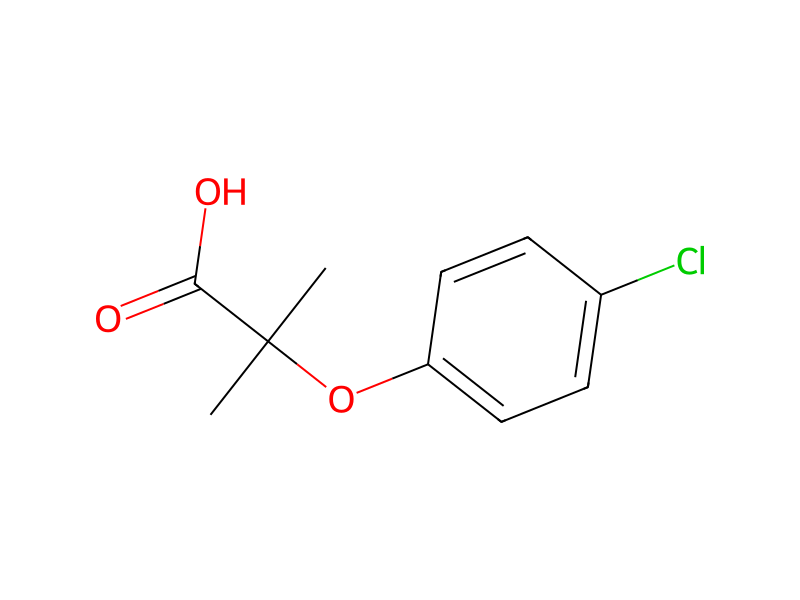
Clofibric acid is a monocarboxylic acid that is isobutyric acid substituted at position 2 by a p-chlorophenoxy group. It is a metabolite of the drug clofibrate. It has a role as a herbicide, an antineoplastic agent, an antilipemic drug, an anticholesteremic drug, a PPARalpha agonist and a marine xenobiotic metabolite. It is a monocarboxylic acid, an aromatic ether and a member of monochlorobenzenes. It is functionally related to an isobutyric acid.
Names & identifiers
- Preferred name
- Clofibric Acid
- IUPAC
- 2-(4-chlorophenoxy)-2-methylpropanoic acid
- English name
- 2-(4-Chlorophenoxy)-2-methylpropionic acid
- Molecular formula
- C10H11ClO3
- Molecular weight
- 214.65
Names & synonyms
clofibric acid882-09-72-(4-Chlorophenoxy)-2-methylpropanoic acid2-(4-CHLOROPHENOXY)-2-METHYLPROPIONIC ACIDChlorofibrinic acidClofibrinic acidChlorophibrinic acidChlorfibrinic acidClofibrate free acid2-(p-Chlorophenoxy)-2-methylpropionic acidClofibrinsaeure2-(p-Chlorophenoxy)isobutyric acid
Show more names
ClofibricPCIBPCPIB4-CPIBRegadrinClofibrinRegulipid
Acido clofibricoPropanoic acid, 2-(4-chlorophenoxy)-2-methyl-Acide clofibriquealpha-(p-Chlorophenoxy)isobutyric acidNSC-1149Acidum clofibricumNSC 1149p-Chlorophenoxyisobutyric Acid
Database identifiers
- CAS
882-09-7- PubChem CID
- 2797
- DTXSID
DTXSID1040661- ChEMBL
Properties
Computed structural propertiesFilling in
- XLogP
- 2.6
- Topological polar surface area
- 46.5 Ų
- Hydrogen bond donors
- 1
- Hydrogen bond acceptors
- 3
- Rotatable bonds
- 3
- Heavy atoms
- 14
- Formal charge
- 0
- Complexity
- 207
Experimental & physicochemical properties
DrugsPharmaceuticals -> Antilipidemic Agents
LogP2.64
Ionization Efficiency
Positive
-0.44
2.7
Agilent XCT
Electrospray ionization
formic acid (5.3nM)
Collision Cross Section
146.6 Ų [M+H]+ [CCS Type: TW; Method: calibrated with polyalanine and drug standards]
149.4 Ų [M-H]-
Physicochemical properties
- Melting point
- 120 · 120-122 °C(lit.)
- Boiling point
- 308.11 °C · 308.11°C (rough estimate)
- Density
- 1.2413 · 1.2413 (rough estimate)
- refractive index
- 1.522 · 1.5220 (estimate)
- storage temp.
- Sealed in dry,Room Temperature
- solubility
- Chloroform, Methanol
Safety & regulation
Safety information is for reference only and does not replace the supplier’s Safety Data Sheet (SDS), applicable regulations, or professional assessment.
GHS classification
GHS Classification
Warning
H302 (100%): Harmful if swallowed [Warning Acute toxicity, oral]
P264, P270, P301+P317, P330, and P501 (click each P-code to see the statement)
Aggregated GHS information provided per 47 reports by companies from 4 notifications to the ECHA C&L Inventory.
Hazard information
Hazard Classes and CategoriesAcute Tox. 4 (100%)
Safety data
- PPE
- dust mask type N95 (US), Eyeshields, Gloves
- wgk
- 3
- rtecs
- UE9455000
- hs_code
- 29189900
- risk_code
- 22-20/21/22
- Signal word
- Warning
- Symbol(GHS)
- GHS07
- hazard_code
- Xn,Xi
- safety_code
- 36-24/25
- hazard_class
- IRRITANT
- Storage Class
- 11 - Combustible Solids
- Hazard statements
- H302
- Hazard Classifications
- Acute Tox. 4 Oral
- Precautionary statements
- P264-P270-P301+P312+P330-P501
Chemistry & industry
Pharmacology
Metabolism/MetabolitesClofibric acid has known human metabolites that include (2S,3S,4S,5R)-6-[2-(4-Chlorophenoxy)-2-methylpropanoyl]oxy-3,4,5-trihydroxyoxane-2-carboxylic acid.
MeSH Pharmacological Classification
Substances used to lower plasma CHOLESTEROL levels.
Substances that lower the levels of certain LIPIDS in the BLOOD. They are used to treat HYPERLIPIDEMIAS.
Applications
DescriptionClofibric acid is a peroxisome proliferator-activated receptor α (PPARα) agonist (EC50 = 50 μM in a transactivation assay) and the active metabolite of clofibrate . It is formed from clofibrate by tissue and serum esterases. Dietary administration of clofibric acid (0.067-0.22%) reduces serum cholesterol, phospholipid, and triglyceride levels in rats. It decreases glutamate oxaloacetate transaminase (GOT) levels and increases glutamate pyruvate transaminase (GPT) and lactate dehydrogenase (LDH) levels, markers of xenobiotic stress, in the plasma of carp (C. carpio) when administered in tank water at a concentration of 10 μg/L. Clofibric acid has been found in wastewater effluent.
UsesAntilipemic.
Usesherbicide, antihyperlipoproteinemic, antineoplastic
UsesA hypolipidemic compound
Upstream & downstream products
Upstream raw materials
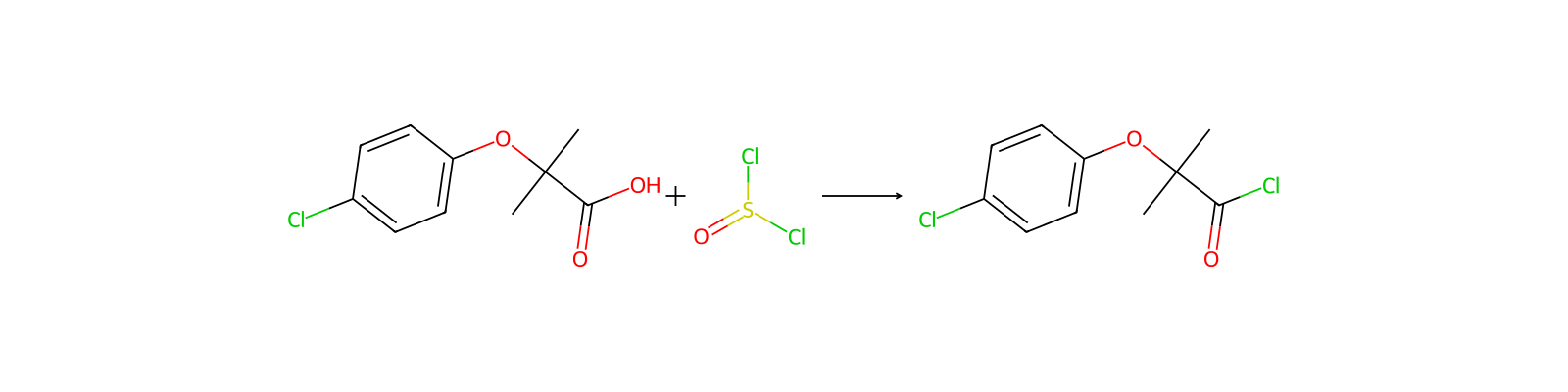
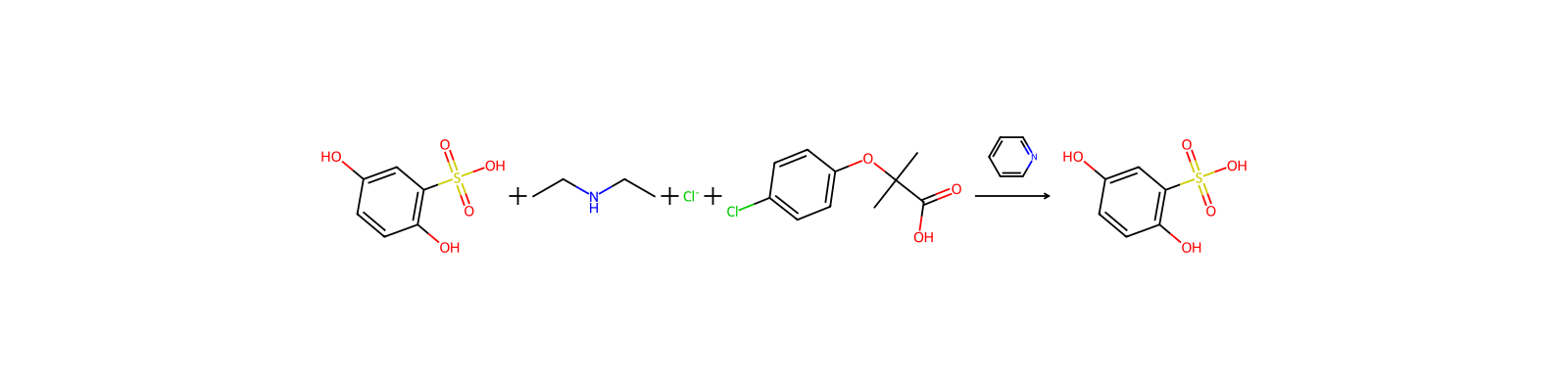
Related reactions
52 records