
Lithium Cation

Basic information
- CAS
17341-24-1- Standard SMILES
[Li+]- InChIKey
HBBGRARXTFLTSG-UHFFFAOYSA-N- Molecular formula
- Li+
- Average molar mass
- 7 g/mol
- Monoisotopic mass
- 7.01600343
Overview
Lithium(1+) is a monoatomic monocation, an alkali metal cation and a monovalent inorganic cation.
Names & identifiers
- Preferred name
- Lithium Cation
- IUPAC
- lithium(1+)
- English name
- Lithium ion (1+)
- Molecular formula
- Li+
- Molecular weight
- 6.94
Names & synonyms
lithium ionlithium cationLithium, ion (Li1+)17341-24-1Lithium ionsLithium(+)8H8Z5UER66CHEBI:49713CHEMBL1234004DTXSID10169612RefChem:1113622Lithium(1+)
Show more names
LithiumcationLithium ion (1+)LITHIUM ION STANDARDLITHIUM, ION CHROMATOGRAPHY STANDARD SOLUTION
lithium, ionLITHIUM ION CHROMATOGRAPHY STANDARDLi(+)Lithium Monohydride;Li+UNII-8H8Z5UER66lithium(I)lithium(I) cation
Database identifiers
- CAS
17341-24-1、7439-93-2- PubChem CID
- 28486
- DTXSID
DTXSID10169612- ChEMBL
CHEMBL1234004- ChEBI
CHEBI:49713- UNII
- 8H8Z5UER66
- Nikkaji
- J247.008J
Properties
Computed structural properties
- Topological polar surface area
- 0 Ų
- Hydrogen bond donors
- 0
- Hydrogen bond acceptors
- 0
- Rotatable bonds
- 0
- Heavy atoms
- 1
- Formal charge
- 1
- Complexity
- 0
Experimental & physicochemical properties
SolubilityViolent reaction
Melting Point190 °C
Physical DescriptionSolid
Physicochemical properties
- FDA 21 CFR
- 175.3 · 175.300
- NCI Dictionary of Cancer Terms
- lithium
- FDA UNII
- 8 H8Z5UER66 · 8H8Z5UER66
Chemistry & industry
Pharmacology
Pharmacodynamics
Although lithium has been used for over 50 years in treatment of bipolar disorder, the mechanism of action is still unknown. Lithium's therapeutic action may be due to a number of effects, ranging from inhibition of enzymes such as glycogen synthase kinase 3, inositol phosphatases, or modulation of glutamate receptors.
Mechanism of Action
The precise mechanism of action of Li+ as a mood-stabilizing agent is currently unknown. It is possible that Li+ produces its effects by interacting with the transport of monovalent or divalent cations in neurons. An increasing number of scientists have come to the conclusion that the excitatory neurotransmitter glutamate is the key factor in understanding how lithium works. Lithium has been shown to change the inward and outward currents of glutamate receptors (especially GluR3), without a shift in reversal potential. Lithium has been found to exert a dual effect on glutamate receptors, acting to keep the amount of glutamate active between cells at a stable, healthy level, neither too much nor too little. It is postulated that too much glutamate in the space between neurons causes mania, and too little, depression. Another mechanism by which lithium might help to regulate mood include the non-competitive inhibition of an enzyme called inositol monophosphatase. Alternately lithium's action may be enhanced through the deactivation of the GSK-3B enzyme. The regulation of GSK-3B by lithium may affect the circadian clock. GSK-3 is known for phosphorylating and thus inactivating glycogen synthase. GSK-3B has also been implicated in the control of cellular response to damaged DNA. GSK-3 normally phosphorylates beta catenin, which leads to beta catenin degratation. When GSK-3 is inhibited, beta catenin increases and transgenic mice with overexpression of beta catenin express similar behaviour to mice treated with lithium. These results suggest that increase of beta catenin may be a possible pathway for the therapeutic action of lithium.
FDA Pharmacological Classification
8H8Z5UER66
LITHIUM CATION
Established Pharmacologic Class [EPC] - Mood Stabilizer
Lithium cation is a Mood Stabilizer.
Additional notes
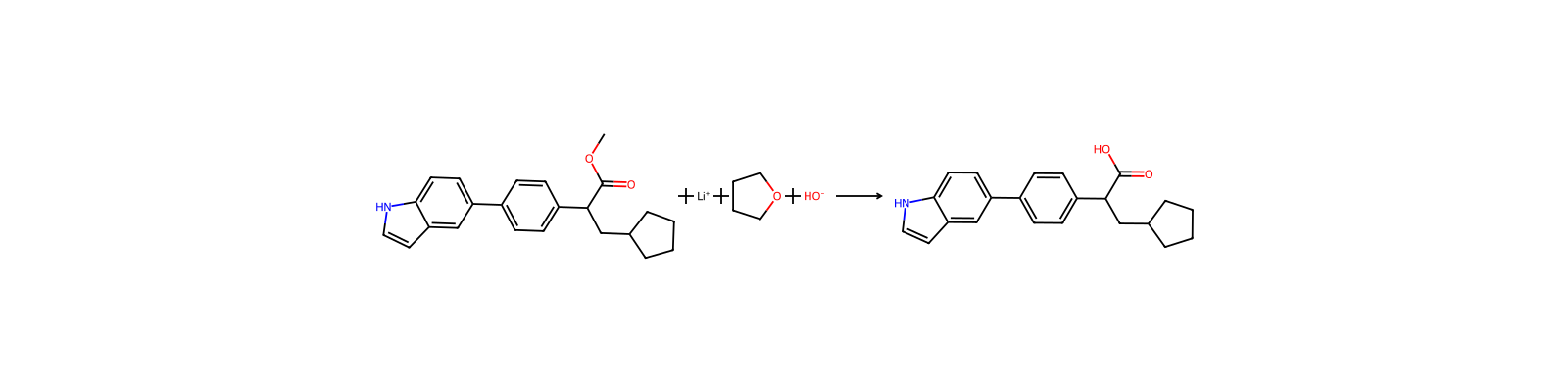
Related reactions
15,856 records





Compound notes
Loading…