

Basic information
- CAS
19952-47-7- Standard SMILES
Nc1nc2c(Cl)cccc2s1- InChIKey
OEQQFQXMCPMEIH-UHFFFAOYSA-N- Molecular formula
- C7H5ClN2S
- Average molar mass
- 184.65 g/mol
- Monoisotopic mass
- 183.98619684
Overview
2-amino-4-chlorobenzothiazole is a cream colored crystalline solid. (NTP, 1992)
Names & identifiers
- Preferred name
- 2-Benzothiazolamine, 4-chloro-
- IUPAC
- 4-chloro-1,3-benzothiazol-2-amine
- English name
- 2-Amino-4-chlorobenzothiazole
- Molecular formula
- C7H5ClN2S
- Molecular weight
- 184.65
Names & synonyms
2-AMINO-4-CHLOROBENZOTHIAZOLE19952-47-74-Chloro-1,3-benzothiazol-2-amine2-Benzothiazolamine, 4-chloro-4-Chlorobenzothiazol-2-ylamineBenzothiazole, 2-amino-4-chloro-4-Chloro-2-benzothiazolamineDTXSID0024470EINECS 243-439-5BRN 0136784DTXCID3044704-27-00-04859 (Beilstein Handbook Reference)
Show more names
AKOS BB-8273ASISCHEM A34695TIMTEC-BB SBB000250LABOTEST-BB LT000125874-Chlorobenzothiazol-2-amine2-Amino-4-chlorbenzothiazole4-Chlorbenzothiazol-2-ylamin
RefChem:465554243-439-54-chlorobenzo[d]thiazol-2-amineMFCD000057914-Chloro-2-aminobenzothiazoleCHEMBL1413383F1911-00084-chlorobenzothiazole-2-ylamine
Database identifiers
- CAS
19952-47-7- PubChem CID
- 29872
- DTXSID
DTXSID0024470- ChEMBL
CHEMBL1413383- UNII
- 2PAW227HMB
- EC Number
- 243-439-5
- Nikkaji
- J24.677H
Properties
Computed structural properties
- XLogP
- 2.7
- Topological polar surface area
- 67.2 Ų
- Hydrogen bond donors
- 1
- Hydrogen bond acceptors
- 3
- Rotatable bonds
- 0
- Heavy atoms
- 11
- Formal charge
- 0
- Complexity
- 155
Experimental & physicochemical properties
Solubility
less than 1 mg/mL at 68 °F (NTP, 1992)
>27.7 [ug/mL] (The mean of the results at pH 7.4)
Melting Point397 to 401 °F (NTP, 1992)
Physical Description2-amino-4-chlorobenzothiazole is a cream colored crystalline solid. (NTP, 1992)
Physicochemical properties
- Melting point
- 203 · 203-205 °C (lit.)
- Boiling point
- 344.3 · 344.3±34.0 °C(Predicted)
- Density
- 1.475 · 1.4750 (rough estimate)
- refractive index
- 1.61 · 1.6100 (estimate)
- storage temp.
- Keep in dark place,Sealed in dry,Room Temperature
- form
- Crystalline Powder
- pka
- 2.14 · 2.14±0.10(Predicted)
- color
- White to light beige or grayish
- BRN
- 136784 · 136784
- InChI
- 1S/C7H5ClN2S/c8-4-2-1-3-5-6(4)10-7(9)11-5/h1-3H,(H2,9,10)
- InChIKey
- OEQQFQXMCPMEIH-UHFFFAOYSA-N
- SMILES
- Nc1nc2c(Cl)cccc2s1
- CAS DataBase Reference
- 19952 · 19952-47-7(CAS DataBase Reference)
- EPA Substance Registry System
- 2 · 2-Amino-4-chlorobenzothiazole (19952-47-7)
- UNSPSC Code
- 12352100 · 12352100
- NACRES
- 22 · NA.22
- Symbol(GHS)
- 7 · GHS07
- Signal word
- Warning
- Hazard statements
- 315 · H315-H319-H335
- Precautionary statements
- 261 · P261-P264-P271-P280-P302+P352-P305+P351+P338
- target organs
- Respiratory system
- PPE
- 95 · dust mask type N95 (US), Eyeshields, Gloves
- Hazard Codes
- Xi,Xn
- Risk Statements
- 36 · 36/37/38-20/21/22
- Safety Statements
- 26 · 26-37/39-36
- WGK Germany
- 2 · 2
- RTECS
- 1225000 · DL1225000
- TSCA
- TSCA listed
- HS Code
- 29342080 · 29342080
- Storage Class
- 11 · 11 - Combustible Solids
- Hazard Classifications
- 2 Skin · Eye Irrit. 2Skin Irrit. 2STOT SE 3
Safety & regulation
GHS classification
GHS Classification
Warning
H315 (100%): Causes skin irritation [Warning Skin corrosion/irritation]
P261, P264, P264+P265, P271, P280, P302+P352, P304+P340, P305+P351+P338, P319, P321, P332+P317, P337+P317, P362+P364, P403+P233, P405, and P501 (click each P-code to see the statement)
Aggregated GHS information provided per 45 reports by companies from 5 notifications to the ECHA C&L Inventory. Each notification may be associated with multiple companies.
Hazard information
Fire HazardsFlash point data for this chemical are not available; however, it is probably combustible. (NTP, 1992)
Health HazardsACUTE/CHRONIC HAZARDS: When heated to decomposition this compound emits very toxic fumes of chloride ion, SOx and NOx. (NTP, 1992)
Reactive GroupAmines, Phosphines, and Pyridines
Reactivity Profile
A halide- and amine-substituted aromatic compound and organosulfide. Organosulfides are incompatible with acids, diazo and azo compounds, halocarbons, isocyanates, aldehydes, alkali metals, nitrides, hydrides, and other strong reducing agents. Reactions with these materials generate heat and in many cases hydrogen gas. Many of these compounds may liberate hydrogen sulfide upon decomposition or reaction with an acid. Amines are chemical bases. They neutralize acids to form salts plus water. These acid-base reactions are exothermic. The amount of heat that is evolved per mole of amine in a neutralization is largely independent of the strength of the amine as a base. Amines may be incompatible with isocyanates, halogenated organics, peroxides, phenols (acidic), epoxides, anhydrides, and acid halides. Flammable gaseous hydrogen is generated by amines in combination with strong reducing agents, such as hydrides.
Air and Water ReactionsInsoluble in water.
Hazard Classes and CategoriesSkin Irrit. 2 (100%)
Safety & protection
Fire FightingFires involving this material can be controlled with a dry chemical, carbon dioxide or Halon extinguisher. (NTP, 1992)
First Aid
EYES: First check the victim for contact lenses and remove if present. Flush victim's eyes with water or normal saline solution for 20 to 30 minutes while simultaneously calling a hospital or poison control center. Do not put any ointments, oils, or medication in the victim's eyes without specific instructions from a physician. IMMEDIATELY transport the victim after flushing eyes to a hospital even if no symptoms (such as redness or irritation) develop.
Nonfire Spill Response
SMALL SPILLS AND LEAKAGE: If a spill of this chemical occurs, FIRST REMOVE ALL SOURCES OF IGNITION, then you should dampen the solid spill material with acetone and transfer the dampened material to a suitable container. Use absorbent paper dampened with acetone to pick up any remaining material. Seal your contaminated clothing and the absorbent paper in a vapor-tight plastic bag for eventual disposal. Solvent wash all contaminated surfaces with acetone followed by washing with a soap and water solution. Do not reenter the contaminated area until the Safety Officer (or other responsible person) has verified that the area has been properly cleaned.
Personal Protective Equipment (PPE)
RECOMMENDED RESPIRATOR: Where the neat test chemical is weighed and diluted, wear a NIOSH-approved half face respirator equipped with an organic vapor/acid gas cartridge (specific for organic vapors, HCl, acid gas and SO2) with a dust/mist filter. (NTP, 1992)
Safety data
- PPE
- dust mask type N95 (US), Eyeshields, Gloves
- wgk
- 2
- tsca
- TSCA listed
- rtecs
- DL1225000
- hs_code
- 29342080
- risk_code
- 36/37/38-20/21/22
- Signal word
- Warning
- Symbol(GHS)
- GHS07
- hazard_code
- Xi,Xn
- safety_code
- 26-37/39-36
- Storage Class
- 11 - Combustible Solids
- target organs
- Respiratory system
- Hazard statements
- H315-H319-H335
- Hazard Classifications
- Eye Irrit. 2Skin Irrit. 2STOT SE 3
- Precautionary statements
- P261-P264-P271-P280-P302+P352-P305+P351+P338
Chemistry & industry
Uses & manufacturing
General Manufacturing Information2-Benzothiazolamine, 4-chloro-: ACTIVE
Applications
Uses2-Amino-4-chlorobenzothiazole is a benzothiazole derivative that shows in vivo antiviral effects against various influenza A2 strains.
General DescriptionCream colored crystalline solid.
Upstream & downstream products
Upstream raw materials
Downstream products
Suppliers100 total
国药集团化学试剂有限公司86-21-63210123 · [email protected]
梯希爱(上海)化成工业发展有限公司021-67121386 · [email protected]
上海阿拉丁生化科技股份有限公司400-6206333 13167063860 · [email protected]
上海策嵘生物科技有限公司[email protected]
成都彼样生物科技有限公司18108052721 · [email protected]
武汉欣扬瑞和化学科技有限公司13720274133 · [email protected]
爱斯特(成都)生物制药股份有限公司+86-28-85122536 85324413 · [email protected]
Dayang Chem (Hangzhou) Co.,Ltd.+86-0571-88938639 17705817739 · [email protected]
科瑞迪化学400-821-5857 021-64326257 · [email protected]
Syntechem Co.,Ltd[email protected]
上海迈瑞尔生化科技有限公司4006356688 18621169109 · [email protected]
阿法埃莎(中国)化学有限公司400-6106006 · [email protected]
安耐吉化学&3A(安徽泽升科技股份有限公司)400-0056266 · [email protected]
武汉凯威斯科技有限公司86-027-67849912 · [email protected]
上海瀚鸿科技股份有限公司021-54306202 13764082696 · [email protected]
上海相辉医药科技有限公司13761987713 · [email protected]
上海景颜化工科技有限公司13817811078 · [email protected]
Pure Chemistry Scientific Inc.001-857-928-2050 or 1-888-588-9418 · [email protected]
上海隆盛化工有限公司58099637 13585536065 · [email protected]
Shanghai Safer Pharmaceutical Technology Co., Ltd.021-31761238 · [email protected]
杭州东帆化学有限公司86-0571-85151182
云南西力生物技术股份有限公司0871-65217109 · [email protected]
苏州施亚生物科技有限公司86(512)5235 8471 17715136450 · [email protected]
上海耐士化工科技有限公司400-188-0725 +86 21 34310725 13611771617
常州市辰悦化工科技有限公司+86-0519-85500896 · [email protected]
北京泰亚杰科技有限公司021-33690831-8001 13552411790;18616022633 · [email protected]
艾科试剂4008-755-333 18080918076 · [email protected]
赛默飞世尔科技(中国)有限公司800-810-5118 · [email protected]
北京伊诺凯科技有限公司400-810-7969 010-59572699 · [email protected]
上海特伯化学科技有限公司+86-21-60341587 · [email protected]
上海遐瑞医药科技有限公司+86 21 61551611
南京诺利斯医药科技有限公司13901585132 · [email protected]
江苏艾康生物医药研发有限公司025-66113011 13913916777 · [email protected]
TCI AMERICA800-4238616 · [email protected]
TOKYO CHEMICAL INDUSTRY CO., LTD.03-36680489 · [email protected]
TCI Europe320-37350700 · [email protected]
上海贤鼎生物科技有限公司4009209199 · [email protected]
南京德尔诺医药科技有限公司02585057128;025-86957866 13952093866 · [email protected]
苏州亚科科技股份有限公司0512-87182055 13451648594 · [email protected]
上海昶衍化工科技有限公司021-20242659 18930833303 · [email protected]
HBCChem, Inc.+1-510-219-6317 · [email protected]
上海毕得医药科技股份有限公司400-164-7117 18317119277 · [email protected]
成都零六生物科技有限公司400-1166-196 13458535857 · [email protected]
湖南华腾制药有限公司400-8592883 · [email protected]
上海御略医药科技有限公司021-60345187 13671753212 · [email protected]
上海澄拓化工科技有限公司021-59904146 18001826933 · [email protected]
天津安浩生物科技有限公司[email protected]
杭州杰恒化工有限公司0571-87396432 · [email protected]
上海纳谦化学科技有限公司13598610367 13598610367 · [email protected]
上海嵩爰化工科技有限公司010-1234567 18521000990 · [email protected]
Related reactions
36 records


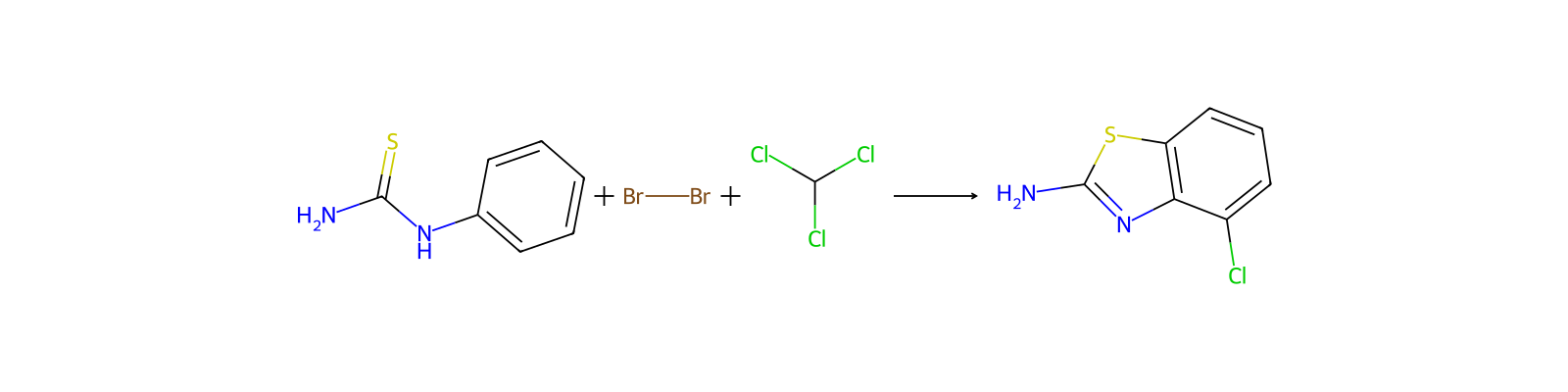

Compound notes
Loading…