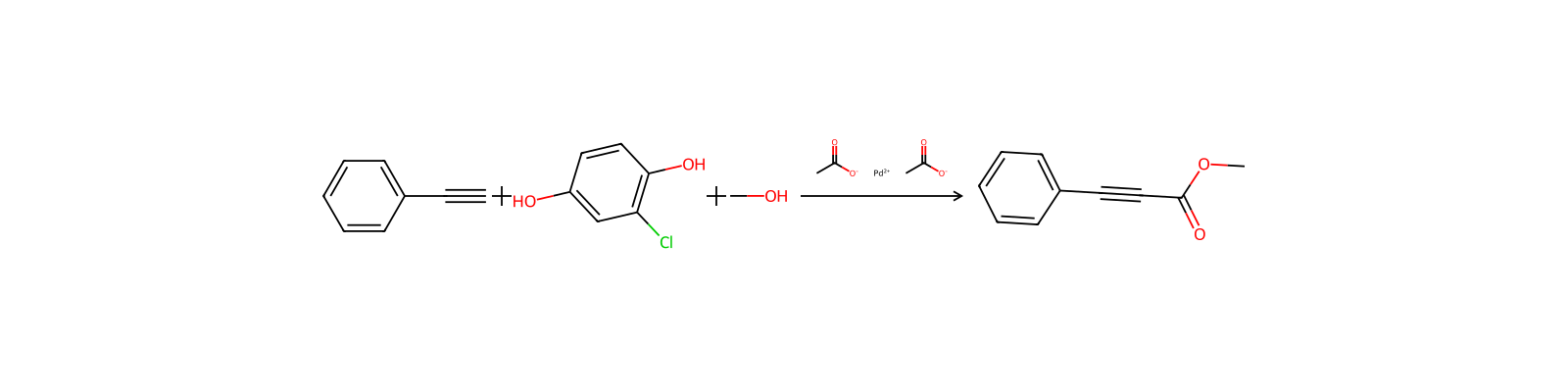
Chlorohydroquinone

Basic information
- CAS
615-67-8- Standard SMILES
Oc1ccc(O)c(Cl)c1- InChIKey
AJPXTSMULZANCB-UHFFFAOYSA-N- Molecular formula
- C6H5ClO2
- Average molar mass
- 144.55 g/mol
- Monoisotopic mass
- 143.99780708
Overview
Chlorohydroquinone is a benzenediol that consists of hydroquinone bearing a single chloro substituent. It has a role as a metabolite. It is a member of chlorohydroquinones and a member of monochlorobenzenes.
Names & identifiers
- Preferred name
- Chlorohydroquinone
- IUPAC
- 2-chlorobenzene-1,4-diol
- English name
- Chlorohydroquinone
- Molecular formula
- C6H5ClO2
- Molecular weight
- 144.56
Names & synonyms
chlorohydroquinone615-67-82-chlorobenzene-1,4-diol2-ChlorohydroquinoneChloroquinolMonochlorohydroquinone2-Chloro-1,4-benzenediol1,4-Benzenediol, 2-chloro-Hydroquinone, chloro-2-Chloro-1,4-dihydroxybenzene2,5-Dihydroxychlorobenzene1,4-Dihydroxy-2-chlorobenzene
Show more names
chlorhydrochinonCHLOROHYDROCHINONchloro-hydroquinon2-Chlorohydroquininechloro-p-hydroquinoneChlorohydroquinone,99%
2-Chloro-1,4-hydroxyquinone1,4-Dihydroxyl-2-chlorobenzeneNSC-42793SNN9E3372-CHLORO-1,4-HYDROQUINONENSC-5934DTXSID4060656CHEBI:27675
Database identifiers
- CAS
615-67-8- PubChem CID
- 301
- DTXSID
DTXSID4060656- ChEBI
CHEBI:27675- UNII
- 93SNN9E337
- EC Number
- 210-442-8
- Nikkaji
- J86.748I
Properties
Computed structural properties
- XLogP
- 1.4
- Topological polar surface area
- 40.5 Ų
- Hydrogen bond donors
- 2
- Hydrogen bond acceptors
- 2
- Rotatable bonds
- 0
- Heavy atoms
- 9
- Formal charge
- 0
- Complexity
- 97.1
Experimental & physicochemical properties
Chemical ClassesOther Classes -> Halogenated Monoaromatics
SpringerMaterials PropertiesBoiling point
LogP
log Kow = 1.40
1.4
Color/FormWHITE TO LIGHT-TAN FINE CRYSTALS
SolubilityVERY SOL IN WATER AND ALC, SLIGHTLY SOL IN ETHER
Boiling Point263 °C
DecompositionWhen heated to decomposition it emits toxic fumes ... .
Melting Point100 °C
Physical DescriptionWhite to light tan solid; [Hawley] Light brown powder; [MSDSonline]
Physicochemical properties
- Melting point
- 100 · 100-104 °C (lit.)
- Boiling point
- 263 °C · 263 °C (lit.)
- Density
- 1.2558 · 1.2558 (rough estimate)
- refractive index
- 1.462 · 1.4620 (estimate)
- Flash point
- 263 °C · 263°C
- storage temp.
- Inert atmosphere,Room Temperature
- solubility
- DMSO (Slightly), Methanol (Slightly)
- form
- Fine Crystalline Powder
- pka
- 9.21 · 9.21±0.18(Predicted)
- color
- Light brown to gray
- Water Solubility
- soluble
- BRN
- 636835 · 636835
- InChI
- 1S/C6H5ClO2/c7-5-3-4(8)1-2-6(5)9/h1-3,8-9H
- InChIKey
- AJPXTSMULZANCB-UHFFFAOYSA-N
- SMILES
- Oc1ccc(O)c(Cl)c1
- CAS DataBase Reference
- 615 · 615-67-8(CAS DataBase Reference)
- EWG's Food Scores
- 1 · 1
- FDA UNII
- 93 SNN9E337 · 93SNN9E337
- NIST Chemistry Reference
- 1 · 1,4-Benzenediol, 2-chloro-(615-67-8)
- EPA Substance Registry System
- Chlorohydroquinone (615-67-8)
- UNSPSC Code
- 12162002 · 12162002
- NACRES
- 23 · NA.23
- Symbol(GHS)
- 5 · GHS05,GHS07
- Signal word
- Danger
- Hazard statements
- 315 · H315-H317-H318-H335
- Precautionary statements
- 280 · P280-P305+P351+P338+P310
- target organs
- Respiratory system
- PPE
- 95 · dust mask type N95 (US), Eyeshields, Faceshields, Gloves
- Hazard Codes
- Xn,Xi
- Risk Statements
- 21 · 21-36/37/38-43
- Safety Statements
- 36 · 36/37-37/39-26
- RIDADR
- 2811 · UN2811
- WGK Germany
- 3 · 3
- RTECS
- 4800000 · MX4800000
- TSCA
- TSCA listed
- HazardClass
- 6.1 · 6.1
- PackingGroup
- III
- HS Code
- 29081990 · 29081990
- Storage Class
- 11 · 11 - Combustible Solids
- Hazard Classifications
- 1 Skin · Eye Dam. 1Skin Irrit. 2Skin Sens. 1STOT SE 3
- Hazardous Substances Data
- 615 · 615-67-8(Hazardous Substances Data)
- Toxicity
- An antidiarrhea drug used extensively in Japan. It has been shown to be the cause of subacute myelooptic neuropathy, a syndrome in which stiffness of the joints is accompanied by damage to the optic nerve.
Safety & regulation
Safety information is for reference only and does not replace the supplier’s Safety Data Sheet (SDS), applicable regulations, or professional assessment.
GHS classification
GHS Classification
Danger
H302 (18.4%): Harmful if swallowed [Warning Acute toxicity, oral]
P261, P262, P264, P264+P265, P270, P271, P272, P280, P301+P317, P302+P352, P304+P340, P305+P351+P338, P316, P319, P321, P330, P332+P317, P333+P317, P337+P317, P361+P364, P362+P364, P403+P233, P405, and P501 (click each P-code to see the statement)
Aggregated GHS information provided per 49 reports by companies from 7 notifications to the ECHA C&L Inventory. Each notification may be associated with multiple companies.
Hazard information
Regulatory InformationTP - indicates a substance that is the subject of a proposed TSCA section 4 test rule.
Hazards SummaryNot mutagenic in assays with Ames salmonella TA100 strain; Emergency medical treatment: see Hydroquinone-quinone; [HSDB] An irritant; [MSDSonline] See Hydroquinone.
Hazard Classes and CategoriesAcute Tox. 4 (18.4%)
Safety & protection
Disposal Methods
SRP: At the time of review, criteria for land treatment or burial (sanitary landfill) disposal practices are subject to significant revision. Prior to implementing land disposal of waste residue (including waste sludge), consult with environmental regulatory agencies for guidance on acceptable disposal practices.
Toxicology
Human Toxicity Excerpts
IRRITATING BUT NOT CORROSIVE. HUMAN POISONINGS HAVE BEEN REPORTED FROM MIXTURE OF HYDROQUINONE & METOL. SYSTEMIC ACTIONS LIKE PHENOL, BUT IN ADDITION TREMORS & CONVULSIONS ARE PROMINENT, PLUS AN OCCASIONAL SEVERE HEMOLYTIC ANEMIA (SUBSEQUENT TO METHEMOGLOBINEMIA?). /HYDROQUINONE/
INGESTION OF 1 G /HYDROQUINONE/ HAS CAUSED TINNITUS, NAUSEA, VOMITING, SENSE OF SUFFOCATION, SHORTNESS OF BREATH, CYANOSIS, CONVULSIONS, DELIRIUM, COLLAPSE. DEATH HAS FOLLOWED INGESTION OF 5 G. IRRITATION OF GI TRACT OCCURS WITH ORAL INGESTION. /HYDROQUINONE/
DERMATITIS CAN RESULT FROM SKIN CONTACT. STAINING AND OPACIFICATION OF CORNEA OCCUR IN WORKERS EXPOSED FOR PROLONGED PERIODS TO CONCN OF VAPOR... /HYDROQUINONE/
NO TOXICITY DATA WERE LOCATED. /IT IS/ PRESUMABLY SIMILAR IN TOXICITY TO HYDROQUINONE.
For more Human Toxicity Excerpts (Complete) data for CHLOROHYDROQUINONE (6 total), please visit the HSDB record page.
Non-Human Toxicity Excerpts
CHLOROHYDROQUINONE WAS NONMUTAGENIC WHEN ASSAYED WITH THE AMES SALMONELLA TA100 STRAIN.
Acute neurotoxic effects reported in animals include convulsions; medullary paralysis. /From table; Quinones/
Safety data
- PPE
- dust mask type N95 (US), Eyeshields, Faceshields, Gloves
- wgk
- 3
- tsca
- TSCA listed
- rtecs
- MX4800000
- ridadr
- UN2811
- hs_code
- 29081990
- Toxicity
- An antidiarrhea drug used extensively in Japan. It has been shown to be the cause of subacute myelooptic neuropathy, a syndrome in which stiffness of the joints is accompanied by damage to the optic nerve.
- risk_code
- 21-36/37/38-43
- Signal word
- Danger
- Symbol(GHS)
- GHS05,GHS07
- hazard_code
- Xn,Xi
- safety_code
- 36/37-37/39-26
- hazard_class
- 6.1
- Storage Class
- 11 - Combustible Solids
- packing_group
- III
- target organs
- Respiratory system
- Hazard statements
- H315-H317-H318-H335
- Hazard Classifications
- Eye Dam. 1Skin Irrit. 2Skin Sens. 1STOT SE 3
- Precautionary statements
- P280-P305+P351+P338+P310
- Hazardous Substances Data
- 615-67-8(Hazardous Substances Data)
Chemistry & industry
Pharmacology
Metabolism/MetabolitesYIELDS 3-CHLORO-4-HYDROXYPHENYL-BETA-D-GLUCURONIDE IN RABBIT. /FROM TABLE/
Uses & manufacturing
Uses
Used as photographic developer, organic intermediate, bactericide, and in dyestuffs; [Hawley]
Using Disinfectants or Biocides [Category: Clean]
PHOTOGRAPHIC DEVELOPER; ORGANIC INTERMEDIATE; IN DYESTUFFS; BACTERICIDE
Methods of ManufacturingChlorination of hydroquinone.
Formulations/Preparations
EDWAL LIQUID CHQ- CHLOROHYDROQUINONE, 10% SOLN.
GRADES: PHOTOGRAPHIC; COMMERCIAL.
General Manufacturing Information1,4-Benzenediol, 2-chloro-: INACTIVE
Applications
UsesChlorohydroquinone is a component of polyethers based on organotin with potential application to breast cancer treatment via growth inhibition. Also a component in the synthesis of contraceptive agents in pharmaceutical compounds. It is also used within hydroxylation and catalysis organic reactions in the synthesis of pharmacologically active phenolic compounds.
Preparation methods
PreparationChlorohydroquinone is obtained by reacting p-benzoquinone with hydrochloric acid. First dissolve p-benzoquinone with chloroform and pass dry hydrogen chloride gas under cooling to obtain.
Upstream & downstream products
Upstream raw materials
Downstream products
Additional notes
DefinitionChEBI: Chlorohydroquinone is a benzenediol that consists of hydroquinone bearing a single chloro substituent. It has a role as a metabolite. It is a member of monochlorobenzenes and a member of chlorohydroquinones.
Related reactions
10 records


Compound notes
Loading…