

Basic information
- Standard SMILES
[Ca+2].[H-].[H-]- InChIKey
UUGAXJGDKREHIO-UHFFFAOYSA-N- Molecular formula
- CaH2
- Average molar mass
- 42.09 g/mol
Overview
Grayish-colored lump or crystalline solid. Irritating to skin and eyes. Used to make other chemicals.
Names & identifiers
- Preferred name
- Calcium hydride
- IUPAC
- calcium hydride
- English name
- calcium hydrogen(-1) anion
- Molecular formula
- CaH2
- Molecular weight
- 0
Names & synonyms
CALCIUM HYDRIDEWY779SQ0XWCALCIUM HYDRIDE [MI]57308-10-8RefChem:122841DTXCID8029494232-189-2CALCIUM DIHYDRIDECALCIUM HYDRIDE (CAH2)DTXSID60894886EINECS 232-189-2HSDB 8095
Show more names
calcium hydrogen(-1) anion
UN1404UNII-WY779SQ0XWCalcium hydride (CaT2)125544-53-8Calcium(II) hydrideSCHEMBL20375CHEMBL5072826UUGAXJGDKREHIO-UHFFFAOYSA-N
Database identifiers
- CAS
57308-10-8、7789-78-8- PubChem CID
- 3033859
- DTXSID
DTXSID301337245- ChEMBL
CHEMBL5072826- UNII
- WY779SQ0XW
- EC Number
- 232-189-2
Properties
Computed structural properties
- Topological polar surface area
- 0 Ų
- Hydrogen bond donors
- 0
- Hydrogen bond acceptors
- 2
- Rotatable bonds
- 0
- Heavy atoms
- 1
- Formal charge
- 0
- Complexity
- 0
Experimental & physicochemical properties
Chemical Classes
Metals -> Metal Hydrides
Flammable agents - 3rd degree
Density
1.7 g/cu cm
1.7 @25 °C
Color/Form
Gray orthorhombic crystals or powder
Grayish-white lumps or crystals
Pure calcium hydride crystalizes in the form of colorless, hexagonal prisms... Industrial product contains some calcium metal and is consequently grey
SolubilityInsoluble in all common inert solvents
Physical Description
Grayish-colored lump or crystalline solid. Irritating to skin and eyes. Used to make other chemicals.
Solid; Commercial product is grey; [Merck Index] Greyish solid; [CAMEO] Light grey odorless powder; [Alfa Aesar MSDS]
Dissociation ConstantsHighly ionic
Other Experimental Properties
Dissociates into calcium and hydrogen at 990 °C without melting
Decomposes at 675 °C
Decomposes with water, lower alcohols and carboxylic acids to form hydrogen; moderately powerful condensing agent with ketones and acid esters; more powerful reducing agent toward metal oxides than lithium or sodium hydrides
Reacts with water, ethanol
For more Other Experimental Properties (Complete) data for Calcium hydride (7 total), please visit the HSDB record page.
Safety & regulation
GHS classification
GHS Classification
Danger
H260: In contact with water releases flammable gases which may ignite spontaneously [Danger Substances and mixtures which in contact with water, emit flammable gases]
P223, P231+P232, P280, P302+P335+P334, P370+P378, P402+P404, and P501 (click each P-code to see the statement)
Danger
H260 (100%): In contact with water releases flammable gases which may ignite spontaneously [Danger Substances and mixtures which in contact with water, emit flammable gases]
P223, P231+P232, P280, P302+P335+P334, P370+P378, P402+P404, and P501 (click each P-code to see the statement)
Hazard information
Regulatory Information
Chemical: Calcium hydride (CaH2)
Status: Active Update: 08-01-2021 https://echa.europa.eu/registration-dossier/-/registered-dossier/26174
Calcium hydride: HSNO Approval: HSR001269 Approved with controls
The New Jersey Worker and Community Right to Know Act requires public and private employers to provide information about hazardous substances at their workplaces. (N.J.S.A. 34:5A-1 et. seq.)
Other Safety InformationIMAP assessments - Calcium hydride (CaH2): Environment tier I assessment
DOT LabelDangerous When Wet
Fire Hazards
Excerpt from ERG Guide 138 [Substances - Water-Reactive (Emitting Flammable Gases)]:
· Produce flammable gases on contact with water.
Health Hazards
Excerpt from ERG Guide 138 [Substances - Water-Reactive (Emitting Flammable Gases)]:
· Inhalation or contact with vapors, substance or decomposition products may cause severe injury or death.
Hazards Summary
Decomposed by water evolving hydrogen; [Merck Index] Reacts violently or is ignited by air; Reacts exothermically with water producing hydrogen and calcium hydroxide; A skin and eye irritant; [CAMEO] Releases flammable gases on contact with water; May cause irritation; [Alfa Aesar MSDS] See Sodium hydride. See Calcium hydroxide.
DOT ID and Guide1404 138
Reactive GroupMetal Hydrides, Metal Alkyls, Metal Aryls, and Silanes
RCRA RequirementsD003; A solid waste containing calcium hydride may become characterized as a hazardous waste when subjected to testing for reactivity as stipulated in 40 CFR 261.23, and if so characterized, must be managed as a hazardous waste.
Reactivity AlertsStrong Reducing Agent
Reactivity Profile
When silver fluoride is ground with CALCIUM HYDRIDE the mass becomes incandescent [Mellor 3:389 1946-47]. Heating the hydride strongly with chlorine, bromine, or iodine leads to incandescence. Mixtures of the hydride with various bromates, i.e. barium bromate; chlorates, i.e. barium chlorate, and perchlorates, i.e. potassium perchlorate; explode on grinding, [Mellor, 1946, vol. 3, 651]. CaH2 reacts incandescently with AgF if subject to friction. (Mellor, 1941, Vol. 3, 389, 651).
DOT Hazard Classification
Calcium hydride
UN1404
Div 4.3 Dangerous when wet material (49 eCFR § 173.124)
PG I: the degree of danger presented by the material is great
Safety & protection
Fire FightingExcerpt from ERG Guide 138 [Substances - Water-Reactive (Emitting Flammable Gases)]:
Accidental Release Measures
· CALL 911. Then call emergency response telephone number on shipping paper. If shipping paper not available or no answer, refer to appropriate telephone number listed on the inside back cover.
· ELIMINATE all ignition sources (no smoking, flares, sparks or flames) from immediate area.
First Aid
Excerpt from ERG Guide 138 [Substances - Water-Reactive (Emitting Flammable Gases)]:
General First Aid:
Exposure Control and Personal Protection· Wear positive pressure self-contained breathing apparatus (SCBA).
Nonfire Spill ResponseExcerpt from ERG Guide 138 [Substances - Water-Reactive (Emitting Flammable Gases)]:
Disposal Methods
SRP: The most favorable course of action is to use an alternative chemical product with less inherent propensity for occupational harm/injury/toxicity or environmental contamination. Recycle any unused portion of the material for its approved use or return it to the manufacturer or supplier. Ultimate disposal of the chemical must consider: the material's impact on air quality; potential migration in soil or water; effects on animal and plant life; and conformance with environmental and public health regulations.
SRP: Wastewater from contaminant suppression, cleaning of protective clothing/equipment, or contaminated sites should be contained and evaluated for subject chemical or decomposition product concentrations. Concentrations shall be lower than applicable environmental discharge or disposal criteria. Alternatively, pretreatment and/or discharge to a permitted wastewater treatment facility is acceptable only after review by the governing authority and assurance that "pass through" violations will not occur. Due consideration shall be given to remediation worker exposure (inhalation, dermal and ingestion) as well as fate during treatment, transfer and disposal. If it is not practicable to manage the chemical in this fashion, it must be evaluated in accordance with EPA 40 CFR Part 261, specifically Subpart B, in order to determine the appropriate local, state and federal requirements for disposal.
Preventive Measures
SRP: The scientific literature for the use of contact lenses by industrial workers is inconsistent. The benefits or detrimental effects of wearing contact lenses depend not only upon the substance, but also on factors including the form of the substance, characteristics and duration of the exposure, the uses of other eye protection equipment, and the hygiene of the lenses. However, there may be individual substances whose irritating or corrosive properties are such that the wearing of contact lenses would be harmful to the eye. In those specific cases, contact lenses should not be worn. In any event, the usual eye protection equipment should be worn even when contact lenses are in place.
SRP: Contaminated protective clothing should be segregated in such a manner so that there is no direct personal contact by personnel who handle, dispose, or clean the clothing. The completeness of the cleaning procedures should be considered before the decontaminated protective clothing is returned for reuse by the workers. Contaminated clothing should not be taken home at the end of shift, but should remain at employee's place of work for cleaning.
If the chemical got onto the clothed portion of the body, remove the contaminated clothes as quickly as possible, protecting your own hands and body. Place the victim under a deluge shower. If the chemical got on the victim's exposed skin, such as the hands: Gently and thoroughly wash the contaminated skin with running water and non-abrasive soap. If irritation persists, seek medical attention. Wash contaminated clothing before reusing.
Isolation and Evacuation
Excerpt from ERG Guide 138 [Substances - Water-Reactive (Emitting Flammable Gases)]:
Immediate precautionary measure
Protective Action Criteria (PAC)
12 [mg/m3]
130 [mg/m3]
790 [mg/m3]
Personal Protective Equipment (PPE)
Excerpt from ERG Guide 138 [Substances - Water-Reactive (Emitting Flammable Gases)]:
Splash goggles. Lab coat. Vapor and dust respirator. Be sure to use an approved/certified respirator or equivalent. Gloves.
Emergency Response Planning Guidelines· DO NOT USE WATER OR FOAM.
Toxicology
Adverse EffectsDermatotoxin - Skin burns.
Non-Human Toxicity Excerpts
/LABORATORY ANIMALS: Neurotoxicity/ This study explored the effect of coral calcium hydride (CCH) on rat intrahippocampal antioxidant ability by measuring the /3-methoxycarbonyl-2,2,5,5-tetramethylpyrrolidine-1-oxyl/ (PCAM) nitroxide radical decay ratio when CCH was (a) co-perfused into the hippocampus and (b) fed orally to the rats for 4 weeks under a freely moving state. Estimation of the in vivo antioxidant effect was obtained by administration of the blood-brain barrier-permeable PCAM nitroxide radical and the measured PCAM radical decay ratio then correlated to the amount of antioxidant in the brain using electron spin resonance (ESR) spectroscopy combined with microdialysis. The half-life periods of PCAM in rats treated with CCH in both the co-perfusion and orally fed groups were significantly shorter compared to the control group. These results clarify the mechanism that CCH may exert antioxidant activity by significantly enhancing the basal endogenous antioxidant ability in the hippocampus through a synergistic effect with alpha-tocopherol and ascorbic acid.
/ALTERNATIVE and IN VITRO TESTS/ Recent studies strongly support the hypothesis that an antioxidant diet inhibits the pathologic aging process as shown in senescence-accelerated mouse prone 8 (SAM/P-8). In our previous study in coral calcium hydride (CCH), we reported that a diet rich in antioxidants inhibited the pathologic aging process, increased the endogenous antioxidant ability, and contributed to prolonging the lifespan of SAM/P-8. To test the hypothesis that antioxidant CCH supplementation to SAM/P-8 mice would change the gene expression and to understand how CCH reverses the acceleration of aging in SAM/P-8 mice, /researchers/ used a DNA array to compare the expression levels in the hippocampus of the brains from 16-week-old SAM/P-8 mice that were either treated or not treated with CCH. The most significant up-regulated changes in the gene network of SAM/P-8 mice were free radical scavenging and molecular transport, whereas genes associated with cell death, cancer, and cell cycle were down-regulated. Findings regarding the changes in these messenger RNA might be associated with the inhibition of the acceleration of aging, as observed in SAM/P-8 mice fed a CCH diet.
Antidote and Emergency Treatment
Immediate first aid: Ensure that adequate decontamination has been carried out. If patient is not breathing, start artificial respiration, preferably with a demand-valve resuscitator, bag-valve-mask device, or pocket mask, as trained. Perform CPR as necessary. Immediately flush contaminated eyes with gently flowing water. Do not induce vomiting. If vomiting occurs, lean patient forward or place on left side (head-down position, if possible) to maintain an open airway and prevent aspiration. Keep patient quiet and maintain normal body temperature. Obtain medical attention. /Corrosives/
Basic treatment: Establish a patent airway (oropharyngeal or nasopharyngeal airway, if needed). Suction if necessary. Watch for signs of respiratory insufficiency and assist ventilations if necessary. Administer oxygen by nonrebreather mask at 10 to 15 L/min. Monitor for pulmonary edema and treat if necessary ... . Monitor for shock and treat if necessary ... . Anticipate seizures and treat if necessary ... . For eye contamination, flush eyes immediately with water. Irrigate each eye continuously with 0.9% saline (NS) during transport ... . Do not use emetics. For ingestion, rinse mouth and administer 5 ml/kg up to 200 ml of water for dilution if the patient can swallow, has a strong gag reflex, and does not drool ... . Cover skin burns with dry sterile dressings after decontamination ... . /Corrosives/
Advanced treatment: Consider orotracheal or nasotracheal intubation for airway control in the patient who is unconscious, has severe pulmonary edema, or is in severe respiratory distress. Early intubation, at the first sign of upper airway obstruction, may be necessary. Positive pressure ventilation techniques with a bag valve mask device may be beneficial. Consider drug therapy for pulmonary edema ... . Monitor cardiac rhythm and treat arrhythmias if necessary ... . Start IV administration of D5W /SRP: "To keep open", minimal flow rate/. Use 0.9% saline (NS) or lactated Ringer's (LR) if signs of hypovolemia are present. For hypotension with signs of hypovolemia, administer fluid cautiously. Watch for signs of fluid overload .... . Treat seizures with diazepam or lorazepam ... . Use proparacaine hydrochloride to assist eye irrigation ... . /Corrosives/
Regulatory information
RCRA RequirementsD003; A solid waste containing calcium hydride may become characterized as a hazardous waste when subjected to testing for reactivity as stipulated in 40 CFR 261.23, and if so characterized, must be managed as a hazardous waste.
Chemistry & industry
Uses & manufacturing
Uses
Used to prepare rare metals (reduction of metal oxides) and to generate hydrogen; Also used as a drying agent and in organic syntheses; [Merck Index]
Metal Extraction and Refining [Category: Industry]
Reducing agent, drying agent, analytical reagent in organic chemistry, easily portable source of hydrogen, cleaner for blocked-up oil wells
To prepare rare metals by reduction of their oxides; as a drying agent for liquids and acid esters; to generate hydrogen; ... in organic synthesis
Principal industrial applications for calcium hydride include reduction at 600-1000 °C of refractory oxides of metals such as titanium, zirconium, vanadium, niobium, uranium, thorium, chromium, and mixtures of these to produce metal and alloy powders ... used in hydrogen generators to inflate weather balloons ... superdrying agent of esters, ketones, halides, electrical insulator oils, silicones, solvents for Ziegler-Natta polymerization systems, monomers, and air and other gases ... analytical reagent to determine water in organic liquids
ImpuritiesThe main impurities are calcium metal (less than 6%) and calcium oxide (less than or equal to 1%).
U.S. ProductionAnnual U.S. production is less than 25 t /metric ton/.
Methods of Manufacturing
Calcium hydride is produced industrially by synthesis from the elements /calcium and hydrogen/ at 400 °C and atmospheric pressure ... The reaction is strongly exothermic and is controlled by means of the hydrogen feed rate. The commercial product contains 90-96% CaH2.
Calcium hydride is prepared on a commercial scale by heating calcium metal to about 300 °C in a high alloy steel, covered crucible under 101 kPa (1 atm) of hydrogen gas. Hydrogen is rapidly absorbed at this temperature and the reaction is exothermic.
Formulations/PreparationsIt is available as a powder, granule, or irregular lumps.
General Manufacturing InformationCalcium hydride (CaH2): ACTIVE
Related reactions
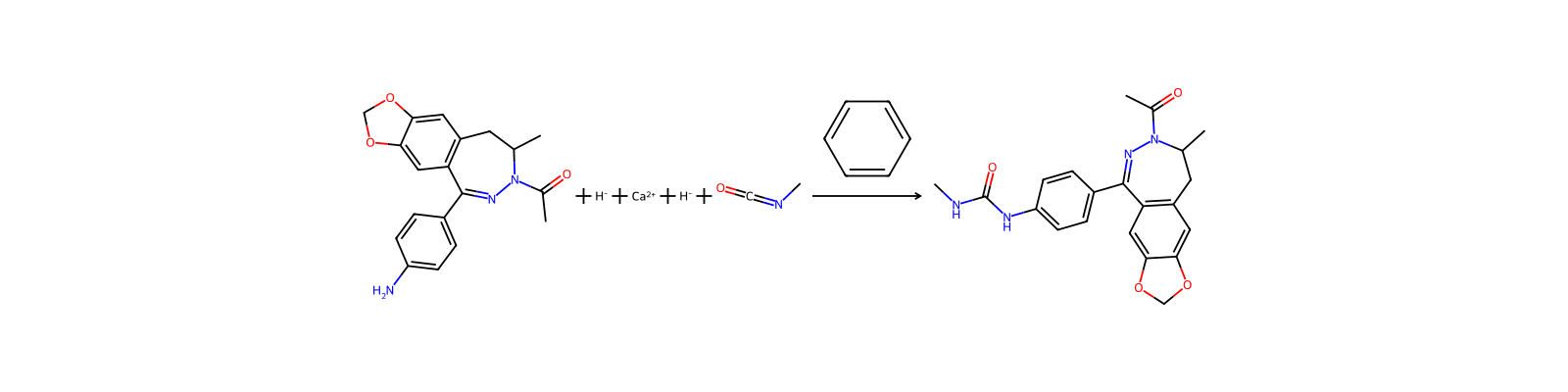
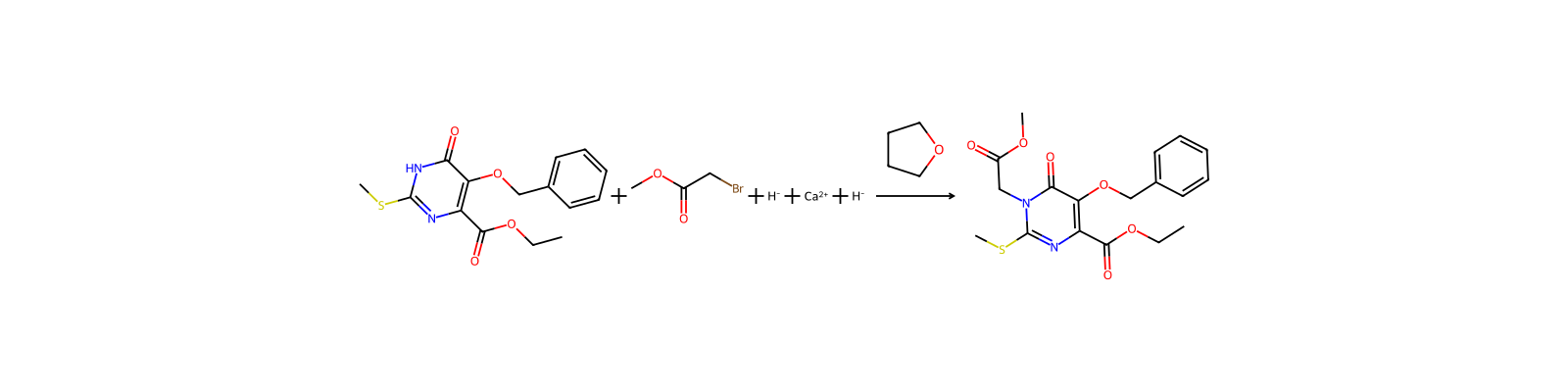
28 records




Linked notes
Loading…