
HomeMCPWorkbenchSkills
HomeWorkbenchNotificationsMe
llms.txt · MCP GuidePrivacy Policy · Terms of Service · Supportv1.8.3
  1. Home
  2. /Compound

Diethyl Pyrocarbonate

HCID 3051
New reaction
Print
Basic informationOverviewNames & identifiersPropertiesSafety & regulationChemistry & industryRelated reactionsCompound notes
Substructure searchFind similar structures

Basic information

CAS
1609-47-8
Standard SMILES
CCOC(=O)OC(=O)OCC
InChIKey
FFYPMLJYZAEMQB-UHFFFAOYSA-N
Molecular formula
C6H10O5
Average molar mass
162.14 g/mol
Monoisotopic mass
162.05282342

Overview

Diethyl pyrocarbonate is the diethyl ester of dicarbonic acid. It is functionally related to a dicarbonic acid.

Names & identifiers

Preferred name
Diethyl Pyrocarbonate
IUPAC
ethoxycarbonyl ethyl carbonate
English name
Diethyl pyrocarbonate
Molecular formula
C6H10O5
Molecular weight
162.14

Names & synonyms

diethyl pyrocarbonate1609-47-8Diethyl dicarbonateDEPCDiethyl oxydiformateDiethylpyrocarbonateBaycovinEthyl pyrocarbonatePirefDicarbonic acid, diethyl esterDicarbonic acid diethyl esterDiethyl pyrocarbonic acid
Show more names
ethoxycarbonyl ethyl carbonateDKDDEP/DEPCDEPC/DEPethylpyrocarbonate
Oxydiformic acid diethyl esterPyrocarbonic acid diethyl esterDiethylpyrokarbonatEthoxyformic acid anhydridePyrocarbonate d'ethylePyrokohlensaeure diaethyl esterDiethyl ester of pyrocarbonic acidDiethylester kyseliny diuhlicite

Database identifiers

CAS
1609-47-8
PubChem CID
3051
DTXSID
DTXSID2051764
ChEMBL
CHEMBL55517
ChEBI
CHEBI:59051
UNII
LMR3LZG146
EC Number
216-542-8
Nikkaji
J13.055I

Properties

Computed structural properties

XLogP
1.4
Topological polar surface area
61.8 Ų
Hydrogen bond donors
0
Hydrogen bond acceptors
5
Rotatable bonds
6
Heavy atoms
11
Formal charge
0
Complexity
126

Experimental & physicochemical properties

Chemical ClassesOther Classes -> Esters, Other
Food AdditivesDOUGH STRENGTHENER -> FDA Substance added to food
Density1.12 @25 °C
Melting Point< 25 °C
Physical Description · 2 items

Viscous liquid with a fruity odor. [Merck Index] Clear colorless liquid; [Sigma-Aldrich MSDS]

Solid

Physicochemical properties

Melting point
69 ℃ · 69℃
Boiling point
93 to · 93 to 94 °C (199 to 201 °F; 366 to 367 K) at 24 hPa
Density
1.101 g/mL · 1.101 g/mL at 25 °C; 1.121 g/mL at 20 °C
refractive index
20 · n 20/D 1.398 (lit.)
Flash point
69 °C · 69 °C (156 °F; 342 K) closed cup
storage temp.
2 · 2-8°C

Safety & regulation

Safety information is for reference only and does not replace the supplier’s Safety Data Sheet (SDS), applicable regulations, or professional assessment.

GHS classification

GHS Classification · 4 items

Warning

H302 (93.5%): Harmful if swallowed [Warning Acute toxicity, oral]

P261, P264, P264+P265, P270, P271, P280, P301+P317, P302+P352, P304+P340, P305+P351+P338, P319, P321, P330, P332+P317, P337+P317, P362+P364, P403+P233, P405, and P501 (click each P-code to see the statement)

Aggregated GHS information provided per 93 reports by companies from 14 notifications to the ECHA C&L Inventory. Each notification may be associated with multiple companies.

Hazard information

Regulatory Information · 2 items

Chemical: Dicarbonic acid, diethyl ester

Diethyl dicarbonate: Does not have an individual approval but may be used under an appropriate group standard

Hazards Summary · 1 item

Causes dyspnea in inhalation lethal-concentration studies of guinea pigs, mice, and rabbits (LCLo = 10 ppm/1hr); [RTECS] Slowly decomposed by water forming ethanol and carbon dioxide; A skin, eye, and mucous membrane irritant; [Merck Index] A skin and strong eye irritant; Harmful by ingestion; [Sigma-Aldrich MSDS]

Hazard Classes and CategoriesAcute Tox. 4 (93.5%)

Safety & protection

Protective Action Criteria (PAC) · 3 items

4.1 [mg/m3]

45 [mg/m3]

270 [mg/m3]

Toxicology

Chemistry & industry

Pharmacology

Cellular LocationsCytoplasm

Uses & manufacturing

Uses · 2 items

Used as a preservative in wines, soft drinks, and fruit juices; [Merck Index] Used as a laboratory reagent; [REPROTOX]

Banned for use as a food additive; [FDA]

Use ClassificationFood Additives -> PRESERVATIVE -> JECFA Functional Classes
General Manufacturing InformationDicarbonic acid, 1,3-diethyl ester: ACTIVE
Applications · 4 items

UsesModification reagent for His and Tyr residues in proteins. Robust probe for structural disruptions in dsDNA, reacting with fully or partially unstacked bases.1

UsesDiethyl pyrocarbonate may be used in the following studies:For the modification of histidyl residues in proteins.As a nuclease inhibitor, for the extraction of undegraded nucleic acids from etiolated and green plant tissues.For the modification of linear and supercoiled plasmid DNAs.As a chemical probe to investigate the secondary structure in negatively supercoiled DNA.For cabethoxylation of histidine residues of actin.

UsesGentle esterifying agent. Preservative for wines, soft drinks, fruit juices.

General DescriptionDiethyl pyrocarbonate (DEP) is a bactericidal agent and decomposes in water to CO2 and ethanol. DEP inhibits enzymes such as DNase and RNase without affecting nucleic acids. It is useful for the preparation of mRNA from tissues.
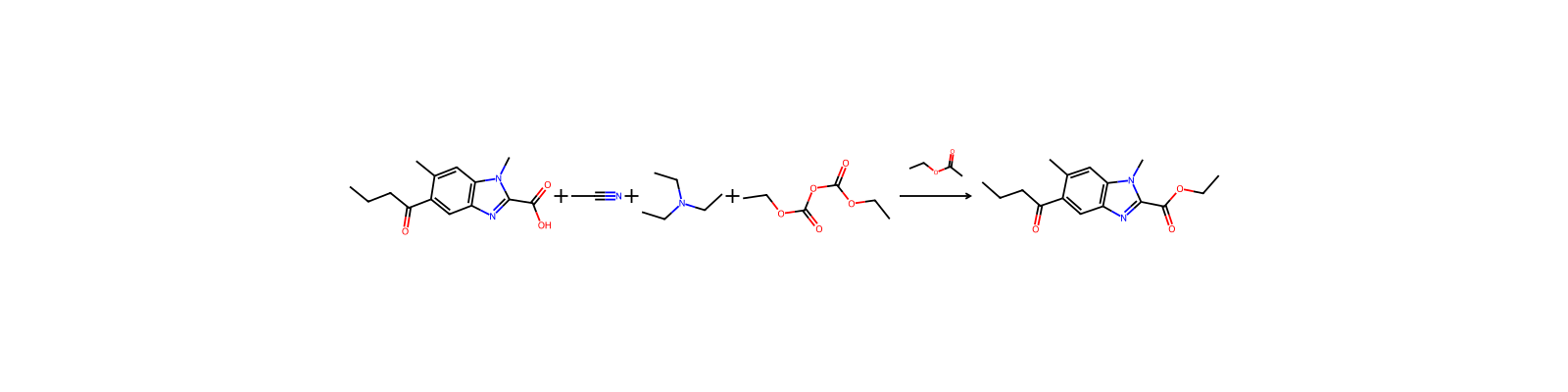
Upstream & downstream products

Downstream products

Related reactions

130 records
New reaction record
HRID 5749 reaction equation
HRID 5749As product
HRID 67149 reaction equation
HRID 67149As reactant
HRID 128820 reaction equation
HRID 128820As reactant
HRID 310546 reaction equation
HRID 310546As reactant
HRID 311816 reaction equation
HRID 311816As reactant
HRID 478945 reaction equation
HRID 478945As reactant
HRID 539510 reaction equation
HRID 539510As reactant
HRID 550259 reaction equation
HRID 550259As reactant
PreviousPage 1 of 17

Compound notes

On this pageBasic informationOverviewNames & identifiersPropertiesSafety & regulationChemistry & industryRelated reactionsCompound notes
solubility
95 % · 95% ethanol: soluble4.5g/10 mL, clear, colorless
form
Clear liquid
color
colorless
biological source
synthetic (microbial fermentation/ cell culture)
Water Solubility
slow decomposition
Sensitive
Moisture Sensitive
Merck
14 · 14,7998
BRN
637031 · 637031
Stability
Combustible. Unstable - readily decomposes. Incompatible with strong oxidizing agents, strong acids, strong reducing agents, strong bases, ammonia.
InChI
1S/C6H10O5/c1-3-9-5(7)11-6(8)10-4-2/h3-4H2,1-2H3
InChIKey
FFYPMLJYZAEMQB-UHFFFAOYSA-N
SMILES
CCOC(=O)OC(=O)OCC
LogP
1.101 · 1.101 (est)
CAS DataBase Reference
1609 · 1609-47-8(CAS DataBase Reference)
Substances Added to Food (formerly EAFUS)
DIETHYL PYROCARBONATE-- PROHIBITED
FDA 21 CFR
189.14 · 189.140
EWG's Food Scores
1 · 1
FDA UNII
3 LZG146 · LMR3LZG146
NIST Chemistry Reference
Diethyl pyrocarbonate(1609-47-8)
EPA Substance Registry System
Dicarbonic acid, diethyl ester (1609-47-8)
UNSPSC Code
12352202 · 12352202
NACRES
77 · NA.77
Symbol(GHS)
7 · GHS07
Signal word
Warning
Hazard statements
302 · H302
Precautionary statements
264 · P264-P270-P301+P312-P501
Hazard Codes
Xn
Risk Statements
22 · 22-36/37/38-20/21/22
Safety Statements
26 · 26-36-37/39
RIDADR
2810 · 2810
WGK Germany
3 · 3
RTECS
9350000 · LQ9350000
F
4.4 · 4.4-9-21
TSCA
TSCA listed
HazardClass
6.1 · 6.1(b)
PackingGroup
III
HS Code
2920900090 · 2920900090
Storage Class
10 · 10 - Combustible liquids
Hazard Classifications
4 Oral · Acute Tox. 4 Oral
Toxicity
50 orally · LD50 orally in Rabbit: 850 mg/kg
Excepted Quantities
Non-Hazardous
Toxicity Data
LCLo (rat) = 10,000 mg/m3/1hr

Safety data

F
4.4-9-21
wgk
3
tsca
TSCA listed
rtecs
LQ9350000
ridadr
2810
hs_code
2920900090
Toxicity
LD50 orally in Rabbit: 850 mg/kg
risk_code
22-36/37/38-20/21/22
Signal word
Warning
Symbol(GHS)
GHS07
hazard_code
Xn
safety_code
26-36-37/39
hazard_class
6.1(b)
Storage Class
10 - Combustible liquids
packing_group
III
Hazard statements
H302
Excepted Quantities
Non-Hazardous
Hazard Classifications
Acute Tox. 4 Oral
Precautionary statements
P264-P270-P301+P312-P501
Ethyl perfluorononanoate4-[(Ethoxycarbonyl)amino]benzoic acid

Additional notes

DefinitionChEBI: The diethyl ester of dicarbonic acid.