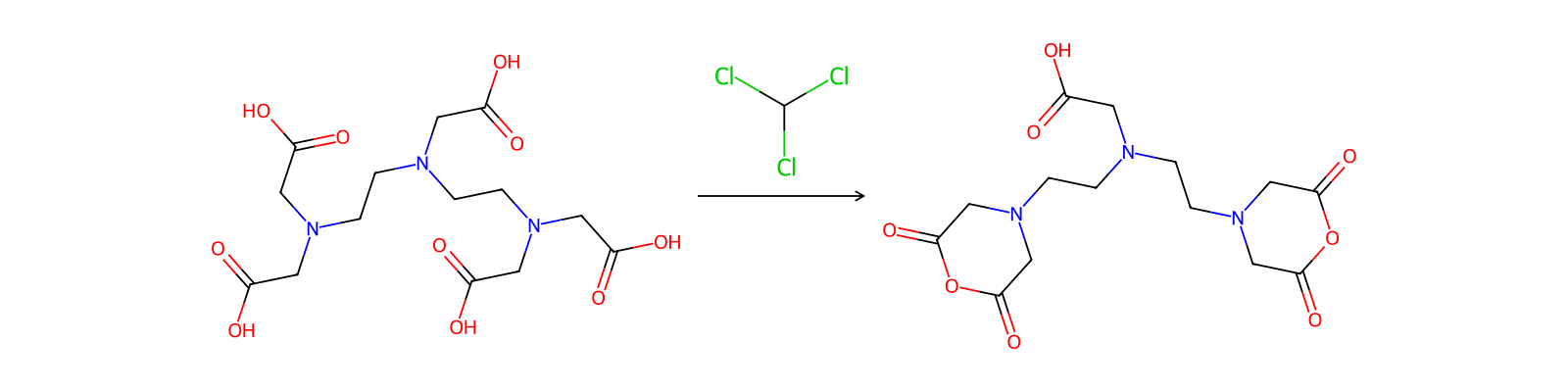
Diethylenetriaminepentaacetic acid
Completing data — refresh the page later to see the latest
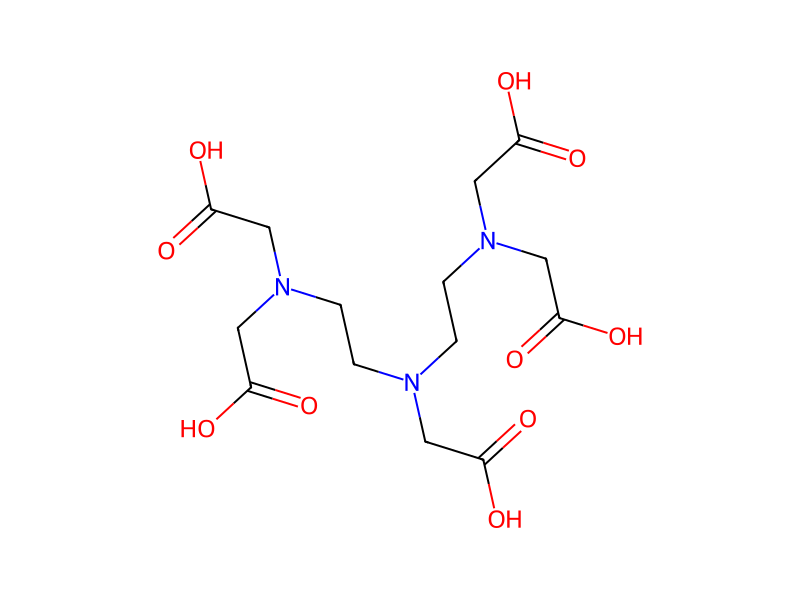
Basic information
- CAS
67-43-6- Standard SMILES
O=C(O)CN(CCN(CC(=O)O)CC(=O)O)CCN(CC(=O)O)CC(=O)O- InChIKey
QPCDCPDFJACHGM-UHFFFAOYSA-N- Molecular formula
- C14H23N3O10
- Average molar mass
- 393.35 g/mol
- Monoisotopic mass
- 393.13834394
Overview
Pentetic acid is a pentacarboxylic acid. It has a role as a copper chelator. It is a conjugate acid of a pentetate(1-).
Names & identifiers
- Preferred name
- Diethylenetriaminepentaacetic acid
- IUPAC
- 2-[bis[2-[bis(carboxymethyl)amino]ethyl]amino]acetic acid
- English name
- DTPA
- Molecular formula
- C14H23N3O10
- Molecular weight
- 393.35
Names & synonyms
Pentetic aciddiethylenetriaminepentaacetic acid67-43-6DTPADetapacDetarexTitriplex VMonaquest CAIPerma kleerDabeersen 503CHEL 330 acidPenthanil
Show more names
Diethylenetriamine Pentaacetic AcidPenthamilChel DTPADissolvine DPentacarboxymethyldiethylenetriamineAcido penteticoAcide pentetique(Diethylenetrinitrilo)pentaacetic acid
Database identifiers
- CAS
67-43-6- PubChem CID
- 3053
- DTXSID
DTXSID2023434- ChEMBL
CHEMBL780- ChEBI
CHEBI:35739- UNII
- 7A314HQM0I
- EC Number
- 200-652-8
- Nikkaji
- J2.813D、J479.816C
Properties
Computed structural propertiesFilling in
- XLogP
- -8.5
- Topological polar surface area
- 196 Ų
- Hydrogen bond donors
- 5
- Hydrogen bond acceptors
- 13
- Rotatable bonds
- 16
- Heavy atoms
- 27
- Formal charge
- 0
- Complexity
- 481
Experimental & physicochemical properties
Chemical ClassesOther Uses -> Chelating Agents
Drugs
Pharmaceuticals -> Listed in ZINC15
Pharmaceuticals
Cosmetics
Cosmetic ingredients (Pentetic Acid) -> CIR (Cosmetic Ingredient Review)
Chelating
SolubilityHighly soluble
Boiling PointDecomposes
Melting Point
219-220 ºC
219 °C
Physical Description
CBI; Dry Powder
White to off-white solid; [Acros Organics MSDS]
Dissociation Constantspentabasic (1.5-10.6)
Collision Cross Section180.2 Ų [M+H]+ [CCS Type: TW; Method: calibrated with polyalanine and drug standards]
Physicochemical properties
- Boiling point
- 721.1 · 721.1±60.0 °C(Predicted)
- Density
- 1.545 · 1.545±0.06 g/cm3(Predicted)
- pka
- 1.48 · 1.48±0.10(Predicted)
- Symbol(GHS)
- 7 · GHS07,GHS08
- Signal word
- Warning
- Hazard statements
- 319 · H319-H332-H361fd-H373
- Precautionary statements
- 202 · P202-P260-P264-P304+P340+P312-P305+P351+P338-P308+P313
Safety & regulation
Safety information is for reference only and does not replace the supplier’s Safety Data Sheet (SDS), applicable regulations, or professional assessment.
GHS classification
GHS Classification
Danger
H319: Causes serious eye irritation [Warning Serious eye damage/eye irritation]
P203, P260, P261, P264+P265, P271, P280, P304+P340, P305+P351+P338, P317, P318, P319, P337+P317, P405, and P501 (click each P-code to see the statement)
This chemical does not meet GHS hazard criteria for 1.3% (7 of 530) of reports.
Danger
H319 (98.7%): Causes serious eye irritation [Warning Serious eye damage/eye irritation]
Hazard information
Regulatory Information
Chemical: Glycine, N,N-bis[2-[bis(carboxymethyl)amino]ethyl]-
Hazard Traits - Reproductive Toxicity
Glycine, N,N-bis[2-[bis(carboxymethyl)amino]ethyl]- is listed on the EPA's Chemical Data Reporting (CDR) system. Manufacturers and importers of Glycine, N,N-bis[2-[bis(carboxymethyl)amino]ethyl]- are required to report information about their production and use of this chemical to the EPA under the Toxic Substances Control Act (TSCA). (40 eCFR Part 711)
REACH registered substance: N-carboxymethyliminobis(ethylenenitrilo)tetra(acetic acid) (EC: 200-652-8)
Pentetic acid: Does not have an individual approval but may be used under an appropriate group standard
Hazards Summary
The calcium salt causes fetal death and teratogenic effects in mice (thought to be associated with the chelation of essential divalent cations such as zinc); [REPROTOX] Causes convulsions and chronic pulmonary edema in intraperitoneal lethal-dose studies of rats (LD50 = 587 mg/kg); [RTECS] An eye irritant; [Acros Organics MSDS] See Edetic acid.
Hazard Classes and Categories
Eye Irrit. 2 (98.7%)
Acute toxicity (inhalation) - category 4
Acute toxicity (Inhalation: Dusts and mists) - Category 4
Repr. 1B
Safety & protection
Protective Action Criteria (PAC)
3.5 [mg/m3]
39 [mg/m3]
230 [mg/m3]
Toxicology
Adverse Effects
Reproductive Toxin - A chemical that is toxic to the reproductive system, including defects in the progeny and injury to male or female reproductive function. Reproductive toxicity includes developmental effects. See Guidelines for Reproductive Toxicity Risk Assessment.
Toxicity SummarySafe in the present practices of use and concentration. Ingredient, concentration, and use information are available in documents discoverable at https://cir-reports.cir-safety.org
Drug Induced Liver Injury
Drug-Induced Liver Injury Severity and Toxicity (DILIst)
pentetic acid
DILI Negative
Intravenous
DOI:10.1016/j.drudis.2019.09.022
Safety data
- Signal word
- Warning
- Symbol(GHS)
- GHS07,GHS08
- Hazard statements
- H319-H332-H361fd-H373
- Precautionary statements
- P202-P260-P264-P304+P340+P312-P305+P351+P338-P308+P313
Chemistry & industry
Pharmacology
Protein BindingThe fast clearance and very short half-life of pentetic acid suggest that this compound is very unlikely to become bound to serum proteins to any significant extent. It is reported that DPTA is negligibly bound to alpha1-antitrypsin.
Pharmacodynamics
There are reports in vivo of low stability of complexes of DPTA with uranium and neptunium which is being reported to cause deposition of the radionuclides into the tissues. In the case of plutonium, some preclinical studies have shown a very high urine elimination efficacy 1 hour after initial contamination. This efficacy is conserved for approximately 24 hours while the radiocontaminant is circulating. When the radionuclide is inhaled, it has been reported a DPTA-induced reduction of even 98% of the lung deposits. It is important to consider that pentetic acid can bind directly to other trace metals in the body which can cause deficiencies.
Mechanism of Action
The calcium and zinc trisodium salts of DTPA achieve the therapeutical potential by exchanging calcium and zinc cations with transuranic radionuclides to form higher affinity complexes and then promote their elimination by glomerular filtration into the urine. DTPA as an acid acts in a very similar way by sequestering ions with its eight coordinate bond forming sites.
Biological Half-LifeIn preclinical studies, DTPA has been shown to present a very short half-life of 18.5-31.8 min after intravenous administration.
Metabolism/MetabolitesPentetic acid and its derivatives present a very minimal metabolism in the body.
FDA Pharmacological Classification
7A314HQM0I
PENTETIC ACID
Mechanisms of Action [MoA] - Lead Chelating Activity
Established Pharmacologic Class [EPC] - Lead Chelator
Pentetic acid is a Lead Chelator. The mechanism of action of pentetic acid is as a Lead Chelating Activity.
KIT FOR THE PREPARATION OF TECHNETIUM TC 99M PENTETATE
MeSH Pharmacological Classification
Agents counteracting or neutralizing the action of POISONS.
Chemicals that bind to and remove ions from solutions. Many chelating agents function through the formation of COORDINATION COMPLEXES with METALS.
Organic chemicals that form two or more coordination links with an iron ion. Once coordination has occurred, the complex formed is called a chelate. The iron-binding porphyrin group of hemoglobin is an example of a metal chelate found in biological systems.
Absorption, Distribution and Excretion
DTPA and its trisodium salts present a very poor bioavailability after oral administration. Therefore, the normal administration of DTPA is done by slow intravenous infusion or inhalation with a nebulizer. When inhaled, the absorption is of about 20% of the administered dose.
DTPA metal complexes are quickly excreted in the urine.It is predominantly excreted by the kidney and it is not excreted by non-renal routes to any significant extent.
The volume of distribution of DPTA is 17 L.
Pentetic acid presents a very rapid blood clearance which explains for the short half-life. The reported clearance rate in patients with normal renal function is 80-120ml/min.
Uses & manufacturing
Uses
CIR ingredient: Pentetic Acid
Used as a chelating agent; [Merck Index] An iron chelating agent with properties like EDETIC ACID. DTPA has also been used as a chelator for other metals, such as plutonium. [ChemIDplus] Used in cosmetic products, in industrial metal extraction, and therapeutically; [ExPub: TERIS]
Metal Extraction and Refining [Category: Industry]
U.S. Production2023: 100,000 - <250,000 lb
Consumer UsesIon exchange agent
Industry UsesIon exchange agent
Household ProductsInformation on 55 consumer products that contain Diethylenetriaminepentaacetic acid (DTPA) in the following categories is provided:
Use ClassificationCosmetics -> Chelating
General Manufacturing Information
CBI
Glycine, N,N-bis[2-[bis(carboxymethyl)amino]ethyl]-: ACTIVE
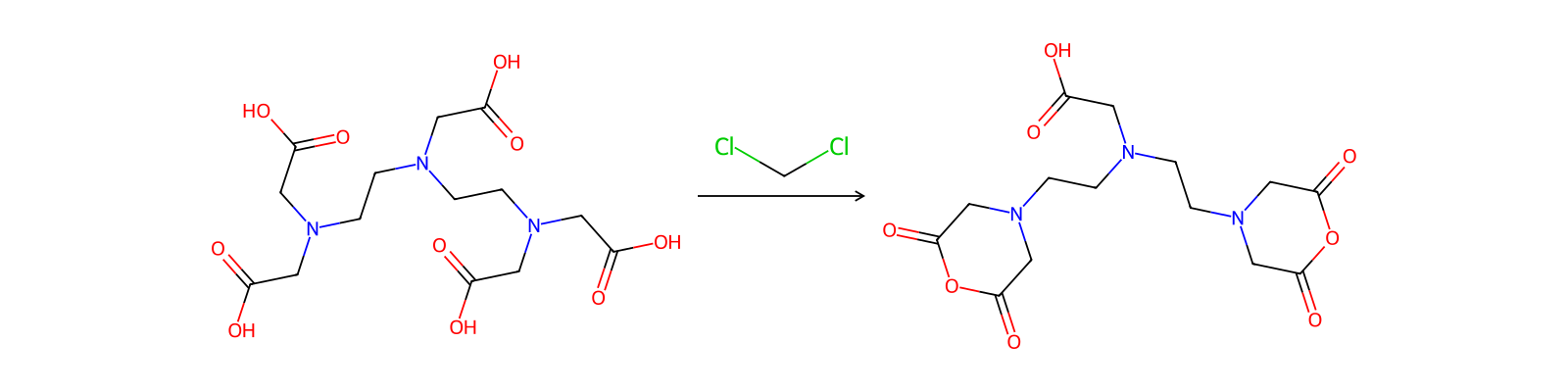
Related reactions
33 records




Compound notes
Loading…