HomeMCPWorkbenchSkills
HomeWorkbenchNotificationsMe
llms.txt · MCP GuidePrivacy Policy · Terms of Service · Supportv1.8.0
  1. Home
  2. /Compound

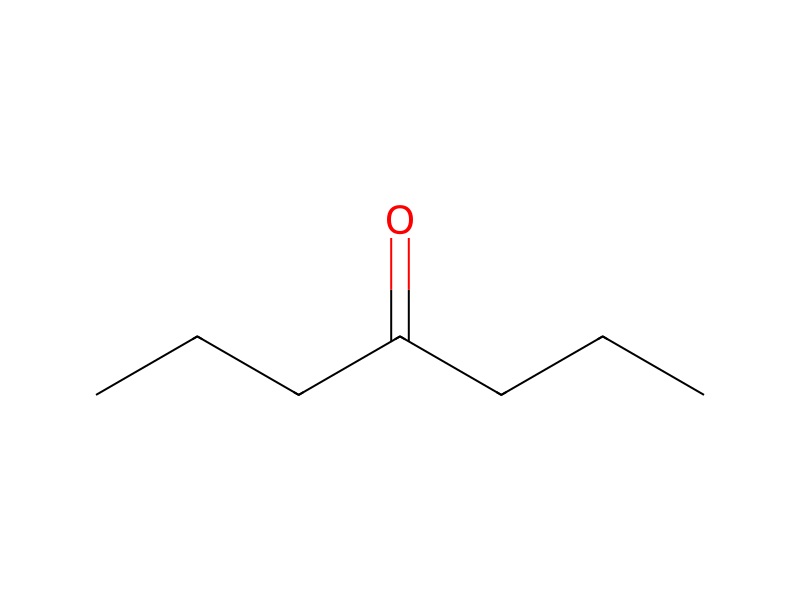
4-Heptanone

HCID 31246
New noteNew reactionRequest quotes
Print preview

Completing data — refresh the page later to see the latest
Basic informationNames & identifiersPropertiesSafety & regulationChemistry & industryRelated reactionsCompound notes
Substructure searchFind similar structures

Basic information

CAS
123-19-3
Standard SMILES
CCCC(=O)CCC
InChIKey
HCFAJYNVAYBARA-UHFFFAOYSA-N
Molecular formula
C7H14O
Average molar mass
114.19 g/mol
Monoisotopic mass
114.10446507

Names & identifiers

Preferred name
4-Heptanone
IUPAC
heptan-4-one
English name
4-Heptanone
Molecular formula
C7H14O
Molecular weight
114.19

Names & synonyms

4-HeptanoneHeptan-4-one123-19-3Dipropyl ketoneButyronePropyl ketoneDi-n-propyl ketone4-OxoheptaneFEMA No. 25469BN582JQ61NSC-8692DTXSID6047650
Show more names
dpkMETHYL N-AMYL KETONEFEMA 2546FEMA 25444-HeptanonHOHOHeptan-4-on
CHEBI:89484RefChem:99080DTXCID4027650204-608-9NSC 8692MFCD000094034-Heptanone (natural)EINECS 204-608-9

Database identifiers

CAS
123-19-3
PubChem CID
31246
DTXSID
DTXSID6047650
ChEBI
CHEBI:89484
UNII
9BN582JQ61
EC Number
204-608-9
Nikkaji
J43.327F

Properties

Computed structural propertiesFilling in

XLogP
1.6
Topological polar surface area
17.1 Ų
Hydrogen bond donors
0
Hydrogen bond acceptors
1
Rotatable bonds
4
Heavy atoms
8
Formal charge
0
Complexity
58

Experimental & physicochemical properties

LogPlog Kow = 2.04
OdorPleasant odor
TasteBurning taste
Density · 6 items

0.82 (NIOSH, 2024) - Less dense than water; will float

0.8174 g/cu cm at 20 °C

Bulk density: 6.79 lb/gal at 20 °C

Relative density (water = 1): 0.8

0.814-0.817 (20 °C)

0.82

Viscosity0.0074 cP at 20 °C
Color/FormStable, colorless liquid
Solubility · 6 items

Insoluble (NIOSH, 2024)

Miscible with ethanol, ethyl ether; very soluble in ligroin

Soluble in carbon tetrachloride

In water, 3.19X10+3 mg/L at 25 °C

3.2 mg/mL at 25 °C

Solubility in water at 20 °C: very poor

Flash Point · 6 items

120 °F (NIOSH, 2024)

120 °F

48.89 °C (closed cup)

49 °C

120 °F

Safety & regulation

Safety information is for reference only and does not replace the supplier’s Safety Data Sheet (SDS), applicable regulations, or professional assessment.

GHS classification

GHS Classification · 6 items

Warning

H226: Flammable liquid and vapor [Warning Flammable liquids];H332: Harmful if inhaled [Warning Acute toxicity, inhalation]

P210, P233, P240, P241, P242, P243, P261, P271, P280, P303+P361+P353, P304+P340, P317, P370+P378, P403+P235, and P501 (click each P-code to see the statement)

This chemical does not meet GHS hazard criteria for < 0.1% (1 of 1945) of reports.

Hazard information

Regulatory Information · 5 items

Chemical: 4-Heptanone

4-Heptanone is listed on the EPA's Chemical Data Reporting (CDR) system. Manufacturers and importers of 4-Heptanone are required to report information about their production and use of this chemical to the EPA under the Toxic Substances Control Act (TSCA). (40 eCFR Part 711)

Status: Active Update: 10-03-2017 https://echa.europa.eu/registration-dossier/-/registered-dossier/19258

4-Heptanone: Does not have an individual approval but may be used under an appropriate group standard

The New Jersey Worker and Community Right to Know Act requires public and private employers to provide information about hazardous substances at their workplaces. (N.J.S.A. 34:5A-1 et. seq.)

DOT LabelFlammable Liquid
Fire Hazards · 3 items

Excerpt from ERG Guide 128 [Flammable Liquids (Water-Immiscible)]:;HIGHLY FLAMMABLE: Will be easily ignited by heat, sparks or flames. Vapors may form explosive mixtures with air. Vapors may travel to source of ignition and flash back. Most vapors are heavier than air. They will spread along the ground and collect in low or confined areas (sewers, basements, tanks, etc.). Vapor explosion hazard indoors, outdoors or in sewers. Those substances designated with a (P) may polymerize explosively when heated or involved in a fire. Runoff to sewer may create fire or explosion hazard. Containers may explode when heated. Many liquids will float on water. Substance may be transported hot. For hybrid vehicles, ERG Guide 147 (lithium ion or sodium ion batteries) or ERG Guide 138 (sodium batteries) should also be consulted. If molten aluminum is involved, refer to ERG Guide 169. (ERG, 2024)

Chemistry & industry

Pharmacology

Metabolism/Metabolites · 2 items

... After establishing analytical methods for all postulated metabolites, /the authors/ analyzed (i) plasma samples from 50 patients on haemodialysis and 50 controls; (ii) urine samples from 100 diabetic patients and 100 controls; and (iii) urine samples from 10 controls receiving DEHP intravenously. 4-Heptanone concentrations in urine did not differ between controls (128.6+/-11.4 ug/L, mean+/- SEM) and diabetic patients (131.2+/-11.6 ug/L) but were significantly elevated in plasma from hemodialysis patients (95.9+/-9.6 ug/L) compared with controls (10.4+/-0.5 ug/L). Exposure to DEHP led to a significant increase (P<0.001) of the metabolite 4-heptanone and all the proposed intermediates in urine of healthy persons within 24 hr. CONCLUSIONS: These studies show that 4-heptanone is not associated with diabetes but is a major DEHP metabolite in humans...

2-Ethylhexanol was efficiently absorbed following oral administration to rats. Carbon-14 associated with 2-ethyl(1-14C)hexanol was rapidly excreted in respiratory CO2 (6-7%), feces (8-9%) and urine (80-82%), with essentially complete elimination by 28 hr after administration. The amount of label recovered in (14)CO2 matched the amount of unlabelled 2-heptanone plus 4-heptanone recovered from urine, suggesting that both types of metabolite may have been derived form the major urinary metabolite, 2-ethylhexanoic acid, by decarboxylation following partial beta-oxidation...

Cellular LocationsMembrane

Uses & manufacturing

Uses · 3 items

Used as a solvent for organic chemicals and surface coatings; [ACGIH]

Painting (Solvents) [Category: Paint]

Solvent for nitrocellulose, raw and blown oils, resins, and polymers; lacquers; flavoring.

U.S. Production · 3 items

2023: 75,000 - <500,000 lb;2022: 1,000,000 - <8,500,000 lb;2021: 1,000,000 - <8,500,000 lb;2020: 500,000 - <1,000,000 lb

Production volumes for non-confidential chemicals reported under the Inventory Update Rule. [Table#7740]

Production volume for non-confidential chemicals reported under the 2006 Inventory Update Rule. Chemical: 4-Heptanone. Aggregated National Production Volume: 1 to < 10 million lbs.

Related reactions

58 records
New reaction record
HRID 3668 reaction equation
HRID 3668As reactantuspto-grants-1998_03
HRID 87414 reaction equation
HRID 87414As reactantTraining data from https://doi.org/10.1039/C8SC04228D (2/10)
HRID 94547 reaction equation
HRID 94547As reactantTraining data from https://doi.org/10.1039/C8SC04228D (2/10)
HRID 122613 reaction equation
HRID 122613As reactantTraining data from https://doi.org/10.1039/C8SC04228D (2/10)
HRID 178098 reaction equation
HRID 178098As reactantTraining data from https://doi.org/10.1039/C8SC04228D (6/10)
HRID 210276 reaction equation
HRID 210276As reactantTraining data from https://doi.org/10.1039/C8SC04228D (6/10)
HRID 232556 reaction equation
HRID 232556As reactantuspto-grants-1997_01
HRID 249061 reaction equation
HRID 249061As reactantuspto-grants-1993_05
Page 1 of 8

Compound notes

Loading…

On this pageBasic informationNames & identifiersPropertiesSafety & regulationChemistry & industryRelated reactionsCompound notes
More actions
New noteNew reactionRequest quotes

120 °F

Boiling Point · 6 items

291 °F at 760 mmHg (NIOSH, 2024)

144 °C

144.00 to 145.00 °C. @ 760.00 mm Hg

144-146 °C

144-145 °C

291 °F

Decomposition · 2 items

Hazardous decomposition products formed under fire conditions. - Carbon oxides.

When heated to decomposition it emits acrid smoke and fumes.

Melting Point · 6 items

-27 °F (NIOSH, 2024)

-33 °C

-34 °C

-33 °C

-27 °F

-32.6 °C

Vapor Density · 2 items

3.93 (Air = 1)

Relative vapor density (air = 1): 3.9

Physicochemical properties

Melting point
-33 °C · -33 °C (lit.)
Boiling point
145 °C · 145 °C (lit.)
Density
0.817 g/mL · 0.817 g/mL at 25 °C (lit.)
vapor density
3.94 · 3.94 (vs air)
vapor pressure
5.2 mm · 5.2 mm Hg ( 20 °C)
refractive index
20 · n20/D 1.408(lit.)
FEMA
2546 · 2546 | 4-HEPTANONE
FLAVIS Number
7.058 · 07.058 | Heptan-4-one
Flash point
120 °F · 120 °F
storage temp.
30 °C · Store below +30°C.
solubility
2 O: · H2O: insoluble
form
Liquid
color
Clear colorless to light yellow
Odor
10 % · at 10.00 % in dipropylene glycol. fruity cheese sweet cognac pineapple
Odor Type
fruity
explosive limit
1 % · 1%(V)
biological source
synthetic
Water Solubility
4.6 g/L · 4.6 g/L (20 ºC)
Thermal Conductivity
0.131 W/ · 0.131 W/(m·K) at 25 ℃
JECFA Number
287 · 287
Merck
14 · 14,3345
BRN
1699049 · 1699049
Specific Activity
221 · 221-299nmol/min·mg
Henry's Law Constant
5.1 · 5.1×10-2 mol/(m3Pa) at 25℃, Brockbank (2013)
Dielectric constant
12.6 · 12.6(17℃)
Exposure limits
235 mg/m3 · TLV-TWA 235 mg/m3 (50 ppm) (NIOSH).
Stability
Stable. Flammable. Incompatible with strong oxidizing agents, strong bases, strong reducing agents.
Cosmetics Ingredients Functions
PERFUMING
InChI
1S/C7H14O/c1-3-5-7(8)6-4-2/h3-6H2,1-2H3
InChIKey
HCFAJYNVAYBARA-UHFFFAOYSA-N
SMILES
CCCC(=O)CCC
LogP
1.97 · 1.97
Substances Added to Food (formerly EAFUS)
4 · 4-HEPTANONE
CAS DataBase Reference
123 · 123-19-3(CAS DataBase Reference)
EWG's Food Scores
1 · 1
FDA UNII
9 BN582JQ61 · 9BN582JQ61
NIST Chemistry Reference
4 · 4-Heptanone(123-19-3)
EPA Substance Registry System
4 · 4-Heptanone (123-19-3)
UNSPSC Code
41116107 · 41116107
NACRES
32 · NA.32
Symbol(GHS)
2 · GHS02,GHS07,GHS08
Signal word
Warning
Hazard statements
332 · H332-H303+H313-H316-H320-H335-H336-H305-H226
Precautionary statements
501 · P501-P240-P261-P210-P233-P243-P241-P242-P271-P264-P280-P370+P378-P312-P331-P337+P313-P305+P351+P338-P303+P361+P353-P332+P313-P301+P310-P304+P340+P312-P403+P233-P403+P235-P405
PPE
Eyeshields, Faceshields, Gloves, type ABEK (EN14387) respirator filter
Hazard Codes
Xn
Risk Statements
10 · 10-20/22-20-R20-R10-2017/10/20
Safety Statements
24 · 24/25-S24/25
OEB
A
OEL
50 ppm · TWA: 50 ppm (235 mg/m3)
RIDADR
1110 · UN 1110 3/PG III (n-AMYL METHYL KETONE)
WGK Germany
2 · 2
RTECS
5600000 · MJ5600000
Autoignition Temperature
430 °C · 430 °C
TSCA
TSCA listed
HazardClass
3 · 3
PackingGroup
III
HS Code
29141900 · 29141900
Storage Class
3 · 3 - Flammable liquids
Hazard Classifications
4 InhalationFlam · Acute Tox. 4 InhalationFlam. Liq. 3
Hazardous Substances Data
123 · 123-19-3(Hazardous Substances Data)
Toxicity
50 orally · LD50 orally in Rabbit: 3021 mg/kg LD50 dermal Rabbit 4585 mg/kg
REACH Registrations
Active

· HIGHLY FLAMMABLE: Will be easily ignited by heat, sparks or flames.;· Vapors may form explosive mixtures with air.;· Vapors may travel to source of ignition and flash back.;· Most vapors are heavier than air. They will spread along the ground and collect in low or confined areas (sewers, basements, tanks, etc.).;· Vapor explosion hazard indoors, outdoors or in sewers.;· Those substances designated with a (P) may polymerize explosively when heated or involved in a fire.;· Runoff to sewer may create fire or explosion hazard.;· Containers may explode when heated.;· Many liquids will float on water.;· Substance may be transported hot.;· For hybrid vehicles, GUIDE 147 (lithium ion or sodium ion batteries) or GUIDE 138 (sodium batteries) should also be consulted.;· If molten aluminum is involved, refer to GUIDE 169.

Flammable. Above 49 °C explosive vapour/air mixtures may be formed.

Fire PotentialFlammable liquid when exposed to heat or flame
Health Hazards · 2 items

Excerpt from ERG Guide 128 [Flammable Liquids (Water-Immiscible)]:;CAUTION: Petroleum crude oil (UN1267) may contain TOXIC hydrogen sulphide gas. Inhalation or contact with material may irritate or burn skin and eyes. Fire may produce irritating, corrosive and/or toxic gases. Vapors may cause dizziness or asphyxiation, especially when in closed or confined areas. Runoff from fire control or dilution water may cause environmental contamination. (ERG, 2024)

CAUTION: Petroleum crude oil (UN1267) may contain TOXIC hydrogen sulphide gas.;· Inhalation or contact with material may irritate or burn skin and eyes.;· Fire may produce irritating, corrosive and/or toxic gases.;· Vapors may cause dizziness or asphyxiation, especially when in closed or confined areas.;· Runoff from fire control or dilution water may cause environmental contamination.

Hazards SummaryIn rats, 400 ppm slows respiration, 825 ppm causes CNS depression, and 1600 ppm induces narcosis. Inhalation of 1200 ppm for 2 weeks causes mild liver enlargement. [ACGIH] Possible burns to eyes and skin; [CAMEO]
DOT ID and Guide · 2 items

2710 128

2710 128

Reactive GroupKetones
EC ClassificationSymbol: Xn; R: 10-20; S: (2)-24/25
UN ClassificationUN Hazard Class: 3; UN Pack Group: III
Reactivity AlertsHighly Flammable
Reactivity ProfileDIPROPYL KETONE is incompatible with the following: Oxidizers (NIOSH, 2024).

Safety & protection

Fire Fighting · 2 items

Excerpt from ERG Guide 128 [Flammable Liquids (Water-Immiscible)]:;CAUTION: The majority of these products have a very low flash point. Use of water spray when fighting fire may be inefficient. CAUTION: For mixtures containing alcohol or polar solvent, alcohol-resistant foam may be more effective.;SMALL FIRE: Dry chemical, CO2, water spray or regular foam. If regular foam is ineffective or unavailable, use alcohol-resistant foam.;LARGE FIRE: Water spray, fog or regular foam. If regular foam is ineffective or unavailable, use alcohol-resistant foam. Avoid aiming straight or solid streams directly onto the product. If it can be done safely, move undamaged containers away from the area around the fire.;FIRE INVOLVING TANKS, RAIL TANK CARS OR HIGHWAY TANKS: Fight fire from maximum distance or use unmanned master stream devices or monitor nozzles. Cool containers with flooding quantities of water until well after fire is out. For petroleum crude oil, do not spray water directly into a breached tank car. This can lead to a dangerous boil over. Withdraw immediately in case of rising sound from venting safety devices or discoloration of tank. ALWAYS stay away from tanks in direct contact with flames. For massive fire, use unmanned master stream devices or monitor nozzles; if this is impossible, withdraw from area and let fire burn. (ERG, 2024)

Use alcohol-resistant foam, dry powder, carbon dioxide. In case of fire: keep drums, etc., cool by spraying with water.

First Aid Measures · 4 items

Fresh air, rest. Refer for medical attention.

Rinse skin with plenty of water or shower.

First rinse with plenty of water for several minutes (remove contact lenses if easily possible), then refer for medical attention.

Rinse mouth. Refer for medical attention .

Accidental Release Measures · 2 items

· CALL 911. Then call emergency response telephone number on shipping paper. If shipping paper not available or no answer, refer to appropriate telephone number listed on the inside back cover.;· Keep unauthorized personnel away.;· Stay upwind, uphill and/or upstream.;· Ventilate closed spaces before entering, but only if properly trained and equipped.

· ELIMINATE all ignition sources (no smoking, flares, sparks or flames) from immediate area.;· All equipment used when handling the product must be grounded.;· Do not touch or walk through spilled material.;· Stop leak if you can do it without risk.;· Prevent entry into waterways, sewers, basements or confined areas.;· A vapor-suppressing foam may be used to reduce vapors.;· Absorb or cover with dry earth, sand or other non-combustible material and transfer to containers.;· Use clean, non-sparking tools to collect absorbed material.;Large Spill;· Dike far ahead of liquid spill for later disposal.;· Water spray may reduce vapor, but may not prevent ignition in closed spaces.

First Aid · 3 items

Excerpt from NIOSH Pocket Guide for Dipropyl ketone:;Eye: IRRIGATE IMMEDIATELY - If this chemical contacts the eyes, immediately wash (irrigate) the eyes with large amounts of water, occasionally lifting the lower and upper lids. Get medical attention immediately.;Skin: SOAP WASH - If this chemical contacts the skin, wash the contaminated skin with soap and water.;Breathing: RESPIRATORY SUPPORT - If a person breathes large amounts of this chemical, move the exposed person to fresh air at once. If breathing has stopped, perform artificial respiration. Keep the affected person warm and at rest. Get medical attention as soon as possible.;Swallow: MEDICAL ATTENTION IMMEDIATELY - If this chemical has been swallowed, get medical attention immediately. (NIOSH, 2024)

General First Aid:;· Call 911 or emergency medical service.;· Ensure that medical personnel are aware of the material(s) involved, take precautions to protect themselves and avoid contamination.;· Move victim to fresh air if it can be done safely.;· Administer oxygen if breathing is difficult.;· If victim is not breathing:;-- DO NOT perform mouth-to-mouth resuscitation; the victim may have ingested or inhaled the substance.;-- If equipped and pulse detected, wash face and mouth, then give artificial respiration using a proper respiratory medical device (bag-valve mask, pocket mask equipped with a one-way valve or other device).;-- If no pulse detected or no respiratory medical device available, provide continuous compressions. Conduct a pulse check every two minutes or monitor for any signs of spontaneous respirations.;· Remove and isolate contaminated clothing and shoes.;· For minor skin contact, avoid spreading material on unaffected skin.;· In case of contact with substance, remove immediately by flushing skin or eyes with running water for at least 20 minutes.;· For severe burns, immediate medical attention is required.;· Effects of exposure (inhalation, ingestion, or skin contact) to substance may be delayed.;· Keep victim calm and warm.;· Keep victim under observation.;· For further assistance, contact your local Poison Control Center.;· Note: Basic Life Support (BLS) and Advanced Life Support (ALS) should be done by trained professionals.;Specific First Aid:;· Wash skin with soap and water.

(General first aid procedures);Eye: Irrigate immediately - If this chemical contacts the eyes, immediately wash (irrigate) the eyes with large amounts of water, occasionally lifting the lower and upper lids. Get medical attention immediately.;Skin: Soap wash - If this chemical contacts the skin, wash the contaminated skin with soap and water.;Breathing: Respiratory support;Swallow: Medical attention immediately - If this chemical has been swallowed, get medical attention immediately.

Safe StorageFireproof. Separated from strong oxidants. Well closed.
Exposure Control and Personal Protection· Wear positive pressure self-contained breathing apparatus (SCBA).;· Structural firefighters' protective clothing provides thermal protection but only limited chemical protection.
Fire Fighting Procedures · 4 items

If material on fire or involved in fire: Do not extinguish fire unless flow can be stopped. Use water in flooding quantities as fog. Solid streams of water may be ineffective. Cool all affected containers with flooding quantities of water. Apply water from as far a distance as possible. Use foam, dry chemical, or carbon dioxide. Keep run-off water out of sewers and water sources.

Personnel protection: Wear appropriate chemical protective gloves, boots, and goggles. Wear positive pressure self-contained breathing apparatus when fighting fires involving this material. If contact with the material anticipated, wear appropriate chemical protective clothing.

Carbon dioxide, dry chemical, alcohol foam, fog, and mist.

Suitable extinguishing media: For small (incipient) fires, use media such as "alcohol" foam, dry chemical, or carbon dioxide. For large fires, apply water from as far as possible. Use very large quantities (flooding) of water applied as a mist or spray; solid streams of water may be ineffective. Cool all affected containers with flooding quantities of water. Special protective equipment for fire-fighters: Wear self contained breathing apparatus for fire fighting if necessary. Use water spray to cool unopened containers.

Storage ConditionsKeep container tightly closed in a dry and well-ventilated place. Store in cool place. Recommended storage temperature: 2 - 8 °C.
Cleanup Methods · 1 item

Personal precautions: Use personal protective equipment. Avoid breathing vapors, mist or gas. Ensure adequate ventilation. Remove all sources of ignition. Beware of vapors accumulating to form explosive concentrations. Vapors can accumulate in low areas. Environmental precautions: Do not let product enter drains. Methods and materials for containment and cleaning up: Contain spillage, and then collect with non-combustible absorbent material, (e.g. sand, earth, diatomaceous earth, vermiculite) and place in container for disposal according to local / national regulations. Keep in suitable, closed containers for disposal.

Nonfire Spill Response · 1 item

Excerpt from ERG Guide 128 [Flammable Liquids (Water-Immiscible)]:;ELIMINATE all ignition sources (no smoking, flares, sparks or flames) from immediate area. All equipment used when handling the product must be grounded. Do not touch or walk through spilled material. Stop leak if you can do it without risk. Prevent entry into waterways, sewers, basements or confined areas. A vapor-suppressing foam may be used to reduce vapors. Absorb or cover with dry earth, sand or other non-combustible material and transfer to containers. Use clean, non-sparking tools to collect absorbed material.;LARGE SPILL: Dike far ahead of liquid spill for later disposal. Water spray may reduce vapor, but may not prevent ignition in closed spaces. (ERG, 2024)

Disposal Methods · 2 items

SRP: The most favorable course of action is to use an alternative chemical product with less inherent propensity for occupational harm/injury/toxicity or environmental contamination. Recycle any unused portion of the material for its approved use or return it to the manufacturer or supplier. Ultimate disposal of the chemical must consider: the material's impact on air quality; potential migration in soil or water; effects on animal and plant life; and conformance with environmental and public health regulations.

SRP: Wastewater from contaminant suppression, cleaning of protective clothing/equipment, or contaminated sites should be contained and evaluated for subject chemical or decomposition product concentrations. Concentrations shall be lower than applicable environmental discharge or disposal criteria. Alternatively, pretreatment and/or discharge to a permitted wastewater treatment facility is acceptable only after review by the governing authority and assurance that "pass through" violations will not occur. Due consideration shall be given to remediation worker exposure (inhalation, dermal and ingestion) as well as fate during treatment, transfer and disposal. If it is not practicable to manage the chemical in this fashion, it must be evaluated in accordance with EPA 40 CFR Part 261, specifically Subpart B, in order to determine the appropriate local, state and federal requirements for disposal.

Spillage Disposal · 1 item

Personal protection: filter respirator for organic gases and vapours adapted to the airborne concentration of the substance. Remove all ignition sources. Ventilation. Collect leaking and spilled liquid in sealable containers as far as possible. Absorb remaining liquid in sand or inert absorbent. Then store and dispose of according to local regulations.

Toxicology

Body Burden · 1 item

Dipropyl ketone was detected in 12.4% of 387 samples of expired air collected from 54 individuals in Chicago, IL with a reported geometric mean concentration of 0.074 ng/L(1). Dipropyl ketone was detected in 35 out of 46 composite samples from the US EPA 1982 National Human Adipose Tissue Survey (NHATS) repository. Dipropyl ketone was detected in samples corresponding to all age groups and geographic regions(2). The reported concentration of dipropyl ketone ranged from 27 to 1044 ng/mL (median = 188 ng/mL)in the urine of 51 healthy individuals and from 17 to 978 ng/mL (median = 179 ng/mL) in 92 diabetic patients(3). During a study of the occurrence of volatile organic compounds in human milk samples from five industrial US cities, dipropyl ketone was detected in one milk sample collected in Jersey City, NJ(4,5).

Target OrgansEyes, skin, central nervous system, liver
Environmental Fate · 3 items

TERRESTRIAL FATE: Based on a classification scheme(1), an estimated Koc value of 178(SRC), determined from a log Kow of 2.04(2) and a regression-derived equation(3), indicates that dipropyl ketone is expected to have moderate mobility in soil(SRC). Volatilization of dipropyl ketone from moist soil surfaces is expected to be an important fate process(SRC) given an estimated Henry's Law constant of 2.4X10⁻⁴ atm-cu m/mole(SRC), derived from its vapor pressure, 5.2 mm Hg at 20 °C(4), and water solubility, 3.19X10+3 mg/L (5). Dipropyl ketone is expected to volatilize from dry soil surfaces(SRC) based upon its vapor pressure(4). Limited biodegradation data are available for dipropyl ketone(SRC, 2011); however, as a group n-alkyl ketones are reported to be susceptible to microbial degradation(6).

AQUATIC FATE: Based on a classification scheme(1), an estimated Koc value of 178(SRC), determined from a log Kow of 2.04(2) and a regression-derived equation(3), indicates that dipropyl ketone is expected to adsorb very little to suspended solids and sediment(SRC). Volatilization from water surfaces is expected(4) based upon an estimated Henry's Law constant of 2.4X10⁻⁴ atm-cu m/mole(SRC), derived from its vapor pressure, 5.2 mm Hg at 20 °C(5), and water soubility, 3.19X10+3 mg/L(6). Using this Henry's Law constant and an estimation method(4), volatilization half-lives for a model river and model lake are 3.7 hours and 5.4 days, respectively(SRC). According to a classification scheme(7),an estimated BCF of 9.7(SRC), from its log Kow(2) and a regression-derived equation(3), suggests the potential for bioconcentration in aquatic organisms is low(SRC). Limited biodegradation data are available for dipropyl ketone(SRC, 2011); however, as a group n-alkyl ketones are reported to be susceptible to microbial degradation(8).

ATMOSPHERIC FATE: According to a model of gas/particle partitioning of semivolatile organic compounds in the atmosphere(1), dipropyl ketone, which has a vapor pressure of 5.2 mm Hg at 20 °C(2), is expected to exist solely as a vapor in the ambient atmosphere. Vapor-phase dipropyl ketone is degraded in the atmosphere by reaction with photochemically-produced hydroxyl radicals(SRC); the half-life for this reaction in air is estimated to be 1.7 days(SRC), calculated from its rate constant of 9.3X10⁻¹² cu cm/molecule-sec at 25 °C(SRC) that was derived using a structure estimation method(3). The maximum UV absorption of dipropyl ketone occurs near 280 nm(4), and the absorption spectrum is expected to extend beyond 290 nm; therefore, this substance may be susceptible to direct photolysis by sunlight(SRC).

Adverse Effects · 1 item

Neurotoxin - Acute solvent syndrome;Occupational hepatotoxin - Secondary hepatotoxins: the potential for toxic effect in the occupational setting is based on cases of poisoning by human ingestion or animal experimentation.;Dermatotoxin - Skin burns.

Exposure Routes · 2 items

The substance can be absorbed into the body by inhalation of its vapour and by ingestion.

inhalation, ingestion, skin and/or eye contact

Milk ConcentrationsENVIRONMENTAL: During a study of the occurrence of volatile organic compounds in human milk samples from five industrial US cities, dipropyl ketone was detected in one milk sample collected in Jersey City, NJ(1,2).
Signs and Symptoms · 5 items

Cough. Sore throat. Drowsiness. Lethargy. Headache.

Redness. Dry skin.

Redness.

Nausea. Vomiting. Diarrhoea. Dizziness. Drowsiness.

irritation eyes, skin; central nervous system depression, dizziness, drowsiness, decreased breath; In Animals: liver injury; narcosis

Effluent ConcentrationsOne occurrence of dipropyl ketone was observed in chamber air during a study of the emissions of volatile organic compounds from the surface coatings of 44 furniture samples. The concentration was not specified(1).
Soil Adsorption/Mobility · 1 item

The Koc of dipropyl ketone is estimated as 178(SRC), using a log Kow of 2.04(1) and a regression-derived equation(2). According to a classification scheme(3), this estimated Koc value suggests that dipropyl ketone is expected to have moderate mobility in soil.

Artificial Pollution Sources · 1 item

Dipropyl ketone's production and use as a solvent for nitrocellulose, raw and blown oils, resins, and polymers and in the production of lacquers and flavoring(1) may result in its release to the environment through various waste streams(SRC).

Environmental Biodegradation · 1 item

AEROBIC: Dipropyl ketone, present at 500 mg/L, in a Warburg repirometry flask containing 20 mL activated sludge suspension with a suspended solids concentration of 2,500 mg/L, reached 3.8% of the theoretical oxygen demand after 24 hours(1,2). Additional biodegradation data for dipropyl ketone were not located; however, as a group n-alkyl ketones are reported to be susceptible to microbial degradation(3).

Environmental Bioconcentration · 1 item

An estimated BCF of 9.7 was calculated in fish for dipropyl ketone(SRC), using a log Kow of 2.04(1) and a regression-derived equation(2). According to a classification scheme(3), this BCF suggests the potential for bioconcentration in aquatic organisms is low(SRC).

Regulatory information

Regulatory Information · 5 items

Chemical: 4-Heptanone

4-Heptanone is listed on the EPA's Chemical Data Reporting (CDR) system. Manufacturers and importers of 4-Heptanone are required to report information about their production and use of this chemical to the EPA under the Toxic Substances Control Act (TSCA). (40 eCFR Part 711)

Status: Active Update: 10-03-2017 https://echa.europa.eu/registration-dossier/-/registered-dossier/19258

4-Heptanone: Does not have an individual approval but may be used under an appropriate group standard

The New Jersey Worker and Community Right to Know Act requires public and private employers to provide information about hazardous substances at their workplaces. (N.J.S.A. 34:5A-1 et. seq.)

Safety data

OEB
A
OEL
TWA: 50 ppm (235 mg/m3)
PPE
Eyeshields, Faceshields, Gloves, type ABEK (EN14387) respirator filter
wgk
2
tsca
TSCA listed
rtecs
MJ5600000
ridadr
UN 2710 3/PG III (DIPROPYL KETONE)
hs_code
29141900
Toxicity
LD50 orally in Rabbit: 3021 mg/kg LD50 dermal Rabbit 4585 mg/kg
risk_code
10-20/22-20-R20-R10-2017/10/20
Signal word
Warning
Symbol(GHS)
GHS02,GHS07,GHS08
hazard_code
Xn
safety_code
24/25-S24/25
hazard_class
3
Storage Class
3 - Flammable liquids
packing_group
III
Hazard statements
H332-H303+H313-H316-H320-H335-H336-H305-H226
REACH Registrations
Active
Hazard Classifications
Acute Tox. 4 InhalationFlam. Liq. 3
Autoignition Temperature
430 °C
Precautionary statements
P501-P240-P261-P210-P233-P243-P241-P242-P271-P264-P280-P370+P378-P312-P331-P337+P313-P305+P351+P338-P303+P361+P353-P332+P313-P301+P310-P304+P340+P312-P403+P233-P403+P235-P405
Hazardous Substances Data
123-19-3(Hazardous Substances Data)
Consumer UsesNot Known or Reasonably Ascertainable
Industry UsesNot Known or Reasonably Ascertainable
Formulations/PreparationsGrade: Technical
Use Classification · 4 items

Fragrance Ingredients

Flavouring Agent -> FLAVOURING_AGENT -> JECFA Functional Classes

Flavoring Agents -> JECFA Flavorings Index

Flavouring Agent -> FLAVOURING_AGENT -> JECFA Functional Classes

General Manufacturing Information · 3 items

All Other Basic Organic Chemical Manufacturing

4-Heptanone: ACTIVE

Made by passing butyric acid over precipitated CaCO3 at 450 °C.

Applications · 7 items

Description4-Heptanone is an organic ketone containing seven carbon atoms. It can be found in urine samples of human being. It arises from in vivo beta-oxidation of 2-ethylhexanoic acid (EHA) from plasticisers, which is similar to the formation of 3-heptanone from valproic acid. It is mainly used as the solvents of nitrocellulose, nitrocellulose paint and synthetic resin and as the raw materials of organic synthesis. It can also be used as a internal standard of gas chromatography-mass spectrometry for the analysis of 3-monochloro-1, 2-propane diol which is a potential carcinogen found in soy sauce. It can be synthesized during the reaction of 1-butanol over base catalysts such as MgO.

Description4-Heptanone has a penetrating odor and burning taste. It is prepared by passing butyric acid over a wood coal at 425°C and then over cerium oxide at 500°C or over thorium oxide; also over manganese oxide at 400 - 425°C.

OccurrenceReported found in apple juice, papaya, pear, cabbage, baked potato, roasted peanut, chicken fat, coffee, bachang (Mangifera foetida L ) and rooibus tea (Aspalathius linearis)

UsesSolvent for nitrocellulose, oils, resins, and polymers and in flavorings

Uses4-Heptanone is used as a solvent for nitrocellulose as well as in organic synthesis. It is involved in the preparation of flavorings. It is used as an intermediate in the synthesis of active pharmaceutical ingredients. Further, it is used in paints and coatings.

UsesDipropyl ketone (DPK) is used as a solventin oils, resins, nitrocellulose, and polymers;and as a flavoring compound.

General DescriptionA colorless liquid with a pleasant odor. Insoluble in water and less dense than water. Flash point 120°F. Toxic by inhalation. A skin irritant. Used to make flavorings and as a solvent.

Preparation methods

PreparationBy passing butyric acid over wood coal at 425°C and then over cerium oxide at 500°C or over thorium oxide; also over manganese oxide at 400 to 425°C.

Upstream & downstream products

Upstream raw materials

Carbon BlackButyric AcidCerium dioxideThorium dioxidetrans-3-Heptene3-HeptanoneButyraldehydePropionaldehydecis-3-Heptene3-Heptene, 2-methyl-

Downstream products

octamylamine4,4-Dimethyl heptane3-Methyl-4-heptanonetrans-3-Heptene4-Heptanone 2,4-dinitrophenyl hydrazone
Additional notes · 1 item

DefinitionChEBI: 4-heptanone is a dialkyl ketone that is heptane in which the two methylene protons at position 4 have been replaced by an oxo group. It has a role as a biomarker, a human xenobiotic metabolite, a human urinary metabolite and a rat metabolite. It derives from a hydride of a heptane.