

Basic information
- CAS
33630-99-8- Standard SMILES
Nc1ccc[nH]c1=O- InChIKey
VTSFNCCQCOEPKF-UHFFFAOYSA-N- Molecular formula
- C5H6N2O
- Average molar mass
- 110.11 g/mol
- Monoisotopic mass
- 110.04801281
Names & identifiers
- Preferred name
- 3-Amino-2-pyridinol
- IUPAC
- 3-amino-1H-pyridin-2-one
- English name
- 3-Amino-2(1H)-pyridinone
- Molecular formula
- C5H6N2O
- Molecular weight
- 110.11
Names & synonyms
3-Amino-2-pyridinol2(1H)-Pyridinone, 3-amino-DTXSID70187317NSC 279497RefChem:497077DTXCID80109808675-803-83-Amino-2-hydroxypyridine33630-99-83-aminopyridin-2-ol59315-44-53-aminopyridin-2(1H)-one
Show more names
3-Amino-2-pyridone >3-Amino-2-pyridinol,97%3-Amino-2(1H)-pyridinone2-HYDROXY-3-AMINO PYRIDINE
3-amino-1H-pyridin-2-one2-Pyridinol, 3-amino-3-Amino-2-pyridone3-Amino-2-pyridinone3-amino-pyridin-2-olMFCD03411556Aminopyridinol2-HYDROXY-3-AMINOPYRIDINE
Database identifiers
- CAS
33630-99-8- PubChem CID
- 322353
- DTXSID
DTXSID70187317- ChEMBL
CHEMBL4286709- UNII
- ER85UN5LYN
- EC Number
- 675-803-8
- Nikkaji
- J1.332.127B
Properties
Computed structural properties
- XLogP
- -0.3
- Topological polar surface area
- 55.1 Ų
- Hydrogen bond donors
- 2
- Hydrogen bond acceptors
- 2
- Rotatable bonds
- 0
- Heavy atoms
- 8
- Formal charge
- 0
- Complexity
- 169
Physicochemical properties
- Melting point
- 118 · 118-130 °C
- Boiling point
- 206.4 °C · 206.4°C (rough estimate)
- Density
- 1.2111 · 1.2111 (rough estimate)
- refractive index
- 1.48 · 1.4800 (estimate)
- storage temp.
- 2 · under inert gas (nitrogen or Argon) at 2–8 °C
- form
- Powder
- pka
- 13.87 · 13.87±0.10(Predicted)
- color
- Dark brown to black
- Water Solubility
- Slightly soluble in water.
- InChI
- InChI=1S/C5H6N2O/c6-4-2-1-3-7-5(4)8/h1-3H,6H2,(H,7,8)
- InChIKey
- VTSFNCCQCOEPKF-UHFFFAOYSA-N
- SMILES
- C1(=O)NC=CC=C1N
- CAS DataBase Reference
- 33630 · 33630-99-8(CAS DataBase Reference)
- FDA UNII
- 85 UN5LYN · ER85UN5LYN
- UNSPSC Code
- 12352200 · 12352200
- NACRES
- 21 · NA.21
- Symbol(GHS)
- 5 · GHS05,GHS07
- Signal word
- Danger
- Hazard statements
- 302 · H302-H315-H318-H335
- Precautionary statements
- 261 · P261-P264-P280-P301+P312-P302+P352-P305+P351+P338
- target organs
- Respiratory system
- Hazard Codes
- Xi,Xn
- Risk Statements
- 36 · 36/37/38-20/21/22
- Safety Statements
- 37 · 37/39-26-36
- WGK Germany
- 3 · WGK 3
- HazardClass
- IRRITANT
- HS Code
- 29333999 · 29333999
- Storage Class
- 11 · 11 - Combustible Solids
- Hazard Classifications
- 4 OralEye · Acute Tox. 4 OralEye Dam. 1Skin Irrit. 2STOT SE 3
Safety & regulation
GHS classification
GHS Classification
Danger
H302 (14.3%): Harmful if swallowed [Warning Acute toxicity, oral]
P261, P264, P264+P265, P270, P271, P280, P301+P317, P302+P352, P304+P340, P305+P351+P338, P305+P354+P338, P317, P319, P321, P330, P332+P317, P337+P317, P362+P364, P403+P233, P405, and P501 (click each P-code to see the statement)
Aggregated GHS information provided per 7 reports by companies from 7 notifications to the ECHA C&L Inventory. Each notification may be associated with multiple companies.
Hazard information
Hazard Classes and CategoriesAcute Tox. 4 (14.3%)
Safety data
- wgk
- WGK 3
- hs_code
- 29333999
- risk_code
- 36/37/38-20/21/22
- Signal word
- Danger
- Symbol(GHS)
- GHS05,GHS07
- hazard_code
- Xi,Xn
- safety_code
- 37/39-26-36
- hazard_class
- IRRITANT
- Storage Class
- 11 - Combustible Solids
- target organs
- Respiratory system
- Hazard statements
- H302-H315-H318-H335
- Hazard Classifications
- Acute Tox. 4 OralEye Dam. 1Skin Irrit. 2STOT SE 3
- Precautionary statements
- P261-P264-P280-P301+P312-P302+P352-P305+P351+P338
Chemistry & industry
Applications
Uses3-Amino-2-hydroxypyridine has been used as a reactant in the preparation of benzothiazolyl hydroxyindolinylphenyl ureas as potent P2Y1 antagonists.
UsesIt is used as pharmaceutical intermediate. It is involved in synthesis of functionalized pyrido[4,3-b][1,4]oxazine and imidazo[1,2-a]pyridine derivatives. The use of ethyl 2-chloro-3-oxopropanoate with 2-amino-3-hydroxypyridine or 3-amino-4-hydroxypyridine led, respectively, to imidazo[1,2-a]pyridine derivatives or ethyl pyrido[4,3-b][1,4] oxazine-2-carboxylate.
Upstream & downstream products
Upstream raw materials
Downstream products
Suppliers100 total
南京波普生物医药研发有限公司025-87138562 18951783565 · [email protected]
梯希爱(上海)化成工业发展有限公司021-67121386 · [email protected]
上海阿拉丁生化科技股份有限公司400-6206333 13167063860 · [email protected]
上海凌富药物研究有限公司+86(21)5895 0110 19945755304 · [email protected]
上海策嵘生物科技有限公司[email protected]
江苏生康迈翔科技有限公司18217475093 · [email protected]
温州共赢化学有限公司+86-0086-577-64498589 +86-15355981851 · [email protected]
陕西缔都新材料有限公司029-63373950 17392216152 · [email protected]
河北展药生物科技有限公司15369953316 +8615369953316 · [email protected]
爱斯特(成都)生物制药股份有限公司+86-28-85122536 85324413 · [email protected]
Dayang Chem (Hangzhou) Co.,Ltd.+86-0571-88938639 17705817739 · [email protected]
韶远科技(上海)有限公司021-50795510 4000665055 · [email protected]
毕佳索(上海毕得医药科技股份有限公司)400-6005915 · [email protected]
Syntechem Co.,Ltd[email protected]
上海迈瑞尔生化科技有限公司4006356688 18621169109 · [email protected]
阿法埃莎(中国)化学有限公司400-6106006 · [email protected]
安耐吉化学&3A(安徽泽升科技股份有限公司)400-0056266 · [email protected]
常州科化生物科技有限公司0519-68985668 13685222090 · [email protected]
广东方信生物科技有限公司0751-2838688 13376594225 · [email protected]
上海源鼎化学科技有限公司21-57721279 18121011378 · [email protected]
上海安化生物技术有限公司021-61263375 18168859245
南京诺利斯医药科技有限公司13901585132 · [email protected]
苏州新瑞生物科技有限公司13401437572 · [email protected]
嘉兴市艾森化工有限公司0573-85285100 18627885956 · [email protected]
玛雅试剂+86 (573) 82222445 (0)18006601000 452520369 · [email protected]
四川库利南科技有限公司400-1166-196 18981987031 · [email protected]
天津津御达化工科技有限公司022-58013646 13011382049 · [email protected]
赛默飞世尔科技(中国)有限公司800-810-5118 · [email protected]
北京伊诺凯科技有限公司400-810-7969 010-59572699 · [email protected]
上海特伯化学科技有限公司+86-21-60341587 · [email protected]
上海遐瑞医药科技有限公司+86 21 61551611
南京诺利斯医药科技有限公司13901585132 · [email protected]
TCI AMERICA800-4238616 · [email protected]
TOKYO CHEMICAL INDUSTRY CO., LTD.03-36680489 · [email protected]
TCI Europe320-37350700 · [email protected]
越林试剂021-62960152 · [email protected]
广州康瑞泰药业有限公司020-82185713,82185709 13418171485 · [email protected]
金瓯生物医药(南京)有限公司13000000000 · [email protected]
安徽科迪达化工有限公司0554-2106669 · [email protected]
上海毕得医药科技股份有限公司400-164-7117 18317119277 · [email protected]
日照力德士化工有限公司010-51268198 · [email protected]
上海爱蝶实业有限公司021-58957966 18930537195 · [email protected]
广拓化学(上海)有限公司021-60899189-8001 18918189673 · [email protected]
雷丁试剂0510-85629785 18013409632 · [email protected]
湖南华腾制药有限公司400-8592883 · [email protected]
上海馨远医药科技有限公司021-24206007 13764915196 · [email protected]
上海洽凡生化科技有限公司+86-021-61654350 · [email protected]
江苏艾康生物医药研发有限公司025-66028182 17714375163 · [email protected]
上海拓目化工有限公司13391076197 · [email protected]
无锡亚肽生物科技有限公司0510-83583050 13771062561 · [email protected]
Related reactions
18 records


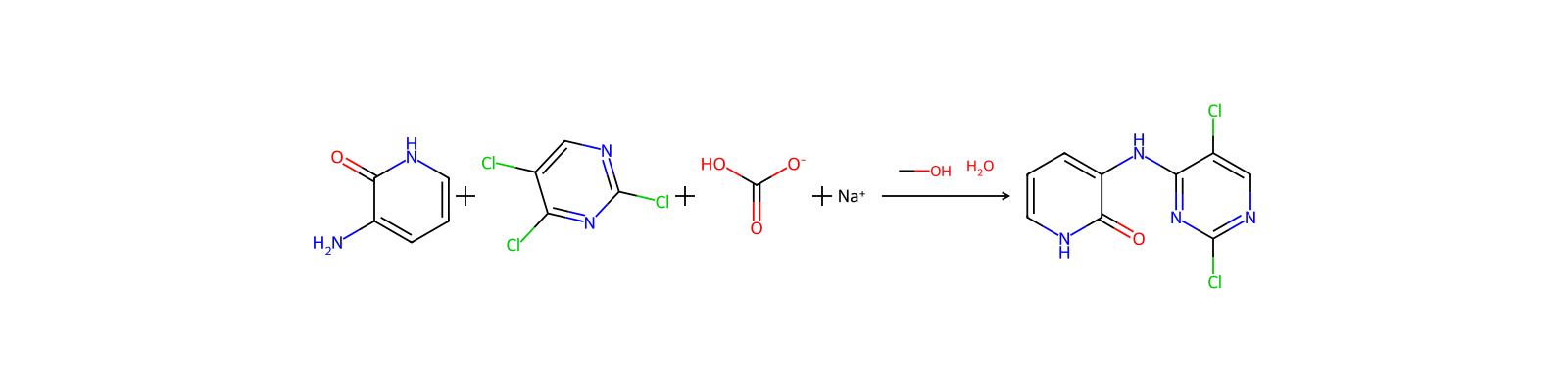


Compound notes
Loading…