
HRID 10415As product
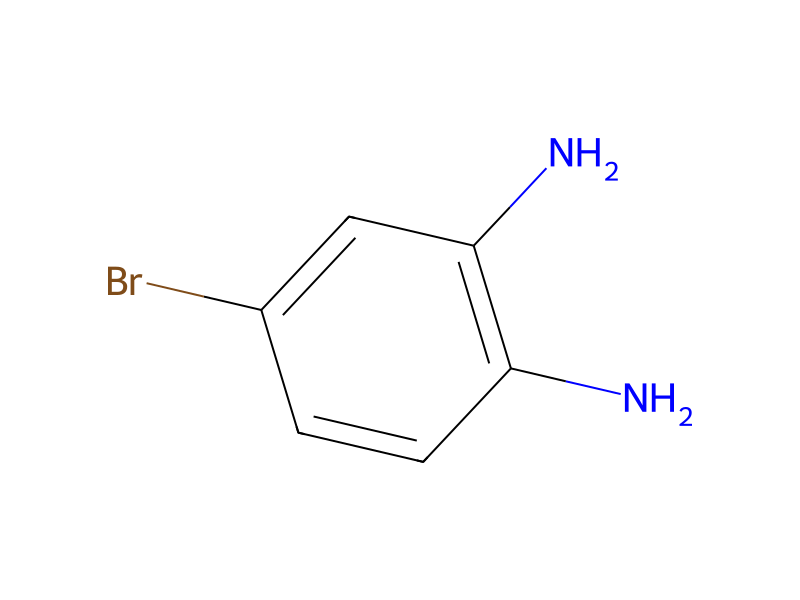
1575-37-7Nc1ccc(Br)cc1NWIHHVKUARKTSBU-UHFFFAOYSA-N1575-37-7DTXSID80314531Safety information is for reference only and does not replace the supplier’s Safety Data Sheet (SDS), applicable regulations, or professional assessment.
This chemical does not meet GHS hazard criteria for 1.8% (1 of 55) of reports.
Danger
H301 (83.6%): Toxic if swallowed [Danger Acute toxicity, oral]
P261, P264, P264+P265, P270, P271, P272, P280, P301+P316, P301+P317, P302+P352, P304+P340, P305+P351+P338, P319, P321, P330, P332+P317, P333+P317, P337+P317, P362+P364, P403+P233, P405, and P501 (click each P-code to see the statement)
Aggregated GHS information provided per 55 reports by companies from 10 notifications to the ECHA C&L Inventory. Each notification may be associated with multiple companies.
REACH registered substance: 4-bromobenzene-1,2-diamine (EC: 629-615-8)
1,2-Benzenediamine, 4-bromo-: Does not have an individual approval but may be used under an appropriate group standard
Uses4-Bromo-o-phenylenediamine, is used as an important raw material and intermediate used in organic Synthesis, pharmaceuticals, agrochemicals and dyestuff.
Uses4-Bromo-1,2-diaminobenzene can be used as a precursor for preparing fluorescent dipolar quinoxaline derivatives, which can find applications as potential emissive and electron-transport materials. It can also be used in the synthesis of 6-bromo-2-methylbenzimidazole.
General Description4-Bromo-1,2-diaminobenzene can be obtained from 1,2-diaminobenzene via acetylation followed by bromination and alkaline hydrolysis.


