HomeMCPWorkbenchSkills
HomeWorkbenchNotificationsMe
llms.txt · MCP GuidePrivacy Policy · Terms of Service · Supportv1.8.0
  1. Home
  2. /Compound

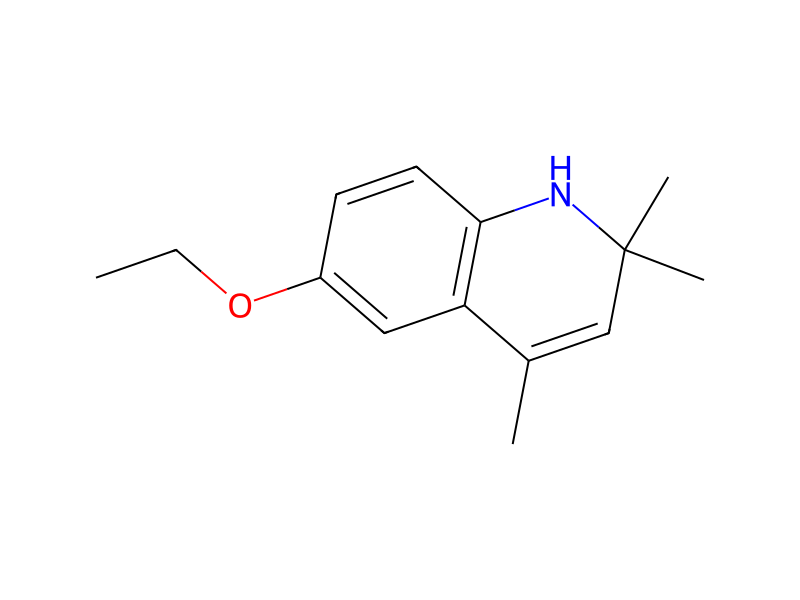
Ethoxyquin

HCID 3293
New noteNew reactionRequest quotes
Print preview
Basic informationOverviewNames & identifiersPropertiesSafety & regulationChemistry & industryRelated reactionsCompound notes
Substructure searchFind similar structures

Basic information

CAS
63301-91-7
Standard SMILES
CCOc1ccc2c(c1)C(C)=CC(C)(C)N2
InChIKey
DECIPOUIJURFOJ-UHFFFAOYSA-N
Molecular formula
C14H19NO
Average molar mass
217.31 g/mol
Monoisotopic mass
217.14666423

Overview

Ethoxyquin is a clear light yellow to dark brown viscous liquid. Discolors and stains badly. Mercaptan-like odor. (NTP, 1992)

Names & identifiers

Preferred name
Ethoxyquin
IUPAC
6-ethoxy-2,2,4-trimethyl-1H-quinoline
English name
Ethoxyquin
Molecular formula
C14H19NO
Molecular weight
217.31

Names & synonyms

ethoxyquin91-53-26-Ethoxy-2,2,4-trimethyl-1,2-dihydroquinolineSantoquinEthoxyquineAntioxidant ECStop-ScaldNix-ScaldSantoquineNiflexSantoflex ASantoflex AW
Show more names
eqEthoxiquinemqSantoflexEthoxyQuinoline1,2-dihydro-2,2,4-trimethyl-6-ethoxyquinolineETMDQ
Dawe's nutrigardNocrack AWQuinol EDAries AntoxPermanax 103Amea 100Niflex DAntage AW

Database identifiers

CAS
63301-91-7、91-53-2
PubChem CID
3293
DTXSID
DTXSID9020582
ChEMBL
CHEMBL172064
ChEBI
CHEBI:77323
UNII
9T1410R4OR
EC Number
202-075-7
Nikkaji
J3.556D

Properties

Computed structural properties

XLogP
3.1
Topological polar surface area
21.3 Ų
Hydrogen bond donors
1
Hydrogen bond acceptors
2
Rotatable bonds
2
Heavy atoms
16
Formal charge
0
Complexity
282

Experimental & physicochemical properties

Chemical Classes · 2 items

Other Uses -> Animal Feed Additives

Antioxidant

Pesticides · 3 items

Plant Growth Regulators

Active substance -> EU Pesticides database: Not approved

Pesticide (Ethoxyquin) -> USDA PDB

Food AdditivesANTIOXIDANT -> FDA Substance added to food
Density · 2 items

1.029 to 1.031 at 77 °F (NTP, 1992)

1.029-1.031 AT 25 °C/25 °C

Color/FormYELLOW LIQUID
Solubilityless than 1 mg/mL at 68 °F (NTP, 1992)
Flash Point225 °F (NTP, 1992)
Animal DrugsPharmaceuticals -> Animal Drugs -> Approved in Taiwan
Boiling Point · 2 items

253 to 257 °F at 2 mmHg (NTP, 1992)

123-125 °C AT 2 MM HG

Safety & regulation

Safety information is for reference only and does not replace the supplier’s Safety Data Sheet (SDS), applicable regulations, or professional assessment.

GHS classification

GHS Classification · 6 items

Warning

H302: Harmful if swallowed [Warning Acute toxicity, oral]

P264, P270, P301+P317, P330, and P501 (click each P-code to see the statement)

Warning

H302 (100%): Harmful if swallowed [Warning Acute toxicity, oral]

P264, P270, P273, P301+P317, P330, P391, and P501 (click each P-code to see the statement)

Hazard information

Regulatory Information · 6 items

Chemical: Quinoline, 6-ethoxy-1,2-dihydro-2,2,4-trimethyl-

Regulation (EC) No 1831/2003 (amended)

Ethoxyquin is listed in the dataset of EPA Human Health Benchmarks for Pesticides under the Safe Drinking Water Act (40 eCFR 141)

2008/941, 2011/143/EU

REACH registered substance: Ethoxyquin (EC: 202-075-7)

Ethoxyquin: Does not have an individual approval but may be used under an appropriate group standard

Fire HazardsThis chemical is combustible. (NTP, 1992)
Fire PotentialFIRE HAZARD /IS/ SLIGHT
Health Hazards · 1 item

SYMPTOMS: Symptoms of exposure to this compound include skin irritation. It can cause eye irritation. It can also cause skin sensitization (allergic reactions), lacrimation, depression, reproductive effects, liver effects, kidney effects and thyroid effects. Dermatitis may also occur.

Hazards Summary · 1 item

Allergic contact dermatitis reported in a feed mill worker; [Kanerva, p. 1793] A skin irritant; May cause reversible changes to the liver; Reports of contact dermatitis in animal feed employees; [HSDB] May polymerize on exposure to light and air; A skin and eye irritant; May cause skin sensitization; [CAMEO] Strongly associated with cases of occupational contact dermatitis; Causes increased liver enzymes in animal experiments; [Reference #2]

Chemistry & industry

Pharmacology

Metabolism/Metabolites · 2 items

MAJOR METABOLIC REACTION WAS DEETHYLATION OF ETHOXYQUIN WHICH PRODUCED 6-HYDROXY-2,2,4-TRIMETHYL-1,2-DIHYDROQUINOLINE & 2,2,4-TRIMETHYL-6-QUINOLINE. OTHER REACTIONS WERE HYDROXYLATION TO FOUR DIFFERENT HYDROXYLATED METABOLITES & ONE DIHYDROXYLATED METABOLITE.

An avg of 28 & 36% of dose of radioactivity was recovered in bile in 12 & 24 hr respectively following intragastric admin of (14)C-ethoxyquin to bile duct cannulated rats. Biliary radioactive substances included, in addn to unchanged ethoxyquin...8-hydroxyethoxyquin; hydroxylated 8-hydroxyethoxyquin; 6-ethoxy-2,2,4-trimethylquinolone; hydroxylated 6-ethoxy-2,2,4-trimethyl-8-quinolone; 6-ethoxy-2,4-dimethylquinoline; and 2,2,4-trimethyl-6-quinolone.

Absorption, Distribution and Excretion · 4 items

FEEDING TRIAL IN COWS WAS CONDUCTED TO DETERMINE WHETHER ETHOXYQUIN OR ITS RESIDUES ARE TRANSFERRED FROM FEED TO MILK WHEN ADDED TO COW FEED AT 0.015% OF DRY MATTER INTAKE. LESS THAN 7 UG ETHOXYQUIN/L WAS DETECTED IN MILK BY FLUORIMETRY & BY THIN-LAYER CHROMATOGRAPHY.

(14)C-ETHOXYQUIN WAS DISTRIBUTED THROUGHOUT MOST TISSUES & BLOOD AT 0.5 HR AFTER ADMIN TO RATS. HIGHEST RADIOACTIVITY THROUGHOUT EXPERIMENT WAS OBSERVED IN LIVER, KIDNEY, GI TRACT & ADIPOSE TISSUE. THERE WAS NO ACTIVITY IN CNS. OF DOSE INGESTED BY RAT 2.2 & 0.2% WERE FOUND IN LIVER AT 0.5 HR & 6 DAYS RESPECTIVELY FOLLOWING DOSE. HEPATIC PEAK IN RADIOACTIVITY WAS MEASURED AT 8 HR; & AFTER 6 DAYS 7.5% OF THIS LEVEL WAS STILL PRESENT IN LIVER. 6 DAYS AFTER ADMIN TO RATS RESIDUES OF ETHOXYQUIN & METABOLITES WERE PRESENT IN KIDNEY CORTEX, INTESTINES, LUNG, VARIOUS ADIPOSE TISSUES & BLOOD.

The compound is readily absorbed, metabolized, and excreted in urine and feces.

Ethoxyquin residue levels in the mouse tissue were determined by the HPLC-fluorometric detection method. Mice were given powdered feed containing 0, 0.125, and 0.5% ethoxyquin hydrochloric acid and the ethoxyquin residue levels in liver kidney, lung, and brain tissues were determined after 2, 4, 6, 10, and 14 wk (4 mice/group). The tissue samples were homogenized in 10 volumes (w/v) of acetonitrile-water (7:3 v/v) centrifuged and the supernatants were stored in a freezer for 2-3 hr or until the two layers separated; then the clear upper layers were analyzed. The mean ethoxyquin residue levels in the tissue ranged 0.84-4.58 ug ethoxyquin/g liver and 0.11-0.92 ug ethoxyquin/g brain. The relative weight of the liver (5.21-7.07% body weight) and the hepatic glutathione level (5.99-7.83 uM GSH/g tissue) of mice that received ethoxyquin were significantly higher than those of the controls (4.67-5.05% body weight and 4.30-5.78 uM GSH/g tissue, respectively). The mean hepatic mitochondrial glutathione levels of the higher ethoxyquin feeding group following dietary administration of ethoxyquin for 14 wk, was approximately twofold (1.68 nM GSH/mg protein) of both the control and the lower ethoxyquin feeding groups (0.83 and 0.74 nM GSH/mg protein, respectively.

Related reactions

13 records
New reaction record
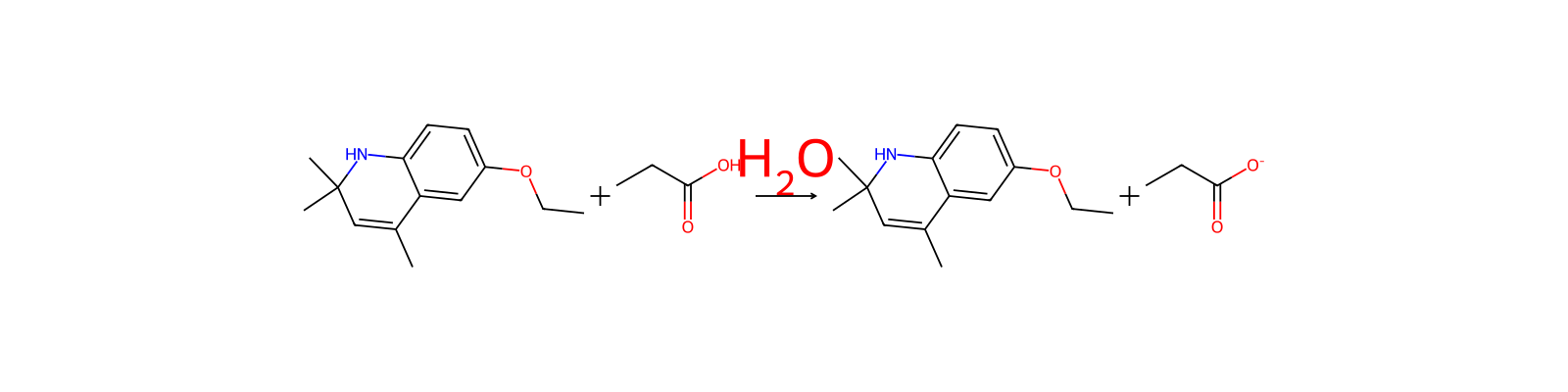
HRID 25795 reaction equation
HRID 25795As reactantuspto-grants-2005_02
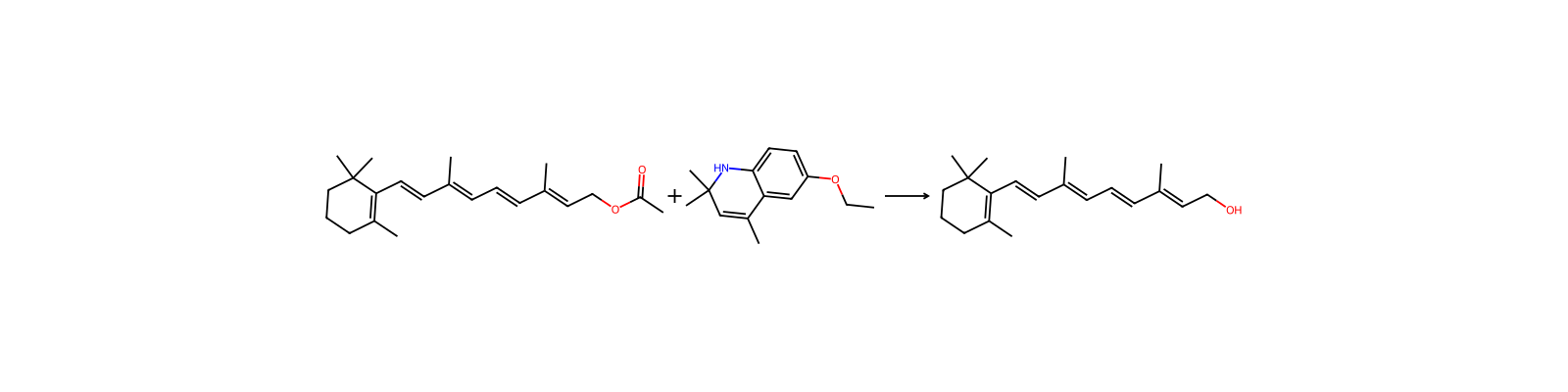
HRID 622790 reaction equation
HRID 622790As reactantuspto-grants-1988_09
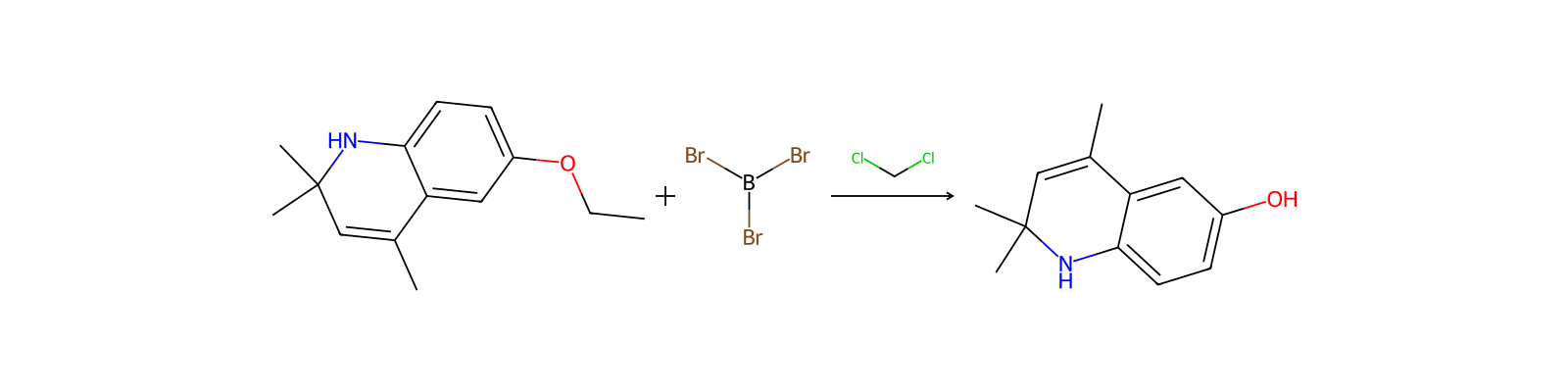
HRID 622791 reaction equation
HRID 622791As reactantuspto-grants-1988_09
HRID 837602 reaction equation
HRID 837602As reactantTest data from https://doi.org/10.1039/C8SC04228D
HRID 987357 reaction equation
HRID 987357As reactantuspto-grants-2003_10
HRID 987358 reaction equation
HRID 987358As reactantuspto-grants-2003_10
HRID 1659855 reaction equation
HRID 1659855As reactantuspto-grants-1981_12
HRID 1659856 reaction equation
HRID 1659856As reactantuspto-grants-1981_12
Page 1 of 2

Compound notes

Loading…

On this pageBasic informationOverviewNames & identifiersPropertiesSafety & regulationChemistry & industryRelated reactionsCompound notes
More actions
New noteNew reactionRequest quotes
Decomposition
... WHEN HEATED TO DECOMP, EMITS TOXIC FUMES ... .
Melting Point · 2 items

less than 32 °F (NTP, 1992)

Approximately 0 °C

Vapor Density · 2 items

7.48 (NTP, 1992) - Heavier than air; will sink (Relative to Air)

7.48 (AIR= 1)

Physicochemical properties

Melting point
0 °C · <0°C
Boiling point
123 · 123-125°C
Density
1.03 g/mL · 1.03 g/mL at 20 °C (lit.)
vapor pressure
0.035 Pa · 0.035Pa at 25℃
refractive index
1.569 · 1.569~1.571
Flash point
137 °C · 137 °C
storage temp.
2 · 2-8°C
solubility
50 mL/L, · ethanol: 50 mL/L, clear, brown
form
Liquid
pka
5.02 · 5.02±0.70(Predicted)
color
Yellow to Very Dark Brown
Water Solubility
0.1 g/100 · <0.1 g/100 mL at 20 ºC
Merck
14 · 14,3753
BRN
158223 · 158223
Henry's Law Constant
8 · 8.0×100 mol/(m3Pa) at 25℃, Ebert et al. (2023)
Stability
Stable. Combustible. Incompatible with oxidizing agents, strong acids. Polymerizes if heated. May polymerize upon exposure to light and air.
Major Application
cleaning productscosmeticsfood and beveragespersonal care
InChI
1S/C14H19NO/c1-5-16-11-6-7-13-12(8-11)10(2)9-14(3,4)15-13/h6-9,15H,5H2,1-4H3
InChIKey
DECIPOUIJURFOJ-UHFFFAOYSA-N
SMILES
CCOc1ccc2NC(C)(C)C=C(C)c2c1
LogP
3.39 · 3.39
CAS DataBase Reference
91 · 91-53-2(CAS DataBase Reference)
Substances Added to Food (formerly EAFUS)
ETHOXYQUIN
FDA 21 CFR
177.26 · 177.2600
EWG's Food Scores
4 · 4-5
FDA UNII
9 T1410R4OR · 9T1410R4OR
NIST Chemistry Reference
6 · Quinoline, 6-ethoxy-1,2-dihydro-2,2,4-trimethyl-(91-53-2)
EPA Substance Registry System
Ethoxyquin (91-53-2)
Pesticides Freedom of Information Act (FOIA)
Ethoxyquin
UNSPSC Code
41116107 · 41116107
NACRES
24 · NA.24
Symbol(GHS)
7 · GHS07
Signal word
Warning
Hazard statements
302 · H302
Precautionary statements
301 · P301+P312+P330
PPE
Eyeshields, Faceshields, Gloves, type ABEK (EN14387) respirator filter
Hazard Codes
Xn
Risk Statements
22 · 22
Safety Statements
24 · 24
RIDADR
3082 · 3082
WGK Germany
1 · 1
RTECS
8225000 · VB8225000
F
2 · 2-8-10
TSCA
TSCA listed
HazardClass
9 · 9
PackingGroup
III
HS Code
29334900 · 29334900
Storage Class
10 · 10 - Combustible liquids
Hazard Classifications
4 Oral · Acute Tox. 4 Oral
Hazardous Substances Data
91 · 91-53-2(Hazardous Substances Data)
Toxicity
50 orally · LD50 orally in rats, mice: 1920, 1730 mg/kg (Piul'skaya)
REACH Registrations
Inactive
FDA Requirements · 3 items

Ethoxyquin is a food additive permitted for direct addition to food for human consumption, as long as 1) the quantity added to food does not exceed the amount reasonably required to accomplish its intended physical, nutritive, or other technical effect in food, and 2) when intended for use in or on food it is of appropriate food grade and is prepared and handled as a food ingredient.

Ethoxyquin in animal feeds may be safely used in accordance with conditions prescribed in 21 CFR Part 573.

Ethoxyquin in certain dehydrated forage crops may be safely used in accordance with conditions prescribed in 21 CFR Part 573.

Reactive GroupAmines, Phosphines, and Pyridines
FIFRA Requirements · 2 items

As the federal pesticide law FIFRA directs, EPA is conducting a comprehensive review of older pesticides to consider their health and environmental effects and make decisions about their future use. Under this pesticide reregistration program, EPA examines health and safety data for pesticide active ingredients initially registered before November 1, 1984, and determines whether they are eligible for reregistration. In addition, all pesticides must meet the new safety standard of the Food Quality Protection Act of 1996. Ethoxyquin is found on List A, which contains most food use pesticides and consists of the 194 chemical cases (or 350 individual active ingredients) for which EPA issued registration standards prior to FIFRA, as amended in 1988. Case No: 0003; Pesticide type: Herbicide; Registration Standard Date: 03/01/81; Case Status: OPP is reviewing data from the pesticide's producers regarding its human health and/or environmental effects, or OPP is determining the pesticide's eligibility for reregistration and developing the Reregistration Eligibility Decision (RED) document.; Active ingredient (AI): Ethoxyquin; Data Call-in (DCI) Date(s): 08/20/90, 10/13/95; AI Status: The producers of the pesticide has made commitments to conduct the studies and pay the fees required for reregistration, and are meeting those commitments in a timely manner.

A tolerance is established for residues of the plant regulator ethoxyquin (1,2-dihydro-6-ethoxy-2,2,4-trimethylquinoline) from preharvest or postharvest use in or on apples and pears.

Reactivity AlertsPolymerizable
Reactivity ProfileETHOXYQUIN may undergo a hazardous polymerization at temperatures above 320 °F. Tends to polymerize and darken in color on exposure to light and air. Not compatible with oxidizing agents and with strong acids (NTP, 1992).
Air and Water ReactionsPolymerizes and darkens in color on exposure to light and air. Insoluble in water.
Hazard Classes and Categories · 4 items

Acute Tox. 4 (100%)

Acute toxicity - category 4

Acute toxicity (Oral) - Category 4

Acute Tox. 4 *

Safety & protection

Fire FightingFires involving this material can be controlled with a dry chemical, carbon dioxide or Halon extinguisher. A water spray may also be used. (NTP, 1992)
First Aid · 1 item

EYES: First check the victim for contact lenses and remove if present. Flush victim's eyes with water or normal saline solution for 20 to 30 minutes while simultaneously calling a hospital or poison control center. Do not put any ointments, oils, or medication in the victim's eyes without specific instructions from a physician. IMMEDIATELY transport the victim after flushing eyes to a hospital even if no symptoms (such as redness or irritation) develop.

Nonfire Spill Response · 1 item

SMALL SPILLS AND LEAKAGE: If you spill this chemical, FIRST REMOVE ALL SOURCES OF IGNITION. Then, use absorbent paper to pick up all liquid spill material. Your contaminated clothing and absorbent paper should be sealed in a vapor-tight plastic bag for eventual disposal. Solvent wash all contaminated surfaces with 60-70% ethanol followed by washing with a soap and water solution. Do not reenter the contaminated area until the Safety Officer (or other responsible person) has verified that the area has been properly cleaned.

Disposal Methods · 1 item

SRP: At the time of review, criteria for land treatment or burial (sanitary landfill) disposal practices are subject to significant revision. Prior to implementing land disposal of waste residue (including waste sludge), consult with environmental regulatory agencies for guidance on acceptable disposal practices.

Allowable TolerancesA tolerance of 3 ppm is established for residues of the plant regulator ethoxyquin (1,2-dihydro -6-ethoxy -2,2,4-trimethylquinoline)from preharvest or postharvest use in or on apples and pears.
Personal Protective Equipment (PPE) · 1 item

RECOMMENDED RESPIRATOR: Where the neat test chemical is weighed and diluted, wear a NIOSH-approved half face respirator equipped with an organic vapor/acid gas cartridge (specific for organic vapors, HCl, acid gas and SO2) with a dust/mist filter. (NTP, 1992)

Toxicology

Interactions · 3 items

ELEVATION OF EPOXIDE HYDRATASE ACTIVITY IS OBTAINED BY IP OR ORAL TREATMENT OF MICE WITH ETHOXYQUIN. THIS ELEVATION IS PREVENTED BY CONCOMITANT TREATMENT WITH CYCLOHEXIMIDE.

SINGLE ORAL DOSE OF ETHOXYQUIN (200 MG/KG) TO RATS INHIBITED HEPATIC MICROSOMAL HYDROXYLATION OF THIABENDAZOLE, ANILINE & BIPHENYL BY 65, 40 & 40% IN VITRO AT 1 HR AFTER DOSAGE. ORAL ETHOXYQUIN (400 MG/KG) DELAYED ABSORPTION OF & DECR PLASMA CONCN OF THIABENDAZOLE.

The effects of dietary administration of ethoxyquin on aflatoxin B1 metabolism, DNA adduct formation and removal and hepatic tumorigenesis were examined in male Fischer rats. Rats were fed a semipurified diet containing 0.4% ethoxyquin for 1 wk, gavaged with 250 ug of aflatoxin B1 per kg 5 times a wk during the next 2 wk, and finally restored to the control diet 1 wk after cessation of dosing. At 4 mo, focal areas of hepatocellular alteration were identified and quantitated by staining sections of liver for gamma-glutamyl transpeptidase. Treatment with ethoxyquin reduced by greater than 95% both area and volume of liver occupied by gamma-glutamyl transpeptidase-positive foci. Utilizing the same multiple dosing protocol, patterns of covalent modifications of DNA by aflatoxin B1 were determined. Ethoxyquin produced a dramatic reduction in the binding of aflatoxin B1 to hepatic DNA: 18-fold initially and 3-fold at the end of the dosing period. Although binding was detectable at 3 and 4 mo postdosing, no effect of ethoxyquin was observed, suggesting that these persistent adducts are not of primary relevance to aflatoxin B1 carcinogenesis. Analysis of nucleic acid bases by high-performance liquid chromatography revealed no qualitative differences in adduct species between treatment groups. The inhibitory effect of ethoxyquin on aflatoxin B1 binding to DNA and tumorigenesis appears related to induction of detoxication enzymes. Rats fed 0.4% ethoxyquin for 7 days showed a 5-fold increase in hepatic cytosolic glutathione S-transferase (GST)-specific activities. Multiple molecular forms of glutathione S-transferase were induced, and concomitant elevations in messenger RNA levels coding for the synthesis of glutathione S-transferase subunits were observed. Correspondingly, billary elimination of aflatoxin B1-glutathione conjugate was increased 4.5-fold in animals on the ethoxyquin diet during the first 2 hr following oral administration of 250 micrograms of aflatoxin B1 per kg. Thus, induction by ethoxyquin of enzymes important to aflatoxin B1 detoxication, such as glutathione S-transferase can lead to enhanced carcinogen elimination, as well as reductions of aflatoxin B1-DNA adduct formation and subsequent expression of preneoplastic lesions, and, ultimately, neoplasia.

Adverse EffectsOccupational hepatotoxin - Secondary hepatotoxins: the potential for toxic effect in the occupational setting is based on cases of poisoning by human ingestion or animal experimentation.
Ongoing Test Status · 1 item

The following link will take the user to the National Toxicology Program (NTP) Test Agent Search Results page, which tabulates all of the "Standard Toxicology & Carcinogenesis Studies", "Developmental Studies", and "Genetic Toxicity Studies" performed with this chemical. Clicking on the "Testing Status" link will take the user to the status (i.e., in review, in progress, in preparation, on test, completed, etc.) and results of all the studies that the NTP has done on this chemical. [http://ntp-apps.niehs.nih.gov/ntp_tox/index.cfm?fuseaction=ntpsearch.searchresults&searchterm=91-53-2]

Human Toxicity Excerpts · 2 items

SKIN IRRITANT. MAY PRODUCE REVERSIBLE LIVER CHANGES.

CASES OF CONTACT DERMATITIS DUE TO ADDITIVES IN ANIMAL FEED SUBSTANCES ARE DESCRIBED OCCURRING IN ANIMAL FEED WORKERS. THERE ARE 2 CASES OF SENSITIVITY TO ETHOXYQUIN.

Carcinogen ClassificationNo indication of carcinogenicity to humans (not listed by IARC).
Non-Human Toxicity Excerpts · 5 items

ITS CHRONIC TOXICITY IS APPARENTLY LOW, 0.2% IN DIET CAUSING TRANSIENT DEPRESSION IN GROWTH RATE OF RATS. AT AUTOPSY, DAMAGE WAS APPARENT IN KIDNEYS, LIVER & THYROID GLAND IN MANY MALES BUT IN NONE OF FEMALES ... .

/IN RATS FED A DIET CONTAINING 0.2% OF SANTOQUIN/ SOME TUMORS WERE FOUND AFTER CONTINUOUS ADMIN ... .

ORAL ADMIN OF ETHOXYQUIN TO RATS INCR EPOXIDE HYDRATASE ACTIVITY IN LIVER MICROSOMES. T/2 OF INCR 3-4 DAYS. AN INCR OF THIS ENZYME WAS ALSO PRODUCED IN MICE BY IP ADMIN.

DIETARY ADMIN OF 0.5% ETHOXYQUIN MARKEDLY ENHANCED RAT HEPATIC UDP-GLUCURONOSYLTRANSFERASE ACTIVITIES.

For more Non-Human Toxicity Excerpts (Complete) data for ETHOXYQUIN (12 total), please visit the HSDB record page.

RAIS Toxicity Values · 4 items

1

OPP

0.04

OPP

EPA Human Health Benchmarks for Pesticides · 6 items

Ethoxyquin

1

7000

Children

0.04

200

Regulatory information

FDA Requirements · 3 items

Ethoxyquin is a food additive permitted for direct addition to food for human consumption, as long as 1) the quantity added to food does not exceed the amount reasonably required to accomplish its intended physical, nutritive, or other technical effect in food, and 2) when intended for use in or on food it is of appropriate food grade and is prepared and handled as a food ingredient.

Ethoxyquin in animal feeds may be safely used in accordance with conditions prescribed in 21 CFR Part 573.

Ethoxyquin in certain dehydrated forage crops may be safely used in accordance with conditions prescribed in 21 CFR Part 573.

FIFRA Requirements · 2 items

As the federal pesticide law FIFRA directs, EPA is conducting a comprehensive review of older pesticides to consider their health and environmental effects and make decisions about their future use. Under this pesticide reregistration program, EPA examines health and safety data for pesticide active ingredients initially registered before November 1, 1984, and determines whether they are eligible for reregistration. In addition, all pesticides must meet the new safety standard of the Food Quality Protection Act of 1996. Ethoxyquin is found on List A, which contains most food use pesticides and consists of the 194 chemical cases (or 350 individual active ingredients) for which EPA issued registration standards prior to FIFRA, as amended in 1988. Case No: 0003; Pesticide type: Herbicide; Registration Standard Date: 03/01/81; Case Status: OPP is reviewing data from the pesticide's producers regarding its human health and/or environmental effects, or OPP is determining the pesticide's eligibility for reregistration and developing the Reregistration Eligibility Decision (RED) document.; Active ingredient (AI): Ethoxyquin; Data Call-in (DCI) Date(s): 08/20/90, 10/13/95; AI Status: The producers of the pesticide has made commitments to conduct the studies and pay the fees required for reregistration, and are meeting those commitments in a timely manner.

A tolerance is established for residues of the plant regulator ethoxyquin (1,2-dihydro-6-ethoxy-2,2,4-trimethylquinoline) from preharvest or postharvest use in or on apples and pears.

Safety data

F
2-8-10
PPE
Eyeshields, Faceshields, Gloves, type ABEK (EN14387) respirator filter
wgk
1
tsca
TSCA listed
rtecs
VB8225000
ridadr
3082
hs_code
29334900
Toxicity
LD50 orally in rats, mice: 1920, 1730 mg/kg (Piul'skaya)
risk_code
22
Signal word
Warning
Symbol(GHS)
GHS07
hazard_code
Xn
safety_code
24
hazard_class
9
Storage Class
10 - Combustible liquids
packing_group
III
Hazard statements
H302
REACH Registrations
Inactive
Hazard Classifications
Acute Tox. 4 Oral
Precautionary statements
P301+P312+P330
Hazardous Substances Data
91-53-2(Hazardous Substances Data)
Cellular LocationsMembrane

Uses & manufacturing

Uses · 6 items

Used as an additive to animal feed; [Kanerva, p. 1793] Used as an antioxidant for food and feed and as anti-degradation agent for rubber; [Merck Index] Also used as a post-harvest dip for apples and pears; [ChemIDplus] Registered in the US as an antioxidant for the control of post-harvest scald (browning) in pears; Also registered with the FDA as a preservative for animal feed, dehydrated crops, sorghum, and for color preservation in chili powder, paprika, and ground chili; [Reference #2]

Farming (Pesticides) [Category: Industry]

For ethoxyquin (USEPA/OPP Pesticide Code: 055501) ACTIVE products with label matches. /SRP: Registered for use in the U.S. but approved pesticide uses may change periodically and so federal, state and local authorities must be consulted for currently approved uses./

MEDICATION (VET):

ANTIOXIDANT IN FEED & FOOD; ANTIDEGRADATION AGENT FOR RUBBER

Antioxidant, used as post-harvest fruit-drop to prevent common scald of apples & pears in storge; Formerly added to poultry feeds & forage crops

Methods of Manufacturing/BY PASSING ACETONE VAPOR INTO P-PHENETIDINE CONTAINING 1% OF IODINE @ 120-130 °C & SEPARATING BY DISTILLATION/
Formulations/Preparations · 2 items

USEPA/OPP Pesticide Code 055501; Trade Names: Stop-scald.

Emulsifiable concentrate

Use ClassificationPharmaceuticals -> Animal Drugs -> Approved in Taiwan
General Manufacturing Information · 4 items

Quinoline, 6-ethoxy-1,2-dihydro-2,2,4-trimethyl-: ACTIVE

2,4-DIMETHYL-6-ETHOXYQUINOLINE, A REACTION PRODUCT OF ETHOXYQUIN, OCCURS IN COMMERCIAL FEEDS & COULD INTERFERE IN ANALYSIS OF MIXED COMMERCIAL FEEDS FOR AFLATOXIN.

THE USE OF ETHOXYQUIN AS FEED ADDITIVE MAY AGGRAVATE POTENTIAL MYCOTOXIN HAZARDS IN CONTAMINATED FEEDSTUFFS BY ALTERING THE TYPE & QUANTITY OF AFLATOXIN PRODUCED.

/ Stop Scald /trade name / discontinued

Applications · 4 items

DescriptionEthoxyquin is used as an antioxidant in animal feed and caused contact dermatitis in a worker at an animal feed mill.

UsesEthoxyquin is an antioxidant used in the preservation of color in chili powder, ground chili, and paprika.

UsesAntioxidant in feed and food; antidegradation agent for rubber.

General DescriptionClear light yellow to dark brown viscous liquid. Discolors and stains badly. Mercaptan-like odor.

Upstream & downstream products

Upstream raw materials

PhenetidineAcetoneBenzenesulfonic acidPara toluene

Downstream products

Mesityl oxide2,2,4-Trimethyl-1,2-dihydro-quinolin-6-ol
Additional notes · 1 item

DefinitionChEBI: Ethoxyquin is a quinoline that is 1,2-dihydroquinoline bearing three methyl substituents at position 2, 2 and 4 as well as an ethoxy substituent at position 6. It has a role as a herbicide, an UDP-glucuronosyltransferase activator, a neuroprotective agent, a Hsp90 inhibitor, a genotoxin, a food antioxidant, a geroprotector and an antifungal agrochemical. It is a member of quinolines and an aromatic ether.