4-Chloro-1,2-dinitrobenzene
Completing data — refresh the page later to see the latest

Basic information
- CAS
610-40-2- Standard SMILES
O=[N+]([O-])c1ccc(Cl)cc1[N+](=O)[O-]- InChIKey
QVQSOXMXXFZAKU-UHFFFAOYSA-N- Molecular formula
- C6H3ClN2O4
- Average molar mass
- 202.55 g/mol
- Monoisotopic mass
- 201.9781343
Names & identifiers
- Preferred name
- 4-Chloro-1,2-dinitrobenzene
- IUPAC
- 4-chloro-1,2-dinitrobenzene
- English name
- 3,4-Dinitrochlorobenzene
- Molecular formula
- C6H3ClN2O4
- Molecular weight
- 202.55
Names & synonyms
610-40-24-Chloro-1,2-dinitrobenzene1-Chloro-3,4-dinitrobenzeneBenzene, 4-chloro-1,2-dinitro-Z29B1F274E1,2-dinitro-4-chlorobenzeneEINECS 210-223-7NSC 119343NSC-119343DTXSID3060586RefChem:520704DTXCID7042932
Show more names
Bendamustine Impurity 544-Chloro-1,2-dinitrobenzen3,4-Dinitrochlorobenzene>1-CHLORO-3,4-DINITROBENZENE1,2-Dinitro-5-chlorobenzene1-Chloro-3,4-dinitrobenzene, 92%+
210-223-73,4-DinitrochlorobenzeneMFCD000072124-chloro-1,2-dinitro-benzene1-Chloro-3.4-dinitrobenzeneSCHEMBL1524058AKOS015889665Q2651784
Database identifiers
- CAS
610-40-2- PubChem CID
- 33097
- DTXSID
DTXSID3060586- UNII
- Z29B1F274E
- EC Number
- 210-223-7
- Nikkaji
- J95.614G
Properties
Computed structural propertiesFilling in
- XLogP
- 2.2
- Topological polar surface area
- 91.6 Ų
- Hydrogen bond donors
- 0
- Hydrogen bond acceptors
- 4
- Rotatable bonds
- 0
- Heavy atoms
- 13
- Formal charge
- 0
- Complexity
- 224
Experimental & physicochemical properties
DensityRelative density (water = 1): 1.687
Flash Point>110 °C
Decomposition315 °C
Melting Point40-41 °C
Physical DescriptionYELLOW CRYSTALS.
Kovats Retention Index1546.8
Physicochemical properties
- Melting point
- 40 · 40-41 °C
- Boiling point
- 16 °C · 16 °C (4 mmHg)
- Density
- 1.687 g/mL · 1.687 g/mL at 25 °C(lit.)
- refractive index
- 20 · n20/D 1.587(lit.)
- Flash point
- 230 °F · >230 °F
- storage temp.
- 0 · 0-10°C
- form
- Oily Liquid
Safety & regulation
Safety information is for reference only and does not replace the supplier’s Safety Data Sheet (SDS), applicable regulations, or professional assessment.
GHS classification
GHS Classification
Danger
H301 (100%): Toxic if swallowed [Danger Acute toxicity, oral];H311 (97.8%): Toxic in contact with skin [Danger Acute toxicity, dermal];H331 (91.1%): Toxic if inhaled [Danger Acute toxicity, inhalation];H373 (97.8%): May causes damage to organs through prolonged or repeated exposure [Warning Specific target organ toxicity, repeated exposure];H400 (100%): Very toxic to aquatic life [Warning Hazardous to the aquatic environment, acute hazard];H410 (97.8%): Very toxic to aquatic life with long lasting effects [Warning Hazardous to the aquatic environment, long-term hazard]
P260, P261, P262, P264, P270, P271, P273, P280, P301+P316, P302+P352, P304+P340, P316, P319, P321, P330, P361+P364, P391, P403+P233, P405, and P501 (click each P-code to see the statement)
Aggregated GHS information provided per 45 reports by companies from 5 notifications to the ECHA C&L Inventory. Each notification may be associated with multiple companies.;Information may vary between notifications depending on impurities, additives, and other factors. The percentage value in parenthesis indicates the notified classification ratio from companies that provide hazard codes. Only hazard codes with percentage values above 10% are shown. For more detailed information, please visit ECHA C&L website.
Hazard information
Regulatory InformationBenzene, 4-chloro-1,2-dinitro-: Does not have an individual approval but may be used under an appropriate group standard
Fire HazardsCombustible. Gives off irritating or toxic fumes (or gases) in a fire.
EC ClassificationSymbol: T, N; R: 23/24/25-33-50/53; S: (1/2)-28-36/37-45-60-61; Note: C
UN ClassificationUN Hazard Class: 6.1; UN Pack Group: II
Chemistry & industry
Uses & manufacturing
General Manufacturing InformationBenzene, 4-chloro-1,2-dinitro-: ACTIVE
Applications
DescriptionSecurinine is derived from the leaf of Securinega suffruticosa Rehd., which was first separated by V.I.Murav’eva in 1956 . Securinega suffruticosa Rehd., a kind of subshrub plant, is widely distributed in temperate and subtropical regions . It has strong adaptability and can be planted in most parts of China. Moreover, it is rich in natural resources. Securinega suffruticosa Rehd. is a folk medicine whose root is the main component, with the effects of activating circulation, spleen, and stomach to treat rheumatism waist pain, limb numbness, infant malnutrition, and other diseases. The roots, stems, leaves, flowers, and skin of Securinega suffruticosa Rehd. contain alkaloids, in which securinine is the main ingredient.
HistorySecurinine was first isolated by a Soviet scholar from the Wusuli region, but its chemical structure was separated and finally determined by Chinese scholars from local sources . The main structural feature is a tetracyclic compound containing an indolizine, pyrrole elidine, or quinolizine ring and an α, β-unsaturated pentahydrin ring whose basic structural skeleton type is as shown in what follows .Owing to the complexity of the chemical reaction of securinine, reports on its chemical reactivity and structural modification have been relatively scarce since securinine was reported on in 1956. However, the research on chemical total synthesis and biological activities of securinine has made a certain amount of progress.Securinine has a rigid molecular structure containing four rings and three chiral centers, which makes synthesis difficult. From 1974 to 1978, three research groups from Japan, the USA, and Canada studied the biosynthesis of securinine by feeding animals with isotope-labeled S. suffruticosa.
UsesThis compound is a sensitizer.
Uses3,4-Dinitrochlorobenzene is a useful reactant in organic synthesis.
Upstream & downstream products
Downstream products
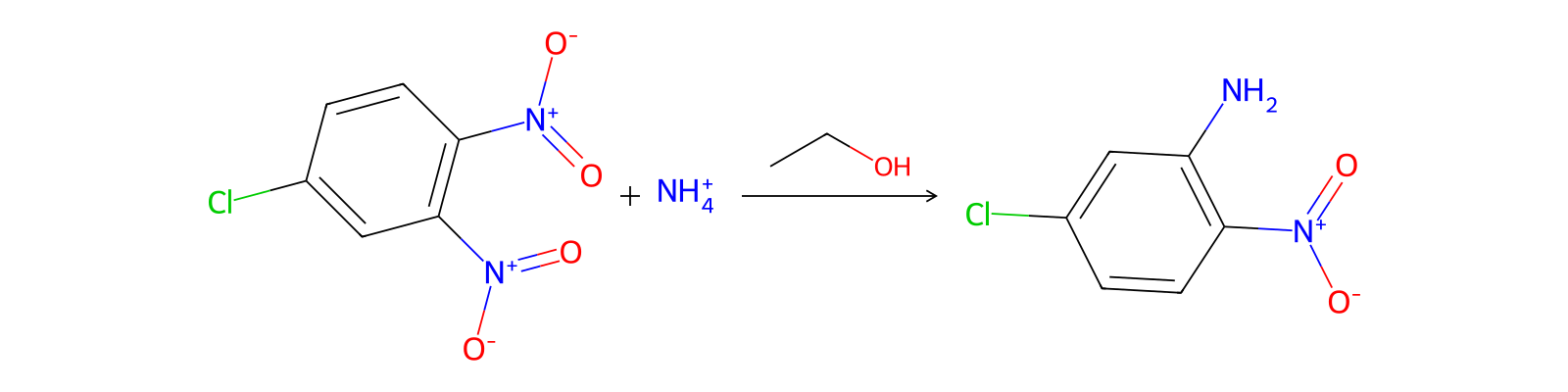
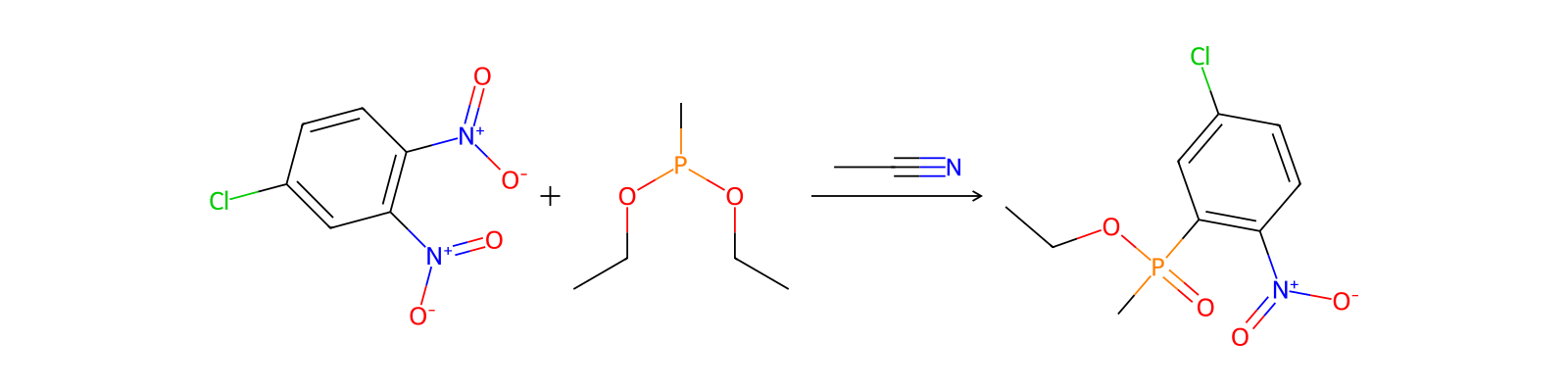
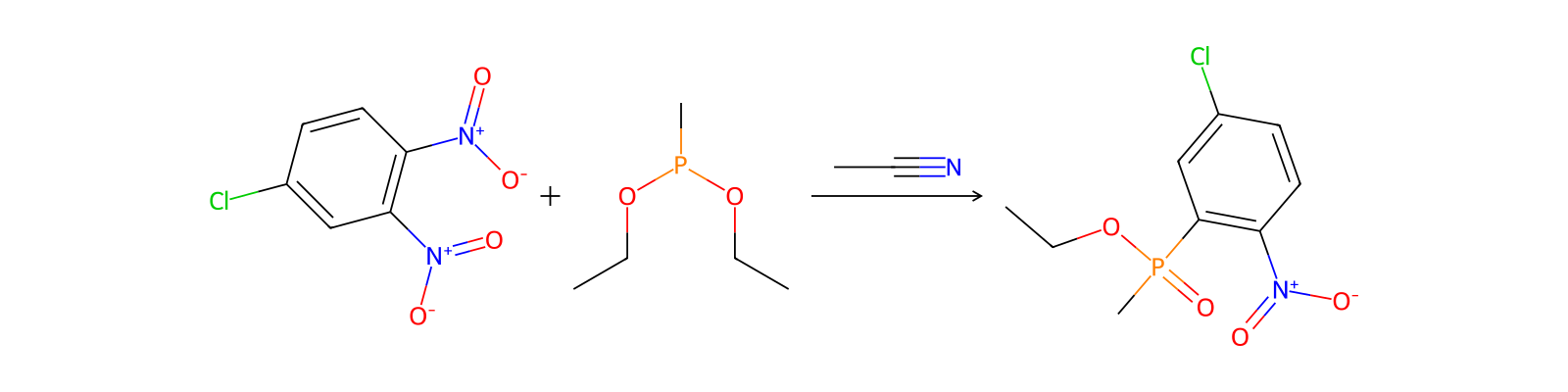
Related reactions
39 records




Compound notes
Loading…