
5-Bromo-2-chlorobenzoic acid
Completing data — refresh the page later to see the latest

Basic information
- CAS
21739-92-4- Standard SMILES
O=C(O)c1cc(Br)ccc1Cl- InChIKey
FGERXQWKKIVFQG-UHFFFAOYSA-N- Molecular formula
- C7H4BrClO2
- Average molar mass
- 235.46 g/mol
- Monoisotopic mass
- 233.90832
Names & identifiers
- Preferred name
- 5-Bromo-2-chlorobenzoic acid
- IUPAC
- 5-bromo-2-chlorobenzoic acid
- English name
- 5-Bromo-2-chlorobenzoic acid
- Molecular formula
- C7H4BrClO2
- Molecular weight
- 235.46
Names & synonyms
5-Bromo-2-chlorobenzoic acid21739-92-4Benzoic acid, 5-bromo-2-chloro-DTXSID40176132EINECS 244-558-5RefChem:533141DTXCID6098623244-558-52-Chloro-5-bromobenzoic acidMFCD00002415Dapagliflozin Impurity 335-Bromo-2-Chloro benzoic acid
Show more names
BCBA5-Br-2-CI Benzoic acid5-bromo-2-chlorobenzoate5-Bromo-2-chlorobenzoicaciEmpagliflozin Impurity 1822-chloro 5-bromo bezoic acid5-Bromo-2-Chlorobenzoci Acid5-Bromo-2-chlorobenzoic(BCBA)
5-bromo-2-chloro-benzoic acid5-bromo-2-chorobenzoic acid5-Bromo-2-chlorobenzoic acid, 98%AKOS000119557EN300-20497AB01331421-02BCP07097MFK3MYA2FZ
Database identifiers
- CAS
21739-92-4- PubChem CID
- 33127
- DTXSID
DTXSID40176132- UNII
- MFK3MYA2FZ
- EC Number
- 244-558-5
- Nikkaji
- J295J
Properties
Computed structural propertiesFilling in
- XLogP
- 2.9
- Topological polar surface area
- 37.3 Ų
- Hydrogen bond donors
- 1
- Hydrogen bond acceptors
- 2
- Rotatable bonds
- 1
- Heavy atoms
- 11
- Formal charge
- 0
- Complexity
- 163
Experimental & physicochemical properties
LogP3.16
Physicochemical properties
- Melting point
- 154 · 154-156 °C (lit.)
- Boiling point
- 324.5 · 324.5±27.0 °C(Predicted)
- Density
- 1.7312 · 1.7312 (rough estimate)
- refractive index
- 1.559 · 1.5590 (estimate)
- storage temp.
- Sealed in dry,Room Temperature
- solubility
- 2.63 g/l · 2.63g/l
- pka
- 2.49 · 2.49±0.25(Predicted)
- form
- Solid
- color
- Off white colored powder
- Water Solubility
- 2.63 g/L · Soluble in water 2.63 g/L @20°C.
- BRN
- 2691432 · 2691432
- InChI
- InChI=1S/C7H4BrClO2/c8-4-1-2-6(9)5(3-4)7(10)11/h1-3H,(H,10,11)
- InChIKey
Safety & regulation
Safety information is for reference only and does not replace the supplier’s Safety Data Sheet (SDS), applicable regulations, or professional assessment.
GHS classification
GHS Classification
Warning
H315 (100%): Causes skin irritation [Warning Skin corrosion/irritation]
P261, P264, P264+P265, P271, P280, P302+P352, P304+P340, P305+P351+P338, P319, P321, P332+P317, P337+P317, P362+P364, P403+P233, P405, and P501 (click each P-code to see the statement)
Aggregated GHS information provided per 53 reports by companies from 9 notifications to the ECHA C&L Inventory. Each notification may be associated with multiple companies.
Hazard information
Regulatory Information
PMN - indicates a commenced PMN (Pre-Manufacture Notices) substance.
REACH registered substance: 5-bromo-2-chlorobenzoic acid (EC: 244-558-5)
Hazard Classes and CategoriesSkin Irrit. 2 (100%)
Safety data
- PPE
- dust mask type N95 (US), Eyeshields, Gloves
- wgk
- 3
- tsca
- TSCA listed
- hs_code
- 29163900
- risk_code
- 36/37/38
- Signal word
- Warning
- Symbol(GHS)
- GHS07
- hazard_code
- Xi
- safety_code
- 26-37/39
- hazard_class
- IRRITANT
- Storage Class
- 11 - Combustible Solids
- target organs
- Respiratory system
Chemistry & industry
Uses & manufacturing
General Manufacturing InformationBenzoic acid, 5-bromo-2-chloro-: ACTIVE
Applications
Description5-Bromo-2-chlorobenzoic acid (BCBA) is an organic reagent that can be used in electroinduced dehalogenation reactions. Ag/Cu electrodes exhibit high electrocatalytic activity in the dehalogenation reaction of BCBA. The process is characterised by a sequence of halide excretion and hydrogen addition. Since the bond dissociation energy value of C-Br bond is smaller than that of C-Cl bond, Br-w is more easily released from the benzene ring. As C-Br breaks, BCBA gains electrons and hydrogen to form the intermediate 2-chlorobenzoate. C-Cl then breaks in the same way to give the final product benzoate.
Uses5-Bromo-2-chlorobenzoic acid was used to evaluate the homogeneity of organic powder. It can be used to produce 2-chloro-5-deuteriobenzoic acid.
Upstream & downstream products
Upstream raw materials
Downstream products
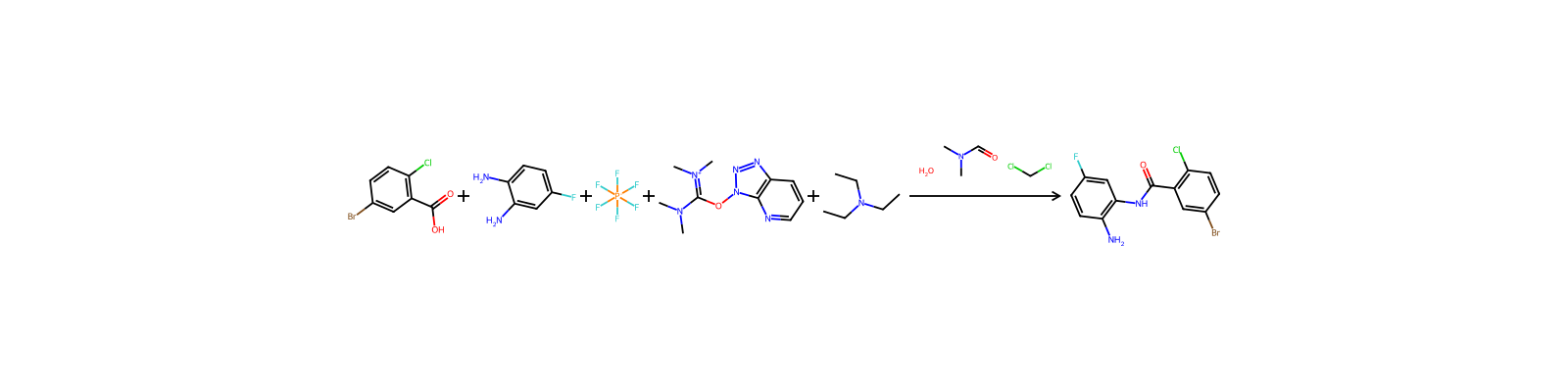
Related reactions
149 records






Compound notes
Loading…