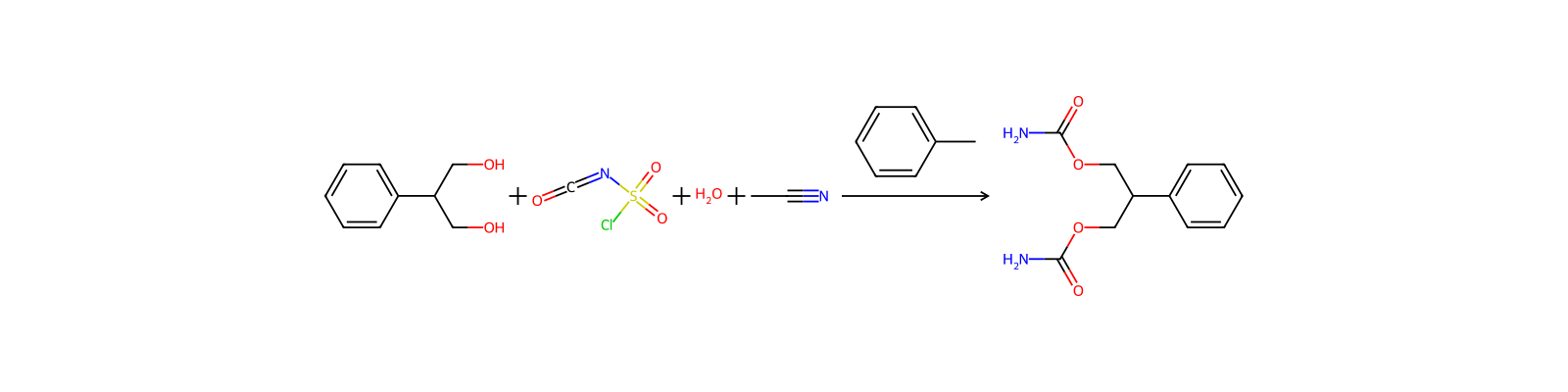
HRID 1363476As product
Completing data — refresh the page later to see the latest
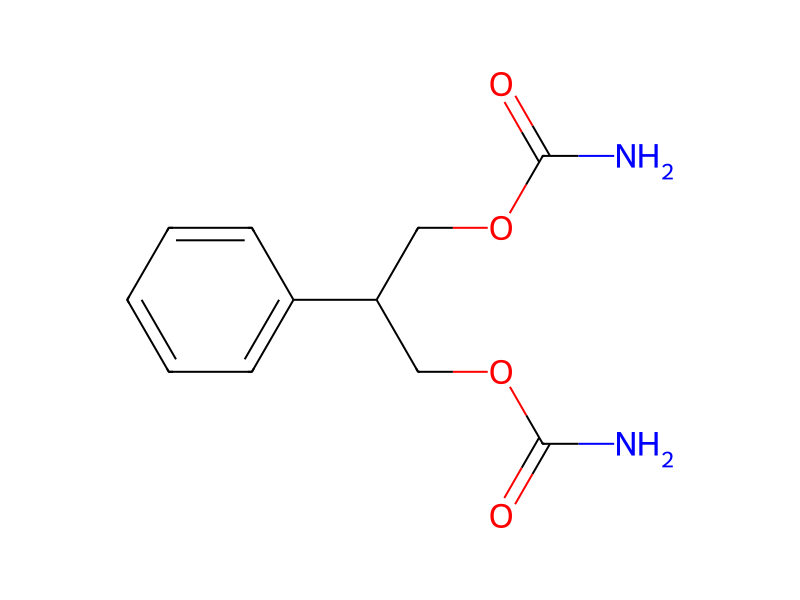
25451-15-4NC(=O)OCC(COC(N)=O)c1ccccc1WKGXYQFOCVYPAC-UHFFFAOYSA-NFelbamate is the bis(carbamate ester) of 2-phenylpropane-1,3-diol. An anticonvulsant, it is used in the treatment of epilepsy. It has a role as an anticonvulsant and a neuroprotective agent.
25451-15-4DTXSID9023041CHEMBL1094CHEBI:4995Pharmaceuticals -> Antiepileptics
Pharmaceuticals
Pharmaceuticals -> Listed in ZINC15
Slightly soluble in water
Sparingly soluble in water, methanol, ethanol, acetone and chloroform; freely soluble in DSMO, 1-methyl-2-pyrrolidinone and DMF.
7.42e-01 g/L
Breast Feeding; Lactation; Anticonvulsants
FDA approved drugs -> Active ingredient
FDA approved drugs -> Active ingredient
Pharmaceuticals
151-153 °C
151.5 °C
Safety information is for reference only and does not replace the supplier’s Safety Data Sheet (SDS), applicable regulations, or professional assessment.
This chemical does not meet GHS hazard criteria for 2.2% (1 of 45) of reports.
Danger
H317 (95.6%): May cause an allergic skin reaction [Warning Sensitization, Skin]
P233, P260, P261, P271, P272, P280, P284, P302+P352, P304+P340, P321, P333+P317, P342+P316, P362+P364, P403, and P501 (click each P-code to see the statement)
Aggregated GHS information provided per 45 reports by companies from 3 notifications to the ECHA C&L Inventory. Each notification may be associated with multiple companies.
SRP: At the time of review, criteria for land treatment or burial (sanitary landfill) disposal practices are subject to significant revision. Prior to implementing land disposal of waste residue (including waste sludge), consult with environmental regulatory agencies for guidance on acceptable disposal practices.
N03AX10
N - Nervous system
QN - Nervous system
Felbamate is an antiepileptic indicated as monotherapy or as an adjunct to other anticonvulsants for the treatment of partial seizures resulting from epilepsy. Receptor-binding studies <i>in vitro</i> indicate that felbamate has weak inhibitory effects on GABA-receptor binding, benzodiazepine receptor binding, and is devoid of activity at the MK-801 receptor binding site of the NMDA receptor-ionophore complex. However, felbamate does interact as an antagonist at the strychnine-insensitive glycine recognition site of the NMDA receptor-ionophore complex.
The mechanism by which felbamate exerts its anticonvulsant activity is unknown, but in animal test systems designed to detect anticonvulsant activity, felbamate has properties in common with other marketed anticonvulsants. <i>In vitro</i> receptor binding studies suggest that felbamate may be an antagonist at the strychnine-insensitive glycine-recognition site of the N-methyl-D-aspartate (NMDA) receptor-ionophore complex. Antagonism of the NMDA receptor glycine binding site may block the effects of the excitatory amino acids and suppress seizure activity. Animal studies indicate that felbamate may increase the seizure threshold and may decrease seizure spread. It is also indicated that felbamate has weak inhibitory effects on GABA-receptor binding, benzodiazepine receptor binding.
The exact mechanism of action of felbamate is not known, but available data suggest that the drug increases seizure threshold and reduces seizure spread. A predominant effect on any particular cell process has not been demonstrated to date, but felbamate appears to exhibit a spectrum of anticonvulsant activity that is pharmacologically distinct from other currently available agents. In animals, felbamate protects against seizures induced by electrical stimulation, suggesting that it would be effective in the management of tonic-clonic (grand mal) seizures and partial seizures. In animals, felbamate also protects against seizures induced by pentylenetetrazol, indicating that it may be effective in the management of absence (petit mal) seizures. Felbamate also protects against seizures in animals induced by picrotoxin, glutamate, or N-methyl-d, l-aspartic acid; it does not protect against seizures induced by bicuculline or strychnine.
Enzyme induction by phenytoin may lead to decreased felbamate plasma concentrations during concurrent use; increased felbamate plasma concentrations may occur when phenytoin dosage is reduced or phenytoin is discontinued; since both felbamate and phenytoin are hydroxylated by the cytochrome P-450 system, possible competitive inhibition of phenytoin metabolism may result in phenytoin plasma concentrations being increased by 20 to 40%, leading to increased adverse effects; ... plasma concentrations of phenytoin should be monitored ...
Felbamate may increase phenobarbital plasma concentrations, leading to increased adverse effects; phenobarbital dosage should be reduced by 20 to 33% when felbamate therapy is initiated, and plasma phenobarbital concentrations should be monitored ...
Felbamate may increase plasma concentrations of N-desmethylmethsuximide, an active metabolite of methsuximide, leading to increased adverse effects; methsuximide dosage should be reduced by 20 to 33% when felbamate therapy is initiated ...
Enzyme induction by carbamazepine may lead to decreased felbamate plasma concentrations; increased felbamate plasma concentrations may occur when carbamazepine dosage is reduced or carbamazepine is discontinued; concurrent use may also decrease carbamazepine plasma concentrations by about 20 to 30% and may increase the plasma concentrations of carbamazepine-10,11-epoxide, an active metabolite of carbamazepine, by about 60%, leading to an increase in adverse effects; carbamazepine dosage should be reduced by 20 to 33% when felbamate therapy is initiated, and plasma concentrations of carbamazepine should be monitored...
For more Interactions (Complete) data for 2-PHENYL-1,3-PROPANEDIOL DICARBAMATE (7 total), please visit the HSDB record page.
Prospective studies suggest that chronic felbamate therapy is not accompanied by significant elevations in serum aminotransferase levels. Nevertheless, clinically apparent hepatotoxicity from felbamate is well described, although uncommon, estimated to occur in 1 in 18,500 to 25,000 exposures, often with severe outcome. The onset of injury is 1 to 6 months after starting therapy and the pattern of enzyme elevations is typically hepatocellular. More than a dozen instances of acute liver failure and death were attributed to felbamate before severe restrictions were placed upon its use. Felbamate has not been associated with anticonvulsant hypersensitivity syndrome and is a potential alternative for persons who have developed that syndrome from other anticonvulsants.
Initial studies showed that felbamate carried relatively little systemic toxicity and less CNS depression when compared to the older generation antiseizure medications (ASMs). Common adverse effects include drowsiness, insomnia, anorexia, nausea, dizziness, and headache. Anorexia and other adverse effects are more likely to occur with higher serum levels.
Signs and Symptoms of Acute Overdose
The mechanism by which felbamate exerts its anticonvulsant activity is unknown, but in animal test systems designed to detect anticonvulsant activity, felbamate has properties in common with other marketed anticonvulsants. <i>In vitro</i> receptor binding studies suggest that felbamate may be an antagonist at the strychnine-insensitive glycine-recognition site of the N-methyl-D-aspartate (NMDA) receptor-ionophore complex. Antagonism of the NMDA receptor glycine binding site may block the effects of the excitatory amino acids and suppress seizure activity. Animal studies indicate that felbamate may increase the seizure threshold and may decrease seizure spread. It is also indicated that felbamate has weak inhibitory effects on GABA-receptor binding, benzodiazepine receptor binding.
/HUMAN EXPOSURE STUDIES/ ... The single and multiple dose pharmacokinetics of felbamate were examined in an open-label two-dose level parallel group study in 24 elderly (66 to 78-year-old) and 11 young (18 to 45-year-old) healthy volunteer subjects. Pharmacokinetics were determined from blood samples obtained over 120 hr after administration of single 600 mg or 1200 mg doses, and after multiple doses of 600 mg or 1200 mg administered every 12 hr. Safety and tolerability were assessed through laboratory tests, ECGs, vital signs and reported adverse events. Single dose felbamate pharmacokinetic parameters differed between young and elderly subjects; compared with young subjects, elderly subjects had lower mean clearance (31.2 vs 25.1 mL min(-1); 90% CI -11.4 to -0.9; P = 0.02) and a trend towards a greater half-life (18.6 vs 21.0 hr; 90% CI -0.6 to 5.4; P = 0.11). Mean AUC and C(max) values were also higher in elderly subjects. No gender differences were noted for weight-adjusted pharmacokinetic variables. Felbamate was less well tolerated in elderly subjects compared with young subjects, as shown by higher rates of adverse event reporting and dropouts at the higher dose level. ...
/SIGNS AND SYMPTOMS/ /After/ ingestion of 12,000 mg felbamate in a 12-hour period the only adverse experiences reported were mild gastric distress and a resting heart rate of 100 beats per min. No serious adverse reactions have been reported.
/CASE REPORTS/ At least 21 reported cases (20 of which occurred in the US) of aplastic anemia have developed in association with felbamate therapy. The rate of aplastic anemia cases currently reported with the drug appears to be at least 40-100 times higher than the expected rate of 2-5 cases per million untreated individuals per year. However, because the onset of felbamate-induced aplastic anemia typically is delayed for weeks to months after initiation of the drug and a substantial fraction of patients had felbamate therapy withdrawn for other reasons prior to this period, the absolute rate of this anemia associated with felbamate probably is higher than the currently reported rate of 1 case per 5000 patients per year. Based on this probability, the manufacturer estimates that the actual risk of aplastic anemia associated with felbamate therapy may be as high as 1 case per 2000 patients (500 cases per million patients) per year or more among those who remain on the drug for longer than a few weeks. While postmarketing surveillance usually captures only a fraction of incident cases, the syndrome is still relatively rare, and no cases were observed during premarket testing in which more than 1600 patients received felbamate therapy. All reports of aplastic anemia associated with felbamate therapy to date have occurred in patients receiving the drug for at least 5 weeks.
/CASE REPORTS/ Of the 21 patients who developed aplastic anemia while receiving felbamate therapy, 5 (all from the US) have died. While current experience and data are too limited to estimate reliably the fatality rate associated with felbamate-induced aplastic anemia, the estimated case fatality rate for untreated individuals with aplastic anemia from any cause ranges from 20-30%. However, historical fatality rates as high as 70% have been reported for aplastic anemia, and the risk of death secondary to this anemia generally varies with severity and etiology. Although most reported cases have been in white females, risk factors for the development of aplastic anemia in patients receiving felbamate therapy have not been identified. Whether age (range for cases to date: 12-68 years old), gender, or race of the patient, duration of exposure to the drug, dosage, or concomitant use of other anticonvulsant agents or drugs affects the incidence of aplastic anemia in patients receiving felbamate remains to be established. Therefore, the manufacturer recommends that felbamate therapy be discontinued in any patient receiving the drug and alternative therapy initiated as necessary, unless in the clinician's judgment continued felbamate therapy outweighs the risk for aplastic anemia.
For more Human Toxicity Excerpts (Complete) data for 2-PHENYL-1,3-PROPANEDIOL DICARBAMATE (16 total), please visit the HSDB record page.
Drug Induced Liver Injury Rank (DILIrank 2.0)
Felbamate
vMost-DILI-concern
7
Box warning
DOI:10.1016/j.drudis.2016.02.015
/LABORATORY ANIMALS: Acute Exposure/ Felbamate, 2-phenyl-1,3-propanediol dicarbamate, is a novel anticonvulsant that is effective against both chemically and electrically induced seizures in laboratory animals. Acute ... studies were conducted in mice, rats, and dogs to establish a preclinical safety profile for this drug. Clinical signs following single intraperitoneal doses included hypoactivity, tremors, decreased muscle tone, ataxia, prostration, and labored breathing. Death was observed after intraperitoneal but not oral administration. ...
/LABORATORY ANIMALS: Chronic Exposure or Carcinogenicity/ Studies to determine the carcinogenic potential of felbamate were performed in mice and rats. Mice received felbamate orally in dosages of 300, 600, and 1200 mg/kg daily for 92 weeks, while male rats received the drug orally in dosages of 30, 100, and 300 mg/kg and female rats received 10, 30, and 100 mg/kg daily for 104 weeks. The maximum dosages used in these studies produced steady-state plasma felbamate concentrations that were equal to or less than the steady-state plasma concentrations in patients with epilepsy receiving 3600 mg of the drug daily. There was an increase in hepatic cell adenomas in male and female mice receiving the high dosages as well as in female rats receiving the high dosages. Hepatic hypertrophy also was increased in a dose-related manner in mice, principally in males, but also in females. Hepatic hypertrophy was not found in female rats. The relationship between the occurrence of benign hepatocellular adenomas and the finding of liver hypertrophy resulting from hepatic enzyme induction has not been evaluated. There also was an increase in benign interstitial cell tumors of the testes in male rats receiving high dosages of felbamate.
/LABORATORY ANIMALS: Developmental or Reproductive Toxicity/ Reproduction studies in rats revealed no evidence of impaired fertility in males or females receiving oral felbamate dosages of up to 13.9 times the human total daily dosage of 3600 mg on a mg/kg basis (up to 3 times the human total daily dose on a mg/sq m basis).
/GENOTOXICITY/ No evidence of mutagenicity was demonstrated by felbamate in the Ames Salmonella microbial mutagen test, the CHO/HGPRT mammalian cell forward gene mutation assay, the sister chromatid exchange assay in CHO cells, or bone marrow cytogenetics assay.
In vitro studies indicate that felbamate has weak inhibitory effects on binding at gamma-aminobutyric acid (GABA) receptors and benzodiazepine receptors. The monocarbamate, p-hydroxy, and 2-hydroxy metabolites of felbamate appear to contribute little, if any, to the anticonvulsant action of the drug.
In vitro receptor binding studies suggest that felbamate may be an antagonist at the strychnine-insensitive glycine-recognition site of the N-methyl-D-aspartate (NMDA) receptor-ionophore complex. Antagonism of the NMDA receptor glycine binding site may block the effects of the excitatory amino acids and suppress seizure activity. Animal studies indicate that felbamate may increase the seizure threshold and may decrease seizure spread.
Felbamate is an anticonvulsant used in the treatment of seizures associated with Lennox-Gastaut syndrome and complex partial seizures that are refractory to other medications. Its unique clinical profile is thought to be due to an interaction with N-methyl-D-aspartate (NMDA) receptors, resulting in decreased excitatory amino acid neurotransmission. To further characterize the interaction between felbamate and NMDA receptors, recombinant receptors expressed in Xenopus oocytes were used to investigate the subtype specificity and mechanism of action. Felbamate reduced NMDA- and glycine-induced currents most effectively at NMDA receptors composed of NR1 and NR2B subunits (IC50 = 0.93 mM), followed by NR1-2C (2.02 mM) and NR1-2A (8.56 mM) receptors. The NR1-2B-selective interaction was noncompetitive with respect to the coagonists NMDA and glycine and was not dependent on voltage. Felbamate enhanced the affinity of the NR1-2B receptor for the agonist NMDA by 3.5-fold, suggesting a similarity in mechanism to other noncompetitive antagonists such as ifenprodil. However, a point mutation at position 201 (E201R) of the epsilon2 (mouse NR2B) subunit that affects receptor sensitivity to ifenprodil, haloperidol, and protons reduced the affinity of NR1-epsilon2 receptors for felbamate by only 2-fold. Furthermore, pH had no effect on the affinity of NR1-2B receptors for felbamate. /Investigators/ suggest that felbamate interacts with a unique site on the NR2B subunit (or one formed by NR1 plus NR2B) that interacts allosterically with the NMDA/glutamate binding site. These results suggest that the unique clinical profile of felbamate is due in part to an interaction with the NR1-2B subtype of NMDA receptor.
The effect of the antiepileptic drug felbamate (FBM) on high-voltage-activated Ca++ currents was studied in cortical and neostriatal neurons acutely isolated from adult rats. Patch-clamp recordings in the whole-cell configuration were performed. Ba++ ions as the charge carrier for Ca++ channels were used. In pyramidal cortical cells, FBM dose-dependently reduced high-voltage-activated Ca++ currents in all the tested neurons. At concentrations of 30 to 100 nM, FBM already produced a significant inhibition of high-voltage-activated Ca++ currents (-6/-15%). At saturating concentrations (1-3 microM), FBM-mediated inhibition averaged 44%. The responses were fully reversible. The dose-response curves revealed IC50 of 504 nM. In striatal neurons, FBM decreased the same conductances by about 28%; the threshold dose was 1 to 2 microM, with an IC50 of 18.7 microM. In both structures, the observed inhibitions were unaffected by omega-conotoxin GVIA and omega-agatoxin IVA, suggesting that N-like channels and P-Like channels were not involved in the FBM-mediated responses. In addition, when omega-conotoxin GVIA and omega-agatoxin IVA (100 nM) were coapplied, the FBM-mediated inhibition on the remaining Ca++ currents averaged 87%. The FBM responses were occluded by micromolar concentrations of nifedipine, supporting a direct interference with dihydropyridine-sensitive channels. It is concluded that the described effect of FBM might represent an efficacious mechanism for either controlling spike discharge from epileptic foci or protecting neurons from excessive Ca++ loading.
20-23 hours
Elimination /half-life is/ 13 to 23 hours.
Hepatic
/Biotransformation is/ hepatic, probably by the cytochrome P-450 system; primarily by hydroxylation and conjugation to metabolites that are neither pharmacologically active nor neurotoxic.
About 40-50% of absorbed dose appears in unchanged in urine, an additional 40% is present as unidentified metabolites and conjugates. About 15% is present parahydroxyfelbamate, 2-hydroxyfelbamate, and felbamate monocarbamate, none of which have significant anticonvulsant activity.
Felbamate (FBM; 2-phenyl-1,3-propanediol dicarbamate) is an approved antiepileptic drug shown to be effective in a variety of seizure disorders refractory to other treatments. However, its use has been restricted because of association with occurrence of rare cases of aplastic anemia and hepatic failure. Since it was shown that FBM metabolism requires glutathione (GSH), we used two experimental protocols to determine if the effects of specific metabolites were sensitive to redox pathways. FBM and its metabolite W873 (2-phenyl-1,3-propanediol monocarbamate), at 0.1 mg/mL, induced increased apoptosis of bone marrow cells from B10.AKM mice as compared with B10.BR mice. Study of the effects of the drug on human promonocytic cell line U937 cells showed that FBM and the metabolite W2986 [2-(4-hydroxyphenyl)-1,3 propanediol dicarbamate], at higher concentrations (0.5 mg/mL), induced apoptosis in this cell line. We also observed that while FBM and its metabolites induced increased apoptosis of B cells with reduced intracellular GSH levels, addition of exogenous GSH decreased apoptosis induced by W873 but did not significantly affect apoptosis induced by FBM or W2986. /The authors/ results suggest that, at concentrations used during the present investigations, FBM metabolites induce apoptosis via redox-sensitive and redox-independent pathways.
Antiepileptic therapy with a broad spectrum drug felbamate (FBM) has been limited due to reports of hepatotoxicity and aplastic anemia associated with its use. It was proposed that a bioactivation of FBM leading to formation of alpha,beta-unsaturated aldehyde, atropaldehyde (ATPAL) could be responsible for toxicities associated with the parent drug. Other members of this class of compounds, acrolein and 4-hydroxynonenal (HNE), are known for their reactivity and toxicity. It has been proposed that the bioactivation of FBM to ATPAL proceeds though a more stable cyclized product, 4-hydroxy-5-phenyltetrahydro-1,3-oxazin-2-one (CCMF) whose formation has been shown recently. Aldehyde dehydrogenase (ALDH) and glutathione transferase (GST) are detoxifying enzymes and targets for reactive aldehydes. This study examined effects of ATPAL and its precursor, CCMF on ALDH, GST and cell viability in liver, the target tissue for its metabolism and toxicity. A known toxin, HNE, which is also a substrate for ALDH and GST, was used for comparison. Interspecies difference in metabolism of FBM is well documented, therefore, human tissue was deemed most relevant and used for these studies. ATPAL inhibited ALDH and GST activities and led to a loss of hepatocyte viability. Several fold greater concentrations of CCMF were necessary to demonstrate a similar degree of ALDH inhibition or cytotoxicity as observed with ATPAL. This is consistent with CCMF requiring prior conversion to the more proximate toxin, ATPAL. GSH was shown to protect against ALDH inhibition by ATPAL. In this context, ALDH and GST are detoxifying pathways and their inhibition would lead to an accumulation of reactive species from FBM metabolism and/or metabolism of other endogenous or exogenous compounds and predisposing to or causing toxicity. Therefore, mechanisms of reactive aldehydes toxicity could include direct interaction with critical cellular macromolecules or indirect interference with cellular detoxification mechanisms.
Hepatic Half Life: 20-23 hours
X72RBB02N8
FELBAMATE
Established Pharmacologic Class [EPC] - Anti-epileptic Agent
Physiologic Effects [PE] - Decreased Central Nervous System Disorganized Electrical Activity
Felbamate is an Anti-epileptic Agent. The physiologic effect of felbamate is by means of Decreased Central Nervous System Disorganized Electrical Activity.
FELBAMATE
Drugs used to prevent SEIZURES or reduce their severity.
Drugs that bind to but do not activate excitatory amino acid receptors, thereby blocking the actions of agonists.
>90%
756±82 mL/kg
26 +/- 3 mL/hr/kg [single 1200 mg dose]
/Absorption is/ complete (>90%). Absorption is unaffected by food, and both tablet and suspension dosage forms exhibit similar kinetics.
Felbamate enters the central nervous system (CNS), with a brain/plasma coefficient of approximately 0.9. The apparent volume of distribution (Vol D) ranged from 0.73 to 0.85 L per kg of body weight (L/kg) in single and multiple dose studies.
/Protein binding of felbamate is/ low (20-36%).
MEDICATION
THERAP CAT: Anticonvulsive
Use (kg; approx.) in Germany (2009): >100
For use only in those patients who respond inadequately to alternative treatments and whose epilepsy is so severe that a substantial risk of aplastic anemia and/or liver failure is deemed acceptable in light of the benefits conferred by its use.
DescriptionFelbamate, characterized by its low toxicity and wide margin of safety, is efficacious in treating refractory patients with generalized tonic-clonic and complex partial seizures as monotherapy and adjunctive therapy.It has also been demonstrated to have a neuroprotective effect in cerebral ischemia and hypoxia. It has been suggested that the mechanism of its anticonvulsant activity is possibly through an interaction with the strychnineinsensitive receptor site on the NMDA receptor complex.
UsesAntiepileptic, structurally similar to meprobamate.
DefinitionChEBI: The bis(carbamate ester) of 2-phenylpropane-1,3-diol. An anticonvulsant, it is used in the treatment of epilepsy.