

Basic information
- CAS
3959-05-5- Standard SMILES
NCc1ccccc1Br- InChIKey
NOYASZMZIBFFNZ-UHFFFAOYSA-N- Molecular formula
- C7H8BrN
- Average molar mass
- 186.05 g/mol
- Monoisotopic mass
- 184.98401
Names & identifiers
- Preferred name
- 2-Bromobenzylamine
- IUPAC
- (2-bromophenyl)methanamine
- English name
- 2-BROMOBENZYLAMINE
- Molecular formula
- C7H8BrN
- Molecular weight
- 186.05
Names & synonyms
2-BromobenzylamineDTXSID30318983RefChem:467217DTXCID60270106638-899-2(2-Bromophenyl)methanamine3959-05-5o-bromobenzylamine1-(2-bromophenyl)methanamine2-Bromo-benzylamine(2-bromophenyl)methylamineMFCD00025572
Show more names
ObretyliuM2-broMoaMineAURORA KA-7560RARECHEM AL BW 00082-Bromobenzylamine 97%2-Bromobenzylamine,98%2-Bromobenzenemethanamine
EN300-352372-brobenzylamineBenzenemethanamine, 2-bromo-(2-Bromophenyl)methanamine #SCHEMBL109674SCHEMBL622471SCHEMBL27306793SCHEMBL27343129
Database identifiers
- CAS
3959-05-5- PubChem CID
- 334072
- DTXSID
DTXSID30318983- EC Number
- 638-899-2
- Nikkaji
- J231.930F
Properties
Computed structural properties
- XLogP
- 1.5
- Topological polar surface area
- 26 Ų
- Hydrogen bond donors
- 1
- Hydrogen bond acceptors
- 1
- Rotatable bonds
- 1
- Heavy atoms
- 9
- Formal charge
- 0
- Complexity
- 85
Physicochemical properties
- Melting point
- 36 °C · 36 °C
- Boiling point
- 118 · 118-119°C 9mm
- Density
- 1.481 · 1.481±0.06 g/cm3(Predicted)
- refractive index
- 1.5875 · 1.5875-1.591
- Flash point
- 118 · 118-119°C/9mm
- storage temp.
- 2 · under inert gas (nitrogen or Argon) at 2–8 °C
- form
- Liquid
- pka
- 8.52 · 8.52±0.10(Predicted)
- color
- Clear
- Water Solubility
- Insoluble in Water. Soluble in Alcohol and Ether.
- Sensitive
- Air Sensitive
- InChI
- InChI=1S/C7H8BrN/c8-7-4-2-1-3-6(7)5-9/h1-4H,5,9H2
- InChIKey
- NOYASZMZIBFFNZ-UHFFFAOYSA-N
- SMILES
- C1(CN)=CC=CC=C1Br
- CAS DataBase Reference
- 3959 · 3959-05-5(CAS DataBase Reference)
- Symbol(GHS)
- 5 · GHS05
- Signal word
- Danger
- Hazard statements
- 314 · H314-H318
- Precautionary statements
- 260 h-P301+P330+P331-P303+P361+P353-P305+P351+P338-P405-P501a · P260h-P301+P330+P331-P303+P361+P353-P305+P351+P338-P405-P501a
- Hazard Codes
- C,Xi
- Risk Statements
- 34 · 34-21/22
- Safety Statements
- 45 · 45-36/37/39-26
- RIDADR
- 2735 · UN2735
- Hazard Note
- Irritant
- HazardClass
- 8 · 8
- PackingGroup
- III
- HS Code
- 29214200 · 29214200
Safety & regulation
GHS classification
GHS Classification
Danger
H302+H312 (11.1%): Harmful if swallowed or in contact with skin [Warning Acute toxicity, oral; acute toxicity, dermal];H302 (44.4%): Harmful if swallowed [Warning Acute toxicity, oral];H312 (44.4%): Harmful in contact with skin [Warning Acute toxicity, dermal];H314 (100%): Causes severe skin burns and eye damage [Danger Skin corrosion/irritation];H318 (44.4%): Causes serious eye damage [Danger Serious eye damage/eye irritation]
P260, P264, P264+P265, P270, P280, P301+P317, P301+P330+P331, P302+P352, P302+P361+P354, P304+P340, P305+P354+P338, P316, P317, P321, P330, P362+P364, P363, P405, and P501 (click each P-code to see the statement)
Aggregated GHS information provided per 9 reports by companies from 5 notifications to the ECHA C&L Inventory. Each notification may be associated with multiple companies.;Information may vary between notifications depending on impurities, additives, and other factors. The percentage value in parenthesis indicates the notified classification ratio from companies that provide hazard codes. Only hazard codes with percentage values above 10% are shown. For more detailed information, please visit ECHA C&L website.
Hazard information
Hazard Classes and CategoriesAcute Tox. 4 (44.4%);Acute Tox. 4 (44.4%);Skin Corr. 1B (100%);Eye Dam. 1 (44.4%)
Safety data
- ridadr
- UN2735
- hs_code
- 29214200
- risk_code
- 34-21/22
- Signal word
- Danger
- Symbol(GHS)
- GHS05
- hazard_code
- C,Xi
- hazard_note
- Irritant
- safety_code
- 45-36/37/39-26
- hazard_class
- 8
- packing_group
- III
- Hazard statements
- H314-H318
- Precautionary statements
- P260h-P301+P330+P331-P303+P361+P353-P305+P351+P338-P405-P501a
Chemistry & industry
Applications
UsesPharmaceutical intermediates. As intermediate in organic synthesis.
Upstream & downstream products
Upstream raw materials
Downstream products
Suppliers100 total
苏州道澜生物医药科技有限公司15952404857 · [email protected]
上海阿拉丁生化科技股份有限公司400-6206333 13167063860 · [email protected]
上海伟聂化工科技有限公司13046668259 · [email protected]
武汉英诺医药科技有限公司+86-027-59232304 15387063101 · [email protected]
毕佳索(上海毕得医药科技股份有限公司)400-6005915 · [email protected]
上海麦克林生化科技股份有限公司021-50706066 15221275939 · [email protected]
上海腾准生物科技有限公司19821570922 · [email protected]
上海凌凯科技股份有限公司58950110 13124863828 · [email protected]
河北创海生物科技有限公司+86-86-13131129325 · [email protected]
宁波季诺化学品有限公司0574-87314919 057487319282 · [email protected]
爱斯特(成都)生物制药股份有限公司+86-28-85122536 85324413 · [email protected]
湖北科乐精细化工有限公司027-59101668 19945030958 · [email protected]
Dayang Chem (Hangzhou) Co.,Ltd.+86-0571-88938639 17705817739 · [email protected]
郑州鸿晟医药科技有限公司0371-55695890 15637198702 · [email protected]
韶远科技(上海)有限公司021-50795510 4000665055 · [email protected]
科瑞迪化学400-821-5857 021-64326257 · [email protected]
上海将来实业股份有限公司400-0066400 13621662912 · [email protected]
上海迈瑞尔生化科技有限公司4006356688 18621169109 · [email protected]
北京华威锐科化工有限公司0757-86329057 18934348241 · [email protected]
阿法埃莎(中国)化学有限公司400-6106006 · [email protected]
安耐吉化学&3A(安徽泽升科技股份有限公司)400-0056266 · [email protected]
黄石精驰医药有限公司17771967576; 17771967576 · [email protected]
济南君合药业有限公司+86-13053355392 +86-13053355392
嘉兴市艾森化工有限公司0573-85285100 18627885956 · [email protected]
郑州药领医药科技有限公司13526569071 · [email protected]
湖北广奥生物科技有限公司027-02702759223056 18162699093 · [email protected]
上海攀鸿化工科技有限公司021-56491756 13512199871 · [email protected]
菏泽博纳医药科技有限公司15865805009 · [email protected]
山东西亚化学有限公司13355009207 13355009207 · [email protected]
天津希恩思生化科技有限公司400 638 7771 · [email protected]
上海思域化工科技有限公司86-21-34053660 · [email protected]
赛默飞世尔科技(中国)有限公司800-810-5118 · [email protected]
北京伊诺凯科技有限公司400-810-7969 010-59572699 · [email protected]
上海特伯化学科技有限公司+86-21-60341587 · [email protected]
上海健超生物科技有限公司150-2103-5486 18017383231 · [email protected]
深圳康特腾科技有限公司86-0755-86635001 · [email protected]
越林试剂021-62960152 · [email protected]
上海睿升化工科技有限公司+86-021-50935922
苏州爱玛特生物科技有限公司0512-56316828 4008675858 · [email protected]
上海湄水化工科技有限公司021-60549325 18616193163
上海将来实业股份有限公司400-0066400 13621662912 · [email protected]
上海将来实业股份有限公司021-61552785 · [email protected]
上海毕得医药科技股份有限公司400-164-7117 18317119277 · [email protected]
北京奥秘佳得医药科技有限公司+86-13522808617 · [email protected]
郑州萃智医药科技有限公司19943855286 · [email protected]
杭州杰恒化工有限公司0571-87396432 · [email protected]
Changzhou Fullone Chemical Co., Ltd.+86-13328197671 +86-13861172460 · [email protected]
九鼎化学(上海)科技有限公司4009209199 · [email protected]
Henan Alfa Chemical Co., Ltd+8618339805032 · [email protected]
广东翁江化学试剂有限公司0751-2886766 13927870850 · [email protected]
Related reactions
45 records


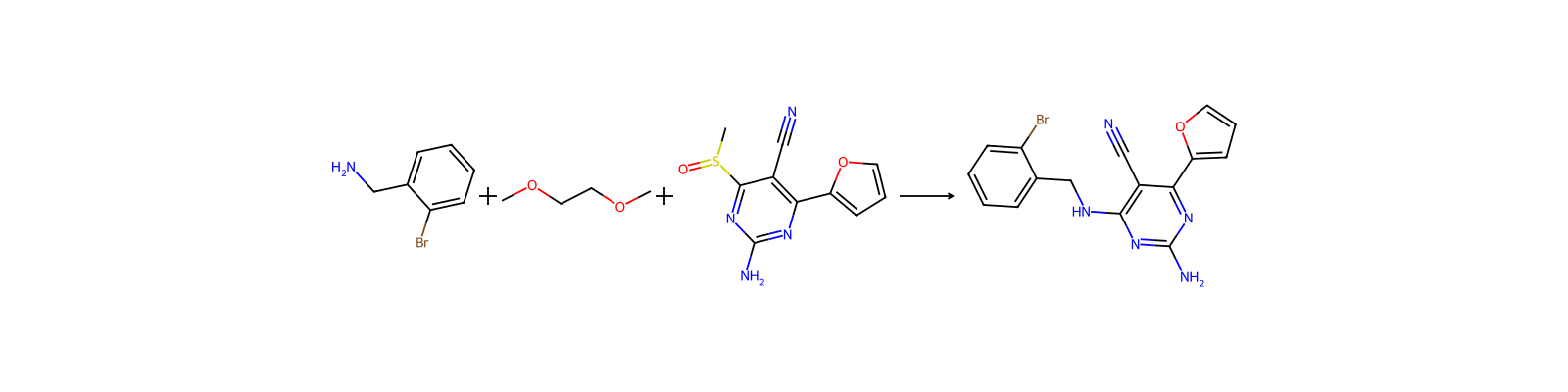


Compound notes
Loading…