
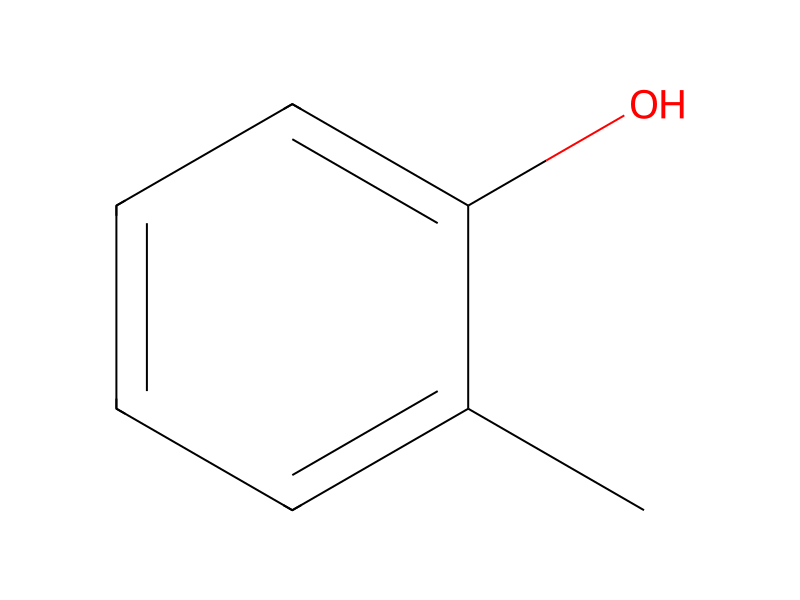
Basic information
- Standard SMILES
Cc1ccccc1O- InChIKey
QWVGKYWNOKOFNN-UHFFFAOYSA-N- Molecular formula
- C7H8O
- Average molar mass
- 108.14 g/mol
- Monoisotopic mass
- 108.05751487
Names & identifiers
- Preferred name
- O-Cresol
- IUPAC
- 2-methylphenol
- English name
- o-Cresol
- Molecular formula
- C7H8O
- Molecular weight
- 108.14
Names & synonyms
o-cresol2-Methylphenol95-48-7Orthocresol2-hydroxytoluene2-Cresolo-methylphenolPhenol, 2-methyl-o-Cresylic acido-Toluolo-Oxytolueneo-Hydroxytoluene
Show more names
FEMA 3480Phenol,2-methyl-o-CresoORTHO CRESO
ortho-cresol1-Hydroxy-2-methylbenzeneo-Methylphenylolo-Kresol2-methyl phenol2-Hydroxy-1-methylbenzeneFEMA No. 3480DTXSID8021808
Database identifiers
- CAS
95-48-7- PubChem CID
- 335
- DTXSID
DTXSID8021808- ChEMBL
CHEMBL46931- ChEBI
CHEBI:28054- UNII
- YW84DH5I7U
- EC Number
- 202-423-8
- Nikkaji
- J1.176B
Properties
Computed structural properties
- XLogP
- 2
- Topological polar surface area
- 20.2 Ų
- Hydrogen bond donors
- 1
- Hydrogen bond acceptors
- 1
- Rotatable bonds
- 0
- Heavy atoms
- 8
- Formal charge
- 0
- Complexity
- 70
Physicochemical properties
- Melting point
- 29 · 29-31 °C (lit.)
- Boiling point
- 191 °C · 191 °C (lit.)
- Density
- 1.048 g/mL · 1.048 g/mL at 25 °C
- vapor density
- 3.72 · 3.72 (vs air)
- vapor pressure
- 0.3 mm · 0.3 mm Hg ( 20 °C)
- refractive index
- 1.5361 · 1.5361
- FEMA
- 3480 · 3480 | O-CRESOL
- FLAVIS Number
- 4.027 · 04.027 | 2-Methylphenol
- Flash point
- 178 °F · 178 °F
- storage temp.
- under inert gas
- solubility
- 20 g/l · 20g/l
- form
- Liquid or Low Melting Solid
- pka
- 10.2 · 10.2(at 25℃)
- color
- white to brown
- PH
- 4.8 · 4.8 (20g/l, H2O, 20℃)
- Odor
- 0.01 % · at 0.01 % in dipropylene glycol. musty phenolic plastic medicinal herbal leathery
- Odor Type
- phenolic
- Odor Threshold
- 0.00028 ppm · 0.00028ppm
- biological source
- synthetic
- explosive limit
- 1.47 %, · 1.47%, 148°F
- Water Solubility
- 20 g/L · 20 g/L (20 ºC)
- Specific Heat Capacity
- 1.43 J/ · Cp(crystal): 1.43 J/(g·K), at 25℃
- Thermal Conductivity
- 0.153 W/ · 0.153 W/(m·K) at 25 ℃
- JECFA Number
- 691 · 691
- Merck
- 14 · 14,2579
- BRN
- 506917 · 506917
- Henry's Law Constant
- 0.34 at · 0.34 at 5.25 °C, 0.61 at 10.00 °C, 1.57 at 20.00 °C, 2.33 at 25.00 °C (dynamic equilibrium system- GC, Feigenbrugel et al., 2004a)
- Exposure limits
- 20 mg/m3,Inhalable · ACGIH TLV-TWA:20 mg/m3,Inhalable fraction and vaporOSHA PEL-TWA:5 ppm (22 mg/m3)NIOSH REL-TWA:2.3 ppm (10 mg/m3);IDLH:250 ppm
- Dielectric constant
- 5.8 · 5.8(-5℃)
- Stability
- Stable, but light and air sensitive. Combustible. Incompatible with oxidizing agents, bases.
- Major Application
- agriculturecleaning productscosmeticsenvironmentalflavors and fragrancesfood and beveragespersonal care
- Cosmetics Ingredients Functions
- ANTIMICROBIALPERFUMING
- Cosmetic Ingredient Review (CIR)
- o-Cresol (95-48-7)
- InChI
- 1S/C7H8O/c1-6-4-2-3-5-7(6)8/h2-5,8H,1H3
- InChIKey
- QWVGKYWNOKOFNN-UHFFFAOYSA-N
- SMILES
- Cc1ccccc1O
- LogP
- 1.95 at · 1.95 at 20℃
- Surface tension
- 35.86 mN/m · 35.86mN/m at 298.15K
- CAS DataBase Reference
- 95 · 95-48-7(CAS DataBase Reference)
- Substances Added to Food (formerly EAFUS)
- O-CRESOL
- FDA 21 CFR
- 175.3 · 175.300; 177.2410
- EWG's Food Scores
- 5 · 5
- FDA UNII
- 84 DH5I7U · YW84DH5I7U
- NIST Chemistry Reference
- 2 · Phenol, 2-methyl-(95-48-7)
- EPA Substance Registry System
- o-Cresol (95-48-7)
- UNSPSC Code
- 41116107 · 41116107
- NACRES
- 24 · NA.24
- Symbol(GHS)
- 5 · GHS05,GHS06,GHS08
- Signal word
- Danger
- Hazard statements
- 301 · H301+H311-H314-H361-H372-H335-H401
- Precautionary statements
- 501 · P501-P273-P260-P270-P202-P201-P271-P264-P280-P308+P313-P361+P364-P303+P361+P353-P301+P330+P331-P301+P310+P330-P304+P340+P310-P305+P351+P338+P310-P403+P233-P405
- PPE
- 2 · Eyeshields, Faceshields, Gloves, type P2 (EN 143) respirator cartridges, type P3 (EN 143) respirator cartridges
- Hazard Codes
- T
- Risk Statements
- 24 · 24/25-34-39/23/24/25-23/24/25
- Safety Statements
- 36 · 36/37/39-45-36/37
- RIDADR
- 3455 · UN 3455 6.1/PG 2
- OEB
- B
- OEL
- 2.3 ppm · TWA: 2.3 ppm (10 mg/m3)
- WGK Germany
- 1 · 1
- RTECS
- 6300000 · GO6300000
- F
- 8 · 8-23
- Autoignition Temperature
- 555 °C · 555 °C
- TSCA
- TSCA listed
- HazardClass
- 6.1 · 6.1
- PackingGroup
- II
- HS Code
- 29071200 · 29071200
- Storage Class
- 6.1 A · 6.1A - Combustible acute toxic Cat. 1 and 2very toxic hazardous materials
- Hazard Classifications
- 3 DermalAcute · Acute Tox. 3 DermalAcute Tox. 3 OralAquatic Chronic 3Eye Dam. 1Skin Corr. 1B
- Hazardous Substances Data
- 95 · 95-48-7(Hazardous Substances Data)
- Toxicity
- 50 orally · LD50 orally in rats: 1.35 g/kg (Deichmann, Witherup)
- IDLA
- 250 ppm · 250 ppm
- REACH Registrations
- Active
Safety & regulation
Safety data
- F
- 8-23
- OEB
- B
- OEL
- TWA: 2.3 ppm (10 mg/m3)
- PPE
- Eyeshields, Faceshields, Gloves, type P2 (EN 143) respirator cartridges, type P3 (EN 143) respirator cartridges
- wgk
- 1
- IDLA
- 250 ppm
- tsca
- TSCA listed
- rtecs
- GO6300000
- ridadr
- UN 3455 6.1/PG 2
- hs_code
- 29071200
- Toxicity
- LD50 orally in rats: 1.35 g/kg (Deichmann, Witherup)
- risk_code
- 24/25-34-39/23/24/25-23/24/25
- Signal word
- Danger
- Symbol(GHS)
- GHS05,GHS06,GHS08
- hazard_code
- T
- safety_code
- 36/37/39-45-36/37
- hazard_class
- 6.1
- Storage Class
- 6.1A - Combustible acute toxic Cat. 1 and 2very toxic hazardous materials
- packing_group
- II
- Hazard statements
- H301+H311-H314-H361-H372-H335-H401
- REACH Registrations
- Active
- Hazard Classifications
- Acute Tox. 3 DermalAcute Tox. 3 OralAquatic Chronic 3Eye Dam. 1Skin Corr. 1B
- Autoignition Temperature
- 555 °C
- Precautionary statements
- P501-P273-P260-P270-P202-P201-P271-P264-P280-P308+P313-P361+P364-P303+P361+P353-P301+P330+P331-P301+P310+P330-P304+P340+P310-P305+P351+P338+P310-P403+P233-P405
- Hazardous Substances Data
- 95-48-7(Hazardous Substances Data)
Chemistry & industry
Applications
OccurrenceReported in Acacial farnesiana, ylang-ylang oil (probably as p-cresyl acetate), jasmine absolute, orange oil from leaves, the essence from flowers of Lilium candidum, anise seed oil, the essence of Artemisia santolinoflia, and some sea algae. Also reported found in asparagus, peppermint oil, cheddar cheese, provolone cheese, butter, milk, lean fish, boiled egg, smoked pork, rum, Scotch whiskey, red wine, white wine, coffee and mango.Reported found in cinnamon, coffee, Oriental tobacco, rum, sherry, tea, tomato and whiskey.
Useso-Cresol is used as a disinfectant and solvent. Lysol disinfectant is a 50% (v/v) mixed-cresol isomer in a soap emulsion formed on mixing with water. Besides disinfection products at solutions of 1–5%, the cresols are used as degreasing compounds, paintbrush cleaners, and additives in lubricating oils. Cresols were previously widely used for disinfection of poultry houses, but this use was discontinued because of their toxicity; they cause respiratory problems and abdominal edema in young chicks. o-Cresol has been used in synthetic resins, explosives, petroleum, photographic, paint, and agricultural industries.
Useso-Cresol is used mostly as an intermediate for the production of pesticides, epoxy resins, dyes, and pharmaceuticals, but also as a component of disinfectants and cleaning agents. o-Cresol is readily biodegradable and has a low bioaccumulation or geoaccumulation potential. Antiseptics; disinfectants; solvent; insecticides; resins; flame-retardant plasticizers
UsesDisinfectant; phenolic resins; tricresyl phosphate; ore flotation; textile scouring agent; organic intermediate; manufacturing salicylaldehyde, coumarin, and herbicides; surfactant; synthetic food flavors (para isomer only); food antioxidant; dye, perfume, plastics, and resins manufacturing.
General DescriptionColorless or yellow to brown-yellow or pinkish colored liquid with a phenol-like odor. Toxic by ingestion and/or skin absorption. May have a flash point between 100 and 199°F. Causes burns to skin, eyes and mucous membranes. Insoluble in water.
Upstream & downstream products
Upstream raw materials
Downstream products
Additional notes
DefinitionChEBI: A cresol that is phenol substituted by a methyl group at position 2. It is a minor urinary metabolite of toluene.
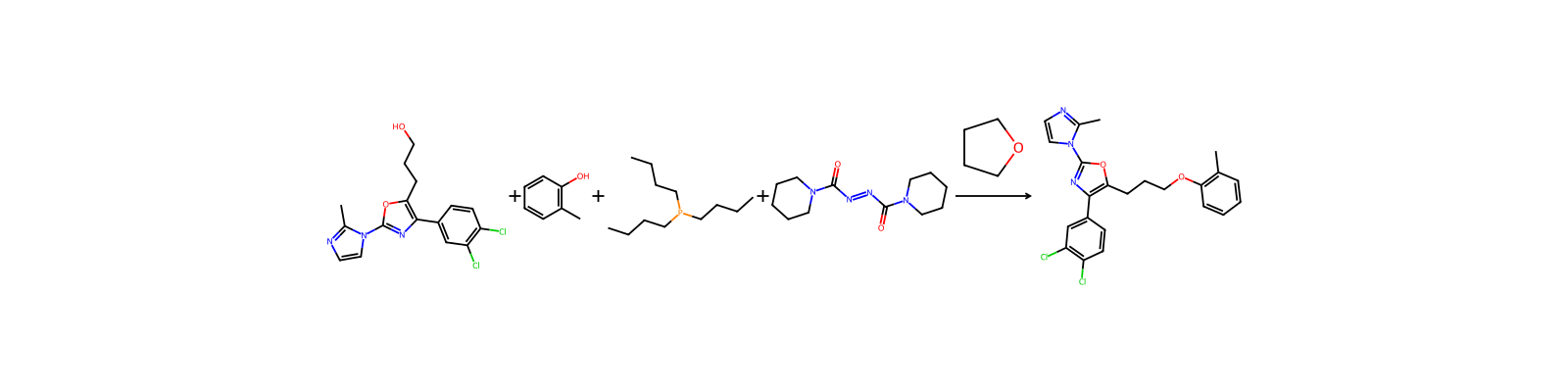
Related reactions
387 records






Linked notes
Loading…