
Basic information
- Standard SMILES
Clc1ccc2nc(Cl)[nH]c2c1- InChIKey
LLIARSREYVCQHL-UHFFFAOYSA-N- Molecular formula
- C7H4Cl2N2
- Average molar mass
- 187.029 g/mol
- Monoisotopic mass
- 185.97515349
Names & identifiers
- Preferred name
- 2,5-Dichlorobenzimidazole
- IUPAC
- 2,6-Dichloro-1H-benzimidazole
- English name
- 2,5-Dichlorobenzimidazole
- Molecular formula
- C7H4Cl2N2
- Molecular weight
- 187.03
Names & synonyms
Benzoimidazoleseries2,5-Dichlorobenzimidazole2,5-Dichlorobenzoimidazole2,5-DICHLORO-1H-BENZIMIDAZOLE2,6-Dichloro-1H-benzimidazole2,5-Dichloro-1H-benzoiMidazole1H-Benzimidazole, 2,6-dichloro-2,6-dichloro-1H-1,3-benzodiazole2,5-dichloro-1H-1,3-benzodiazole2,5-dichloro-1H-benzo[d]imidazole
Database identifiers
- CAS
4887-95-0- PubChem CID
- 335473
- DTXSID
DTXSID90319416- UNII
- 85UMR74GY9
- EC Number
- 839-594-9
Properties
Computed structural properties
- XLogP
- 3.2
- Topological polar surface area
- 28.7 Ų
- Hydrogen bond donors
- 1
- Hydrogen bond acceptors
- 1
- Rotatable bonds
- 0
- Heavy atoms
- 11
- Formal charge
- 0
- Complexity
- 153
Physicochemical properties
- Melting point
- 207 · 207-208 °C (decomp)
- Boiling point
- 364.5 · 364.5±34.0 °C(Predicted)
- Density
- 1.571 · 1.571±0.06 g/cm3(Predicted)
- storage temp.
- 2 · 2-8°C
- form
- solid
- pka
- 8.11 · 8.11±0.10(Predicted)
- Appearance
- Off-white to light yellow Solid
- InChI
- InChI=1S/C7H4Cl2N2/c8-4-1-2-5-6(3-4)11-7(9)10-5/h1-3H,(H,10,11)
- InChIKey
- LLIARSREYVCQHL-UHFFFAOYSA-N
- SMILES
- C1(Cl)NC2=CC(Cl)=CC=C2N=1
- UNSPSC Code
- 12352101 · 12352101
- Symbol(GHS)
- 7 · GHS07,GHS09
- Signal word
- Warning
- Hazard statements
- 315 · H315-H317-H319-H410
- Precautionary statements
- 261 · P261-P264-P273-P280-P391
- WGK Germany
- 3 · WGK 3
- HS Code
- 2933998090 · 2933998090
- Storage Class
- 11 · 11 - Combustible Solids
- Hazard Classifications
- 1 Aquatic · Aquatic Acute 1Aquatic Chronic 1Eye Irrit. 2Skin Irrit. 2Skin Sens. 1
Safety & regulation
GHS classification
GHS Classification
Warning
H302 (50%): Harmful if swallowed [Warning Acute toxicity, oral];H315 (100%): Causes skin irritation [Warning Skin corrosion/irritation];H317 (50%): May cause an allergic skin reaction [Warning Sensitization, Skin];H319 (100%): Causes serious eye irritation [Warning Serious eye damage/eye irritation];H335 (50%): May cause respiratory irritation [Warning Specific target organ toxicity, single exposure; Respiratory tract irritation];H400 (50%): Very toxic to aquatic life [Warning Hazardous to the aquatic environment, acute hazard];H410 (50%): Very toxic to aquatic life with long lasting effects [Warning Hazardous to the aquatic environment, long-term hazard]
P261, P264, P264+P265, P270, P271, P272, P273, P280, P301+P317, P302+P352, P304+P340, P305+P351+P338, P319, P321, P330, P332+P317, P333+P317, P337+P317, P362+P364, P391, P403+P233, P405, and P501 (click each P-code to see the statement)
Aggregated GHS information provided per 2 reports by companies from 2 notifications to the ECHA C&L Inventory. Each notification may be associated with multiple companies.;Information may vary between notifications depending on impurities, additives, and other factors. The percentage value in parenthesis indicates the notified classification ratio from companies that provide hazard codes. Only hazard codes with percentage values above 10% are shown. For more detailed information, please visit ECHA C&L website.
Hazard information
Hazard Classes and CategoriesAcute Tox. 4 (50%);Skin Irrit. 2 (100%);Skin Sens. 1 (50%);Eye Irrit. 2 (100%);STOT SE 3 (50%);Aquatic Acute 1 (50%);Aquatic Chronic 1 (50%)
Safety data
- wgk
- WGK 3
- hs_code
- 2933998090
- Signal word
- Warning
- Symbol(GHS)
- GHS07,GHS09
- Storage Class
- 11 - Combustible Solids
- Hazard statements
- H315-H317-H319-H410
- Hazard Classifications
- Aquatic Acute 1Aquatic Chronic 1Eye Irrit. 2Skin Irrit. 2Skin Sens. 1
- Precautionary statements
- P261-P264-P273-P280-P391
Chemistry & industry
Suppliers50 total
Career Henan Chemica Co+86-0371-86658258 +86-13203830695 · [email protected]
毕佳索(上海毕得医药科技股份有限公司)400-6005915 · [email protected]
杭州品高化工有限公司0571-87658025 · [email protected]
上海毕得医药科技股份有限公司400-1647117 13681763483 · [email protected]
常州稀亚生物科技有限公司13775267187
Dayang Chem (Hangzhou) Co.,Ltd.+86-0571-88938639 17705817739 · [email protected]
北京华威锐科化工有限公司0757-86329057 18934348241 · [email protected]
北京索莱宝科技有限公司010-50973130 17801761073 · [email protected]
湖北魏氏化学试剂股份有限公司17771898297 13125137661 · [email protected]
上海健超生物科技有限公司15021035486 18081542813 · [email protected]
上海旭晗化学科技有限公司15921303235 · [email protected]
上海纳谦化学科技有限公司13598610367 0373-7129549 · [email protected]
上海健超生物科技有限公司150-2103-5486 18017383231 · [email protected]
赛纳斯特化学(欢迎点击联系)021-60343070
PT CHEM GROUP LIMITED+86-85511178; +86-85511178 · [email protected]
上海石洋化工有限公司021-56795766 · [email protected]
上海御略医药科技有限公司021-60345187 13671753212 · [email protected]
上海安米克化学品有限公司微信 17321281695 18019252918 · [email protected]
上海鑫圭生物科技有限公司15121041756 · [email protected]
上海拓目化工有限公司13391076197 · [email protected]
武汉壹加壹生物科技有限公司027-027-16602739303 16602739303 · [email protected]
河北晨药生物科技有限公司13273277291 17611379171 · [email protected]
Sigma-Aldrich西格玛奥德里奇(上海)贸易有限公司021-61415566 800-8193336 · [email protected]
韶远科技(上海)有限公司021-50795510 4000665055 · [email protected]
Wuhan ChemNorm Biotech Co.,Ltd.+86-27-8439 4403 18971486879 · [email protected]
四川义研药物研究有限公司19949968070; 19949968070 · [email protected]
陕西缔都医药化工有限公司029-029-81120477 17792793610 · [email protected]
上海指月生物科技有限公司13918644899 · [email protected]
上海炎泽化工有限公司15345144255 19901447308 · [email protected]
上海源叶生物科技有限公司13636370518 · [email protected]
上海鹤成医药科技有限公司13564747822 · [email protected]
四川铂友生物科技有限公司(原四川佰朋)028-65791793 18140026355 · [email protected]
上海康恩博医药科技有限公司400-1388-521 17510465506 · [email protected]
杭州洁汉化工有限公司+86-571-86217390; +8618058761490 · [email protected]
江苏艾康生物医药研发有限公司025-66061636 19370895928 · [email protected]
上海皓鸿生物医药科技有限公司400-8210725 400821072 · [email protected]
聿锦(天津)科技有限公司13370351217 kungfu1217@1 · [email protected]
上海索本生物科技有限公司15088289376;13917786310 · [email protected]
上海吉至生化科技有限公司021-4009004166/18616739031 18616739031 · [email protected]
安徽勇晟医药科技有限公司021-50430803 18016036736;18017383231 · [email protected]
南京美韬医药科技有限公司[email protected] · [email protected]
爆牛贸易重庆有限公司+86-023-6139-8061 +86-86-13650506873 · [email protected]
济南光尘医药科技有限公司18563726319 · [email protected]
SUZHOU SENFEIDA CHEMICAL CO.,LTD+86-0512-83500002 +86-15195660023 · [email protected]
武汉顶全科技有限公司18971486879 · [email protected]
陕西缔都医药化工有限公司+86-29-81139210 17389186172 · [email protected]
上海相辉医药科技有限公司13611835272 13611835272 · [email protected]
HANGZHOU LEAP CHEM CO., LTD.+86-571-87711850 +8619957148339 · [email protected]
武汉万鉴生物科技有限公司13277087647 · [email protected]
南京药石科技股份有限公司4000255188 · [email protected]
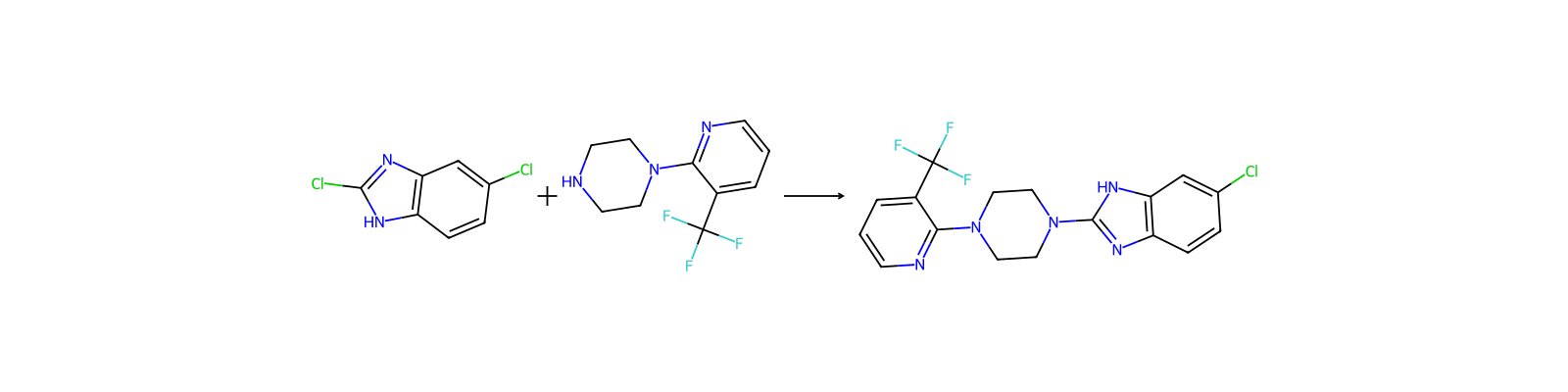
Related reactions
16 records


Linked notes
Loading…