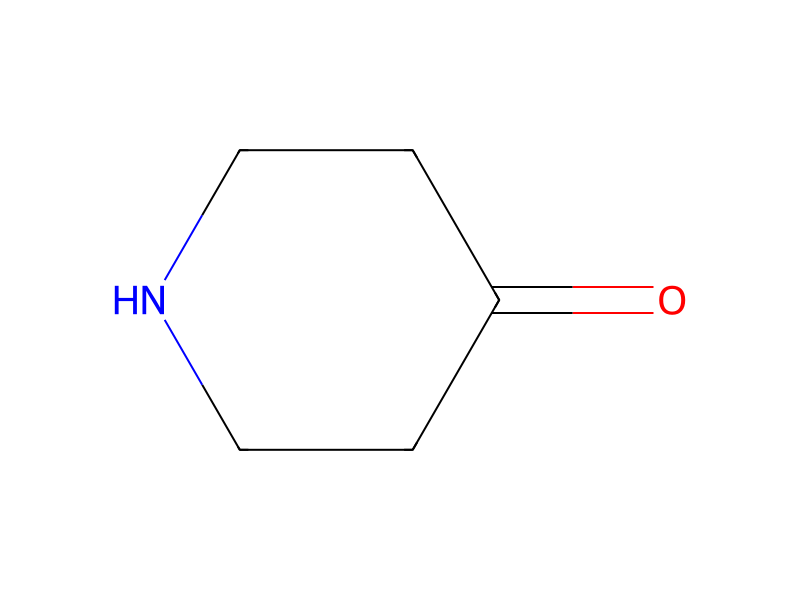
Basic information
- CAS
41661-47-6- Standard SMILES
O=C1CCNCC1- InChIKey
VRJHQPZVIGNGMX-UHFFFAOYSA-N- Molecular formula
- C5H9NO
- Average molar mass
- 99.13 g/mol
- Monoisotopic mass
- 99.06841391
Names & identifiers
- Preferred name
- 4-Piperidone
- IUPAC
- piperidin-4-one
- English name
- 4-Piperidinone
- Molecular formula
- C5H9NO
- Molecular weight
- 99.13
Names & synonyms
4-Piperidone4-Piperidinone15WP1EA7UHEINECS 255-481-1UNII-15WP1EA7UH.GAMMA.-PIPERIDINONEDTXSID50194488GAMMA-PIPERIDINONERefChem:100408DTXCID60116979255-481-14-piperidone (piperidin-4-one), its acetals, its amides, its carbamates, its salts, and salts of its acetals, its amides, and its carbamates, and any combination thereof, whenever the existence of such is possible.
Show more names
4-piperidinLUBE-013γ-Piperidone1-yl)acetyl)-4-Piperidinonγ-Piperidinone
VRJHQPZVIGNGMX-UHFFFAOYSA-Npiperidin-4-one41661-47-64-oxopiperidine4piperidone4-oxo-piperidinepiperid-4-one4-Piperidone, AldrichCPR
Database identifiers
- CAS
41661-47-6- PubChem CID
- 33721
- DTXSID
DTXSID50194488- UNII
- 15WP1EA7UH
- EC Number
- 255-481-1
- Nikkaji
- J16.026A
Properties
Computed structural properties
- XLogP
- -0.7
- Topological polar surface area
- 29.1 Ų
- Hydrogen bond donors
- 1
- Hydrogen bond acceptors
- 2
- Rotatable bonds
- 0
- Heavy atoms
- 7
- Formal charge
- 0
- Complexity
- 72
Physicochemical properties
- Boiling point
- 175.1 · 175.1±15.0 °C(Predicted)
- Density
- 1.001 · 1.001±0.06 g/cm3(Predicted)
- pka
- 8.95 · 8.95±0.20(Predicted)
- form
- solid
- color
- yellow
- CAS DataBase Reference
- 41661 · 41661-47-6(CAS DataBase Reference)
- FDA UNII
- 15 WP1EA7UH · 15WP1EA7UH
- Symbol(GHS)
- 7 · GHS07
- Signal word
- Warning
- Hazard statements
- 315 · H315-H319-H335
- Precautionary statements
- 271 · P271-P261-P280
- Risk Statements
- 11 · 11-20/21/22
- Safety Statements
- 16 · 16-26-36/37/39
- RIDADR
- 1993 · 1993
- HazardClass
- IRRITANT
- HS Code
- 2914390090 · 2914390090
Safety & regulation
GHS classification
GHS Classification
Warning
H315 (100%): Causes skin irritation [Warning Skin corrosion/irritation];H319 (100%): Causes serious eye irritation [Warning Serious eye damage/eye irritation];H335 (100%): May cause respiratory irritation [Warning Specific target organ toxicity, single exposure; Respiratory tract irritation]
P261, P264, P264+P265, P271, P280, P302+P352, P304+P340, P305+P351+P338, P319, P321, P332+P317, P337+P317, P362+P364, P403+P233, P405, and P501 (click each P-code to see the statement)
The GHS information provided by 1 company from 1 notification to the ECHA C&L Inventory.
Hazard information
Regulatory Information
List I Chemical: A chemical specified by regulation that, in addition to legitimate uses, is used in manufacturing a controlled substance in violation of the Act and is important to the manufacture of a controlled substance. (21 eCFR 1310.02)
Hazard Classes and CategoriesSkin Irrit. 2 (100%);Eye Irrit. 2 (100%);STOT SE 3 (100%)
Regulatory information
Regulatory Information
List I Chemical: A chemical specified by regulation that, in addition to legitimate uses, is used in manufacturing a controlled substance in violation of the Act and is important to the manufacture of a controlled substance. (21 eCFR 1310.02)
Safety data
- ridadr
- 1993
- hs_code
- 2914390090
- risk_code
- 11-20/21/22
- Signal word
- Warning
- Symbol(GHS)
- GHS07
- safety_code
- 16-26-36/37/39
- hazard_class
- IRRITANT
- Hazard statements
- H315-H319-H335
- Precautionary statements
- P271-P261-P280
Chemistry & industry
Uses & manufacturing
DEA Listed Chemicals
4-piperidone (piperidin-4-one), its acetals, its amides, its carbamates, its salts, and salts of its acetals, its amides, and its carbamates, and any combination thereof, whenever the existence of such is possible.
A chemical specified by regulation that, in addition to legitimate uses, is used in manufacturing a controlled substance in violation of the Act and is important to the manufacture of a controlled substance. (21 eCFR 1310.02)
Applications
Description4-Piperidinone is a derivative of piperidine with the molecular formula C5H9NO. 4-Piperidone is used as an intermediate in the manufacture of chemicals and pharmaceutical drugs.Piperidones are a class of chemical compounds sharing the piperidone skeleton. A classic named reaction for the synthesis of piperidones is the Petrenko-Kritschenko piperidone synthesis which involves combining an alkyl-1,3-acetonedicarboxylate with benzaldehyde and an amine. This multicomponent reaction is related to the Hantzsch pyridine synthesis.
Uses4-Piperidone monohydrate hydrochloride was used in the generation of compound libraries based on sub-reactions of an Ugi multicomponent reaction (MCR).
Upstream & downstream products
Upstream raw materials
Downstream products
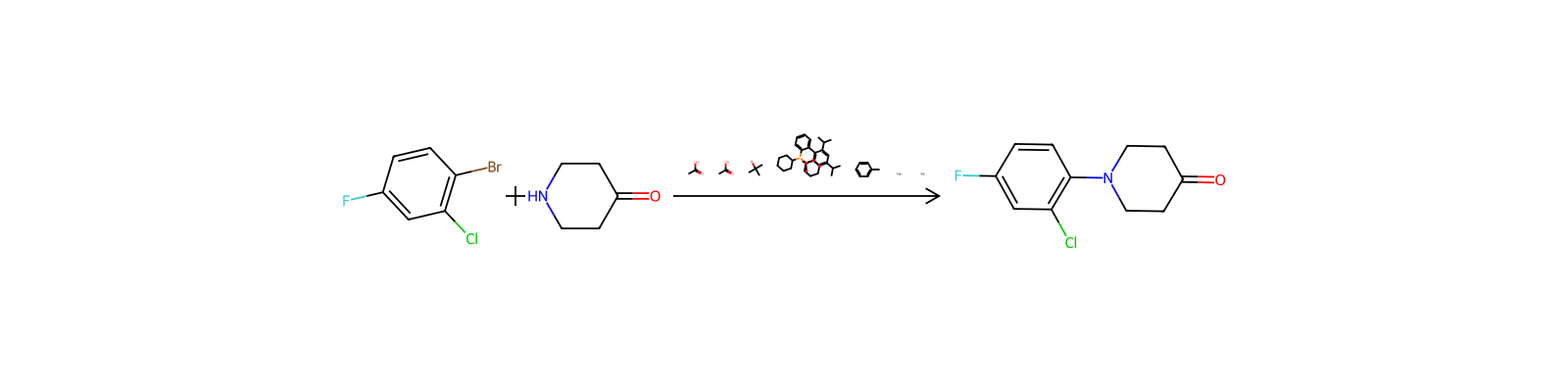
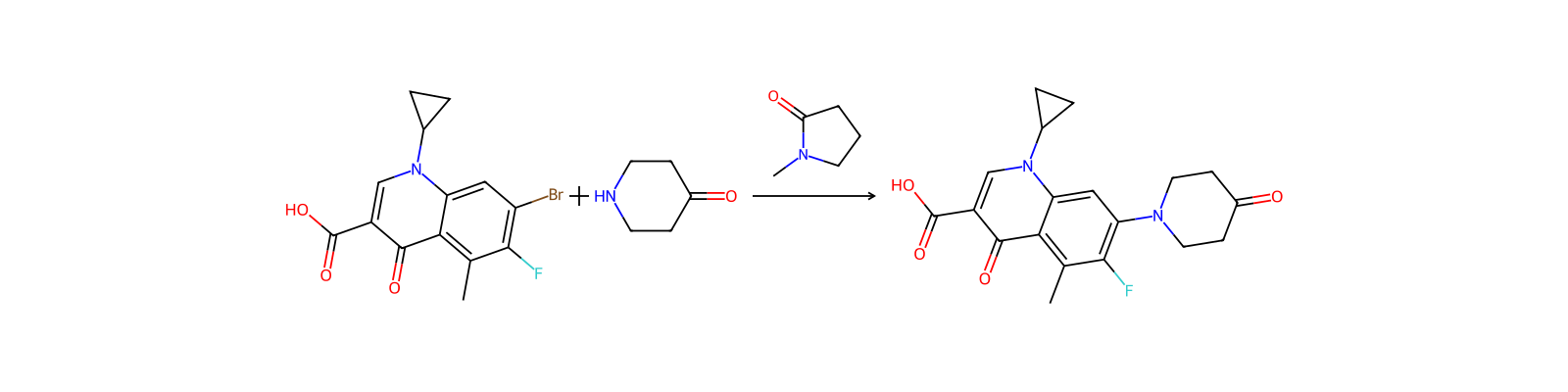
Related reactions
373 records


Compound notes
Loading…