

Basic information
- Standard SMILES
Cc1ccoc1C- InChIKey
FJSKXQVRKZTKSI-UHFFFAOYSA-N- Molecular formula
- C6H8O
- Average molar mass
- 96.13 g/mol
- Monoisotopic mass
- 96.05751488
Names & identifiers
- Preferred name
- 2,3-Dimethylfuran
- IUPAC
- 2,3-dimethylfuran
- English name
- 2,3-Dimethylfuran
- Molecular formula
- C6H8O
- Molecular weight
- 96.13
Names & synonyms
2,3-Dimethylfuran14920-89-9DTXSID301027759RefChem:1059481DTXCID9037878626-651-6Furan, dimethyl-Dimethyl furanFuran, 2,3-dimethyl-DIMETHYLFURAN2,3-Dimethyl-furan28802-49-5
Show more names
Furagin Impurity 202,3-Dimethylfuran>2,3-Dimethylfuran 99%2,3-Dimethylfuran 99%2,3-Dimethylfuran,99%2,3-Dimethylfuran, GC 99%2,3-DiMethylfuran, 99% 1GR
MFCD00153893Dimethyl furaneEINECS 249-235-22,3-Dimethylfuran, 99%SCHEMBL115390SCHEMBL466372CHEMBL108232orb3132290
Database identifiers
- CAS
14920-89-9、28802-49-5- PubChem CID
- 34337
- DTXSID
DTXSID301027759- ChEMBL
CHEMBL108232- EC Number
- 249-235-2、626-651-6
- Nikkaji
- J498.240A
Properties
Computed structural properties
- XLogP
- 1.8
- Topological polar surface area
- 13.1 Ų
- Hydrogen bond donors
- 0
- Hydrogen bond acceptors
- 1
- Rotatable bonds
- 0
- Heavy atoms
- 7
- Formal charge
- 0
- Complexity
- 61.2
Experimental & physicochemical properties
SpringerMaterials PropertiesOptical coefficient
Physicochemical properties
- Melting point
- -62.8 °C · -62.8°C (estimate)
- Boiling point
- 42 °C/115 · 42 °C/115 mmHg (lit.)
- Density
- 0.91 g/mL · 0.91 g/mL at 25 °C (lit.)
- refractive index
- 20 · n20/D 1.443(lit.)
- Flash point
- 30 °F · 30 °F
- storage temp.
- Flammables area
- form
- clear liquid
- color
- Colorless to Yellow to Green
- Specific Gravity
- 0.919 · 0.919
- Water Solubility
- Insoluble in water.
- BRN
- 104572 · 104572
- InChI
- 1S/C6H8O/c1-5-3-4-7-6(5)2/h3-4H,1-2H3
- InChIKey
- FJSKXQVRKZTKSI-UHFFFAOYSA-N
- SMILES
- Cc1ccoc1C
- CAS DataBase Reference
- 14920 · 14920-89-9(CAS DataBase Reference)
- UNSPSC Code
- 12352100 · 12352100
- NACRES
- 22 · NA.22
- Symbol(GHS)
- 2 · GHS02,GHS07
- Signal word
- Danger
- Hazard statements
- 225 · H225-H302+H312+H332
- Precautionary statements
- 210 · P210-P233-P280-P301+P312-P303+P361+P353-P304+P340+P312
- PPE
- Eyeshields, Faceshields, Gloves, type ABEK (EN14387) respirator filter
- Hazard Codes
- F,Xn
- Risk Statements
- 11 · 11-20/21/22
- Safety Statements
- 16 · 16-36
- RIDADR
- 1993 · UN 1993 3/PG 2
- WGK Germany
- 3 · 3
- HazardClass
- 3 · 3
- PackingGroup
- II
- HS Code
- 29321900 · 29321900
- Storage Class
- 3 · 3 - Flammable liquids
- Hazard Classifications
- 4 DermalAcute · Acute Tox. 4 DermalAcute Tox. 4 InhalationAcute Tox. 4 OralFlam. Liq. 2
Safety & regulation
GHS classification
GHS Classification
Danger
H225 (100%): Highly Flammable liquid and vapor [Danger Flammable liquids]
P210, P233, P240, P241, P242, P243, P261, P264, P270, P271, P280, P301+P317, P302+P352, P303+P361+P353, P304+P340, P317, P321, P330, P362+P364, P370+P378, P403+P235, and P501 (click each P-code to see the statement)
Aggregated GHS information provided per 44 reports by companies from 3 notifications to the ECHA C&L Inventory. Each notification may be associated with multiple companies.
Danger
H225 (100%): Highly Flammable liquid and vapor [Danger Flammable liquids]
Hazard information
Hazard Classes and Categories
Flam. Liq. 2 (100%)
Flam. Liq. 2 (100%)
Safety data
- PPE
- Eyeshields, Faceshields, Gloves, type ABEK (EN14387) respirator filter
- wgk
- 3
- ridadr
- UN 1993 3/PG 2
- hs_code
- 29321900
- risk_code
- 11-20/21/22
- Signal word
- Danger
- Symbol(GHS)
- GHS02,GHS07
- hazard_code
- F,Xn
- safety_code
- 16-36
- hazard_class
- 3
- Storage Class
- 3 - Flammable liquids
- packing_group
- II
- Hazard statements
- H225-H302+H312+H332
- Hazard Classifications
- Acute Tox. 4 DermalAcute Tox. 4 InhalationAcute Tox. 4 OralFlam. Liq. 2
- Precautionary statements
- P210-P233-P280-P301+P312-P303+P361+P353-P304+P340+P312
Chemistry & industry
Applications
Uses2,3-Dimethylfuran may be used in the synthesis of 2,9-dioxabicyclo[3.3.1]nonane. Ireland Alcohol was synthesized in from 2,3-dimethylfuran.
General Description2,3-Dimethylfuran is a methyl substituted furan. The gas-phase rate constant determined by the relative rate method for the reaction of 2,3-dimethylfuran with NO3 radical was found to be (5.83 ± 0.46)×10-11 and with OH radical was (12.6 ± 0.4)×10-11 (in units of cm3 molecule-1 s-1). It is reported to be formed by the cyclization of (Z)-3-methylpent-2-en-4-yn-1-ol by various methods.
Upstream & downstream products
Downstream products
Suppliers1 total
DAYANG CHEM (HANGZHOU) CO.,LTD+86-88938639 +86-17705817739 · [email protected]
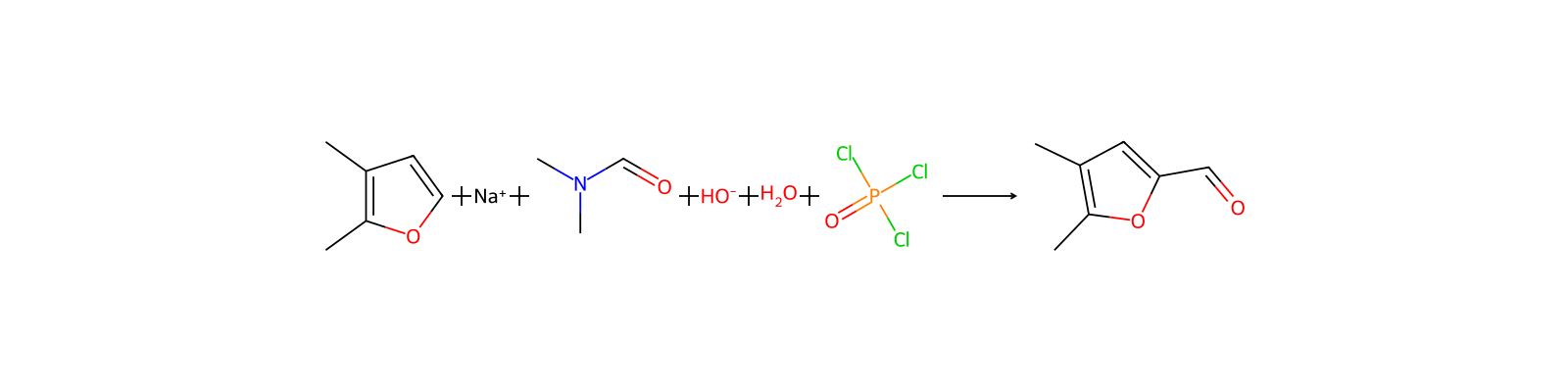
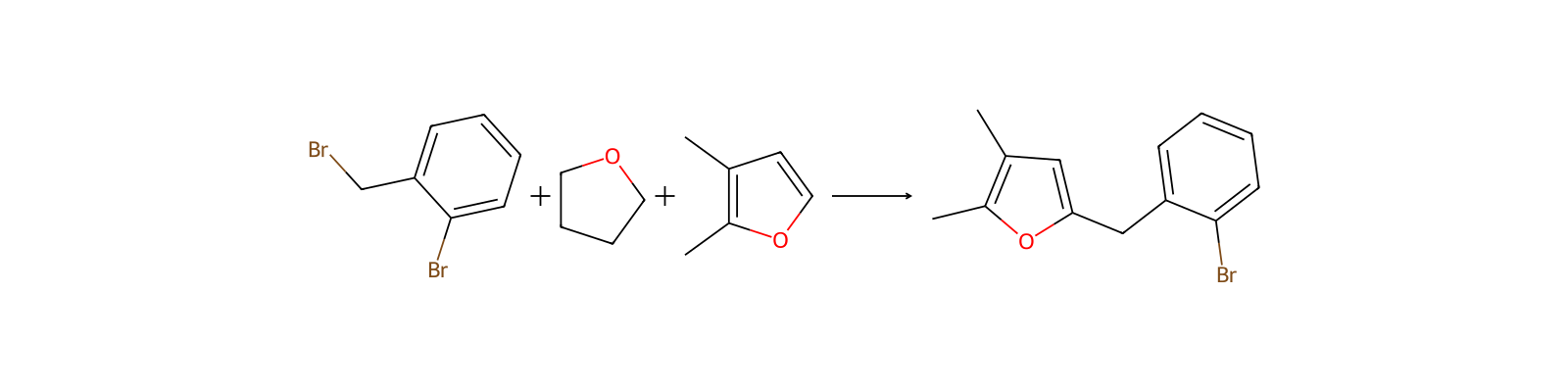
Related reactions
42 records


Linked notes
Loading…