

Basic information
- CAS
1314-15-4- Standard SMILES
[O]=[Pt]=[O]- InChIKey
YKIOKAURTKXMSB-UHFFFAOYSA-N- Molecular formula
- O2Pt
- Average molar mass
- 227.08 g/mol
- Monoisotopic mass
- 226.95462034
Names & identifiers
- Preferred name
- Adams' catalyst
- IUPAC
- dioxoplatinum
- English name
- Platinum dioxide
- Molecular formula
- O2Pt
- Molecular weight
- 227.08
Names & synonyms
Platinum(IV) oxide1314-15-4dioxoplatinumAdams' catalystAdams CatalystPlatinic oxideplatinum (iv) oxidePlatinium oxideMFCD00011184platinum(iv) dioxidePlatinium oxide, PtO2Platinum(iv)oxide
Show more names
PtO2PLATINUM OXIDE1341-15-4ADAM'S CATALYSTplatinum(iv) oxide monohydrate, adams catalyst
Bis(oxido)platinumplatinum (IV)oxideplatinum(IV)-oxidePlatinum-(IV)-oxidePlatinum (1V) oxideplatinum (IV) dioxidePlatinum( cento) oxideSCHEMBL72223
Database identifiers
- CAS
1314-15-4- PubChem CID
- 345198
- DTXSID
DTXSID40904275- EC Number
- 215-223-0
- Nikkaji
- J96.441G
Properties
Computed structural properties
- Topological polar surface area
- 34.1 Ų
- Hydrogen bond donors
- 0
- Hydrogen bond acceptors
- 2
- Rotatable bonds
- 0
- Heavy atoms
- 3
- Formal charge
- 0
- Complexity
- 18.3
Experimental & physicochemical properties
Chemical ClassesMetals -> Metals, Inorganic Compounds
Food Contact SubstancesFCS -> FDA Inventory of Effective Food Contact Substance (FCS) Notifications
Physical DescriptionMonohydrate: Black solid; [Merck Index] Black odorless powder; Insoluble in water; [MSDSonline]
Physicochemical properties
- Melting point
- 450 °C · 450 °C (lit.)
- Density
- 10.2 · 10.2
- RTECS
- 2506020 · TP2506020
- storage temp.
- 2 · under inert gas (nitrogen or Argon) at 2-8°C
- form
- crystalline
- color
- Dark brown
- Water Solubility
- Soluble in caustic potash solution. Insoluble in water, acid, aquaregia.
- Crystal Structure
- 2 type · CaCl2 type
- crystal system
- Nogata
- Merck
Safety & regulation
GHS classification
GHS Classification
This chemical does not meet GHS hazard criteria for 3% (8 of 269) of reports.
Danger
H271 (75.5%): May cause fire or explosion; strong Oxidizer [Danger Oxidizing liquids; Oxidizing solids]
P210, P220, P264+P265, P280, P283, P305+P351+P338, P306+P360, P337+P317, P370+P378, P371+P380+P375, P420, and P501 (click each P-code to see the statement)
Aggregated GHS information provided per 269 reports by companies from 9 notifications to the ECHA C&L Inventory. Each notification may be associated with multiple companies.
Hazard information
Regulatory Information
Chemical: Platinum oxide (PtO2)
Status: Active Update: 27-01-2022 https://echa.europa.eu/registration-dossier/-/registered-dossier/18998
Platinum (IV) oxide: Does not have an individual approval but may be used under an appropriate group standard
Other Safety InformationIMAP assessments - Platinum oxide (PtO2): Environment tier I assessment
Hazards SummaryA skin irritant; Corrosive to eyes; [eChemPortal: ERMA] An oxidizing agent; May cause fire on contact with combustible material; An irritant; May cause skin sensitization; [MSDSonline]
Hazard Classes and CategoriesOx. Sol. 1 (75.5%)
Toxicology
Adverse EffectsSkin Sensitizer - An agent that can induce an allergic reaction in the skin.
Safety data
- PPE
- Eyeshields, Gloves, type P3 (EN 143) respirator cartridges
Chemistry & industry
Uses & manufacturing
Uses
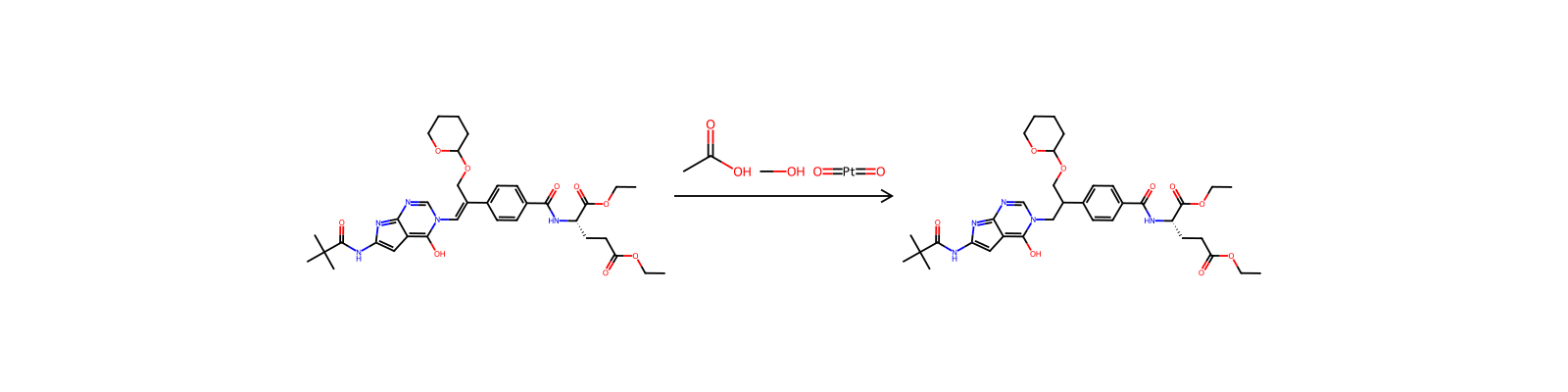
Used as a hydrogenation catalyst; [Merck Index] Platinum(IV) oxide hydrate (PtO2.H2O) is a hydrogenation catalyst. Other platinum oxides have little commercial use: Platinum(II) oxide (PtO) and platinum(II) oxide hydrate (PtO.H2O). [Ullmann]
General Manufacturing InformationPlatinum oxide (PtO2): ACTIVE
Applications
UsesHydrogenation: Reduction of alkynes to alkenes, Catalyst/ In the presence of H2,PtO2 can be reduced to Pt black which is the active form;Hydrogenation of nitro compounds to amines;Hydrogenation of ketones;The removal of phenyl groups attached to a heteroatom;Reduction of aromatic ring;Dehydrogenation: Dehydrogenation of 1,4-diketone to pyridazine;Oxidation: Oxidation of alcohols to carbonyl compounds;Others: Resistance, Low resistance range;Hydrogen absorbing material: Excellent hydrogen absorbing capacity;Thick film circuit and electronic component: Insoluble in aqueous solutions (water) and extremely stable;Solid oxide fuel cells and oxygen generation systems: Cathode/certain perovskite structured oxides are electronically conductive.
UsesPlatinum(IV) oxide is used as catalyst for hydrogenation reactions. It is applied in the hydrogenation of alkenes to alkanes, nitro compounds to amines and ketones to alcohols. It is also involved in the hydrogenolysis of cyclopropyl group in to an isopropyl group and in selective oxidation of primary alcohols.
UsesAs catalyst in hydrogenations. The actual catalyst is platinum black which is formed in situ by reduction of the PtO2 by the hydrogen used for the hydrogenation. Especially useful for reduction at room tempereture and hydrogen pressures up to 4 atmospheres. Suitable for the reduction of double and triple bonds, aromatic nuclei, carbonyl groups, nitro groups, and nitriles.
General DescriptionPlatinum(IV) oxide has been used for the reduction of citernyl bromide to form (S)-3,7-dimethyloctylbromide. Prepared by Adams′ nitrate fusion method.
Upstream & downstream products
Related reactions
2,325 records



Compound notes
Loading…