
Completing data — usually done within a minute

Basic information
- Standard SMILES
COc1ccccc1OCC(O)CO- InChIKey
HSRJKNPTNIJEKV-UHFFFAOYSA-N- Molecular formula
- C10H14O4
- Average molar mass
- 198.218 g/mol
- Monoisotopic mass
- 198.08920893
Names & identifiers
- Preferred name
- Guaifenesin
- IUPAC
- 3-(2-Methoxyphenoxy)propane-1,2-diol
- English name
- Guaifenesin
- Molecular formula
- C10H14O4
- Molecular weight
- 198.22
Names & synonyms
GLYCERYL GUAIACOLATEGUAIPHENESINggeGUAIFENESINARAC GUAIFENESIN3-(2-methoxyphenoxy)propane-1,2-diolXL-90NeurotonRobitussinGuaifenesin API
Database identifiers
- CAS
93-14-1- PubChem CID
- 3516
- DTXSID
DTXSID5023114- ChEMBL
CHEMBL980- ChEBI
CHEBI:5551- UNII
- 495W7451VQ
- EC Number
- 202-222-5
- Nikkaji
- J3.936E
Properties
Physicochemical properties
- Melting point
- 77 · 77-81 °C
- Boiling point
- 215 °C · 215 °C (19 mmHg)
- Density
- 1.1825 · 1.1825 (rough estimate)
- refractive index
- 1.555 · 1.5550 (estimate)
- Flash point
- 215 °C/19mm · 215°C/19mm
- storage temp.
- 2 · 2-8°C
- solubility
- 50 g/l · 50g/l (experimental)
- pka
- 13.53 · 13.53±0.20(Predicted)
- form
- Solid
- color
- White to Off-White
- Water Solubility
- 5 g/100 · 5 g/100 mL (25 ºC)
- Merck
- 14 · 14,4555
- BRN
- 2049375 · 2049375
- Henry's Law Constant
- 2.2 · 2.2×105 mol/(m3Pa) at 25℃, HSDB (2015)
- InChI
- 1S/C10H14O4/c1-13-9-4-2-3-5-10(9)14-7-8(12)6-11/h2-5,8,11-12H,6-7H2,1H3
- InChIKey
- HSRJKNPTNIJEKV-UHFFFAOYSA-N
- SMILES
- COc1ccccc1OCC(O)CO
- LogP
- 1.39 · 1.390
- CAS DataBase Reference
- 93 · 93-14-1(CAS DataBase Reference)
- EWG's Food Scores
- 1 · 1-3
- FDA UNII
- 495 W7451VQ · 495W7451VQ
- ATC code
- 5 CA03 · R05CA03
- NIST Chemistry Reference
- 3 · 3-(O-methoxyphenoxy)-1,2-propanediol(93-14-1)
- EPA Substance Registry System
- Guaifenesin (93-14-1)
- UNSPSC Code
- 41116107 · 41116107
- NACRES
- 24 · NA.24
- Symbol(GHS)
- 7 · GHS07
- Signal word
- Warning
- Hazard statements
- 302 · H302
- Precautionary statements
- 264 · P264-P270-P301+P312-P501
- PPE
- 95 · dust mask type N95 (US), Eyeshields, Gloves
- Hazard Codes
- Xn
- Risk Statements
- 22 · 22-36/37/38
- Safety Statements
- 26 · 26-36
- WGK Germany
- 1 · 1
- RTECS
- 8400000 · TY8400000
- Hazard Note
- Harmful
- TSCA
- TSCA listed
- HS Code
- 29093090 · 29093090
- Storage Class
- 11 · 11 - Combustible Solids
- Hazard Classifications
- 4 Oral · Acute Tox. 4 Oral
- Hazardous Substances Data
- 93 · 93-14-1(Hazardous Substances Data)
- Toxicity
- 50 oral · LD50 oral in rabbit: 2553mg/kg
Safety & regulation
Safety data
- PPE
- dust mask type N95 (US), Eyeshields, Gloves
- wgk
- 1
- tsca
- TSCA listed
- rtecs
- TY8400000
- hs_code
- 29093090
- Toxicity
- LD50 oral in rabbit: 2553mg/kg
- risk_code
- 22-36/37/38
- Signal word
- Warning
- Symbol(GHS)
- GHS07
- hazard_code
- Xn
- hazard_note
- Harmful
- safety_code
- 26-36
- Storage Class
- 11 - Combustible Solids
- Hazard statements
- H302
- Hazard Classifications
- Acute Tox. 4 Oral
- Precautionary statements
- P264-P270-P301+P312-P501
- Hazardous Substances Data
- 93-14-1(Hazardous Substances Data)
Chemistry & industry
Applications
DescriptionGuaifenesin is an oral expectorant drug. The expectorant action of guaifenesin is mediated by stimulation of the gastrointestinal tract. It is a common ingredient in prescription and over-the-counter medications used to treat cough due to colds and minor upper respiratory infections. Additionally, Guaifenesin is also a centrally-acting muscle relaxant and is used routinely in combination with analgesics and sedatives in large-animal veterinary surgery.
HistoryGuaifenesin was originally derived from the guaiac tree and used by Native Americans for health purposes. Synthesis of guaifenesin was first reported in 1912. Guaifenesin has been used in the treatment of respiratory diseases since the nineteenth century. The United States’ Food and Drug Administration (FDA) approved guaifenesin for use in overthe- counter medications in 1989. Guaifenesin is widely consumed alone and combined with antihistamines, cough suppressants, and decongestants. Guaifenesin is also a centrally acting muscle relaxant and is used routinely in combination with analgesics and sedatives in large-animal veterinary surgery.
UsesGuaifenesin is a muscle relaxant with expectorant properties often used as an expectorant to facilitate the removal of phlegm from the airways in acute respiratory tract infections. Guaifenesin comes in tablet and capsule form, as syrup, as dissolving granules, and recently as an extended-release (longacting) tablet. The tablets, capsules, dissolving granules, and syrup are usually taken with or without food every 4 h as needed. The extended-release tablet is usually taken with or without food every 12 h.
General DescriptionGuaifenesin is an expectorant, widely used in the treatment of cough. Its mode of action involves the alleviating of cough discomfort by increasing sputum volume and decreasing its viscosity, thus resulting in effective cough.Pharmaceutical secondary standards for application in quality control, provide pharma laboratories and manufacturers with a convenient and cost-effective alternative to the preparation of in-house working standards.
Upstream & downstream products
Upstream raw materials
Downstream products
Suppliers50 total
国药集团化学试剂有限公司86-21-63210123 · [email protected]
梯希爱(上海)化成工业发展有限公司021-67121386 · [email protected]
上海阿拉丁生化科技股份有限公司400-6206333 13167063860 · [email protected]
Jai Radhe Sales+(91)-(79)-26431096/65255722 · [email protected]
LGM Pharma1-(800)-881-8210 · [email protected]
Syntechem Co.,Ltd[email protected]
上海迈瑞尔生化科技有限公司4006356688 18621169109 · [email protected]
武汉易泰科技有限公司上海分公司18930552037 · [email protected]
阿法埃莎(中国)化学有限公司400-6106006 · [email protected]
太原市瑞和丰科贸有限公司+86 351 7031519 · [email protected]
安耐吉化学&3A(安徽泽升科技股份有限公司)400-0056266 · [email protected]
浙江海洲制药有限公司0576-88221739 · [email protected]
成都普思生物科技股份有限公司028-85370565-229 18080489829 · [email protected]
Pure Chemistry Scientific Inc.001-857-928-2050 or 1-888-588-9418 · [email protected]
上海泰坦科技股份有限公司400-6009262 15618770481 · [email protected]
MedChemexpress LLC021-58955995 · [email protected]
武汉丰泰威远科技有限公司027-87465837 19945049750 · [email protected]
BOC Sciences1-631-485-4226; 16314854226 · [email protected]
孝感深远化工有限公司15527621225; 15527621225 · [email protected]
山东西亚化学有限公司13355009207 13355009207 · [email protected]
玛雅试剂+86 (573) 82222445 (0)18006601000 452520369 · [email protected]
四川库利南科技有限公司400-1166-196 18981987031 · [email protected]
天津希恩思生化科技有限公司400 638 7771 · [email protected]
斯百全化学(上海)有限公司021-021-021-67601398-809-809-809 15221380277 · [email protected]
上海源叶生物科技有限公司13636370518 · [email protected]
山东铭枫医药科技有限公司053155551677 15315114555 · [email protected]
深圳菲斯生物科技有限公司0755-83725681-603
上海思域化工科技有限公司86-21-34053660 · [email protected]
AdooQ BioScience, LLC+1 (866) 930-6790 · [email protected]
TCI AMERICA800-4238616 · [email protected]
TOKYO CHEMICAL INDUSTRY CO., LTD.03-36680489 · [email protected]
TCI Europe320-37350700 · [email protected]
深圳振强药物研发有限公司0755-66853366 13670046396 · [email protected]
上海诺宝化工有限公司+86(0)21 60484900
Clearsynth Labs Limited+91-22-26355700 · [email protected]
广州爱纯医药科技有限公司020-39119399 18927568969 · [email protected]
南京生利德生物科技有限公司025-57798810 18652991625 · [email protected]
湖北威德利化学试剂有限公司186-02735115 18602735115 · [email protected]
上海将来实业股份有限公司400-0066400 13621662912 · [email protected]
上海石洋化工有限公司021-56795766 · [email protected]
成都零六生物科技有限公司400-1166-196 13458535857 · [email protected]
上海永叶生物科技有限公司86-021-61559134 15921386130 · [email protected]
上海有朋化工有限公司021-69005955 13701776567 · [email protected]
北京海力扬化学科技有限公司13718199399 · [email protected]
四川海诺威科技有限公司13708085536 13708085536 · [email protected]
江苏艾康生物医药研发有限公司025-66028182 17714375163 · [email protected]
南京百鑫德诺生物科技有限公司025-58849295 · [email protected]
上海凯赛化工有限公司021-33516722 13701817765 · [email protected]
上海彤源化工有限公司021-021-69182866 13701855675 · [email protected]
凯试(上海)科技有限公司021-50135380 · [email protected]
Additional notes
DefinitionChEBI: Guaifenesin is a member of methoxybenzenes.
Related reactions
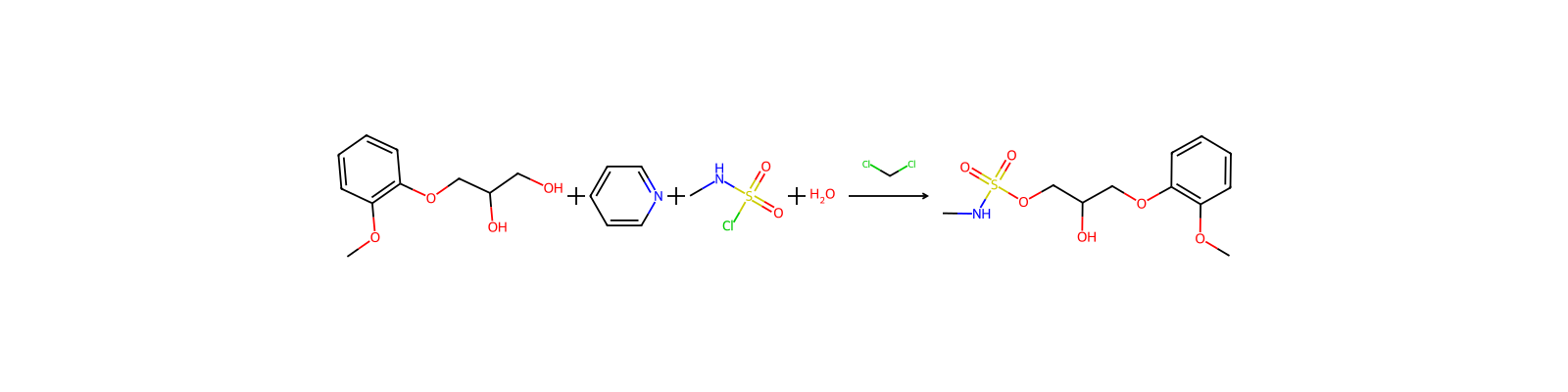
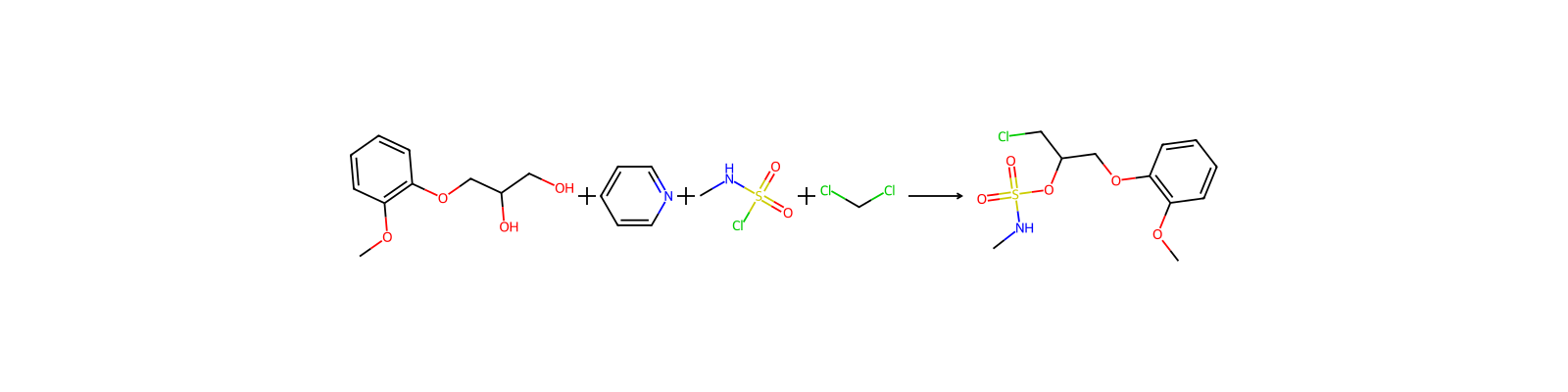
11 records


Linked notes
Loading…