

Basic information
- Standard SMILES
N=C(N)N- InChIKey
ZRALSGWEFCBTJO-UHFFFAOYSA-N- Molecular formula
- CH5N3
- Average molar mass
- 59.07 g/mol
- Monoisotopic mass
- 59.04834716
Overview
Guanidine is an aminocarboxamidine, the parent compound of the guanidines. It is a member of guanidines, a carboxamidine and a one-carbon compound. It is a conjugate base of a guanidinium.
Names & identifiers
- Preferred name
- Guanidine
- IUPAC
- guanidine
- English name
- Aminomethanamidine
- Molecular formula
- CH5N3
- Molecular weight
- 59.07
Names & synonyms
guanidine113-00-8IminoureaCarbamidineAminomethanamidineCarbamamidineImidoureaAminoformamidineGuanidinJU58VJ6Y3BCHEBI:42820H2N-C(=NH)-NH2
Show more names
DTXSID0023117Phosphate, GuanidineMonohydrate, GuanidineRefChem:782773Monohydroiodine, GuanidineDTXCID603117204-021-8Guanidine, free base
Database identifiers
- CAS
113-00-8、50-01-1- PubChem CID
- 3520
- DTXSID
DTXSID0023117- ChEMBL
CHEMBL821- ChEBI
CHEBI:42820- UNII
- JU58VJ6Y3B
- EC Number
- 204-021-8
- Nikkaji
- J2.462G
Properties
Computed structural properties
- XLogP
- -1.3
- Topological polar surface area
- 75.9 Ų
- Hydrogen bond donors
- 3
- Hydrogen bond acceptors
- 1
- Rotatable bonds
- 0
- Heavy atoms
- 4
- Formal charge
- 0
- Complexity
- 26.3
Experimental & physicochemical properties
Chemical ClassesNitrogen Compounds -> Other Nitrogen Compounds
DrugsPharmaceuticals -> Listed in ZINC15
PesticidesEnvironmental transformation -> Pesticide transformation products (metabolite, successor)
Color/FormDeliquescent crystalline mass
Solubility
In water, 1,840 mg/L at 25 °C
829 mg/mL
DecompositionWhen heated to decomposition it emits toxic fumes of /Nitrogen oxide/.
Melting Point
50 °C
182.3 °C
Vapor Pressure4.1 [mmHg]
Food Contact SubstancesFCS -> FDA Inventory of Food Contact Substances Listed in 21 CFR
Physical Description
Deliquescent solid; Absorbs carbon dioxide from the air; [Merck Index]
Solid
Ionization Efficiency
Positive
1.95
2.7
Agilent XCT
Electrospray ionization
formic acid (5.3nM)
Dissociation Constants
12.5
pKa = 12.5
Safety & regulation
GHS classification
GHS Classification
This chemical does not meet GHS hazard criteria for 40% (2 of 5) of reports.
Danger
H225 (40%): Highly Flammable liquid and vapor [Danger Flammable liquids]
P210, P233, P240, P241, P242, P243, P260, P261, P262, P264, P264+P265, P270, P271, P280, P301+P316, P301+P317, P301+P330+P331, P302+P352, P302+P361+P354, P303+P361+P353, P304+P340, P305+P351+P338, P305+P354+P338, P308+P316, P316, P317, P321, P330, P332+P317, P337+P317, P361+P364, P362+P364, P363, P370+P378, P403+P233, P403+P235, P405, and P501 (click each P-code to see the statement)
Aggregated GHS information provided per 5 reports by companies from 4 notifications to the ECHA C&L Inventory. Each notification may be associated with multiple companies.
Danger
Hazard information
Regulatory InformationStatus: Active Update: 14-07-2022 https://echa.europa.eu/registration-dossier/-/registered-dossier/17100
Hazards Summary
The chloride salt is highly irritating to the skin and eyes of rabbits and is not a skin sensitizer in guinea pigs; Symptoms of severe oral intoxication include muscle tremors and convulsive contractions, salivation, vomiting, hypoglycemia, and circulatory disturbances; [HSDB]
FDA Requirements
The Approved Drug Products with Therapeutic Equivalence Evaluations List identifies currently marketed prescription drug products, incl guanidine hydrochloride, approved on the basis of safety and effectiveness by FDA under sections 505 of the Federal Food, Drug, and Cosmetic Act. /Guanidine Hydrochloride/
Special ReportsEuropean Chemicals Bureau; IUCLID Dataset, Guanidine chloride (CAS # 50-01-1) (2000 CD-ROM edition). Available from the Database Query page at: http://ecb.jrc.it/esis/esis.php as of March 4, 2008.
Hazard Classes and Categories
Flam. Liq. 2 (40%)
Acute toxicity (Oral) - Category 4
Safety & protection
Storage ConditionsStore at 25 °C (77 °F); excursions permitted to 15-30 °C (59-86 °F). /Guanidine hydrochloride/
Disposal Methods
SRP: At the time of review, criteria for land treatment or burial (sanitary landfill) disposal practices are subject to significant revision. Prior to implementing land disposal of waste residue (including waste sludge), consult with environmental regulatory agencies for guidance on acceptable disposal practices.
Toxicology
TreatmentKidney dialysis is usually needed to relieve the symptoms of uremic syndrome until normal kidney function can be restored.
Interactions
The characteristics of guanidine uptake in brush-border membrane vesicles isolated from rabbit renal cortex were investigated ... Guanidine uptake was only minimally inhibited by organic cations such as tetraethylammonium, N1-methylnicotinamide, and choline, but many other organic cations such as amiloride, clonidine, imipramine, and harmaline caused considerable inhibition. Uptake of radiolabeled guanidine was inhibited more effectively by guanidine than by tetraethylammonium, whereas uptake of radiolabeled tetraethylammonium was inhibited more effectively by tetraethylammonium than by guanidine. beta-Lactam antibiotics did not inhibit guanidine uptake but did inhibit tetraethylammonium uptake. Kinetic analysis showed that there were at least two kinetically distinct carrier systems for guanidine uptake, whereas tetraethylammonium uptake occurred via a single carrier system ...
Concurrent therapy with other drugs that may cause bone-marrow suppression should be avoided. /Guanidine hydrochloride/
Health EffectsChronic exposure to uremic toxins can lead to a number of conditions including renal damage, chronic kidney disease and cardiovascular disease.
Ecotoxicity Values
LC50; Species: Cloeon dipterum (Mayfly, nymphs, length 9.3 mm, weight 5.6 mg); Conditions: freshwater, 25 °C; Concentration: 22000 ug/L for 3 hr /Conditions of bioassay not specified in source examined/
LC50; Species: Cloeon dipterum (Mayfly, nymphs, length 9.3 mm, weight 5.6 mg); Conditions: freshwater, 25 °C; Concentration: 15000 ug/L for 6 hr /Conditions of bioassay not specified in source examined/
LC50; Species: Cloeon dipterum (Mayfly, nymphs, length 9.3 mm, weight 5.6 mg); Conditions: freshwater, 25 °C; Concentration: 7200 ug/L for 24 hr /Conditions of bioassay not specified in source examined/
LC50; Species: Cloeon dipterum (Mayfly, nymphs, length 9.3 mm, weight 5.6 mg); Conditions: freshwater, 25 °C; Concentration: 2000 ug/L for 48 hr /Conditions of bioassay not specified in source examined/
LC50 Leuciscus idus (ide) 1758 mg/L/48 hr /Conditions of bioassay not specified in source examined/ /Guanidine chloride/
Environmental Fate
TERRESTRIAL FATE: Based on a classification scheme(1), an estimated Koc value of 20(SRC), determined from a structure estimation method(2), indicates that guanidine is expected to have very high mobility in soil(SRC). However, guanidine has a pKa of 12.5(3) and should exist almost entirely as a cation under environmental conditions (pH 5-9)(SRC). As a result, guanidine may have greater adsorption and less mobility than its estimated Koc value indicates since cations generally adsorb more strongly to soils containing organic carbon and clay than neutral species(4). Volatilization from moist soil surfaces is not an important environmental fate process since cations do not volatilize(SRC). The potential to volatilize from dry soil surfaces exists based upon an estimated vapor pressure of 2.2 mm Hg(SRC), determined from a fragment constant method(5). Guanidine was degraded in soil samples incubated under aerobic conditions at varying rates as a function of the initial starting concentration(6). At an initial concentration of 10 mg/kg, guanidine was 78% biodegraded after 10 days; however, at an initial concentration of 400 mg/kg, guanidine was 62% biodegraded after 25 days(6).
AQUATIC FATE: Based on a classification scheme(1), an estimated Koc value of 20(SRC), determined from a structure estimation method(2), indicates that guanidine is not expected to adsorb to suspended solids and sediment(SRC). However, guanidine has a pKa of 12.5(3) and should exist almost entirely as a cation under environmental conditions (pH 5-9)(SRC). As a result, guanidine may have greater adsorption to suspended solids and sediment than its estimated Koc value indicates(SRC). Volatilization of guanidine from water surfaces will not be an important fate process, since cations do not volatilize(SRC). According to a classification scheme(4), BCF values in the range of <0.1 to 0.1 measured in fish(5), suggest bioconcentration in aquatic organisms is low(SRC). Complete guanidine degradation in stream water samples obtained near a nitroguanidine production facility was observed in 20 days after an initial lag period 11 days and 68 days following a lag period 52 days(5).
ATMOSPHERIC FATE: According to a model of gas/particle partitioning of semivolatile organic compounds in the atmosphere(1), guanidine, which has an estimated vapor pressure of 2.2 mm Hg at 25 °C(SRC), determined from a fragment constant method(2), is expected to exist solely as a vapor in the ambient atmosphere. Vapor-phase guanidine is degraded in the atmosphere by reaction with photochemically-produced hydroxyl radicals(SRC); the half-life for this reaction in air is estimated to be 9 hours(SRC), calculated from its rate constant of 4.2X10⁻¹¹ cu cm/molecule-sec at 25 °C(SRC) that was derived using a structure estimation method(3). Guanidine does not contain chromophores that absorb at wavelengths >290 nm and therefore is not expected to be susceptible to direct photolysis by sunlight(4).
Adverse EffectsNeurotoxin - Other CNS neurotoxin
Exposure RoutesRapidly absorbed and distributed
Toxicity Summary
Uremic toxins such as guaniidine are actively transported into the kidneys via organic ion transporters (especially OAT3). Increased levels of uremic toxins can stimulate the production of reactive oxygen species. This seems to be mediated by the direct binding or inhibition by uremic toxins of the enzyme NADPH oxidase (especially NOX4 which is abundant in the kidneys and heart) (A7868). Reactive oxygen species can induce several different DNA methyltransferases (DNMTs) which are involved in the silencing of a protein known as KLOTHO. KLOTHO has been identified as having important roles in anti-aging, mineral metabolism, and vitamin D metabolism. A number of studies have indicated that KLOTHO mRNA and protein levels are reduced during acute or chronic kidney diseases in response to high local levels of reactive oxygen species (A7869).
Signs and Symptoms
As a uremic toxin, this compound can cause uremic syndrome. Uremic syndrome may affect any part of the body and can cause nausea, vomiting, loss of appetite, and weight loss. It can also cause changes in mental status, such as confusion, reduced awareness, agitation, psychosis, seizures, and coma. Abnormal bleeding, such as bleeding spontaneously or profusely from a very minor injury can also occur. Heart problems, such as an irregular heartbeat, inflammation in the sac that surrounds the heart (pericarditis), and increased pressure on the heart can be seen in patients with uremic syndrome. Shortness of breath from fluid buildup in the space between the lungs and the chest wall (pleural effusion) can also be present.
Soil Adsorption/Mobility
Using a structure estimation method based on molecular connectivity indices(1), the Koc of guanidine can be estimated to be 20(SRC). According to a classification scheme(2), this estimated Koc value suggests that guanidine is expected to have very high mobility in soil(SRC). The pKa of guanidine is 12.5(3), indicating that this compound will exist almost entirely as a cation in the environment(SRC). As a result, guanidine may have greater adsorption and less mobility than its estimated Koc value indicates since cations generally adsorb more strongly to soils containing organic carbon and clay than neutral species(4).
Human Toxicity Excerpts
/SIGNS AND SYMPTOMS/ Severe guanidine intoxication is characterized by nervous hyperirritability, fibrillary tremors and convulsive contractions of muscle, salivation, vomiting, diarrhea, hypoglycemia, and circulatory disturbances. Administration of intravenous calcium gluconate may control the neuromuscular and convulsive symptoms and provide some relief of other toxic manifestations. /Guanidine hydrochloride/
/CASE REPORTS/ A 43-year-old man with Eaton-Lambert syndrome developed chronic interstitial nephritis after 4 years of guanidine hydrochloride therapy. The diagnosis of Eaton-Lambert syndrome was confirmed by clinical neurophysiologic studies and by intracellular electrode studies of end-plate potentials from an intercostal muscle biopsy. Because guanidine had toxic effects in this patient, an alternative form of therapy was tried. /Guanidine hydrochloride/
/ALTERNATIVE and IN VITRO TESTS/ Plasma proteins in hemodialysis patients display a significant increase in deamidated/isomerized Asx (asparagine and aspartic acid) content, a marker of protein fatigue damage ... The deamidated/isomerized Asx content of normal plasma incubated with several uremic toxins for 24 hr, 72 hr, and 7 days was measured, identifying a group of toxins that were able to elicit this kind of damage. Uremic toxins were also incubated with purified human albumin, and dose-response experiments with the two most toxic agents in terms of protein damage (guanidine and guanidinopropionic acid) were carried out ... Among the uremic toxins that are able to elicit protein damage, guanidine produced a dose-dependent increase in protein damage. No difference was found after a hemodialysis session.
/ALTERNATIVE and IN VITRO TESTS/ Plasma levels of endogenous guanidine compounds are increased in various pathologic conditions, including chronic renal failure. In the present study ... the effects of some of these compounds on basal and stimulated nitric oxide activity in human renal arteries /were tested/ ... Rings from human renal arteries were obtained from 22 patients undergoing nephrectomy ... The effects of N(G)-monomethyl-L-arginine (L-NMMA), N(G),N(G)-dimethyl-L-arginine (asymmetrical dimethylarginine (ADMA)), aminoguanidine (AG), and methylguanidine (MG) on artery rings under basal and stimulated conditions /were studied/ ... In precontracted arteries, L-NMMA (1 umol/L to 1 mmol/L) and ADMA (1 umol/L to 3 mmol/L) caused concentration- and endothelium-dependent contractions (median effective concentrations (EC50) = 13.3 umol/L and 17.5 umol/L, respectively; Emax = 15 + or - 4% and 17 + or - 4% of the response to 100 mmol/L KCl, respectively). Aminoguanidine (0.01 to 3 mmol/L) and MG (0.01 to 3 mmol/L) produced endothelium-independent contractions (Emax = 9 + or -3% and 16 + or - 2% of the response to 100 mmol/L KCl, respectively). L-arginine (1 mmol/L) but not D-arginine (1 mmol/L) prevented the contractions by L-NMMA and ADMA, but did not change contractions induced by AG and MG. In precontracted arteries, the relaxation to acetylcholine was decreased but not abolished by L-NMMA and ADMA. The remaining relaxation was reduced by charybdotoxin (0.1 mol/L) and tetraethylammonium (1 mmol/L) ... The results demonstrate that L-NMMA and ADMA reduce basal and stimulated nitric oxide activity in human renal arteries. An increase in the plasma concentrations of methylarginines associated with renal disease should be considered as a risk factor for endothelial dysfunction and abnormal vasomotor tone in human renal arteries. /Endogenous guanidine compounds/
/OTHER TOXICITY INFORMATION/ Guanidino compounds are known as uremic toxins which increase in the blood of patients with renal failure. Guanidino succinic acid (GSA) and methyl guanidine (MG) ... reflect the pathological stage of nephritis. GSA correlates well with blood urea nitrogen and therefore indicates the reduction of renal function. MG does not appear in the early stage of renal failure and abruptly increases at the stage of serious uremia. /Guanidino compounds/
Artificial Pollution SourcesGuanidine's production and use as a starting material for munitions, polymeric resins, flame retardants, and pharmaceuticals(1) may result in its release to the environment through various waste streams(SRC).
Regulatory information
FDA Requirements
The Approved Drug Products with Therapeutic Equivalence Evaluations List identifies currently marketed prescription drug products, incl guanidine hydrochloride, approved on the basis of safety and effectiveness by FDA under sections 505 of the Federal Food, Drug, and Cosmetic Act. /Guanidine Hydrochloride/
Chemistry & industry
Pharmacology
PharmacodynamicsGuanidine apparently acts by enhancing the release of acetylcholine following a nerve impulse. It also appears to slow the rates of depolarization and repolarization of muscle cell membranes.
Mechanism of Action
Guanidine apparently acts by enhancing the release of acetylcholine following a nerve impulse. It also appears to slow the rates of depolarization and repolarization of muscle cell membranes. /Guanidine hydrochloride/
Guanidine-induced alterations in substrate dependent kinetics of hepatic and renal succinate dehydrogenase (SDH) have been investigated under in vitro conditions. Guanidine hydrochloride (GuHCl) induced a mixed type of inhibition by decreasing the maximal velocity (Vmax) and increasing the Michaelis-Menten constant (Km). The competitive (Ki) and non-competitive (Ki) inhibitory constants ... showed that the inhibitory influence of GuHCl is more due to decreased enzyme substrate affinity rather than reduction in the active site density of the enzyme as revealed by low Ki values. /Guanidine hydrochloride/
Biological Half-Life7-8 hours
Metabolism/Metabolites
Not metabolized.
Not metabolized. Half Life: 7-8 hours
FDA Pharmacological Classification
JU58VJ6Y3B
GUANIDINE
Established Pharmacologic Class [EPC] - Acetylcholine Releasing Agent
Physiologic Effects [PE] - Increased Acetylcholine Activity
Guanidine is an Acetylcholine Releasing Agent. The physiologic effect of guanidine is by means of Increased Acetylcholine Activity.
Absorption, Distribution and Excretion
Rapidly absorbed and distributed
Accumulation of specific guanidine compounds (GCs) has been related to neurological, cardiovascular, hematological, and immunological complications of renal failure ... The obvious increases of urea, guanidinosuccinic acid, creatinine, guanidine, methylguanidine, and N(G)N(G)-dimethylarginine (symmetrical dimethylarginine) seen in blood of oldest heterozygous and younger homozygous polycystic kidney disease (PKD) rats were largely within the same range as those found in the studied human PKD population, especially in patients with a glomerular filtration rate below 60 mL/min/1.73 sq m. The decreased levels of plasma guanidinoacetic acid seen at end-stage renal disease in homozygous and oldest heterozygous PKD/Mhm rats were also observed in serum of patients with a glomerular filtration rate below 20 mL/min/1.73 sq m ... /Guanidino compounds/
Brush-border membrane vesicles were prepared from donor human kidneys ... Uptake of (14)C-guanidine ... in the vesicles, as determined by rapid filtration, was significantly greater in the presence of an outwardly-directed proton gradient, at all early time points, than in the absence of the gradient ... Evidence was obtained suggesting that the transporter for guanidine is distinct from the previously described organic cation proton antiporter for TEA. /Tetraethylammonium/
The characteristics of guanidine uptake in brush-border membrane vesicles isolated from rabbit renal cortex were investigated. Guanidine uptake was markedly stimulated by an outwardly directed H+ gradient, resulting in a transient uphill transport. This stimulation was not due to an inside-negative, H+-diffusion potential because an ionophore-induced H+-diffusion potential and a K+-diffusion potential (both inside-negative) failed to enhance guanidine uptake. The H+ gradient itself appeared to be the driving force for the uptake ...
... The plasma, erythrocyte, and urinary concentration of guanidino compounds in 30 hemodialysis patients and 15 patients with chronic renal failure who had not undergone hemodialysis /were determined/ ... Plasma levels of taurocyamine, guanidinosuccinic acid, alpha-N-acetyl-L-arginine, creatine, guanidinobutyric acid, guanidine, and methylguanidine were significantly increased in patients with chronic renal failure with or without hemodialysis. In contrast, plasma guanidinoacetic acid concentrations were significantly decreased. Erythrocyte concentrations of creatinine, guanidinosuccinic acid, guanidine and methylguanidine were also markedly elevated. No correlation was observed between plasma creatinine concentration and erythrocyte concentration of guanidinosuccinic acid or methylguanidine. However, there was a significant correlation between plasma and erythrocyte methylguanidine, and between plasma and erythrocyte guanidinosuccinic acid. /Guanidino compounds/
For more Absorption, Distribution and Excretion (Complete) data for GUANIDINE (7 total), please visit the HSDB record page.
Tissue LocationsAdrenal Cortex
Cellular LocationsCytoplasm
Uses & manufacturing
Uses
A strong organic base present in turnip juice, mushrooms, corn germ, rice hulls, mussels, and earthworms; Used as a therapeutic cholinergic; [Merck Index] Found in urine as a product of protein metabolism; Used in laboratory research, to treat myasthenia, and as a fluorescent probe in HPLC; [ChemIDplus] Used to make munitions, polymeric resins, flame retardants, and pharmaceuticals; [HSDB]
Organic synthesis
Starting material for munitions, polymeric resins, flame retardants, and pharmaceuticals.
For the reduction of the symptoms of muscle weakness and easy fatigability associated with the myasthenic syndrome of Eaton-Lambert. It is not indicated for treating myasthenia gravis.
Methods of Manufacturing
From ammonium thiocyanate or thiourea + ammonia
(1) By heating calcium cyanamide with ammonium iodide. (2) By treating urea with ammonia under pressure.
Free guanidine can be isolated from guanidine salts by reaction with a strong base such as an alkali metal hydroxide or methoxide. After removal of the precipitated salt the free guanidine base is obtained as colorless, waxy, very hygroscopic crystals.
Formulations/PreparationsOral: Tablets 125 mg guanidine hydrochloride (Schering Canada for Key Pharm) /Guanidine hydrochloride/
Use ClassificationEnvironmental transformation -> Pesticide transformation products (metabolite, successor)
General Manufacturing InformationOn heating to 160 °C it is converted to melamine and NH3
Suppliers50 total
湖北永阔科技有限公司027-59223108 15972152991 · [email protected]
湖北万得化工有限公司15377098680 15377098680 · [email protected]
湖北实兴化工有限公司13554155445 · [email protected]
杭州摩库生物医药科技有限公司+86-057181025280; +8617767106207 · [email protected]
Syntechem Co.,Ltd[email protected]
上海道鞅科技有限公司QQ:3150471267 13381681725 · [email protected]
梯希爱(上海)化工贸易有限公司021-61109150 · [email protected]
嘉兴市艾森化工有限公司0573-85285100 18627885956 · [email protected]
湖北广奥生物科技有限公司027-02702759223056 18162699093 · [email protected]
医恩医疗系统研发(上海)有限公司021-58958002 18930822973 · [email protected]
武汉丰泰威远科技有限公司+86-27-8746-5837 +86-18627785180 · [email protected]
武汉丰泰威远科技有限公司027-87465837 19945049750 · [email protected]
湖北恩星生物科技有限公司16621771607 · [email protected]
湖北成海化工有限公司027-59220433 18327245847 · [email protected]
湖北扬信医药科技有限公司0714-3999001 19171453112 · [email protected]
广东大小化工有限公司1866-171603 18666171603 · [email protected]
北京泰亚杰科技有限公司021-33690831-8001 13552411790;18616022633 · [email protected]
深圳振强药物研发有限公司0755-66853366 13670046396 · [email protected]
杭州杰恒化工有限公司0571-87396432 · [email protected]
陕西缔都医药化工有限公司029-81024372 17792795018 · [email protected]
青岛海智微元生物科技有限公司18317699790 18317699790 · [email protected]
池州凯隆进出口贸易有限公司[email protected]
Sigma-Aldrich西格玛奥德里奇(上海)贸易有限公司021-61415566 800-8193336 · [email protected]
HANGZHOU LEAP CHEM CO., LTD.+86-571-87711850 +86-15355479329 · [email protected]
嘉兴市德亿化工有限公司0573-85866609 13325730825 · [email protected]
上海玻尔化学试剂有限公司19102157732 · [email protected]
湖北扬信医药科技有限公司07143299675 13092790750 · [email protected]
北京华威锐科化工科技有限公司89508211 18501085097 · [email protected]
湖北齐飞医药化工有限公司027-59322506 18071128681 · [email protected]
BOC Sciences[email protected]
成都塞欧斯医药科技有限公司028-64971018 18108168130
金锦乐(湖南)化学有限公司18001959627(微信同号) 18001959627 · [email protected]
上海研易宝医药科技有限公司13661744693 · [email protected]
Shaanxi Didu New Materials Co. Ltd+86-86-17392712779 +86-13289823923 · [email protected]
河南威梯希化工科技有限公司0371-53732842 13383863444 · [email protected]
嘉兴市德亿化工有限公司86-0573-85866609 18367600069 · [email protected]
上海易恩化学技术有限公司400-400-1332688 18019345275 · [email protected]
河南天孚化工有限公司+86-0371-55170693 +86-19937530512 · [email protected]
career henan chemical co+86-0371-86658258 · [email protected]
武汉赢元贝商贸有限公司86-13349903920 13349903920 · [email protected]
北京迈瑞达科技有限公司010-82387566 · [email protected]
湖北达豪化工有限公司027-027-59106191 13986034860 · [email protected]
湖北信康医药化工有限公司027-027-59308705 18871579363 · [email protected]
常州翔龙医药科技有限公司18661161657 · [email protected]
XIAMEN AMITY INDUSTRY AND TRADE CO., LTD.+8618950047208 · [email protected]
湖北拓邦化工有限公司027-59106185 13986192185 · [email protected]
上海迈瑞尔生化科技有限公司18621169109 · [email protected]
武汉赢元贝商贸有限公司13349903920 · [email protected]
上海相辉医药科技有限公司13611835272 13611835272 · [email protected]
天津佳一生物科技有限公司13261917876 13261917876 · [email protected]
Additional notes
DefinitionChEBI: Guanidine is an aminocarboxamidine, the parent compound of the guanidines. It is a one-carbon compound, a member of guanidines and a carboxamidine. It is a conjugate base of a guanidinium.
Related reactions
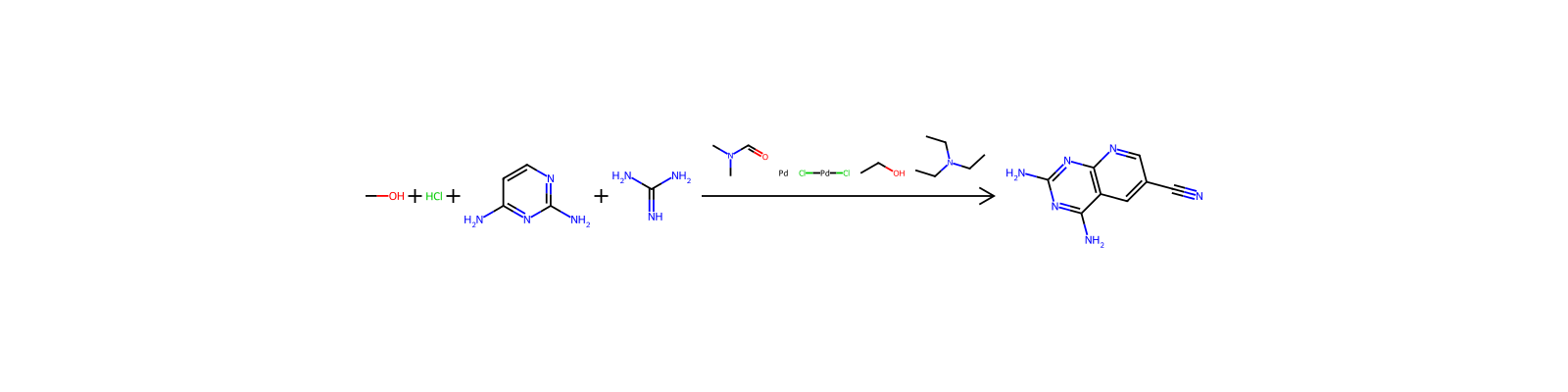
317 records





Linked notes
Loading…