HomeMCPWorkbenchSkills
HomeWorkbenchNotificationsMe
llms.txt · MCP GuidePrivacy Policy · Terms of Service · Supportv1.8.0
  1. Home
  2. /Compound

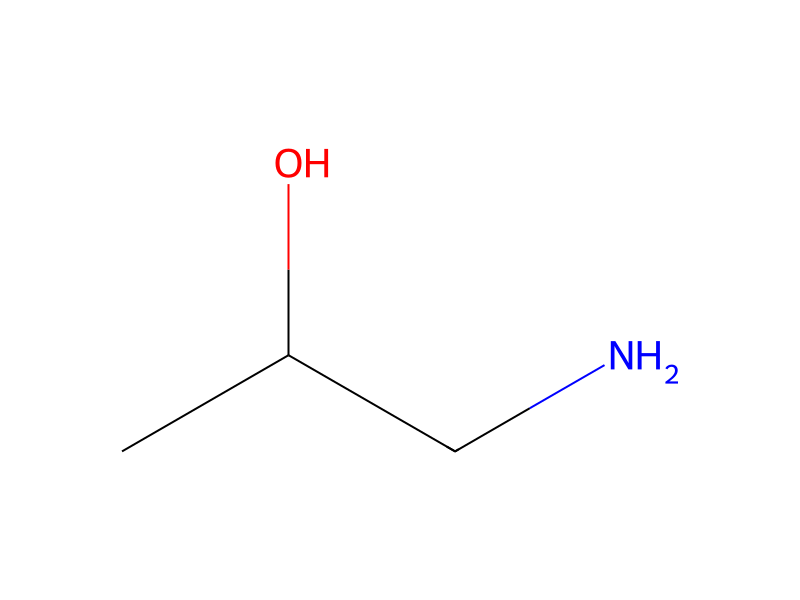
1-Amino-2-propanol

HCID 4
New noteNew reactionRequest quotes
Print preview
Basic informationOverviewNames & identifiersPropertiesSafety & regulationChemistry & industryRelated reactionsCompound notes
Substructure searchFind similar structures

Basic information

CAS
78-96-6
Standard SMILES
CC(O)CN
InChIKey
HXKKHQJGJAFBHI-UHFFFAOYSA-N
Molecular formula
C3H9NO
Average molar mass
75.11 g/mol
Monoisotopic mass
75.06841391

Overview

Monoisopropanolamine appears as a colorless liquid with a slight ammonia-like odor. Less dense than water and soluble in water. Flash point 165 °F. Corrosive to metals and tissue. Vapors are heavier than air. Produces toxic oxides of nitrogen during combustion. Used in plastics, paints, cutting oils, and specialized cleaning compounds.

Names & identifiers

Preferred name
1-Amino-2-propanol
IUPAC
1-aminopropan-2-ol
English name
Amino-2-propanol
Molecular formula
C3H9NO
Molecular weight
75.11

Names & synonyms

1-Aminopropan-2-ol1-AMINO-2-PROPANOLIsopropanolamineThreamineMonoisopropanolamineDL-1-Amino-2-propanol2-Hydroxypropylamine2-Propanol, 1-amino-1-Methyl-2-aminoethanol2-Amino-1-methylethanol2-Hydroxypropanamine1-Amino-2-hydroxypropane
Show more names
MIPA3-Amino-2-propanol1-AMINOISOPROPANOLDL-ISOPROPANOLAMINE
2-Hydroxy-1-propylaminealpha-Aminoisopropyl alcoholMono-iso-propanolamineCCRIS 22842-Hydroxy-1-propanamineDTXSID9021764HSDB 5224beta-Aminoisopropanol

Database identifiers

CAS
78-96-6
PubChem CID
4
DTXSID
DTXSID9021764
ChEMBL
CHEMBL326602
ChEBI
CHEBI:19030
UNII
UE40BY1BZW
EC Number
201-162-7
Nikkaji
J1.961E、J2.150D

Properties

Computed structural properties

XLogP
-1
Topological polar surface area
46.3 Ų
Hydrogen bond donors
2
Hydrogen bond acceptors
2
Rotatable bonds
1
Heavy atoms
5
Formal charge
0
Complexity
22.9

Experimental & physicochemical properties

Chemical Classes · 2 items

Nitrogen Compounds -> Amines, Aliphatic

Flammable agents - 2nd degree

Cosmetics · 2 items

Cosmetic ingredients (Isopropanolamine) -> CIR (Cosmetic Ingredient Review)

Buffering

LogP · 4 items

log Kow= -0.96 (experimental)

-0.960

-1.0

-0.96

OdorSLIGHT AMMONIA ODOR
Food AdditivesFLAVORING AGENT OR ADJUVANT -> FDA Substance added to food
Density · 6 items

0.961 at 68 °F (USCG, 1999) - Less dense than water; will float

0.9611 @ 20 °C/4 °C

0.96 g/cm³

Relative density of the vapour/air-mixture at 20 °C (air = 1): 1.00

0.970-0.976

0.961

Viscosity24 mm²/s at 25 °C
Color/FormLIQUID
Solubility · 6 items

Safety & regulation

Safety information is for reference only and does not replace the supplier’s Safety Data Sheet (SDS), applicable regulations, or professional assessment.

GHS classification

GHS Classification · 6 items

Danger

H314: Causes severe skin burns and eye damage [Danger Skin corrosion/irritation]

P260, P264, P280, P301+P330+P331, P302+P361+P354, P304+P340, P305+P354+P338, P316, P321, P363, P405, and P501 (click each P-code to see the statement)

This chemical does not meet GHS hazard criteria for < 0.1% (1 of 3123) of reports.

Danger

H312 (83.7%): Harmful in contact with skin [Warning Acute toxicity, dermal]

Hazard information

Regulatory Information · 5 items

Chemical: 2-Propanol, 1-amino-

2-Propanol, 1-amino- is listed on the EPA's Chemical Data Reporting (CDR) system. Manufacturers and importers of 2-Propanol, 1-amino- are required to report information about their production and use of this chemical to the EPA under the Toxic Substances Control Act (TSCA). (40 eCFR Part 711)

REACH registered substance: 1-aminopropan-2-ol (EC: 201-162-7)

Aminopropanol: Does not have an individual approval but may be used under an appropriate group standard

The New Jersey Worker and Community Right to Know Act requires public and private employers to provide information about hazardous substances at their workplaces. (N.J.S.A. 34:5A-1 et. seq.)

Other Safety InformationIMAP assessments - 2-Propanol, 1-amino-: Environment tier I assessment
DOT LabelCorrosive
Fire Hazards · 2 items

Special Hazards of Combustion Products: Irritating vapors generated when heated. (USCG, 1999)

Combustible. Gives off irritating or toxic fumes (or gases) in a fire. Above 77 °C explosive vapour/air mixtures may be formed.

Health HazardsVapor irritates eyes and nose. Liquid causes local injury to mouth, throat, digestive tract, skin, and eyes. (USCG, 1999)

Chemistry & industry

Uses & manufacturing

Uses · 4 items

CIR ingredient: Isopropanolamine

Used as an emulsifying agent and in dry cleaning soaps, soluble textile oils, wax removers, metal-cutting oils, cosmetics, emulsion paints, plasticizers, and insecticides; [Hawley] Used as a flavoring agent; [WHO]

Metal Machining [Category: Heat or Machine]

Emulsifying agent, drycleaning soaps, soluble textile oils, wax removers, metal cutting oils, cosmetics, emulsion paints, plasticizers, insecticides.

U.S. Production2023: 10,000,000 - <50,000,000 lb
Consumer UsesLubricating agent
Industry UsesLubricating agent
Use Classification · 3 items

Flavouring Agent -> FLAVOURING_AGENT -> JECFA Functional Classes

Flavoring Agents -> JECFA Flavorings Index

Cosmetics -> Buffering

General Manufacturing Information · 2 items

All Other Chemical Product and Preparation Manufacturing

2-Propanol, 1-amino-: ACTIVE

Applications · 5 items

OccurrenceReportedly present in sherry.

UsesSynthetic and semisynthetic machine lubricating/cutting oil formulations have included isopropanolamine, diisopropanolamine, and triethanolamine, together with nitrites; consequently the EPA has promulgated standards regarding the composition of cutting fluids. No additional uses were found in the literature.

UsesAmino-2-propanol is used to study the effect of temperature and water content on the molecular structure and hydrogen bonding of amino-2-propanol, which has been examined by Fourier transform near-infrared (FT-NIR) spectroscopy. Also used in used in the synthesis of protein kinase CK2 inhibitors used in the treatment of neoplasia and other infective diseases.

Related reactions

335 records
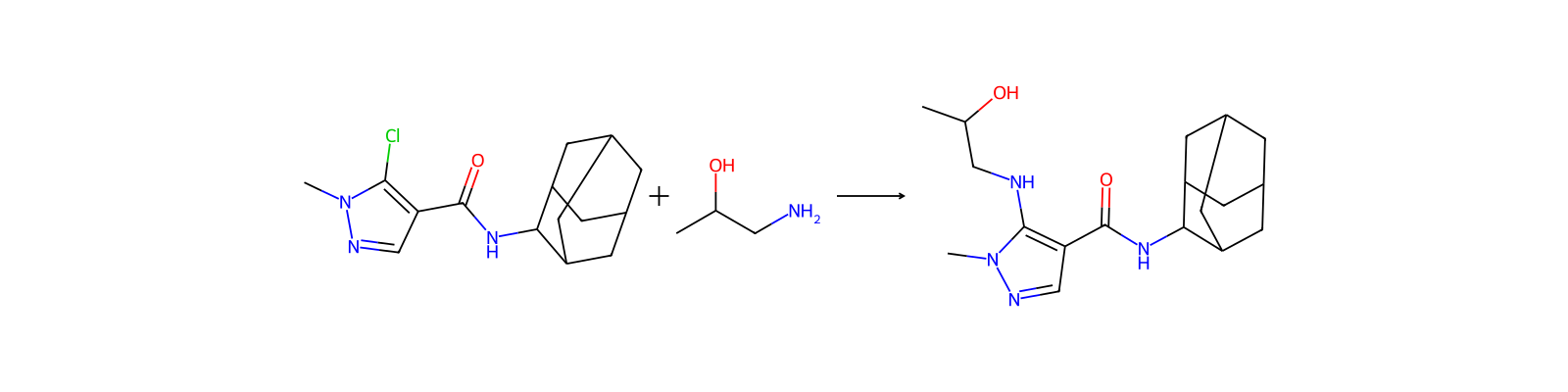
New reaction record
HRID 12844 reaction equation
HRID 12844As reactantuspto-grants-2010_06
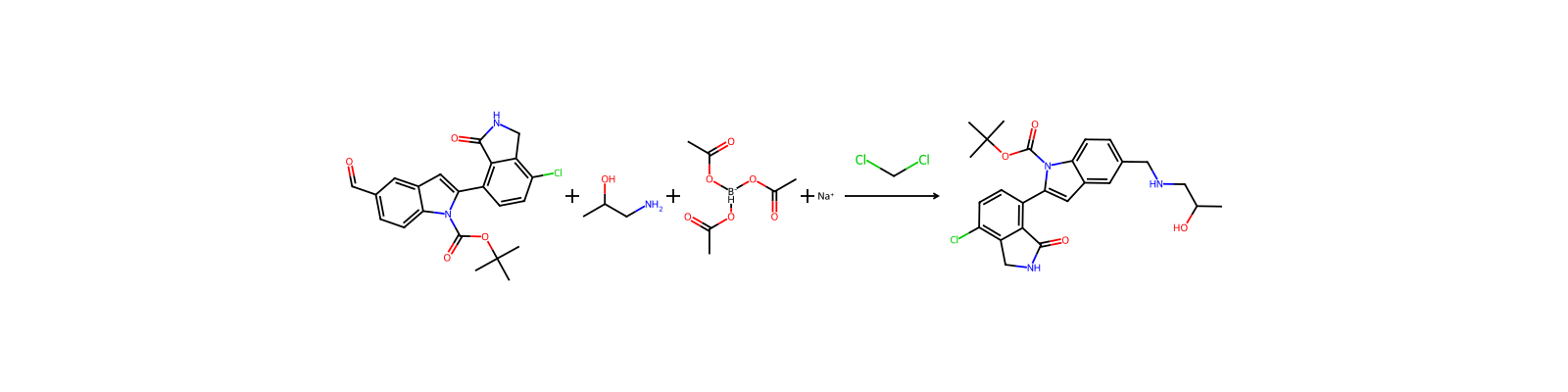
HRID 21064 reaction equation
HRID 21064As reactantuspto-grants-2010_06
HRID 22621 reaction equation
HRID 22621As reactantuspto-grants-2005_02
HRID 26389 reaction equation
HRID 26389As reactantuspto-grants-1979_04
HRID 69087 reaction equation
HRID 69087As reactantuspto-grants-2014_09
HRID 71057 reaction equation
HRID 71057As reactantuspto-grants-2014_09
HRID 83443 reaction equation
HRID 83443As reactantuspto-grants-2014_09
HRID 84527 reaction equation
HRID 84527As reactantuspto-grants-2014_09
Page 1 of 42

Compound notes

Loading…

On this pageBasic informationOverviewNames & identifiersPropertiesSafety & regulationChemistry & industryRelated reactionsCompound notes
More actions
New noteNew reactionRequest quotes

greater than or equal to 100 mg/mL at 67.6 °F (NTP, 1992)

SOL IN ALL PROPORTIONS IN WATER, ALC, ETHER, ACETONE, BENZENE, CARBON TETRACHLORIDE.

1.00E+06 mg/L @ 25 °C (exp)

Solubility in water: soluble

Soluble in water

Soluble (in ethanol)

Flash Point · 5 items

171 °F (NTP, 1992)

76.6 °C

171 °F (77 °C) (closed cup)

77 °C c.c.

171 °F

Boiling Point · 6 items

313 to 316 °F at 758 mmHg (NTP, 1992)

159.46 °C @ 760 MM HG

160.00 to 161.00 °C. @ 760.00 mm Hg

159.5 °C

160 °C

313-316 °F

Melting Point · 5 items

34.5 °F (NTP, 1992)

1.74 °C

24.00 to 26.00 °C. @ 760.00 mm Hg

1 °C

34.5 °F

Physicochemical properties

Melting point
-2 °C · -2 °C (lit.)
Boiling point
160 °C · 160 °C (lit.)
Density
0.973 g/mL · 0.973 g/mL at 25 °C (lit.)
vapor density
2.6 · 2.6 (vs air)
vapor pressure
1 mm · <1 mm Hg ( 20 °C)
refractive index
20 · n20/D 1.4478(lit.)
FEMA
3965 · 3965 | 1-AMINO-2-PROPANOL
Flash point
165 °F · 165 °F
storage temp.
2 · 2-8°C
solubility
250 mg/mL · DMSO : 250 mg/mL (3328.45 mM; Need ultrasonic)
form
Liquid
pka
12.92 · 12.92±0.35(Predicted)
color
Clear
PH
11.3 · 11.3 (10g/l, H2O, 20℃)
Odor
slt ammonia odor
Odor Type
fishy
biological source
synthetic
explosive limit
1.9 · 1.9-10.4%(V)
Water Solubility
freely soluble
FreezingPoint
1.4 ℃ · 1.4℃
Sensitive
Hygroscopic
JECFA Number
1591 · 1591
BRN
605275 · 605275
Henry's Law Constant
4.2 · 4.2×104 mol/(m3Pa) at 25℃, HSDB (2015)
Stability
Stable. Substances to be avoided include strong oxidizing agents. Combustible. Hygroscopic.
Major Application
cleaning productscosmeticsflavors and fragrancesfood and beveragespersonal care
Cosmetics Ingredients Functions
BUFFERING
InChI
1S/C3H9NO/c1-3(5)2-4/h3,5H,2,4H2,1H3
InChIKey
HXKKHQJGJAFBHI-UHFFFAOYSA-N
SMILES
CC(O)CN
LogP
-0.93 at · -0.93 at 23℃
Surface tension
37.6 mN/m · 37.6mN/m at 293.15K
CAS DataBase Reference
78 · 78-96-6(CAS DataBase Reference)
Substances Added to Food (formerly EAFUS)
1 · 1-AMINO-2-PROPANOL
FDA 21 CFR
175.105 · 175.105; 176.170; 176.180;176.210
FDA UNII
40 BY1BZW · UE40BY1BZW
NIST Chemistry Reference
2 · 2-Propanol, 1-amino-(78-96-6)
EPA Substance Registry System
Monoisopropanolamine (78-96-6)
UNSPSC Code
85151701 · 85151701
NACRES
24 · NA.24
Symbol(GHS)
5 · GHS05,GHS07
Signal word
Danger
Hazard statements
312 · H312-H314
Precautionary statements
280 · P280-P301+P330+P331-P303+P361+P353-P304+P340+P310-P305+P351+P338-P362+P364
Hazard Codes
C,Xn
Risk Statements
34 · 34-21/22
Safety Statements
23 · 23-26-36-45-36/37
RIDADR
2735 · UN 2735 8/PG 2
WGK Germany
1 · 1
RTECS
5775000 · UA5775000
Autoignition Temperature
335 °C · 335°C
TSCA
TSCA listed
HazardClass
8 · 8
PackingGroup
II
HS Code
29221980 · 29221980
Storage Class
8 A · 8A - Combustible corrosive hazardous materials
Hazard Classifications
4 DermalEye · Acute Tox. 4 DermalEye Dam. 1Skin Corr. 1B
Hazardous Substances Data
78 · 78-96-6(Hazardous Substances Data)
Toxicity
50 orl-rat: · LD50 orl-rat: 1715 mg/kg GTPZAB 30(7),46,86
REACH Registrations
Active
Limited Quantities
1 L · 1.0 L (0.3 gallons) (liquid) or 1 Kg (2.2 lbs) (solid)
Excepted Quantities
Max Inner Pack (30g or 30ml) and Max Outer Pack (500g or 500ml)
Hazards Summary · 2 items

A corrosive substance that can cause injury to the skin, eyes, and respiratory tract; Inhalation may cause pulmonary edema; May be absorbed through skin; [ICSC] External application to rabbit eyes scored 7-9 on a scale of 1-10 (10 being most severe) for degree of injury after 24 hours; [HSDB] Safe when used as a flavoring agent in food; [JECFA] Corrosive; Harmful by ingestion and skin absorption; May cause corrosive effects to upper respiratory tract if inhaled; [Aldrich MSDS]

The major hazards encountered in the use and handling of 1-amino-2-propanol stem from its toxicologic properties. Toxic primarily by inhalation and dermal contact, exposure to this liquid, with a slight ammonia odor, may occur from its production and use as a chemical intermediate, emulsifying agent, in drycleaning soaps, wax removers, metal cutting oils, cosmetics, plasticizers,and insecticides. In activities and situations where over-exposure may occur, wear a self-contained breathing apparatus. If contact should occur, irrigate exposed eyes with copious amounts of tepid water for at least 15 minutes, and wash exposed skin thoroughly with soap and water. 1-Amino-2-propanol must be moderately heated before ignition will occur. Fires involving this substance may be extinguished with water spray or alcohol foam.

Reactive GroupAlcohols and Polyols
EC ClassificationSymbol: C; R: 34; S: (1/2)-23-26-36-45
UN ClassificationUN Hazard Class: 8; UN Pack Group: II
Reactivity Profile · 1 item

MONOISOPROPANOLAMINE is an aminoalcohol. Amines are chemical bases. They neutralize acids to form salts plus water. These acid-base reactions are exothermic. The amount of heat that is evolved per mole of amine in a neutralization is largely independent of the strength of the amine as a base. Amines may be incompatible with isocyanates, halogenated organics, peroxides, phenols (acidic), epoxides, anhydrides, and acid halides. Flammable gaseous hydrogen is generated by amines in combination with strong reducing agents, such as hydrides.

Chemical DangersOn combustion, forms nitrogen oxides. Reacts violently with strong oxidants, cellulose nitrate, nitric acid and aldehydes.
Packaging and LabellingDo not transport with food and feedstuffs.

Safety & protection

Fire Fighting · 2 items

Excerpt from ERG Guide 153 [Substances - Toxic and/or Corrosive (Combustible)]:

Use water spray, powder, alcohol-resistant foam, carbon dioxide.

First Aid Measures · 4 items

Fresh air, rest. Half-upright position. Artificial respiration may be needed. Refer for medical attention.

First rinse with plenty of water for at least 15 minutes, then remove contaminated clothes and rinse again. Refer for medical attention .

Rinse with plenty of water for several minutes (remove contact lenses if easily possible). Refer immediately for medical attention.

Rinse mouth. Give nothing to drink. Do NOT induce vomiting. Refer immediately for medical attention.

First Aid · 1 item

EYES: First check the victim for contact lenses and remove if present. Flush victim's eyes with water or normal saline solution for 20 to 30 minutes while simultaneously calling a hospital or poison control center. Do not put any ointments, oils, or medication in the victim's eyes without specific instructions from a physician. IMMEDIATELY transport the victim after flushing eyes to a hospital even if no symptoms (such as redness or irritation) develop.

Safe StorageSeparated from strong oxidants and food and feedstuffs. See Chemical Dangers. Well closed. Keep in a well-ventilated room. Store in an area without drain or sewer access.
Fire Fighting ProceduresALCOHOL FOAM
Nonfire Spill ResponseExcerpt from ERG Guide 153 [Substances - Toxic and/or Corrosive (Combustible)]:
Spillage Disposal · 1 item

Personal protection: complete protective clothing including self-contained breathing apparatus. Do NOT let this chemical enter the environment. Collect leaking liquid in sealable containers. Absorb remaining liquid in sand or inert absorbent. Then store and dispose of according to local regulations.

Isolation and EvacuationExcerpt from ERG Guide 153 [Substances - Toxic and/or Corrosive (Combustible)]:
Eye PreventionWear face shield or eye protection in combination with breathing protection.
Fire PreventionNO open flames. Above 77 °C use a closed system and ventilation.
Inhalation RiskNo indication can be given whether a harmful concentration in the air will be reached.
Skin PreventionProtective gloves. Protective clothing.

Toxicology

Environmental Fate · 3 items

TERRESTRIAL FATE: The dominant degradation process for 1-amino-2-propanol in soil is expected to be biodegradation. Several biodegradation studies have demonstrated that 1-amino-2-propanol is biodegradable(1,2,3). Based upon an estimated Koc of 7.1, 1-amino-2-propanol is expected to leach readily in soil(4,SRC). The importance of leaching may be lessened by concurrent biodegradation. Based upon a vapor pressure of 0.47 mm Hg at 25 °C(5), 1-amino-2-propanol should evaporate slowly from dry surfaces(SRC).

AQUATIC FATE: The dominant removal process for 1-amino-2-propanol in water is expected to be biodegradation. Several biodegradation studies have demonstrated that 1-amino-2-propanol is readily biodegradable(1,2,3). Aquatic volatilization, bioconcentration, and adsorption to sediment are not expected to be important(SRC).

ATMOSPHERIC FATE: Based upon a vapor pressure of 0.47 mm Hg at 25 °C(1), 1-amino-2-propanol is expected to exist almost entirely in the vapor-phase in the ambient atmosphere(2,SRC). It is expected to degrade relatively rapidly in an average ambient atmosphere (estimated half-life of about 9.9 hr) by reaction with photochemically produced hydroxyl radicals (3,SRC). Since 1-amino-2-propanol is miscible in water(4), physical removal via wet deposition is likely to occur(SRC).

Adverse EffectsDermatotoxin - Skin burns.
Exposure RoutesSerious local effects by all routes of exposure.
Toxicity Summary · 2 items

The Panel concludes that Diisopropanolamine, Triisopropanolamine, Isopropanolamine, and Mixed Isopropanolamines are safe as cosmetic ingredients in the present practices of use and concentration. The isopropanolamines should not be used in products containing N-nitrosating agents.

Safe for use in cosmetics, with qualifications

Signs and Symptoms · 4 items

Sore throat. Cough. Burning sensation. Shortness of breath. Laboured breathing.

Pain. Redness. Blisters. Skin burns.

Pain. Redness. Severe burns. Loss of vision.

Burning sensation. Burns in mouth and throat. Abdominal cramps. Shock or collapse.

ICSC Environmental DataThe substance is harmful to aquatic organisms.
Soil Adsorption/MobilityBased upon an experimental log Kow of -0.96(1), the Koc for 1-amino-2-propanol can be estimated to be 7.1 from a regression-derived equation(2,SRC). This BCF value suggests that 1-amino-2-propanol has very high soil mobility(3).
Artificial Pollution Sources · 1 item

Since 1-amino-2-propanol is primarily used as a chemical intermediate in the production of derivatives for many industries(1), it may be released to the environment in waste streams generated at sites of its commercial production and use(SRC).

Environmental Biodegradation · 1 item

A 5-day theoretical BOD of 4% was observed for 1-amino-2-propanol using a non-acclimated sewage inocula and a standard BOD dilution method(1); adaptation of the sewage inocula resulted in a 5-day theoretical BOD of 43%(1). Using a sewage inocula and a BOD dilution method, 5-day, 10-day, 15-day and 20-day theoretical BODs of 5.1, 34.0, 43.4 and 46.0% were measured respectively for 1-amino-2-propanol(2). In anaerobic serum bottle degradation studies, 1-amino-2-propanol exhibited a lag period of 9 days followed by a removal rate of 22 mg/l/day(3); during the observation period, 65% of initial 1-amino-2-propanol was removed compared to 100% removal for 1-propanol(3). 1-Amino-2-propanol is considered to be amenable to anaerobic biotechnology for industrial wastewater treatment(4).

Environmental Bioconcentration · 1 item

Based upon an experimental log Kow of - 0.96(1), the BCF for 1-amino-2-propanol can be estimated to be 0.11 from a regression-derived equation(2,SRC). This BCF value suggests that 1-amino-2-propanol will not bioconcentrate significantly in aquatic organisms(SRC).

Volatilization from Water/Soil · 1 item

The Henry's Law constant for 1-amino-2-propanol can be estimated to be 2.34X10⁻¹⁰ atm-cu m/mole using a structure estimation method(1,SRC); this value of Henry's Law constant indicates that a compound is essentially non-volatile from water(2). Based upon a vapor pressure of 0.47 mm Hg at 25 °C(3), 1-amino-2-propanol should evaporate from dry surfaces(SRC).

Non-Human Toxicity Excerpts · 1 item

ISOPROPANOL AMINE RATED 7-9 ON RABBIT EYES. ... TESTED EXTERNALLY ON EYES OF RABBITS & ... RATED NUMERICALLY ON SCALE OF 1-10 ACCORDING TO DEGREE OF INJURY ... AFTER 24 HR /OBSERVATION/, PAYING PARTICULAR ATTENTION TO CONDITION OF CORNEA. MOST SEVERE INJURIES HAVE BEEN RATED 10.

Safety data

wgk
1
tsca
TSCA listed
rtecs
UA5775000
ridadr
UN 2735 8/PG 2
hs_code
29221980
Toxicity
LD50 orl-rat: 1715 mg/kg GTPZAB 30(7),46,86
risk_code
34-21/22
Signal word
Danger
Symbol(GHS)
GHS05,GHS07
hazard_code
C,Xn
safety_code
23-26-36-45-36/37
hazard_class
8
Storage Class
8A - Combustible corrosive hazardous materials
packing_group
II
Hazard statements
H312-H314
Limited Quantities
1.0 L (0.3 gallons) (liquid) or 1 Kg (2.2 lbs) (solid)
Excepted Quantities
Max Inner Pack (30g or 30ml) and Max Outer Pack (500g or 500ml)
REACH Registrations
Active
Hazard Classifications
Acute Tox. 4 DermalEye Dam. 1Skin Corr. 1B
Autoignition Temperature
335°C
Precautionary statements
P280-P301+P330+P331-P303+P361+P353-P304+P340+P310-P305+P351+P338-P362+P364
Hazardous Substances Data
78-96-6(Hazardous Substances Data)

UsesAmino-2-propanol can be used as a reactant to prepare: 5-methyl-2-oxazolidinone by oxidative carbonylation reaction using Pd(OAc)2/I2 catalyst. Bio-based polyurethanes by reacting with epoxidized soybean oil via ring-opening and amidation reaction. It can also be used as a solvent as well as a template to synthesize layered aluminophosphate containing a racemic mixture of isopropanolamine.

General DescriptionA colorless liquid with a slight ammonia-like odor. Less dense than water and soluble in water. Flash point 165°F. Corrosive to metals and tissue. Vapors are heavier than air. Produces toxic oxides of nitrogen during combustion. Used in plastics, paints, cutting oils, and specialized cleaning compounds.

Preparation methods

PreparationBy employing Salmonella, mutatant cobD, and aminopropanol

Upstream & downstream products

Upstream raw materials

2,6-Dichlorophenolindophenyl acetatePropylene oxide

Downstream products

Metal cleanerCadralazineTris(2-methyl-1-aziridinyl)phosphine oxide1-Dimethylamino-2-propanol3-Bromo-6-methyl-2-oxo-1(2H)-pyrazineacetic acid ethyl esterethyl 2-(3,4-dihydro-6-methyl-2,3-dioxopyrazin-1(2H)-yl)acetateDiisopropanolamine

Additional notes

DefinitionChEBI: Any amino alcohol that is propan-2-ol substituted by an amino group at position 1.