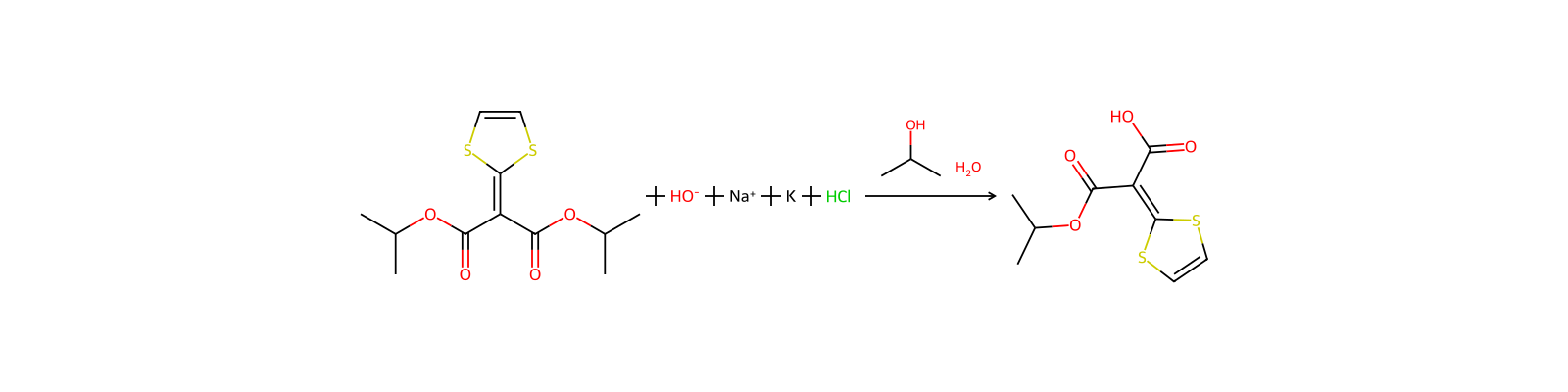
HRID 36915As reactant
Completing data — refresh the page later to see the latest

59937-28-9CC(C)OC(=O)C(C(=O)OC(C)C)=C1SC=CS1YPIQVCUJEKAZCP-UHFFFAOYSA-NMalotilate is an isopropyl ester.
59937-28-9DTXSID7046463CHEMBL1697754CHEBI:31798Safety information is for reference only and does not replace the supplier’s Safety Data Sheet (SDS), applicable regulations, or professional assessment.
DescriptionMalotilate is a hepatoprotective agent reported to be effective in the treatment of cirrhosis, chronic hepatitis and similar liver disorders. It appears to improve hepatic function by increasing blood and bile flow and improving protein synthesis.
DescriptionMalotilate is a hepatoprotective agent. It inhibits A23187-induced metabolism of arachidonic acid (Item Nos. 90010 | 90010.1 | 10006607) to the 5-lipoxygenase (5-LO) metabolites leukotriene B4 (LTB4; ) and 5-HETE in macrophages isolated from the ascitic fluid of patients with alcoholic liver cirrhosis. Malotilate (50 mg/kg) prevents increases in plasma glutamic-pyruvic transaminase (GPT) and glutamic-oxaloacetic transaminase (GOT) activities in a rat model of carbon tetrachloride-induced liver injury. It reduces hepatic deposition of type III procollagen, type IV collagen, laminin, and fibronectin in a rat model of dimethylnitrosamine-induced hepatic fibrosis when administered at a dose of 100 mg/kg.
UsesMalotilate is used as an adjunct treatment for hepatitis. It can activate liver function and inhibit the progression of liver fibrosis. It is suitable for the treatment of chronic hepatitis, compensated cirrhosis (to improve liver function), and cirrhosis with hypoalbuminemia caused by late-stage schistosomiasis.
DefinitionChEBI: Malotilate is an isopropyl ester.


