
HRID 171215As reactant
Completing data — refresh the page later to see the latest

31828-71-4Cc1cccc(C)c1OCC(C)NVLPIATFUUWWMKC-UHFFFAOYSA-NMexiletine is an aromatic ether which is 2,6-dimethylphenyl ether of 2-aminopropan-1-ol. It has a role as an anti-arrhythmia drug. It is an aromatic ether and a primary amino compound.
31828-71-4DTXSID8048446CHEMBL558CHEBI:69162.1
2.15
Breast Feeding; Lactation; Milk, Human; Antiarrhythmics
EMA approved medicines: Human medicine (Orphan designations)
203-205 °C
203 - 205 °C
9.14
9.15
9.2
Safety information is for reference only and does not replace the supplier’s Safety Data Sheet (SDS), applicable regulations, or professional assessment.
Warning
H302 (100%): Harmful if swallowed [Warning Acute toxicity, oral]
P264, P270, P301+P317, P330, and P501 (click each P-code to see the statement)
Aggregated GHS information provided per 2 reports by companies from 1 notifications to the ECHA C&L Inventory.
In clinical trials, mexiletine was associated with a low rate of serum aminotransferase and alkaline phosphatase elevations (~0.5%). Despite wide scale use, mexiletine has only rarely been linked to cases of clinically apparent liver injury. Most cases are associated with a hypersensitivity reaction. Typically, patients present with fever, rash, eosinophilia and systemic systemics (DRESS syndrome) after 2 to 6 weeks of mexiletine therapy. Eosinophilia or atypical lymphocytosis usually accompany the liver test abnormalities but may arise or continue to worsen days or weeks after onset. The pattern of serum enzyme elevations ranges from cholestatic to hepatocellular, but jaundice is usually mild or absent. Autoimmune features are uncommon. Cases of Stevens Johnson and DRESS syndrome due to mexiletine have also been reported. Corticosteroids were often used, but largely for the fever and skin rash rather than the liver disease which was typically mild. Rare instances of cholestatic hepatitis with mexiletine therapy have also been reported and may represent a different form of liver injury.
C - Cardiovascular system
QC - Cardiovascular system
Mexiletine is a local anesthetic, antiarrhythmic agent (Class Ib), structurally similar to lidocaine, but orally active. Mexiletine has fast onset and offset kinetics, meaning that they have little or no effect at slower heart rates, and more effects at faster heart rates. It shortens the action potential duration, reduces refractoriness, and decreases Vmax in partially depolarized cells with fast response action potentials. Mexiletine either does not change the action potential duration, or decreases the action potential duration.
Mexiletine, like lidocaine, inhibits the inward sodium current required for the initiation and conduction of impulses, thus reducing the rate of rise of the action potential, Phase 0. It achieves this reduced sodium current by inhibiting sodium channels. Mexiletine decreases the effective refractory period (ERP) in Purkinje fibers in the heart. The decrease in ERP is of lesser magnitude than the decrease in action potential duration (APD), which results in an increase in the ERP/APD ratio. It does not significantly affect resting membrane potential or sinus node automaticity, left ventricular function, systolic arterial blood pressure, atrioventricular (AV) conduction velocity, or QRS or QT intervals
1U511HHV4Z
MEXILETINE
Established Pharmacologic Class [EPC] - Antiarrhythmic
Mexiletine is an Antiarrhythmic.
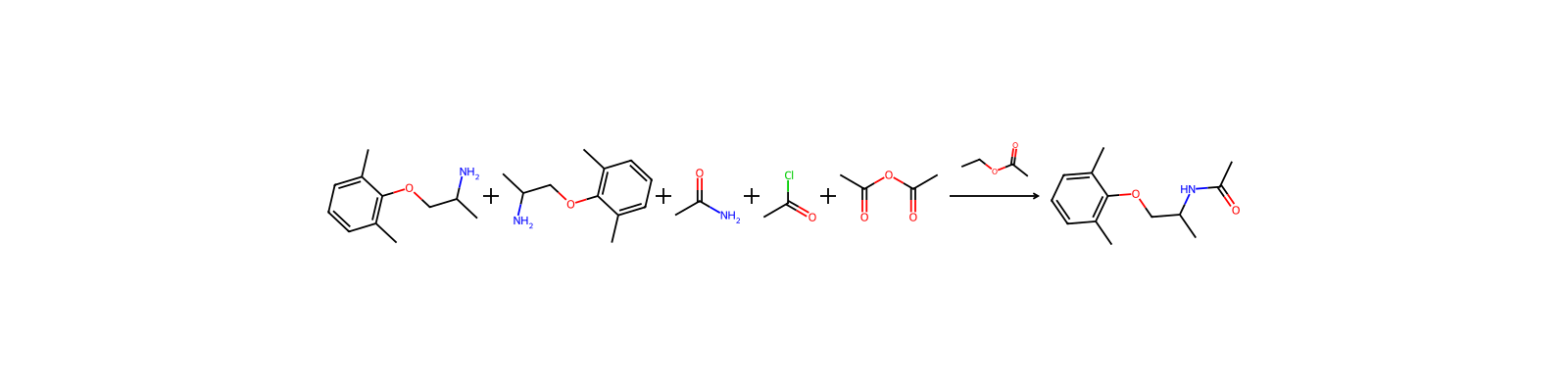
The adverse effect profile of mexiletine is extensive and limits its use. It affects nearly every organ system; most notably, it has significant cardiovascular and central nervous system (CNS) side effects and affecting the gastrointestinal (GI), musculoskeletal, dermatologic systems.
Toxicity is common with mexiletine and can manifest in several organ systems. Cardiovascular, CNS, and GI-related symptoms most commonly occur. Cardiovascular toxicity can present as varying degrees of heart block, heart failure, exacerbation of cardiac arrhythmias, and cardiac arrest. Central nervous system-related symptoms include lightheadedness, fatigue, confusion, the presence of tremors, and seizures. Gastrointestinal symptoms are highly variable but can include xerostomia, nausea/vomiting, and diarrhea. Mexiletine has a half-life of 10 to 12 hours and is metabolized by the liver with small amounts, about 10% of the administered dose, of excretion in the urine. Thus, toxicity is much more prevalent in the setting of liver failure as metabolism is largely impaired.
Benchmark Dataset for the Liver Toxicity Knowledge Base (LTKB)
mexiletine
Mexitil®
Antiarrhythmics
3
less-DILI-concern drugs
Agents used for the treatment or prevention of cardiac arrhythmias. They may affect the polarization-repolarization phase of the action potential, its excitability or refractoriness, or impulse conduction or membrane responsiveness within cardiac fibers. Anti-arrhythmia agents are often classed into four main groups according to their mechanism of action: sodium channel blockade, beta-adrenergic blockade, repolarization prolongation, or calcium channel blockade.
A class of drugs that inhibit the activation of VOLTAGE-GATED SODIUM CHANNELS.
Well absorbed (bioavailability 90%) from the gastrointenstinal tract.
Approximately 10% is excreted unchanged by the kidney. The urinary excretion of N-methylmexiletine in man is less than 0.5%.
5 to 7 L/lg
DescriptionMexiletine is effective both parenterally and orally , . Because the substance has a large distribution volume, a high initial dose is necessary.
UsesCardiac depressant (anti-arrhythmic).
UsesMexiletine is used for ventricular extrasystole and ventricular tachycardia, and ventricular fibrillation (including during the severe period of myocardial infarction).
UsesMexiletine is a useful analgesia.It is used in treatment of amyotrophic lateral sclerosis comprising administering a bile acid and a phenylbutyrate compound and an additional therapeutic agent.
DefinitionChEBI: An aromatic ether which is 2,6-dimethylphenyl ether of 2-aminopropan-1-ol.