
HRID 10491As reactant

10465-78-8CN(C)C(=O)N=NC(=O)N(C)CVLSDXINSOMDCBK-UHFFFAOYSA-N10465-78-8DTXSID6040456CHEMBL1338900Safety information is for reference only and does not replace the supplier’s Safety Data Sheet (SDS), applicable regulations, or professional assessment.
This chemical does not meet GHS hazard criteria for 50% (2 of 4) of reports.
Warning
H315 (50%): Causes skin irritation [Warning Skin corrosion/irritation]
P261, P264, P264+P265, P271, P280, P302+P352, P304+P340, P305+P351+P338, P319, P321, P332+P317, P337+P317, P362+P364, P403+P233, P405, and P501 (click each P-code to see the statement)
Aggregated GHS information provided per 4 reports by companies from 3 notifications to the ECHA C&L Inventory. Each notification may be associated with multiple companies.
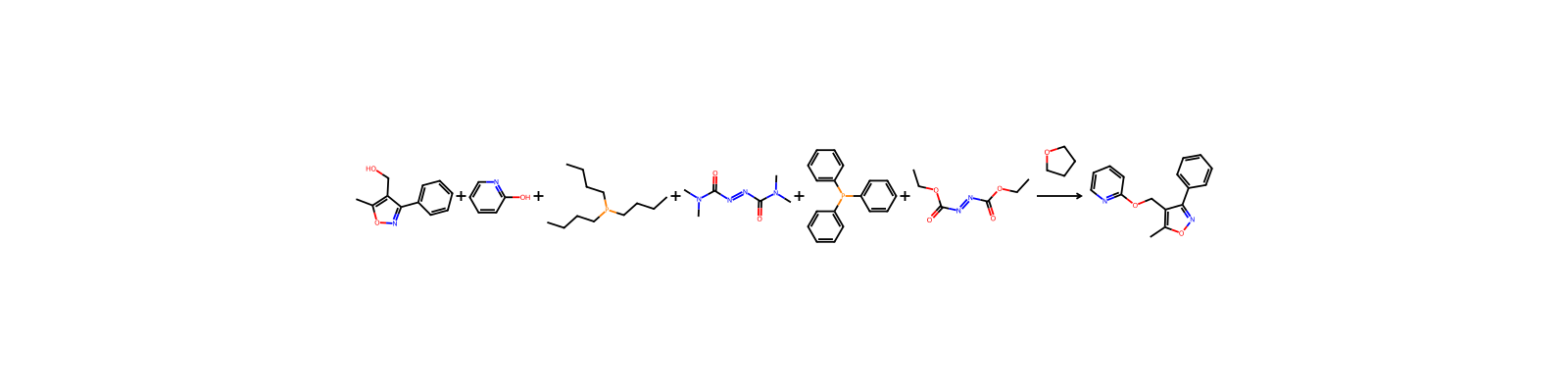
DescriptionN,N,N’,N’-Tetramethylazodicarboxamide (also named as Diamide, TMAD) is a reagent used for the oxidization of thiols in proteins. It is used as a reagent in the Mitsunobu reaction in place of diethyl azodicarboxylate. It can be used to titrate protein gluotathiolation to discriminate from other protein modifications.
UsesReported to be of use as a thiol oxidizing agent. Diamide has been used to titrate protein glutathiolation to discriminate from other oxidative protein modifications. Treatment increased protein glutathiolation in a concentration-dependent manner and had comparably little effect on protein-protein disulfide formation.




DefinitionChEBI: 1,1'-azobis(N,N-dimethylformamide) is a monoazo compound.