HomeMCPWorkbenchSkills
HomeWorkbenchNotificationsMe
llms.txt · MCP GuidePrivacy Policy · Terms of Service · Supportv1.8.3
  1. Home
  2. /Compound

Piperacillin

HCID 43672
New reaction
Print
Basic informationOverviewNames & identifiersPropertiesSafety & regulationChemistry & industryRelated reactionsCompound notes
Substructure searchFind similar structures

Basic information

CAS
61477-96-1
Standard SMILES
CCN1CCN(C(=O)N[C@@H](C(=O)N[C@@H]2C(=O)N3[C@@H]2SC(C)(C)[C@@H]3C(=O)O)c2ccccc2)C(=O)C1=O
InChIKey
IVBHGBMCVLDMKU-GXNBUGAJSA-N
Molecular formula
C23H27N5O7S
Average molar mass
517.6 g/mol
Monoisotopic mass
517.16311939

Overview

Piperacillin is a penicillin in which the substituent at position 6 of the penam ring is a 2-[(4-ethyl-2,3-dioxopiperazin-1-yl)carboxamido]-2-phenylacetamido group. It has a role as an antibacterial drug. It is a penicillin and a penicillin allergen. It is a conjugate acid of a piperacillin(1-).

Names & identifiers

Preferred name
Piperacillin
IUPAC
(2S,5R,6R)-6-[[(2R)-2-[(4-ethyl-2,3-dioxopiperazine-1-carbonyl)amino]-2-phenylacetyl]amino]-3,3-dimethyl-7-oxo-4-thia-1-azabicyclo[3.2.0]heptane-2-carboxylic acid
English name
Piperacillin
Molecular formula
C23H27N5O7S
Molecular weight
517.55

Names & synonyms

piperacillin61477-96-1Piperacillin anhydrousPiperacillinePipercillinPiperacilinaPeracinPiperacillinaPiperacillinumPIPCCHEBI:8232(2S,5R,6R)-6-[[(2R)-2-[(4-ethyl-2,3-dioxopiperazine-1-carbonyl)amino]-2-phenylacetyl]amino]-3,3-dimethyl-7-oxo-4-thia-1-azabicyclo[3.2.0]heptane-2-carboxylic acid
Show more names
PIPERACILLIN SODIUMPipracil(2S,5R,6R)-6-[[(2R)-[[(4-Ethyl-2,3-dioxo-1-piperazinyl)carbonyl]amino]phenylacetyl]amino]-3,3-dimethyl-7-oxo-4-Thia-1-azabicyclo[3.2.0]heptane-2-carboxylic acid(2S,5R,6R)-6-((R)-2-(4-ethyl-2,3-dioxopiperazine-1-carboxamido)-2-phenylacetamido)-3,3-dimethyl-7-oxo-4-thia-1-azabicyclo[3.2.0]heptane-2-carboxylic acid hydrate4-Thia-1-azabicyclo[3.2.0]heptane-2-carboxylicacid,6-[[(2R)-2-[[(4-ethyl-2,3-dioxo-1-piperazinyl)carbonyl]aMino]-2-phenylacetyl]aMino]-3,3-diMethyl-7-oxo-,(2S,5R,6R)-C14034Pipraci
(2S,5R,6R)-6-{[(2R)-2-{[(4-ethyl-2,3-dioxopiperazin-1-yl)carbonyl]amino}-2-phenylacetyl]amino}-3,3-dimethyl-7-oxo-4-thia-1-azabicyclo[3.2.0]heptane-2-carboxylic acid9I628532GXDTXSID2023482AB Piperacillin4-Thia-1-azabicyclo(3.2.0)heptane-2-carboxylic acid, 3,3-dimethyl-6-(((((4-ethyl-2,3-dioxo-1-piperazinyl)carbonyl)amino)phenylacetyl)amino)-7-oxo-, (2S-(2-alpha,5-alpha,6-beta(S*)))-4-Thia-1-azabicyclo(3.2.0)heptane-2-carboxylic acid, 6-(((((4-ethyl-2,3-dioxo-1-piperazinyl)carbonyl)amino)phenylacetyl)amino)-3,3-dimethyl-7-oxo-, (2S-(2alpha,5alpha,6beta(S*)))-(2S,5R,6R)-6-[(2R)-2-{[(4-ethyl-2,3-dioxopiperazin-1-yl)carbonyl]amino}-2-phenylacetamido]-3,3-dimethyl-7-oxo-4-thia-1-azabicyclo[3.2.0]heptane-2-carboxylic acid(2S,5R,6R)-6-((R)-2-(4-Ethyl-2,3-dioxo-1-piperazinecarboxamido)-2-phenylacetamido)-3,3-dimethyl-7-oxo-4-thia-1-azabicyclo(3.2.0)heptane-2-carboxylic acid monohydrate

Properties

Computed structural properties

XLogP
0.5
Topological polar surface area
182 Ų
Hydrogen bond donors
3
Hydrogen bond acceptors
8
Rotatable bonds
6
Heavy atoms
36
Formal charge
0
Complexity
982

Experimental & physicochemical properties

Chemical ClassesOther Uses -> Pharmaceuticals
Drugs · 4 items

Pharmaceuticals -> Antibiotics

Pharmaceuticals -> Antibiotics

Pharmaceuticals -> Used in Switzerland

Pharmaceuticals -> Listed in ZINC15

LogP · 2 items

0.3

0.5

Solubility1.19e-01 g/L
Human DrugsBreast Feeding; Lactation; Milk, Human; Anti-Infective Agents; Antibacterial Agents; Penicillins
Physical Description · 2 items

White to off-white solid; [Bristol-Myers Squibb]

Solid

Collision Cross Section · 3 items

226.4 Ų [M+Na]+ [CCS Type: TW; Method: calibrated with Waters Major Mix]

221.36 Ų [M+Na]+ [CCS Type: TW; Method: calibrated with polyalanine and drug standards]

221.26 Ų [M-H]-

Physicochemical properties

Safety & regulation

Safety information is for reference only and does not replace the supplier’s Safety Data Sheet (SDS), applicable regulations, or professional assessment.

GHS classification

GHS Classification · 4 items

Danger

H317 (93.8%): May cause an allergic skin reaction [Warning Sensitization, Skin]

P233, P260, P261, P271, P272, P273, P280, P284, P302+P352, P304+P340, P321, P333+P317, P342+P316, P362+P364, P403, and P501 (click each P-code to see the statement)

Aggregated GHS information provided per 16 reports by companies from 4 notifications to the ECHA C&L Inventory. Each notification may be associated with multiple companies.

Hazard information

Regulatory InformationREACH registered substance: [2S-[2α,5α,6β(S*)]]-6-[[[[(4-ethyl-2,3-dioxopiperazin-1-yl)carbonyl]amino]phenylacetyl]amino]-3,3-dimethyl-7-oxo-4-thia-1-azabicyclo[3.2.0]heptane-2-carboxylic acid (EC: 262-811-8)
Other Safety InformationIMAP assessments - 4-Thia-1-azabicyclo[3.2.0]heptane-2-carboxylic acid, 6-[[[[(4-ethyl-2,3-dioxo-1-piperazinyl)carbonyl]amino]phenylacetyl]amino]-3,3-dimethyl-7-oxo-, [2S-[2.alpha.,5.alpha.,6.beta.(S*)]]-: Environment tier I assessment
Hazards SummaryA dermal and respiratory sensitizer; [Bristol-Myers Squibb] Occupational asthma confirmed in a pharmaceutical worker; [Malo] Causes contact urticaria; [Kanerva, p. 219]
Hazard Classes and CategoriesSkin Sens. 1 (93.8%)

Toxicology

Hepatotoxicity · 1 item

Patients on intravenous piperacillin may have transient and mild-to-moderate serum aminotransferase elevations in up to 12% of patients, but these are of little clinical significance and not more common than with comparative parenteral antibiotics. Hepatic injury was more commonly reported with mezlocillin, a related extended spectrum ureidopenicillin which has been withdrawn from use. Rare instances of idiosyncratic liver injury have been reported in persons receiving piperacillin. The liver injury is typically cholestatic arising within 1 to 6 weeks of starting therapy. The injury can be severe, but is generally self-limited once piperacillin is stopped. The features of the hepatotoxicity resemble those of other penicillins. The cholestatic hepatitis caused by piperacillin and other penicillins can be prolonged and lead to persistent cholestasis (vanishing bile duct syndrome) or persistent elevations in serum alkaline phosphatase suggestive of partial bile duct loss. Most cases of liver injury related to piperacillin are linked to the combination of piperacillin with the beta-lactamase inhibitor tazobactam (Zosyn and generics), which is more commonly used than piperacillin alone.

Chemistry & industry

Pharmacology

ATC Code · 3 items

J01CR05

J - Antiinfectives for systemic use

QJ - Antiinfectives for systemic use

Pharmacodynamics · 1 item

Piperacillin is a penicillin beta-lactam antibiotic used in the treatment of bacterial infections caused by susceptible, usually gram-positive, organisms. The name "penicillin" can either refer to several variants of penicillin available, or to the group of antibiotics derived from the penicillins. Piperacillin has <i>in vitro</i> activity against gram-positive and gram-negative aerobic and anaerobic bacteria. The bactericidal activity of Piperacillin results from the inhibition of cell wall synthesis and is mediated through Piperacillin binding to penicillin binding proteins (PBPs). Piperacillin is stable against hydrolysis by a variety of beta-lactamases, including penicillinases, and cephalosporinases and extended spectrum beta-lactamases.

Mechanism of Action · 1 item

By binding to specific penicillin-binding proteins (PBPs) located inside the bacterial cell wall, Piperacillin inhibits the third and last stage of bacterial cell wall synthesis. Cell lysis is then mediated by bacterial cell wall autolytic enzymes such as autolysins; it is possible that Piperacillin interferes with an autolysin inhibitor.

Biological Half-Life36-72 minutes
Metabolism/MetabolitesLargely not metabolized.
FDA Pharmacological Classification · 5 items

9I628532GX

PIPERACILLIN ANHYDROUS

Established Pharmacologic Class [EPC] - Penicillin-class Antibacterial

Chemical Structure [CS] - Penicillins

Piperacillin anhydrous is a Penicillin-class Antibacterial.

MeSH Pharmacological ClassificationSubstances that inhibit the growth or reproduction of BACTERIA.

Related reactions

3 records
New reaction record
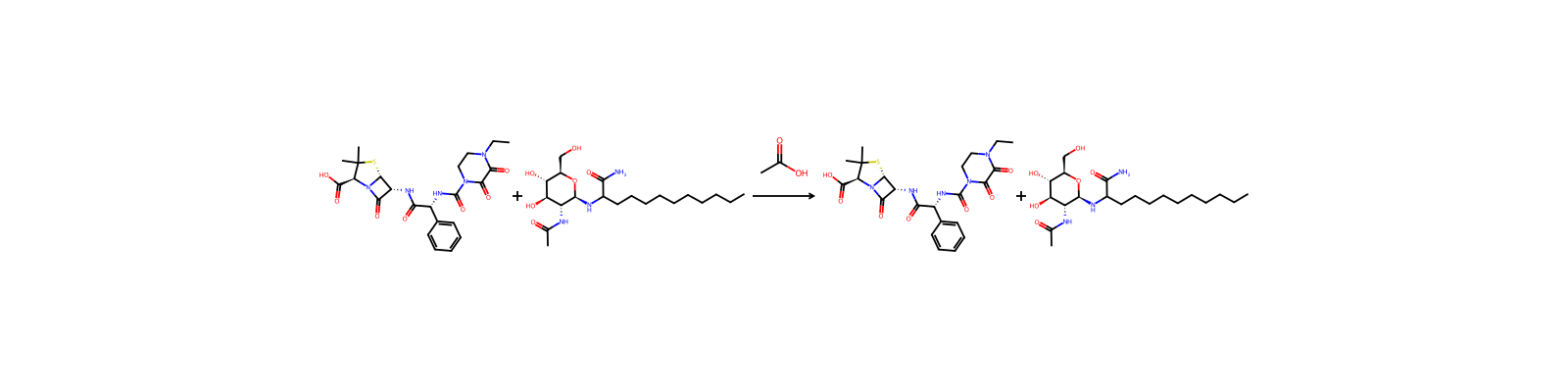
HRID 377529 reaction equation
HRID 377529As reactant
HRID 970294 reaction equation
HRID 970294As reactant
HRID 1955488 reaction equation
HRID 1955488As reactant

Compound notes

On this pageBasic informationOverviewNames & identifiersPropertiesSafety & regulationChemistry & industryRelated reactionsCompound notes

Database identifiers

CAS
61477-96-1、66258-76-2
PubChem CID
43672
DTXSID
DTXSID2023482
ChEMBL
CHEMBL702
ChEBI
CHEBI:8232
UNII
9I628532GX
EC Number
262-811-8
Nikkaji
J18.442J
Melting point
183 · 183-185C (dec.)
Density
1.51 · 1.51±0.1 g/cm3(Predicted)
vapor pressure
0 Pa · 0Pa at 20℃
RTECS
8952200 · XH8952200
storage temp.
2 · Sealed in dry,2-8°C
solubility
0.119 mg/mL · Freely soluble in methanol. Only sparingly soluble in aqueous solution at 0.119 mg/mL
pka
2.44 · 2.44±0.50(Predicted)
form
Solid
color
White to Off-White
Water Solubility
256.8 mg/L · 256.8mg/L at 20℃
Stability
Hygroscopic
InChIKey
IVBHGBMCVLDMKU-GXNBUGAJSA-N
SMILES
N12[C@@]([H])([C@H](NC([C@H](NC(N3CCN(CC)C(=O)C3=O)=O)C3=CC=CC=C3)=O)C1=O)SC(C)(C)[C@@H]2C(O)=O
LogP
-1.55 at · -1.55 at 20℃
CAS DataBase Reference
61477 · 61477-96-1(CAS DataBase Reference)
FDA UNII
9 I628532GX · 9I628532GX
NCI Drug Dictionary
piperacillin sodium
ATC code
1 CA12 · J01CA12
Comptox DTXSID
2023482 · DTXSID2023482
Symbol(GHS)
8 · GHS08
Signal word
Warning
Hazard statements
317 · H317-H334
Precautionary statements
261 · P261-P280g-P284-P304+P340-P342+P311a-P501a
Hazard Codes
Xi
Risk Statements
42 · 42/43
Safety Statements
36 · 36/37
REACH Registrations
Active
Adverse EffectsAsthma - Reversible bronchoconstriction (narrowing of bronchioles) initiated by the inhalation of irritating or allergenic agents.
Drug Induced Liver Injury · 5 items

Drug-Induced Liver Injury Severity and Toxicity (DILIst)

piperacillin

DILI Negative

Intravenous

DOI:10.1016/j.drudis.2019.09.022

Effects During Pregnancy and Lactation◉ Summary of Use during Lactation

Safety data

risk_code
42/43
Signal word
Warning
Symbol(GHS)
GHS08
hazard_code
Xi
safety_code
36/37
Hazard statements
H317-H334
REACH Registrations
Active
Precautionary statements
P261-P280g-P284-P304+P340-P342+P311a-P501a
Absorption, Distribution and Excretion · 4 items

Not absorbed following oral administration.

As with other penicillins, PIPRACIL is eliminated primarily by glomerular filtration and tubular secretion; it is excreted rapidly as unchanged drug in high concentrations in the urine. Because PIPRACIL is excreted by the biliary route as well as by the renal route, it can be used safely in appropriate dosage in patients with severely restricted kidney function.

101 mL/kg [intravenous administration of 50 mg/kg (5-minute infusion) in neonates]

32 - 41 mL/min/1.73 m2

Cellular LocationsMembrane

Uses & manufacturing

Uses · 2 items

A beta-lactam antibiotic; [Bristol-Myers Squibb]

Use (kg) in Switzerland (2009): >1000

Applications

UsesPiperacillin is a semisynthetic penicillin with wide spectrum of antimicrobial activity, particularly pseudomonas strains. It is used to treat moderate-to-severe infections due to susceptible organisms.

Upstream & downstream products

Upstream raw materials

6-Aminopenicillanic acidBromidePhosgeneDiethyl oxalateChlorotrimethylsilaneSodium 2-ethylhexanoate2-Aminoethyl(ethyl)amine
Additional notes · 1 item

DefinitionChEBI: Piperacillin is a penicillin in which the substituent at position 6 of the penam ring is a 2-[(4-ethyl-2,3-dioxopiperazin-1-yl)carboxamido]-2-phenylacetamido group. It has a role as an antibacterial drug. It is a penicillin and a penicillin allergen. It is a conjugate acid of a piperacillin(1-).