
D-Tartaric acid
Completing data — refresh the page later to see the latest
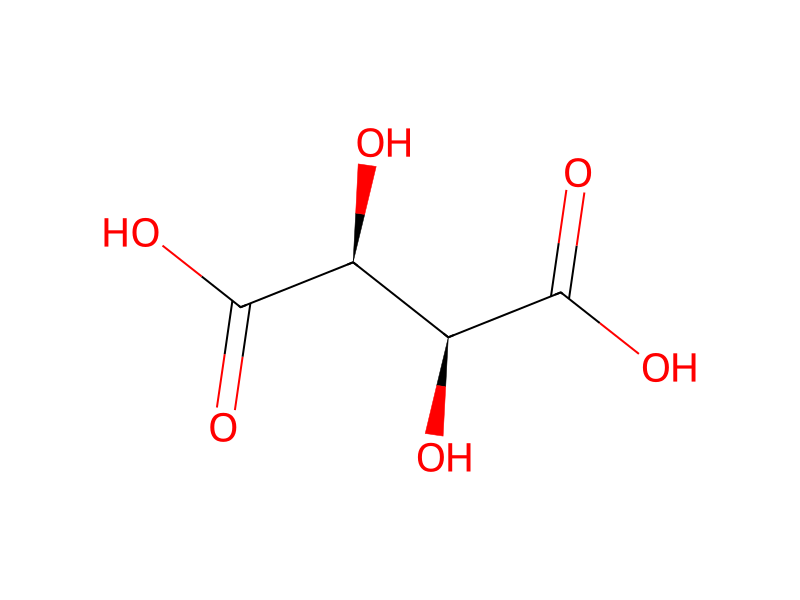
Basic information
- CAS
133-37-9- Standard SMILES
O=C(O)[C@@H](O)[C@H](O)C(=O)O- InChIKey
FEWJPZIEWOKRBE-LWMBPPNESA-N- Molecular formula
- C4H6O6
- Average molar mass
- 150.09 g/mol
Overview
D-tartaric acid is the D-enantiomer of tartaric acid. It has a role as an Escherichia coli metabolite. It is a conjugate acid of a D-tartrate(1-). It is an enantiomer of a L-tartaric acid.
Names & identifiers
- Preferred name
- D-Tartaric acid
- IUPAC
- (2S,3S)-2,3-dihydroxybutanedioic acid
- English name
- L-Tartaric acid
- Molecular formula
- C4H6O6
- Molecular weight
- 150.08684
Names & synonyms
d-Tartaric acidD-(-)-Tartaric acid147-71-7(2S,3S)-2,3-dihydroxybutanedioic acid(-)-Tartaric acidD-threaric acid(-)-D-Tartaric acid(S,S)-Tartaric acid(2S,3S)-(-)-Tartaric acid(2S,3S)-Tartaric acid(-)-(S,S)-Tartaric acid(S,S)-(-)-Tartaric acid
Show more names
unusual tartaric acidRRX6A4PL3CTARTARIC ACID, D-UNNATURAL TARTARIC ACIDDTXSID4043775CHEBI:15672RefChem:130683GlyTouCan:G95238FE
Database identifiers
- CAS
133-37-9、147-71-7- PubChem CID
- 439655
- DTXSID
DTXSID4043775- ChEMBL
CHEMBL1200861- ChEBI
CHEBI:15672- UNII
- RRX6A4PL3C
- EC Number
- 205-105-7、205-695-6
- Nikkaji
- J9.264I
Properties
Computed structural propertiesFilling in
- XLogP
- -1.9
- Topological polar surface area
- 115 Ų
- Hydrogen bond donors
- 4
- Hydrogen bond acceptors
- 6
- Rotatable bonds
- 3
- Heavy atoms
- 10
- Formal charge
- 0
- Complexity
- 134
Experimental & physicochemical properties
Chemical Classes
Other Classes -> Organic Acids
Other Classes -> Organic Acids
SpringerMaterials PropertiesCrystal structure
FragrancesFragrance Ingredient (Tartaric acid (d-, l-, dl-, meso-)) -> IFRA transparency List
Solubility1.00E+06 mg/L @ 25 °C (exp)
Melting Point169 - 170 °C
Physical Description
Liquid; Other Solid
White solid; [ICSC] Colorless or white odorless solid; [JECFA] White odorless crystalline powder; [Acros Organics MSDS]
Solid; [Merck Index] White odorless crystalline powder; [Alfa Aesar MSDS]
Solid
Collision Cross Section
119.1 Ų [M-H]- [CCS Type: DT; Buffer gas: N2; Ionization: ESI-; Dataset: TOXCAST; Source Identifier: DTXSID5046986]
118.3 Ų [M-H]-
Safety & regulation
Safety information is for reference only and does not replace the supplier’s Safety Data Sheet (SDS), applicable regulations, or professional assessment.
GHS classification
GHS Classification
This chemical does not meet GHS hazard criteria for 5.1% (26 of 506) of reports.
Danger
H315 (22.1%): Causes skin irritation [Warning Skin corrosion/irritation]
P261, P264, P264+P265, P271, P280, P302+P352, P304+P340, P305+P351+P338, P305+P354+P338, P317, P319, P321, P332+P317, P337+P317, P362+P364, P403+P233, P405, and P501 (click each P-code to see the statement)
Aggregated GHS information provided per 506 reports by companies from 13 notifications to the ECHA C&L Inventory. Each notification may be associated with multiple companies.
This chemical does not meet GHS hazard criteria for 1% (3 of 310) of reports.
Hazard information
Regulatory Information
Chemical: Butanedioic acid, 2,3-dihydroxy-, (R*,R*)-(.+-.)-
Chemical: Butanedioic acid, 2,3-dihydroxy-, [S-(R*,R*)]-
Butanedioic acid, 2,3-dihydroxy-, (2S,3S)- is listed on the EPA's Chemical Data Reporting (CDR) system. Manufacturers and importers of Butanedioic acid, 2,3-dihydroxy-, (2S,3S)- are required to report information about their production and use of this chemical to the EPA under the Toxic Substances Control Act (TSCA). (40 eCFR Part 711)
Status: Active Update: 23-07-2020 https://echa.europa.eu/registration-dossier/-/registered-dossier/17277
Status: Active Update: 03-10-2022 https://echa.europa.eu/registration-dossier/-/registered-dossier/34095
D-Tartaric acid: Does not have an individual approval but may be used under an appropriate group standard
Other Safety Information
IMAP assessments - Butanedioic acid, 2,3-dihydroxy-, (R*,R*)-(.+-.)-: Human health tier I assessment
Evaluation - Chemicals that are unlikely to require further regulation to manage risks to environment
Hazards Summary
Chemistry & industry
Pharmacology
Cellular LocationsCytoplasm
Uses & manufacturing
Uses
Used as a synergist for antioxidants, acid, emulsifier, sequestrant, and flavoring agent; [JECFA]
Dextro configuration of levorotatory tartaric acid; Called unnatural but has been found in nature; [Merck Index]
U.S. Production2023: 477,000 lb
Consumer UsesNot Known or Reasonably Ascertainable
Use Classification
Fragrance Ingredients
Flavouring Agent -> FLAVOURING_AGENTFood Additives -> ACID; ANTIOXIDANT_SYNERGIST; EMULSIFIER; SEQUESTRANT; SYNERGIST -> JECFA Functional Classes
General Manufacturing InformationButanedioic acid, 2,3-dihydroxy-, (2S,3S)-: ACTIVE
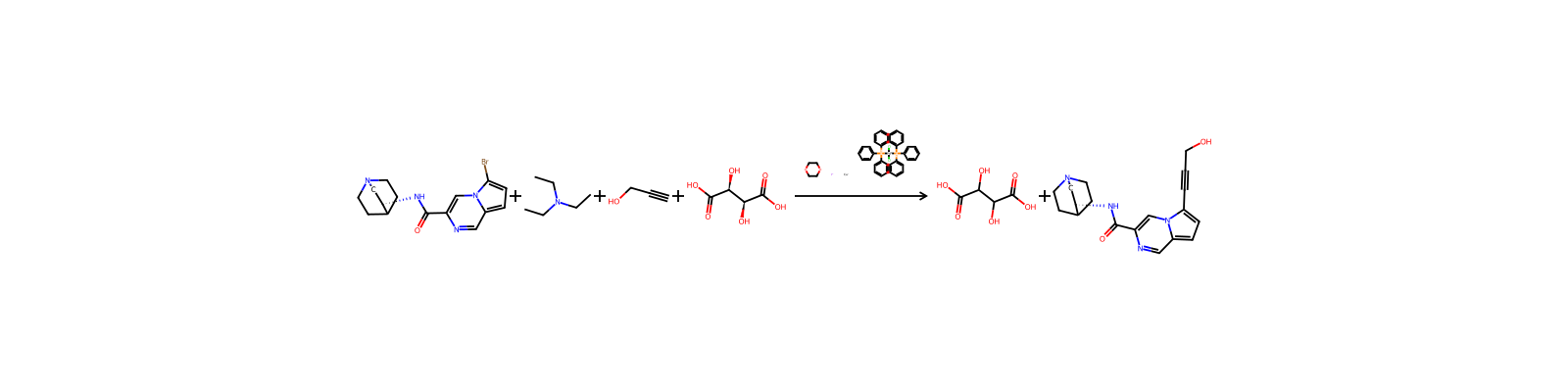
Related reactions
139 records




Compound notes
Loading…