Basic information
- CAS
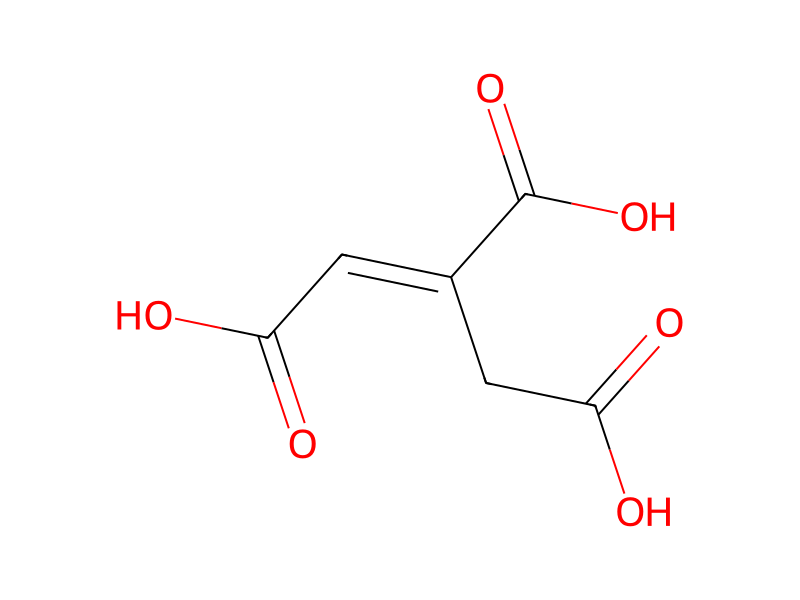
4023-65-8- Standard SMILES
O=C(O)/C=C(\CC(=O)O)C(=O)O- InChIKey
GTZCVFVGUGFEME-HNQUOIGGSA-N- Molecular formula
- C6H6O6
- Average molar mass
- 174.11 g/mol
- Monoisotopic mass
- 174.01643791
Names & identifiers
- Preferred name
- trans-Aconitic acid
- IUPAC
- (E)-prop-1-ene-1,2,3-tricarboxylic acid
- English name
- TRANS-ACONITIC ACID
- Molecular formula
- C6H6O6
- Molecular weight
- 174.11
Names & synonyms
trans-Aconitic acid4023-65-8(E)-prop-1-ene-1,2,3-tricarboxylic acidtrans-Aconitate(1E)-prop-1-ene-1,2,3-tricarboxylic acidAconitic acid, (E)-DTXSID10487061-Propene-1,2,3-tricarboxylic acid, (1E)-7DB37960CWNSC-43980DTXCID8028632CHEBI:32806
Show more names
citridic acidACHILLEIC ACIDTRANS-4-METHYLCYCLOHEXYLAMINEAKOS NCG1-0088equisetic acid
FEMA NO. 2010, E-RefChem:1100251223-688-6(E)-1-Propene-1,2,3-tricarboxylic acid(E)-Aconitic acidtrans Aconitic acidtransaconitic acidaconitate
Database identifiers
- CAS
4023-65-8、499-12-7- PubChem CID
- 444212
- DTXSID
DTXSID1048706- ChEBI
CHEBI:32806- UNII
- 7DB37960CW
- EC Number
- 223-688-6
- Nikkaji
- J79.903C
Properties
Computed structural properties
- XLogP
- -1
- Topological polar surface area
- 112 Ų
- Hydrogen bond donors
- 3
- Hydrogen bond acceptors
- 6
- Rotatable bonds
- 4
- Heavy atoms
- 12
- Formal charge
- 0
- Complexity
- 251
Experimental & physicochemical properties
LogP-0.140
Solubility472.5 mg/mL
Melting Point187 - 191 °C
Physical DescriptionSolid
Collision Cross Section
149.13 Ų [M+Na]+ [CCS Type: DT; Method: stepped-field];153.02 Ų [M+H]+ [CCS Type: DT; Method: stepped-field];131.88 Ų [M-H]- [CCS Type: DT; Method: stepped-field]
148.2 Ų [M+Na]+;152 Ų [M+H]+;131.4 Ų [M-H]-
Physicochemical properties
- Melting point
- 190 °C · 190 °C (dec.)(lit.)
- Boiling point
- 225.05 °C · 225.05°C (rough estimate)
- Density
- 0.56 g/cm3 · 0.56 g/cm3 (20℃)
- refractive index
- 1.586 · 1.5860 (estimate)
- FEMA
- 2010 · 2010 | ACONITIC ACID
- storage temp.
- 30 °C · Store below +30°C.
Safety & regulation
Safety information is for reference only and does not replace the supplier’s Safety Data Sheet (SDS), applicable regulations, or professional assessment.
GHS classification
GHS Classification
This chemical does not meet GHS hazard criteria for 50% (7 of 14) of reports.
Warning
H315 (50%): Causes skin irritation [Warning Skin corrosion/irritation];H319 (50%): Causes serious eye irritation [Warning Serious eye damage/eye irritation];H335 (42.9%): May cause respiratory irritation [Warning Specific target organ toxicity, single exposure; Respiratory tract irritation]
P261, P264, P264+P265, P271, P280, P302+P352, P304+P340, P305+P351+P338, P319, P321, P332+P317, P337+P317, P362+P364, P403+P233, P405, and P501 (click each P-code to see the statement)
Aggregated GHS information provided per 14 reports by companies from 4 notifications to the ECHA C&L Inventory. Each notification may be associated with multiple companies.;Reported as not meeting GHS hazard criteria per 7 of 14 reports by companies.;There are 3 notifications provided by 7 of 14 reports by companies with hazard statement code(s).;Information may vary between notifications depending on impurities, additives, and other factors. The percentage value in parenthesis indicates the notified classification ratio from companies that provide hazard codes. Only hazard codes with percentage values above 10% are shown. For more detailed information, please visit ECHA C&L website.
Hazard information
Regulatory Information
Chemical: 1-Propene-1,2,3-tricarboxylic acid, (E)-
Status: Active Update: 12-11-2020 https://echa.europa.eu/registration-dossier/-/registered-dossier/31773
1-Propene-1,2,3-tricarboxylic acid, (1E)-: Does not have an individual approval but may be used under an appropriate group standard
Other Safety InformationEvaluation - Chemicals that are unlikely to require further regulation to manage risks to environment
Hazard Classes and CategoriesSkin Irrit. 2 (50%);Eye Irrit. 2 (50%);STOT SE 3 (42.9%)
Chemistry & industry
Pharmacology
Cellular LocationsCytoplasm
Uses & manufacturing
General Manufacturing Information1-Propene-1,2,3-tricarboxylic acid, (1E)-: ACTIVE
Applications
UsesIt plays an important role as an antimicrobial agent that blocks the transformation of Leishmania donovani amastigotes to prostigotes. trans-Aconitic acid is also used in synthesis of aconitate esters. It may be used for cross-linking polyvinyl alcohol film for preparing composite nanofiltration membranes.
General Descriptiontrans-Aconitic acid is inhibitor of the tricarboxylic acid cycle and was identified in range grasses.
Upstream & downstream products
Downstream products
Suppliers100 total
国药集团化学试剂有限公司86-21-63210123 · [email protected]
北京华美互利生物化工010-56205725 · [email protected]
梯希爱(上海)化成工业发展有限公司021-67121386 · [email protected]
上海阿拉丁生化科技股份有限公司400-6206333 13167063860 · [email protected]
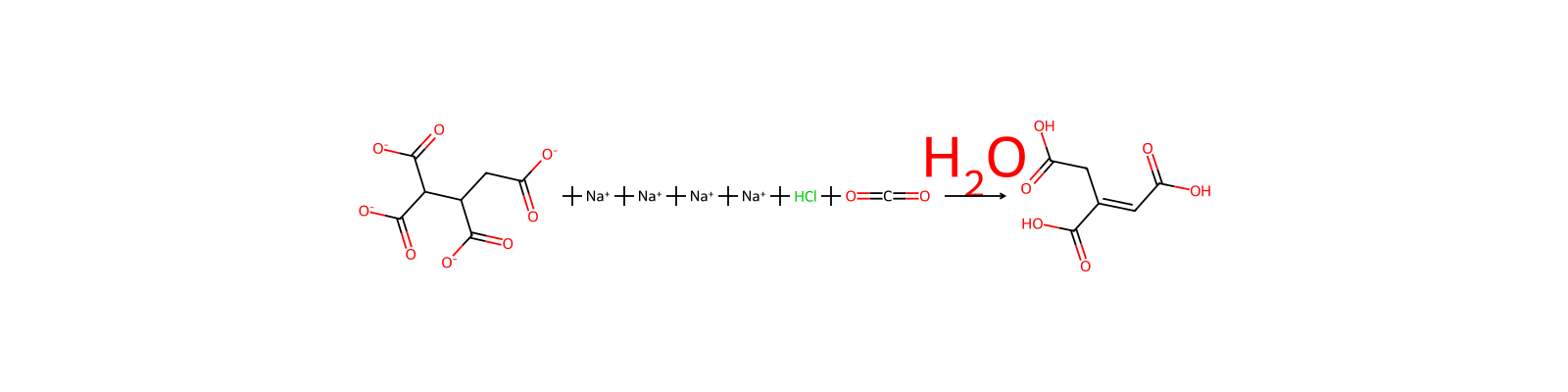
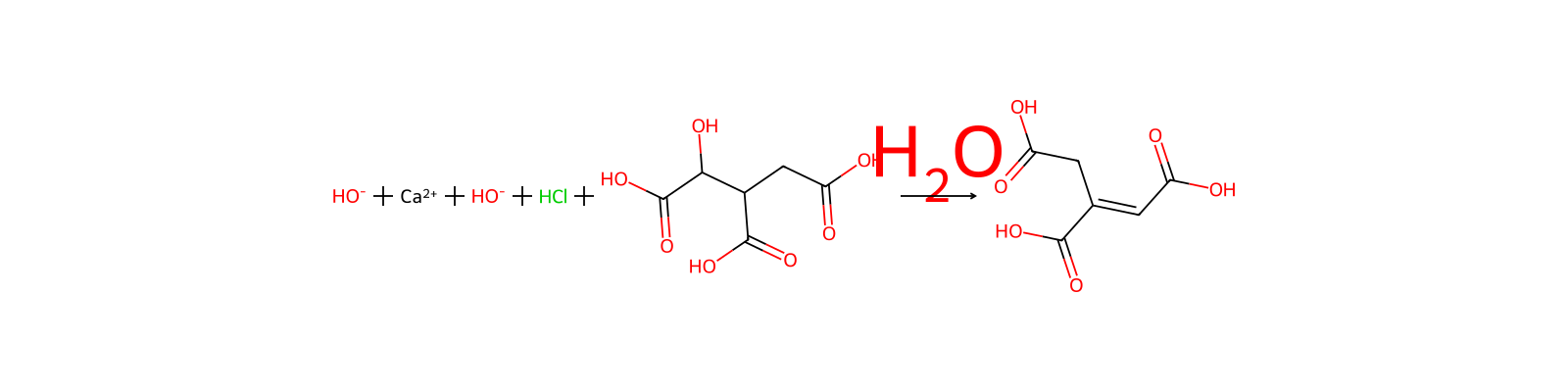
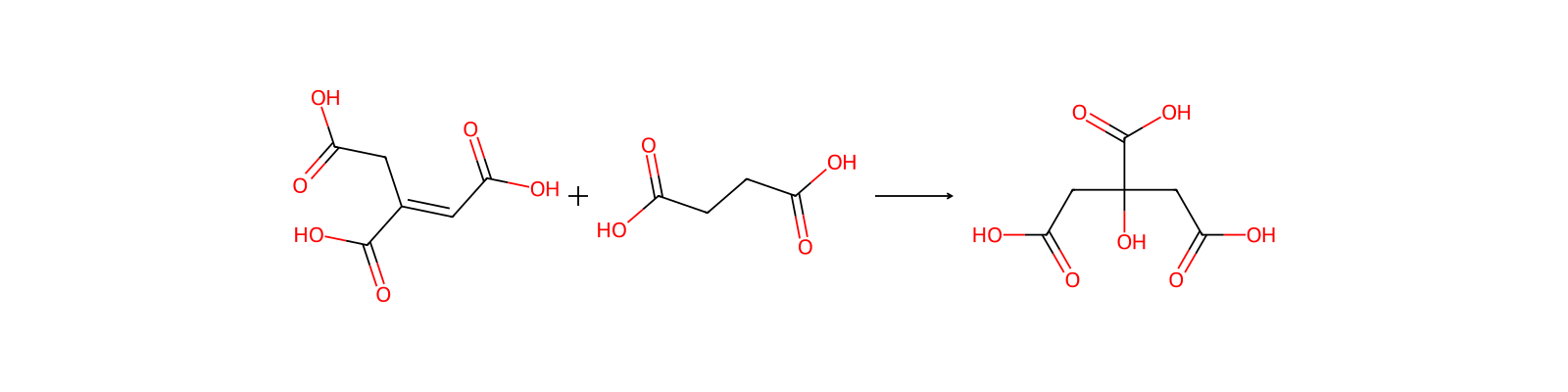
Related reactions
11 records





Compound notes
Loading…