Basic information
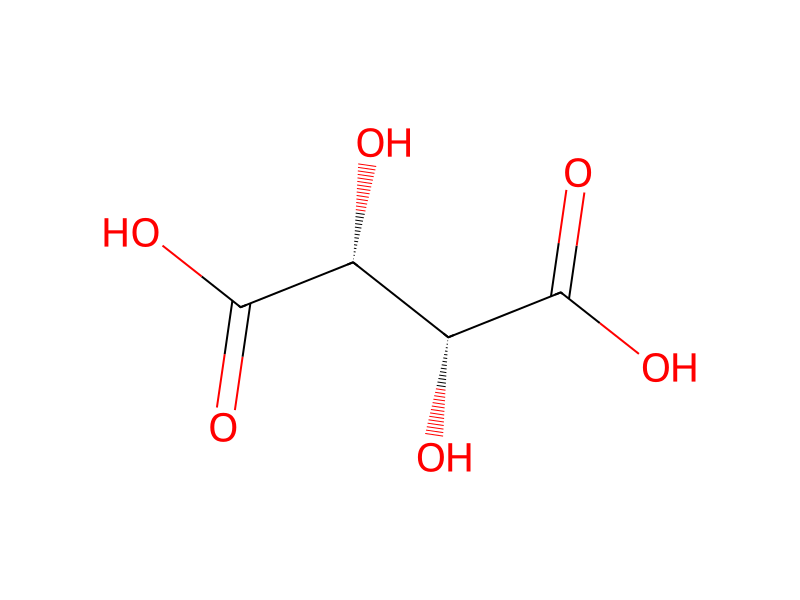
- Standard SMILES
O=C(O)[C@H](O)[C@@H](O)C(=O)O- InChIKey
FEWJPZIEWOKRBE-JCYAYHJZSA-N- Molecular formula
- C4H6O6
- Average molar mass
- 150.09 g/mol
- Monoisotopic mass
- 150.01643791
Names & identifiers
- Preferred name
- L-Tartaric acid
- IUPAC
- (2R,3R)-2,3-dihydroxybutanedioic acid
- English name
- DL-Tartaric acid
- Molecular formula
- C4H6O6
- Molecular weight
- 150.09
Names & synonyms
L-tartaric acid87-69-4L-(+)-Tartaric acidtartaric acid(2R,3R)-2,3-dihydroxysuccinic acid(2R,3R)-2,3-dihydroxybutanedioic acid(+)-Tartaric acid(+)-L-Tartaric acid(R,R)-Tartaric acidThrearic acidDextrotartaric acidL-threaric acid
Show more names
RACEMIC ACIDdl-Tartaric acid anhydrousDL-TARTRATEDL-TartaricClopidogrel Impurity 45DL-Tartaric acid concentrateButanedioic acid, 2,3-dihydroxy-, (2R,3R)-rel-DL-Tartaric acid 133-37-9 pure 99% food additives Paratartaric acid kf-wang(at)kf-chem.comUvic acid
Natural tartaric acidAcidum tartaricum(+)-(R,R)-Tartaric acid(2R,3R)-Tartaric acidRechtsweinsaeureKyselina vinna(R,R)-(+)-Tartaric acidWeinsaeure
Database identifiers
- CAS
133-37-9、868-14-4、87-69-4- PubChem CID
- 444305
- DTXSID
DTXSID8023632- ChEMBL
CHEMBL1236315- ChEBI
CHEBI:15671- UNII
- 4J4Z8788N8、W4888I119H
- EC Number
- 201-766-0、205-105-7
- Nikkaji
- J31.839F
Properties
Computed structural properties
- XLogP
- -1.9
- Topological polar surface area
- 115 Ų
- Hydrogen bond donors
- 4
- Hydrogen bond acceptors
- 6
- Rotatable bonds
- 3
- Heavy atoms
- 10
- Formal charge
- 0
- Complexity
- 134
Physicochemical properties
- Melting point
- 210 · 210-212 °C(lit.)
- Boiling point
- 191.59 °C · 191.59°C (rough estimate)
- alpha
- 20 · [α]D20 -0.2~+0.2° (c=20, H2O)
- Density
- 1.788 · 1.788
- vapor pressure
- 0.1 hPa · <0.1 hPa (20 °C)
- FEMA
- 3044 · 3044 | TARTARIC ACID (D-, L-, DL-, MESO-)
- refractive index
- 1.586 · 1.5860 (estimate)
- FLAVIS Number
- 8.018 · 08.018 | Tartaric acid
- Flash point
- 210 °C · 210 °C
- storage temp.
- 30 °C · Store below +30°C.
- solubility
- 2 O: · H2O: 0.1 g/mL, clear
- form
- Liquid
- pka
- 3.03 · 3.03, 4.37(at 25℃)
- color
- White
- PH
- 3.19 · 3.19(1 mM solution);2.58(10 mM solution);2.03(100 mM solution);
- Odor
- 100 % · at 100.00 %. very mild caramellic
- Odor Type
- odorless
- biological source
- synthetic
- Water Solubility
- soluble
- Merck
- 14 · 14,9069
- JECFA Number
- 621 · 621
- BRN
- 1725148 · 1725148
- Dielectric constant
- 35.9 · 35.9(-10℃)
- Stability
- Stable. Incompatible with bases, oxidizing agents, reducing agents, silver.
- Major Application
- flavors and fragrances
- Cosmetics Ingredients Functions
- BUFFERINGFRAGRANCE
- InChI
- 1S/C4H6O6/c5-1(3(7)8)2(6)4(9)10/h1-2,5-6H,(H,7,8)(H,9,10)/t1-,2-/m0/s1
- InChIKey
- FEWJPZIEWOKRBE-UHFFFAOYSA-N
- SMILES
- O[C@@H]([C@H](O)C(O)=O)C(O)=O
- LogP
- -1.43 · -1.43
- CAS DataBase Reference
- 133 · 133-37-9(CAS DataBase Reference)
- FDA UNII
- 4 J4Z8788N8 · 4J4Z8788N8
- NIST Chemistry Reference
- Tartaric acid(133-37-9)
- EPA Substance Registry System
- 2 · Butanedioic acid, 2,3-dihydroxy-, (2R,3R)-rel- (133-37-9)
- UNSPSC Code
- 41116105 · 41116105
- NACRES
- 21 · NB.21
- Symbol(GHS)
- 5 · GHS05
- Signal word
- Danger
- Hazard statements
- 318 · H318
- Precautionary statements
- 280 · P280-P305+P351+P338+P310
- PPE
- 95 · dust mask type N95 (US), Eyeshields, Gloves
- Hazard Codes
- Xi
- Risk Statements
- 36 · 36/37/38-41
- Safety Statements
- 26 · 26-37/39-36
- WGK Germany
- 3 · 3
- Autoignition Temperature
- 425 °C · 425 °C
- TSCA
- TSCA listed
- HS Code
- 29181200 · 29181200
- Storage Class
- 11 · 11 - Combustible Solids
- Hazard Classifications
- 1 · Eye Dam. 1
- REACH Registrations
- Active
Safety & regulation
Safety data
- PPE
- dust mask type N95 (US), Eyeshields, Gloves
- wgk
- 3
- tsca
- TSCA listed
- hs_code
- 29181200
- risk_code
- 36/37/38-41
- Signal word
- Danger
- Symbol(GHS)
- GHS05
- hazard_code
- Xi
- safety_code
- 26-37/39-36
- Storage Class
- 11 - Combustible Solids
- Hazard statements
- H318
- REACH Registrations
- Active
- Hazard Classifications
- Eye Dam. 1
- Autoignition Temperature
- 425 °C
- Precautionary statements
- P280-P305+P351+P338+P310
Chemistry & industry
Applications
Occurrenced-Tartaric acid occurs in many fruits or other parts of the plant, free or combined with potassium, calcium or magnesium. It is also reported found in raw, lean fish, white wine, red wine and port wine.
UsesDL-Tartaric acid is used as a synergist for antioxidants, emulsifier, sequestrant and flavoring agent. It is also added with citric acid to prepare effervescent salts, thereby enhancing the taste of oral medications. It is also utilized in pigments, processing aids, ink, toner and colorant products. It acts as a chelating agent in metal and farming industries. Further, it is used as lubricant and grease. It is mixed with sodium bicarbonate and used as a leavening agent in food preparation. In the pharmaceutical industry, it is utilized in the preparation of tartar emetic, which is used in cough syrup as an expectorant.
Preparation methods
PreparationThe tartrates used in commerce are obtained as a by-product of wine manufacture and have the L(+) configuration. Produced from argols or wine lees, which are formed in the manufacture of wine by extracting the potassium acid tartrate, transforming this into the calcium salt and then acidifying with dilute sulfuric acid; also by oxidation of d-glucose with nitric acid. The dl-tartaric acid is obtained by boiling the d-tartaric acid with an aqueous solution of NaOH or by oxidation of fumaric acid. The l- and the meso-tartaric acid are also known, but are less important.
Upstream & downstream products
Upstream raw materials
Downstream products
Suppliers50 total
国药集团化学试剂有限公司86-21-63210123 · [email protected]
梯希爱(上海)化成工业发展有限公司021-67121386 · [email protected]
上海阿拉丁生化科技股份有限公司400-6206333 13167063860 · [email protected]
天津市恒兴化学试剂制造有限公司022-26772349 15822233318 · [email protected]
爱斯特(成都)生物制药股份有限公司+86-28-85122536 85324413 · [email protected]
上海如吉生物科技发展有限公司+86-21-65211385-8001 36031160 · [email protected]
科瑞迪化学400-821-5857 021-64326257 · [email protected]
Syntechem Co.,Ltd[email protected]
上海迈瑞尔生化科技有限公司4006356688 18621169109 · [email protected]
阿法埃莎(中国)化学有限公司400-6106006 · [email protected]
上海德默医药科技有限公司400-021-7337 2355568890 · [email protected]
安耐吉化学&3A(安徽泽升科技股份有限公司)400-0056266 · [email protected]
上海瀚鸿科技股份有限公司021-54306202 13764082696 · [email protected]
成都普思生物科技股份有限公司028-85370565-229 18080489829 · [email protected]
上海景颜化工科技有限公司13817811078 · [email protected]
合肥天健化工有限公司551-65418679 15856988503;15837135945 · [email protected]
孝感深远化工有限公司15527621225; 15527621225 · [email protected]
山东西亚化学有限公司13355009207 13355009207 · [email protected]
玛雅试剂+86 (573) 82222445 (0)18006601000 452520369 · [email protected]
天津希恩思生化科技有限公司400 638 7771 · [email protected]
南京瑞泰生化技术有限公司+86-(0)25-84931986,(0)18951962398
斯百全化学(上海)有限公司021-021-021-67601398-809-809-809 15221380277 · [email protected]
上海源叶生物科技有限公司13636370518 · [email protected]
艾科试剂4008-755-333 18080918076 · [email protected]
青岛保税区鲁联国际贸易有限公司0532-83893697 18561902820 · [email protected]
上海思域化工科技有限公司86-21-34053660 · [email protected]
赛默飞世尔科技(中国)有限公司800-810-5118 · [email protected]
北京伊诺凯科技有限公司400-810-7969 010-59572699 · [email protected]
上海遐瑞医药科技有限公司+86 21 61551611
江苏艾康生物医药研发有限公司025-66113011 13913916777 · [email protected]
TOKYO CHEMICAL INDUSTRY CO., LTD.03-36680489 · [email protected]
上海贤鼎生物科技有限公司4009209199 · [email protected]
潍坊沃腾进出口有限公司0536-2456718
南京生利德生物科技有限公司025-57798810 18652991625 · [email protected]
北京环宇世纪化学科技有限公司hysj_bj.com
湖北鑫源顺医药化工有限公司13971561712, 13995564702, 027-50664929 · [email protected]
上海将来实业股份有限公司400-0066400 13621662912 · [email protected]
天津阿尔塔科技有限公司022-65378550-8551 · [email protected]
HBCChem, Inc.+1-510-219-6317 · [email protected]
日照力德士化工有限公司010-51268198 · [email protected]
美岚实业(上海)有限公司021-58958189 · [email protected]
上海爱蝶实业有限公司021-58957966 18930537195 · [email protected]
成都零六生物科技有限公司400-1166-196 13458535857 · [email protected]
广拓化学(上海)有限公司021-60899189-8001 18918189673 · [email protected]
雷丁试剂0510-85629785 18013409632 · [email protected]
上海御略医药科技有限公司021-60345187 13671753212 · [email protected]
上海麦克林生化科技股份有限公司15221275939 15221275939 · [email protected]
杭州杰恒化工有限公司0571-87396432 · [email protected]
上海永叶生物科技有限公司86-021-61559134 15921386130 · [email protected]
上海嵩爰化工科技有限公司010-1234567 18521000990 · [email protected]
Additional notes
DefinitionChEBI: DL-Tartaric acid is a tetraric acid that is butanedioic acid substituted by hydroxy groups at positions 2 and 3. It has a role as a human xenobiotic metabolite and a plant metabolite. It is a conjugate acid of a 3-carboxy-2,3-dihydroxypropanoate.
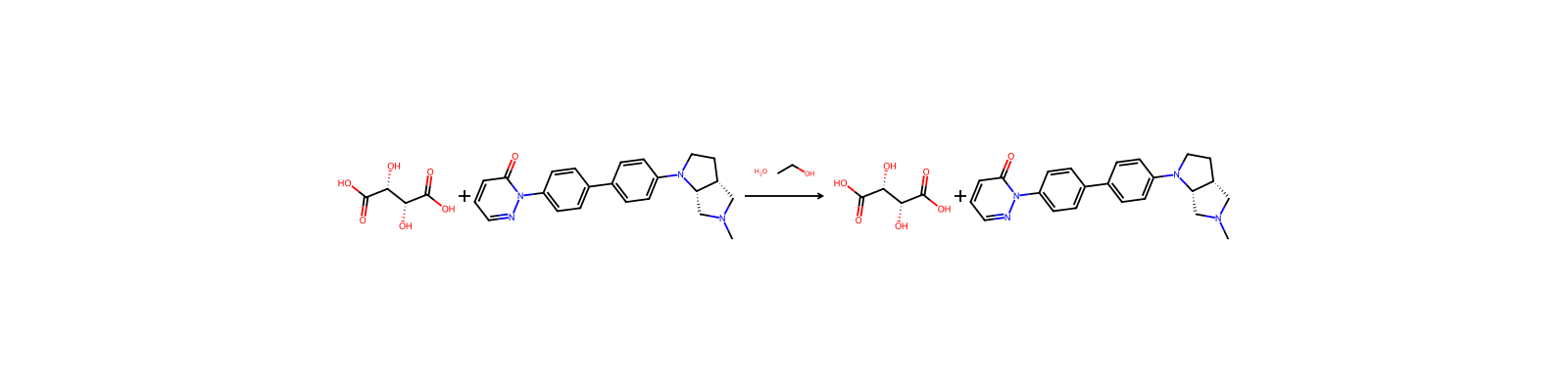
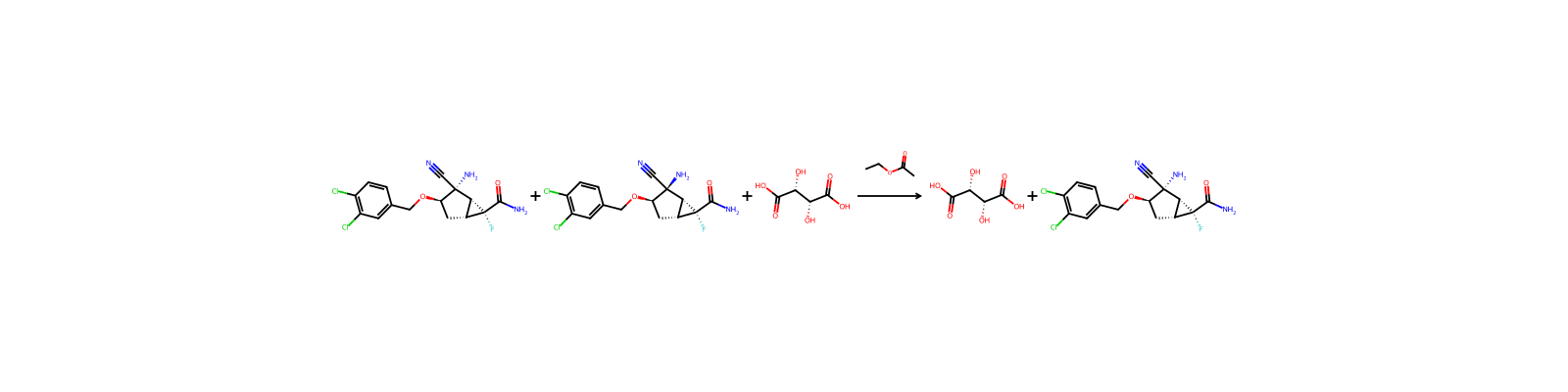
Related reactions
305 records




Linked notes
Loading…