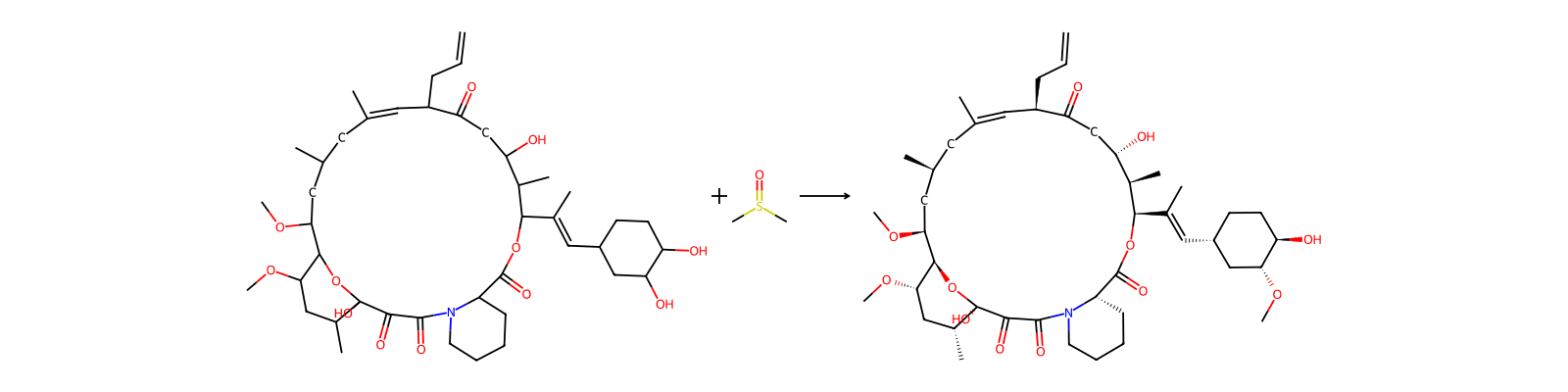
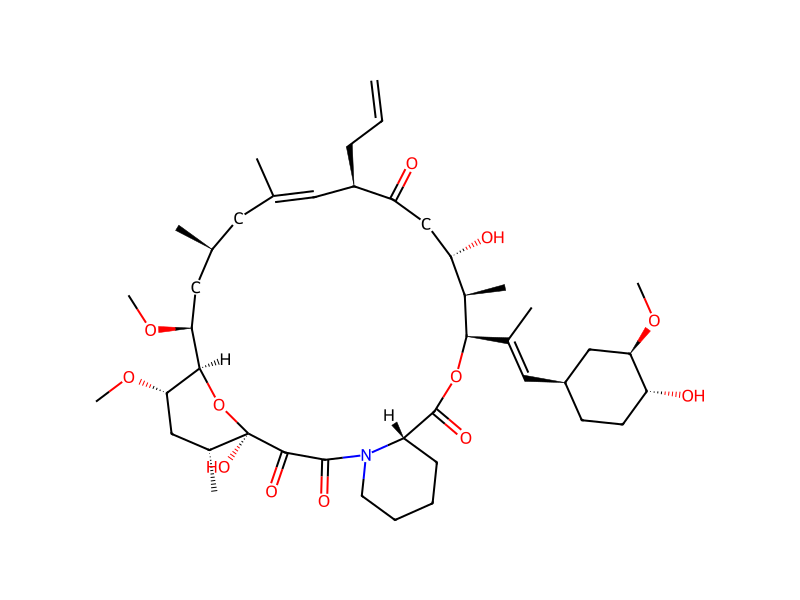
Basic information
- Standard SMILES
C=CC[C@@H]1/C=C(\C)C[C@H](C)C[C@H](OC)[C@H]2O[C@@](O)(C(=O)C(=O)N3CCCC[C@H]3C(=O)O[C@H](/C(C)=C/[C@@H]3CC[C@@H](O)[C@H](OC)C3)[C@H](C)[C@@H](O)CC1=O)[C@H](C)C[C@@H]2OC- InChIKey
QJJXYPPXXYFBGM-LFZNUXCKSA-N- Molecular formula
- C44H69NO12
- Average molar mass
- 804 g/mol
- Monoisotopic mass
- 803.48197665
Overview
Tacrolimus (anhydrous) is a macrolide lactam containing a 23-membered lactone ring, originally isolated from the fermentation broth of a Japanese soil sample that contained the bacteria Streptomyces tsukubaensis. It has a role as an immunosuppressive agent and a bacterial metabolite.
Names & identifiers
- Preferred name
- Tacrolimus
- IUPAC
- (1R,9S,12S,13R,14S,17R,18E,21S,23S,24R,25S,27R)-1,14-dihydroxy-12-[(E)-1-[(1R,3R,4R)-4-hydroxy-3-methoxycyclohexyl]prop-1-en-2-yl]-23,25-dimethoxy-13,19,21,27-tetramethyl-17-prop-2-enyl-11,28-dioxa-4-azatricyclo[22.3.1.04,9]octacos-18-ene-2,3,10,16-tetrone
- English name
- Tacrolimus
- Molecular formula
- C44H69NO12
- Molecular weight
- 804.02
Names & synonyms
tacrolimusFujimycin104987-11-3PrografTsukubaenolideAdvagrafModigrafProtopicTacrolimus anhydrousFK506FK 506Protopy
Show more names
FK-506Tacrolimus premixTacrolimus referenceimus)TacrosCS-1172L 679934
Anhydrous TacrolimusTACROLIMUS MONOHYDRATEEnvarsusAvagrafFR-900506PrograftTacrolimus, anhydrousAstagraf XL
Database identifiers
- CAS
104987-11-3、109581-93-3- PubChem CID
- 445643
- DTXSID
DTXSID5046354- ChEMBL
CHEMBL269732、CHEMBL3989887- ChEBI
CHEBI:61049- UNII
- Y5L2157C4J
- EC Number
- 627-021-3、658-056-2
- Nikkaji
- J313.679E
Properties
Computed structural properties
- XLogP
- 2.7
- Topological polar surface area
- 178 Ų
- Hydrogen bond donors
- 3
- Hydrogen bond acceptors
- 12
- Rotatable bonds
- 7
- Heavy atoms
- 57
- Formal charge
- 0
- Complexity
- 1,480
Experimental & physicochemical properties
LipidsPolyketides [PK] -> Macrolides and lactone polyketides [PK04]
SolubilityInsoluble
Human Drugs
Breast Feeding; Lactation; Milk, Human; Immunosuppressive Agents; Dermatologic Agents
FDA approved drugs -> Active ingredient
EMA approved medicines: Human medicine
EMA approved medicines: Human medicine
EMA approved medicines: Human medicine
EMA approved medicines: Human medicine
Optical Rotation
Colorless prisms from acetonitrile; mp 127-129 °C. Specific optical rotation: -84.4 deg at 23 °C/D (c = 1.02 in chloroform). Soluble in methanol, ethanol, acetone, ethyl acetate, chloroform, diethyl ether; sparingly soluble in hexane, petroleum ether. Insoluble in water. /Tacrolimus monohydrate/
Stability/Shelf LifeStable under recommended storage conditions. /FK-506 monohydrate/
Collision Cross Section
267 Ų [M+Na]+ [CCS Type: TW; Method: calibrated with polyalanine and drug standards]
269.55 Ų [M+Na]+ [CCS Type: TW; Method: calibrated with polyalanine and drug standards]
Physicochemical properties
- Melting point
- 113 · 113-115°C
- Boiling point
- 871.7 · 871.7±75.0 °C(Predicted)
- Density
- 1.19 · 1.19±0.1 g/cm3(Predicted)
- Flash point
- 2 ℃ · 2℃
- storage temp.
- -20 °C · Sealed in dry,Store in freezer, under -20°C
- solubility
- 3 mg/mL · DMSO: >3 mg/mL
- form
- solid
- pka
- 9.97 · 9.97±0.70(Predicted)
- color
- white
- optical activity
- 62.223 · +62.223 (CHCl3)
- Water Solubility
- Freely soluble in DMSO or ethanol. Poorly soluble in water.Soluble in dimethyl sulfoxide, ethanol, water, acetone, chloroform, ethyl acetate, ether, methanol and dimethyl formamide.
- BCS Class
- 2 · 2
- Stability
- 2 years · Stable for 2 years from date of purchase as supplied. Solutions in DMSO or ethanol may be stored at -20°C for up to 2 months.
- InChIKey
- QJJXYPPXXYFBGM-LFZNUXCKSA-N
- CAS DataBase Reference
- 104987 · 104987-11-3(CAS DataBase Reference)
- NCI Dictionary of Cancer Terms
- tacrolimus
- FDA UNII
- 5 L2157C4J · Y5L2157C4J
- NCI Drug Dictionary
- Prograf
- ATC code
- 11 AH01,L04AD02 · D11AH01,L04AD02
- UNSPSC Code
- 41116107 · 41116107
- NACRES
- 77 · NA.77
- Protein binding
- 98 % · >98%
- Excreted unchanged in urine
- 1 % · <1%
- Volume of distribution
- 1300 Litres · 1300 Litres
- Biological half-life
- 12 · 12-16 / Probably unchanged
- Symbol(GHS)
- 6 · GHS06,GHS08
- Signal word
- Danger
- Hazard statements
- 301 · H301-H361f-H373
- Precautionary statements
- 202 · P202-P260-P264-P270-P280-P301+P310
- Hazard Codes
- T,Xi,Xn,F
- Risk Statements
- 25 · 25-36/37/38-36-20/21/22-11
- Safety Statements
- 45 · 45-36-26-36/37-16-60-20
- RIDADR
- 2811 · UN 2811 6.1/PG 3
- WGK Germany
- 3 · 3
- RTECS
- 4201200 · KD4201200
- HazardClass
- 6.1 · 6.1
- HS Code
- 29349990 · 29349990
- Storage Class
- 6.1 C · 6.1C - Combustible acute toxic Cat.3toxic compounds or compounds which causing chronic effects
- Hazard Classifications
- 3 OralEye · Acute Tox. 3 OralEye Irrit. 2Repr. 2STOT RE 2
- Hazardous Substances Data
- 104987 · 104987-11-3(Hazardous Substances Data)
Safety & regulation
GHS classification
GHS Classification
Danger
H301 (97.6%): Toxic if swallowed [Danger Acute toxicity, oral]
P203, P260, P264, P270, P280, P301+P316, P318, P319, P321, P330, P405, and P501 (click each P-code to see the statement)
Aggregated GHS information provided per 82 reports by companies from 13 notifications to the ECHA C&L Inventory. Each notification may be associated with multiple companies.
Danger
H301 (100%): Toxic if swallowed [Danger Acute toxicity, oral]
Hazard information
Regulatory InformationHazard Traits - Carcinogenicity
FDA Requirements
The Approved Drug Products with Therapeutic Equivalence Evaluations identifies currently marketed prescription drug products, including tacrolimus, approved on the basis of safety and effectiveness by FDA under sections 505 of the Federal Food, Drug, and Cosmetic Act.
Toxic Combustion ProductsSpecial hazards arising from the substance or mixture: Carbon oxides, nitrogen oxides (NOx). /FK-506 monohydrate/
Hazard Classes and Categories
Acute Tox. 3 (100%)
Acute Tox. 3 (97.6%)
Hazardous Reactivities and IncompatibilitiesStrong oxidizing agents. /FK-506 monohydrate/
Safety & protection
Fire Fighting ProceduresSuitable extinguishing media: Use water spray, alcohol-resistant foam, dry chemical or carbon dioxide. Advice for firefighters: Wear self contained breathing apparatus for fire fighting if necessary. /FK-506 monohydrate/
Storage Conditions
Keep container tightly closed in a dry and well-ventilated place. Recommended storage temperature: -20 °C Keep in a dry place. /FK-506 monohydrate/
Store at 25 °C (77 °F); excursions permitted to 15 °C-30 °C (59 °F-86 °F).
Store at room temperature 25 °C (77 °F); excursions permitted to 15 deg - 30 °C (59 deg - 86 °F).
Cleanup Methods
Personal precautions, protective equipment and emergency procedures: Wear respiratory protection. Avoid dust formation. Avoid breathing vapours, mist or gas. Ensure adequate ventilation. Evacuate personnel to safe areas. Avoid breathing dust. Environmental precautions: Prevent further leakage or spillage if safe to do so. Do not let product enter drains. Methods and materials for containment and cleaning up: Pick up and arrange disposal without creating dust. Sweep up and shovel. Keep in suitable, closed containers for disposal. /FK-506 monohydrate/
Disposal Methods
SRP: Expired or waste pharmaceuticals shall carefully take into consideration applicable DEA, EPA, and FDA regulations. It is not appropriate to dispose by flushing the pharmaceutical down the toilet or discarding to trash. If possible return the pharmaceutical to the manufacturer for proper disposal being careful to properly label and securely package the material. Alternatively, the waste pharmaceutical shall be labeled, securely packaged and transported by a state licensed medical waste contractor to dispose by burial in a licensed hazardous or toxic waste landfill or incinerator.
Product: Offer surplus and non-recyclable solutions to a licensed disposal company. Contact a licensed professional waste disposal service to dispose of this material. Dissolve or mix the material with a combustible solvent and burn in a chemical incinerator equipped with an afterburner and scrubber. Contaminated packaging: Dispose of as unused product. /FK-506 monohydrate/
Preventive Measures
Where risk assessment shows air-purifying respirators are appropriate use a full-face particle respirator type N99 (US) or type P2 (EN 143) respirator cartridges as a backup to engineering controls. If the respirator is the sole means of protection, use a full-face supplied air respirator. Use respirators and components tested and approved under appropriate government standards such as NIOSH (US) or CEN (EU). /FK-506 monohydrate/
Complete suit protecting against chemicals, The type of protective equipment must be selected according to the concentration and amount of the dangerous substance at the specific workplace. /FK-506 monohydrate/
Gloves must be inspected prior to use. Use proper glove removal technique (without touching glove's outer surface) to avoid skin contact with this product. Dispose of contaminated gloves after use in accordance with applicable laws and good laboratory practices. Wash and dry hands. /FK-506 monohydrate/
Avoid contact with skin and eyes. Avoid formation of dust and aerosols. Provide appropriate exhaust ventilation at places where dust is formed. /FK-506 monohydrate/
SRP: Local exhaust ventilation should be applied wherever there is an incidence of point source emissions or dispersion of regulated contaminants in the work area. Ventilation control of the contaminant as close to its point of generation is both the most economical and safest method to minimize personnel exposure to airborne contaminants. Ensure that the local ventilation moves the contaminant away from the worker.
Personal Protective Equipment (PPE)
Handle with gloves. /FK-506 monohydrate/
Face shield and safety glasses Use equipment for eye protection tested and approved under appropriate government standards such as NIOSH (US) or EN 166(EU). /FK-506 monohydrate/
Toxicology
Interactions
With a given dose of mycophenolic acid (MPA) products, exposure to MPA is higher with Prograf co-administration than with cyclosporine co-administration because cyclosporine interrupts the enterohepatic recirculation of MPA while tacrolimus does not. Clinicians should be aware that there is also a potential for increased MPA exposure after crossover from cyclosporine to Prograf in patients concomitantly receiving MPA-containing products.
Grapefruit juice inhibits CYP3A-enzymes resulting in increased tacrolimus whole blood trough concentrations, and patients should avoid eating grapefruit or drinking grapefruit juice with tacrolimus.
Since tacrolimus is metabolized mainly by CYP3A enzymes, drugs or substances known to inhibit these enzymes may increase tacrolimus whole blood concentrations. Drugs known to induce CYP3A enzymes may decrease tacrolimus whole blood concentrations. Dose adjustments may be needed along with frequent monitoring of tacrolimus whole blood trough concentrations when Prograf is administered with CYP3A inhibitors or inducers. In addition, patients should be monitored for adverse reactions including changes in renal function and QT prolongation.
Verapamil, diltiazem, nifedipine, and nicardipine inhibit CYP3A metabolism of tacrolimus and may increase tacrolimus whole blood concentrations. Monitoring of whole blood concentrations and appropriate dosage adjustments of tacrolimus are recommended when these calcium channel blocking drugs and tacrolimus are used concomitantly.
For more Interactions (Complete) data for Tacrolimus (18 total), please visit the HSDB record page.
Hepatotoxicity
Tacrolimus therapy is associated with mild to moderate elevations in serum aminotransferase levels in 5% to 10% of patients. These elevations are usually mild, asymptomatic and self-limited, but are occasionally persistent and may require dose modification. Tacrolimus has also been implicated in instances of cholestatic hepatitis, but clinically apparent liver injury is rare. Because tacrolimus is used in the context of organ transplantation and often in liver transplantation, the causes of liver test abnormalities arising during therapy are many, and drug induced liver injury due to tacrolimus is sufficiently rare that its clinical features and typical course have not been defined.
Adverse EffectsAdverse effects include, but are not limited to:
Exposure Routes
Absorption of tacrolimus from the gastrointestinal tract after oral administration is incomplete and variable. The absolute bioavailability in adult kidney transplant patients is 17Њ±10%; in adults liver transplant patients is 22Њ±6%; in healthy subjects is 18Њ±5%. The absolute bioavailability in pediatric liver transplant patients was 31Њ±24%. Tacrolimus maximum blood concentrations (Cmax) and area under the curve (AUC) appeared to increase in a dose-proportional fashion in 18 fasted healthy volunteers receiving a single oral dose of 3, 7, and 10 mg. When given without food, the rate and extent of absorption were the greatest. The time of the meal also affected bioavailability. When given immediately after a meal, mean Cmax was reduced 71%, and mean AUC was reduced 39%, relative to the fasted condition. When administered 1.5 hours following the meal, mean Cmax was reduced 63%, and mean AUC was reduced 39%, relative to the fasted condition.
Milk Concentrations
EXPERIMENTAL: ... Very small amounts of tacrolimus are excreted in the breast milk ... .
EXPERIMENTAL: The aim of this study was to assess tacrolimus levels in breast milk and neonatal exposure during breastfeeding. An observational cohort study was performed in two tertiary referral high-risk obstetric medicine clinics. Fourteen women taking tacrolimus during pregnancy and lactation, and their 15 infants, 11 of whom were exclusively breast-fed, were assessed. Tacrolimus levels were analyzed by liquid chromatography-tandem mass spectrometry. Samples from mothers and cord blood were collected at delivery and from mothers, infants, and breast milk postnatally where possible. All infants with serial sampling had a decline in tacrolimus level, which was approximately 15% per day (ratio of geometric mean concentrations 0.85; 95% confidence interval, 0.82-0.88; P<0.001). Breast-fed infants did not have higher tacrolimus levels compared with bottle-fed infants (median 1.3 ug/L [range, 0.0-4.0] versus 1.0 ug/L (range, 0.0-2.3), respectively; P=0.91). Maximum estimated absorption from breast milk is 0.23% of maternal dose (weight-adjusted). Ingestion of tacrolimus by infants via breast milk is negligible. Breastfeeding does not appear to slow the decline of infant tacrolimus levels from higher levels present at birth.
EXPERIMENTAL: ... Infant exposure to tacrolimus through the breast milk was less than 0.3% of the mother's weight-adjusted dose. ...
EXPERIMENTAL: Although systemic absorption of tacrolimus following topical applications of Protopic Ointment is minimal relative to systemic administration, it is known that tacrolimus is excreted in human milk. ...
Toxicity Summary
IDENTIFICATION AND USE: Tacrolimus is white to off-white crystalline powder. It is a calcineurin-inhibitor immunosuppressant available in several preparations. Tacrolimus in both oral capsules and a solution for IV injection is used for prophylaxis of organ rejection in patients receiving liver, kidney or heart transplants. Tacrolimus topical ointment is used as a second-line therapy for the short-term and non-continuous chronic treatment of moderate to severe atopic dermatitis in non-immunocompromised adults and children. HUMAN EXPOSURE AND TOXICITY: While most acute overdosages of tacrolimus at up to 30 times the intended dose have been asymptomatic and all patients recovered with no sequelae, some acute overdosages were followed by adverse reactions including tremors, abnormal renal function, hypertension, and peripheral edema. At therapeutic doses, patients receiving tacrolimus are at increased risk of developing lymphomas and other malignancies, particularly of the skin, as well as an increased risk of developing bacterial, viral, fungal, and protozoal infections, including opportunistic infections. These infections may lead to serious, including fatal, outcomes. While there are no adequate and well-controlled studies in pregnant women, the use of tacrolimus during pregnancy in humans has been associated with neonatal hyperkalemia and renal dysfunction. ANIMAL STUDIES: Both rats and baboons showed a similar toxicologic profile following oral or intravenous administration of tacrolimus. Toxicity following intravenous administration was evident at lower doses than after oral administration for both rats and baboons. Toxicity was seen at lower doses in rats than in baboons. The primary target organs were the kidneys, pancreatic islets of Langerhans and exocrine pancreas, spleen, thymus, gastrointestinal tract, and lymph nodes. In addition, decreases in erythrocyte parameters were seen. Tacrolimus also produced reproductive and developmental toxicity in both rats and rabbits. In rats, chronic oral administration of tacrolimus at high doses resulted in changes in sex organs, and glaucoma/eye changes. Oral doses of tacrolimus at 1 and 3.2 mg/kg/day produced overt signs of parental toxicity and changes in the fertility and general reproductive performance of rats. Effects on reproduction included some embryo lethality, reduced number of implantations, increased incidence of post-implantation loss, and reduced embryo and offspring viability. In a rabbit teratology study, signs of maternal toxicity including reduced body weight were produced at all oral doses of tacrolimus administered (0.1, 0.32, or 1 mg/kg/day). Doses of 0.32 and 1 mg/kg/day produced signs of developmental toxicity, such as increased incidence of post-implantation losses, reduced number of viable fetuses, and increased incidences of morphological variations. In a rat teratology study, increased post-implantation loss was observed at 3.2 mg/kg/day. Maternal doses of 1 mg/kg/day decreased the body weight of F1 offspring. Decreased body weight, reduced survival number, and some skeletal alterations were seen in F1 offspring at maternal doses of 3.2 mg/kg/day. Tacrolimus did not exhibit genotoxic activity in vitro in bacterial asaays in Salmonella typhimurium and Escherichia coli or mammalian assays in Chinese hamster lung-derived cells assays. No evidence of mutagenicity was observed in vitro in the CHO/HGPRT assay (the Chinese hamster ovary cell assay (CHO), which measures forward mutation of the HGPRT locus) or in vivo in clastogenicity assays performed in mice. Tacrolimus also did not cause unscheduled DNA synthesis in rodent hepatocytes.
Signs and Symptoms of Overdose
The mechanism of action of tacrolimus in atopic dermatitis is not known. While the following have been observed, the clinical significance of these observations in atopic dermatitis is not known. It has been demonstrated that tacrolimus inhibits T-lymphocyte activation by first binding to an intracellular protein, FKBP-12. A complex of tacrolimus-FKBP-12, calcium, calmodulin, and calcineurin is then formed and the phosphatase activity of calcineurin is inhibited. This prevents the dephosphorylation and translocation of nuclear factor of activated T-cells (NF-AT), a nuclear component thought to initiate gene transcription for the formation of lymphokines. Tacrolimus also inhibits the transcription for genes which encode IL-3, IL-4, IL-5, GM-CSF, and TNF-, all of which are involved in the early stages of T-cell activation. Additionally, tacrolimus has been shown to inhibit the release of pre-formed mediators from skin mast cells and basophils, and to downregulate the expression of FceRI on Langerhans cells.
Signs and SymptomsSide effects can be severe and include blurred vision, liver and kidney problems (it is nephrotoxic), seizures, tremors, hypertension, hypomagnesemia, diabetes mellitus, hyperkalemia, itching, insomnia, confusion.
Natural Pollution SourcesTacrolimus is derived from a soil bacteria, Streptomyces tsukubaensis(1).
Human Toxicity Excerpts
/SIGNS AND SYMPTOMS/ Patients receiving immunosuppressants, including Prograf, are at increased risk of developing bacterial, viral, fungal, and protozoal infections, including opportunistic infections. These infections may lead to serious, including fatal, outcomes.
/SIGNS AND SYMPTOMS/ Patients receiving immunosuppressants, including Prograf, are at increased risk of developing lymphomas and other malignancies, particularly of the skin [see Boxed Warning]. The risk appears to be related to the intensity and duration of immunosuppression rather than to the use of any specific agent.
/SIGNS AND SYMPTOMS/ There are no adequate and well-controlled studies in pregnant women. ... The use of tacrolimus during pregnancy in humans has been associated with neonatal hyperkalemia and renal dysfunction.
/SIGNS AND SYMPTOMS/ Acute overdosages of up to 30 times the intended dose have been reported. Almost all cases have been asymptomatic and all patients recovered with no sequelae. Acute overdosage was sometimes followed by adverse reactions ... including tremors, abnormal renal function, hypertension, and peripheral edema); in one case of acute overdosage, transient urticaria and lethargy were observed.
For more Human Toxicity Excerpts (Complete) data for Tacrolimus (11 total), please visit the HSDB record page.
Carcinogen Classification
Tacrolimus
Group 1: Carcinogenic to humans
Volume 137: (2026) Hydrochlorothiazide, Voriconazole, and Tacrolimus
2026 online
2024
No indication of carcinogenicity to humans (not listed by IARC).
Drug Induced Liver Injury
Drug Induced Liver Injury Rank (DILIrank 2.0)
Tacrolimus
vLess-DILI-concern
5
Adverse reactions
DOI:10.1016/j.drudis.2016.02.015
Non-Human Toxicity Excerpts
/LABORATORY ANIMALS: Chronic Exposure or Carcinogenicity/ In a 52-week photocarcinogenicity study, the median time to onset of skin tumor formation was decreased in hairless mice following chronic topical dosing with concurrent exposure to UV radiation (40 weeks of treatment followed by 12 weeks of observation) with tacrolimus ointment at > or = 0.1% tacrolimus.
/LABORATORY ANIMALS: Chronic Exposure or Carcinogenicity/ A 104-week dermal carcinogenicity study was performed in mice with tacrolimus ointment (0.03% - 3%), equivalent to tacrolimus doses of 1.1-118 mg/kg/day or 3.3-354 mg/sq m/day. In the study, the incidence of skin tumors was minimal and the topical application of tacrolimus was not associated with skin tumor formation under ambient room lighting. However, a statistically significant elevation in the incidence of pleomorphic lymphoma in high dose male (25/50) and female animals (27/50) and in the incidence of undifferentiated lymphoma in high dose female animals (13/50) was noted in the mouse dermal carcinogenicity study. Lymphomas were noted in the mouse dermal carcinogenicity study at a daily dose of 3.5 mg/kg (0.1% tacrolimus ointment). No drug-related tumors were noted in the mouse dermal carcinogenicity study at a daily dose of 1.1 mg/kg (0.03% tacrolimus ointment). The relevance of topical administration of tacrolimus in the setting of systemic tacrolimus use is unknown.
/LABORATORY ANIMALS: Chronic Exposure or Carcinogenicity/ The carcinogenicity potential of FK506 /Sandoz Tacrolimus/ has been evaluated in mice and rats. Mice (56/sex) were administered FK506 as a dietary admix at doses of 0 (control), 0 (placebo), 0.3, 1 and 3 mg/kg/day. There was no evidence of any tumorigenic potential of FK506 in this study. Signs of toxicity were evident in the form of reduced bodyweight gain in both sexes receiving 3.0 mg/kg/day and for males receiving 1 mg/kg/day. For males receiving 3.0 mg/kg/day, there was a reduction in the efficiency of food utilization. An increase in mortality for males at 3.0 mg/kg/day was accompanied by pathological findings of minimal adipose tissue and fur staining, evidence of dysfunctional testes/epididymides, prostate glands and seminal vesicles. Males and females at 3.0 mg/kg/day also demonstrated reduced islets of Langerhans and increased basophilia and cellularity of islets. The no-effect level was considered to be 0.3 mg/kg/day in both sexes. In addition, 1 mg/kg/day was a no-effect level for females only.
/LABORATORY ANIMALS: Chronic Exposure or Carcinogenicity/ The 104 week studies in rats administered tacrolimus at oral doses of 0.2, 0.5, 1.25, 2.5 and 5.0 mg/kg/day demonstrated no evidence of tumorigenicity.
For more Non-Human Toxicity Excerpts (Complete) data for Tacrolimus (11 total), please visit the HSDB record page.
Regulatory information
FDA Requirements
The Approved Drug Products with Therapeutic Equivalence Evaluations identifies currently marketed prescription drug products, including tacrolimus, approved on the basis of safety and effectiveness by FDA under sections 505 of the Federal Food, Drug, and Cosmetic Act.
Safety data
- wgk
- 3
- rtecs
- KD4201200
- ridadr
- UN 2811 6.1/PG 3
- hs_code
- 29349990
- risk_code
- 25-36/37/38-36-20/21/22-11
- Signal word
- Danger
- Symbol(GHS)
- GHS06,GHS08
- hazard_code
- T,Xi,Xn,F
- safety_code
- 45-36-26-36/37-16-60-20
- hazard_class
- 6.1
- Storage Class
- 6.1C - Combustible acute toxic Cat.3toxic compounds or compounds which causing chronic effects
- Hazard statements
- H301-H361f-H373
- Hazard Classifications
- Acute Tox. 3 OralEye Irrit. 2Repr. 2STOT RE 2
- Precautionary statements
- P202-P260-P264-P270-P280-P301+P310
- Hazardous Substances Data
- 104987-11-3(Hazardous Substances Data)
Chemistry & industry
Pharmacology
ATC Code
L04AD02
L - Antineoplastic and immunomodulating agents
D - Dermatologicals
QD - Dermatologicals
QL - Antineoplastic and immunomodulating agents
L04AD02
Protein Binding~99% bound to human plasma protein, primarily to albumin and alpha-1-acid glycoprotein. This is independent of concentration over a range of 5-50 ng/mL.
Pharmacodynamics
Tacrolimus acts by reducing peptidyl-prolyl isomerase activity by binding to the immunophilin FKBP-12 (FK506 binding protein) creating a new complex. This inhibits both T-lymphocyte signal transduction and IL-2 transcription. Tacrolimus has similar activity to cyclosporine but rates of rejection are lower with tacrolimus. Tacrolimus has also been shown to be effective in the topical treatment of eczema, particularly atopic eczema. It suppresses inflammation in a similar way to steroids, but is not as powerful. An important dermatological advantage of tacrolimus is that it can be used directly on the face; topical steroids cannot be used on the face, as they thin the skin dramatically there. On other parts of the body, topical steroid are generally a better treatment.
Mechanism of Action
The mechanism of action of tacrolimus in atopic dermatitis is not known. While the following have been observed, the clinical significance of these observations in atopic dermatitis is not known. It has been demonstrated that tacrolimus inhibits T-lymphocyte activation by first binding to an intracellular protein, FKBP-12. A complex of tacrolimus-FKBP-12, calcium, calmodulin, and calcineurin is then formed and the phosphatase activity of calcineurin is inhibited. This prevents the dephosphorylation and translocation of nuclear factor of activated T-cells (NF-AT), a nuclear component thought to initiate gene transcription for the formation of lymphokines. Tacrolimus also inhibits the transcription for genes which encode IL-3, IL-4, IL-5, GM-CSF, and TNF-, all of which are involved in the early stages of T-cell activation. Additionally, tacrolimus has been shown to inhibit the release of pre-formed mediators from skin mast cells and basophils, and to downregulate the expression of FceRI on Langerhans cells.
Tacrolimus is a macrolide immunosuppressant produced by Streptomyces tsukubaensis. Tacrolimus is commercially available for topical use as a 0.03 or 0.1% ointment. The exact mechanism(s) of action of tacrolimus in the treatment of atopic dermatitis has not been elucidated but appears to involve inhibition of the activation of T cells. Tacrolimus also has been shown to inhibit release of mediators from skin mast cells and basophils and to downregulate the expression of high-affinity receptors for immunoglobulin E (IgE) on Langerhans cells. Although tacrolimus is not genotoxic and does not interact directly with DNA, the drug may impair local immunosurveillance.
Tacrolimus inhibits T-lymphocyte activation, although the exact mechanism of action is not known. Experimental evidence suggests that tacrolimus binds to an intracellular protein, FKBP-12. A complex of tacrolimus-FKBP-12, calcium, calmodulin, and calcineurin is then formed and the phosphatase activity of calcineurin inhibited. This effect may prevent the dephosphorylation and translocation of nuclear factor of activated T-cells (NF-AT), a nuclear component thought to initiate gene transcription for the formation of lymphokines (such as interleukin-2, gamma interferon). The net result is the inhibition of T-lymphocyte activation (i.e., immunosuppression).
The mechanism of action of tacrolimus in atopic dermatitis is not known. While the following have been observed, the clinical significance of these observations in atopic dermatitis is not known. It has been demonstrated that tacrolimus inhibits T-lymphocyte activation by first binding to an intracellular protein, FKBP-12. A complex of tacrolimus-FKBP-12, calcium, calmodulin, and calcineurin is then formed and the phosphatase activity of calcineurin is inhibited. This effect has been shown to prevent the dephosphorylation and translocation of nuclear factor of activated T-cells (NF-AT), a nuclear component thought to initiate gene transcription for the formation of lymphokines (such as interleukin-2, gamma interferon). Tacrolimus also inhibits the transcription for genes which encode IL-3, IL-4, IL-5, GM-CSF, and TNF-a, all of which are involved in the early stages of T-cell activation. Additionally, tacrolimus has been shown to inhibit the release of pre-formed mediators from skin mast cells and basophils, and to down regulate the expression of FceRI on Langerhans cells.
Tacrolimus, formerly known as FK506, is a macrolide antibiotic with immunosuppressive properties. Although structurally unrelated to cyclosporin A (CsA), its mode of action is similar. It exerts its effects principally through impairment of gene expression in target cells. Tacrolimus bonds to an immunophilin, FK506 binding protein (FKBP). This complex inhibits calcineurin phosphatase. The drug inhibits calcium-dependent events, such as interleukin-2 gene transcription, nitric oxide synthase activation, cell degranulation, and apoptosis. Tacrolimus also potentiates the actions of glucocorticoids and progesterone by binding to FKBPs contained within the hormone receptor complex, preventing degradation. The agent may enhance expression of the transforming growth factor beta-1 gene in a fashion analogous to that demonstrated for CsA. T cell proliferation in response to ligation of the T cell receptor is inhibited by tacrolimus. Type 1 T helper cells appear to be preferentially suppressed compared with type 2 T helper cells. T cell-mediated cytotoxicity is impaired. B cell growth and antibody production are affected indirectly by the suppression of T cell-derived growth factors necessary for these functions. Antigen presentation appears to be spared. ...
Biological Half-Life
The elimination half life in adult healthy volunteers, kidney transplant patients, liver transplants patients, and heart transplant patients are approximately 35, 19, 12, 24 hours, respectively. The elimination half life in pediatric liver transplant patients was 11.5±3.8 hours, in pediatric kidney transplant patients was 10.2±5.0 (range 3.4-25) hours.
In a mass balance study of IV administered radiolabeled tacrolimus to 6 healthy volunteers, ... the elimination half-life based on radioactivity was 48.1+ or - 15.9 hours whereas it was 43.5 + or- 11.6 hours based on tacrolimus concentrations. ... When administered PO, the elimination half-life based on radioactivity was 31.9 + or- 10.5 hours whereas it was 48.4 + or - 12.3 hours based on tacrolimus concentrations ... .
... A case of tacrolimus toxicity in a non-transplant patient /is presented/. ... /The/ patient's tacrolimus dose was 2.1 mg/kg/day for 4 days (therapeutic 0.03 to 0.05 mg/kg/day). Her tacrolimus elimination half-life was 16.5 hours, compared to a mean half-life in healthy volunteers of 34.2 +/- 7.7 hours. ...
Metabolism/Metabolites
The metabolism of tacrolimus is predominantly mediated by CYP3A4 and secondarily by CYP3A5. Tacrolimus is metabolized into 8 metabolites: 13-demethyl tacrolimus, 31-demethyl tacrolimus, 15-demethyl tacrolimus, 12-hydroxy tacrolimus, 15,31-didemethyl tacrolimus, 13,31-didemethyl tacrolimus, 13,15-didemethyl tacrolimus, and a final metabolite involving O-demethylation and the formation of a fused ring. The major metabolite identified in incubations with human liver microsomes is 13-demethyl tacrolimus. In in vitro studies, a 31-demethyl metabolite has been reported to have the same activity as tacrolimus.
Tacrolimus is extensively metabolized by the mixed-function oxidase system, primarily the cytochrome P-450 system (CYP3A). A metabolic pathway leading to the formation of 8 possible metabolites has been proposed. Demethylation and hydroxylation were identified as the primary mechanisms of biotransformation in vitro. The major metabolite identified in incubations with human liver microsomes is 13-demethyl tacrolimus. In in vitro studies, a 31-demethyl metabolite has been reported to have the same activity as tacrolimus.
Fk_506 has known human metabolites that include 13-O-Desmethyltacrolimus and 15-O-Desmethyltacrolimus.
Hepatic, extensive, primarily by CYP3A4. The major metabolite identified in incubations with human liver microsomes is 13-demethyl tacrolimus. In in vitro studies, a 31-demethyl metabolite has been reported to have the same activity as tacrolimus. Route of Elimination: In man, less than 1% of the dose administered is excreted unchanged in urine. When administered IV, fecal elimination accounted for 92.6±30.7%, urinary elimination accounted for 2.3±1.1%. Half Life: The elimination half life in adult healthy volunteers, kidney transplant patients, liver transplants patients, and heart transplant patients are approximately 35, 19, 12, 24 hours, respectively. The elimination half life in pediatric liver transplant patients was 11.5±3.8 hours, in pediatric kidney transplant patients was 10.2±5.0 (range 3.4-25) hours.
FDA Pharmacological Classification
Y5L2157C4J
TACROLIMUS ANHYDROUS
Established Pharmacologic Class [EPC] - Calcineurin Inhibitor Immunosuppressant
Mechanisms of Action [MoA] - Calcineurin Inhibitors
Tacrolimus anhydrous is a Calcineurin Inhibitor Immunosuppressant. The mechanism of action of tacrolimus anhydrous is as a Calcineurin Inhibitor.
TACROLIMUS
MeSH Pharmacological Classification
Agents that suppress immune function by one of several mechanisms of action. Classical cytotoxic immunosuppressants act by inhibiting DNA synthesis. Others may act through activation of T-CELLS or by inhibiting the activation of HELPER CELLS. While immunosuppression has been brought about in the past primarily to prevent rejection of transplanted organs, new applications involving mediation of the effects of INTERLEUKINS and other CYTOKINES are emerging.
Compounds that inhibit or block the PHOSPHATASE activity of CALCINEURIN.
Absorption, Distribution and Excretion
Absorption of tacrolimus from the gastrointestinal tract after oral administration is incomplete and variable. The absolute bioavailability in adult kidney transplant patients is 17±10%; in adults liver transplant patients is 22±6%; in healthy subjects is 18±5%. The absolute bioavailability in pediatric liver transplant patients was 31±24%. Tacrolimus maximum blood concentrations (Cmax) and area under the curve (AUC) appeared to increase in a dose-proportional fashion in 18 fasted healthy volunteers receiving a single oral dose of 3, 7, and 10 mg. When given without food, the rate and extent of absorption were the greatest. The time of the meal also affected bioavailability. When given immediately after a meal, mean Cmax was reduced 71%, and mean AUC was reduced 39%, relative to the fasted condition. When administered 1.5 hours following the meal, mean Cmax was reduced 63%, and mean AUC was reduced 39%, relative to the fasted condition.
In man, less than 1% of the dose administered is excreted unchanged in urine. When administered IV, fecal elimination accounted for 92.6±30.7%, urinary elimination accounted for 2.3±1.1%.
2.6 ± 2.1 L/kg [pediatric liver transplant patients]
0.040 L/hr/kg [healthy subjects, IV]
The aim of this study was to assess tacrolimus levels in breast milk and neonatal exposure during breastfeeding. An observational cohort study was performed in two tertiary referral high-risk obstetric medicine clinics. Fourteen women taking tacrolimus during pregnancy and lactation, and their 15 infants, 11 of whom were exclusively breast-fed, were assessed. Tacrolimus levels were analyzed by liquid chromatography-tandem mass spectrometry. Samples from mothers and cord blood were collected at delivery and from mothers, infants, and breast milk postnatally where possible. All infants with serial sampling had a decline in tacrolimus level, which was approximately 15% per day (ratio of geometric mean concentrations 0.85; 95% confidence interval, 0.82-0.88; P<0.001). Breast-fed infants did not have higher tacrolimus levels compared with bottle-fed infants (median 1.3 ug/L [range, 0.0-4.0] versus 1.0 ug/L (range, 0.0-2.3), respectively; P=0.91). Maximum estimated absorption from breast milk is 0.23% of maternal dose (weight-adjusted). Ingestion of tacrolimus by infants via breast milk is negligible. Breastfeeding does not appear to slow the decline of infant tacrolimus levels from higher levels present at birth.
Maternal and umbilical cord (venous and arterial) samples were obtained at delivery from eight solid organ allograft recipients to measure tacrolimus and metabolite bound and unbound concentrations in blood and plasma. Tacrolimus pharmacokinetics in breast milk were assessed in one subject. Mean (+ or - SD) tacrolimus concentrations at the time of delivery in umbilical cord venous blood (6.6 + or - 1.8 ng ml(-1)) were 71 + or - 18% (range 45-99%) of maternal concentrations (9.0 + or - 3.4 ng ml(-1)). The mean umbilical cord venous plasma (0.09 + or - 0.04 ng ml(-1)) and unbound drug concentrations (0.003 + or - 0.001 ng ml(-1)) were approximately one fifth of the respective maternal concentrations. Arterial umbilical cord blood concentrations of tacrolimus were 100 + or - 12% of umbilical venous concentrations. In addition, infant exposure to tacrolimus through the breast milk was less than 0.3% of the mother's weight-adjusted dose. Differences between maternal and umbilical cord tacrolimus concentrations may be explained in part by placental P-gp function, greater red blood cell partitioning and higher haematocrit levels in venous cord blood.
Uses & manufacturing
Uses
THERAPEUTIC CATEGORY: Immunosupressant; dermatological treatment of atopic eczema
Immunosuppressive Agents
MEDICATION
Use (kg; approx.) in Germany (2009): >25
For use after allogenic organ transplant to reduce the activity of the patient's immune system and so the risk of organ rejection. It was first approved by the FDA in 1994 for use in liver transplantation, this has been extended to include kidney, heart, small bowel, pancreas, lung, trachea, skin, cornea, and limb transplants. It has also been used in a topical preparation in the treatment of severe atopic dermatitis.
Methods of ManufacturingObtained from Streptomyces tsukubaensis. /Tacrolimus hydrate/
Formulations/Preparations
Table: Tacrolimus Preparations [Table#8174]
Table: Tacrolimus Preparations [Table#8175]
Oral: 0.2 mg, 1 mg tacrolimus (as monohydrate), granules for oral suspension (Modgraf)
Oral: 0.5 mg, 1 mg, 5 mg of tacrolimus (as tacrolimus monohydrate) hard capsules (Perixis)
Oral: 0.5 mg, 1 mg, 5 mg tacrolimus (as monohydrate), prolonged-release hard capsules (Advagraf)
Applications
DescriptionTacrolimus, isolated from the microorganism Streptomyces tsukubaensis, is a macrolide immunosuppressant developed by Fujisawa for organ transplantation. It displays similar but more potent immunosuppressive activity than cyclosporin. It inhibits both cell mediated and humoral immune responses. In animal models of organ transplantation, tacrolimus has been shown to prolong survival of hepatic, renal, cardiac, small intestine, pancreatic and skin allografts and to reverse cardiac and renal allograft rejection. It has been used effectively in humans as rescue or primary immunosuppressant therapy in liver or kidney transplantation. Compared to cyclosporin, tacrolimus causes reduced incidence of infectious complications and of hypertension and hypercholesterolemia for the allograft recipients. In common with cyclosporin, tacrolimus binds with high affinity to a family of cytoplasmic immunosuppressant binding proteins, the immunophilins. This tight complex is proposed as the biologically active moiety that interacts with intracellular molecules involved in signal transduction.It inhibits phosphatase activity of calcineurin, an action that may impair the generation and/or activation of nuclear transcription factors required for lymphokine (particularly interleukin-2) gene expression. Tacrolimus has also been reported to have potential in multiple sclerosis, psoriasis, rheumatoid arthritis and uveitis associated with Behcet‘s disease.
DescriptionFK-506 is a potent immunosuppressant in the same molecular class as cyclosporin A and rapamycin . Its mechanism of action involves the formation of a high affinity complex (Ki = 0.2 nM) with FK-506 binding protein 12 (FKBP12). This complex then inhibits the activity of the calcium/calmodulin-dependent protein phosphatase, calcineurin, leading to disruption of T cell activation. The physiological effects of FK-506 also include regulation of nitric oxide neurotoxicity, neurotransmitter release, and regulation of Ca2+ release via the ryanodine and inositol-(1,4,5)-trisphosphate (IP3) receptors. In the latter case, FKBP12 forms a tight complex with both ryanodine and IP3 receptors which can be disrupted by FK-506, thereby rendering the receptors leaky to Ca2+.
UsesFK-506 (Tacrolimus) is a macrolide immunosuppressive drug that is mainly used after allogeneic organ transplant to reduce the activity of the patient's immune system
UsesTacrolimus (fujimycin) was discovered as a potent inhibitor of IL2 production in a targeted search for novel immunosuppressants. Tacrolimus acts by blocking T cell proliferation in vitro by inhibiting the generation of several lymphokines, notably the original target IL-2. Tacrolimus inhibits the activity of FK-506 binding protein, Ca2+-dependent phosphatase and calcineurin, and activates NF-κB through phosphorylation and degradation of IκBα.
UsesAn immunosuppressant that blocks T cell proliferation in vitro by inhibiting the generation of several lymphokines, especially IL-2. Shown to inhibit the activity of FK-506 binding protein, thereby reversing its effects on sarcoplasmic reticulum Ca+2 release.
Usestreatment of Cushing's syndrome
UsesFor use after allogenic organ transplant to reduce the activity of the patient's immune system and so the risk of organ rejection. It was first approved by the FDA in 1994 for use in liver transplantation, this has been extended to include kidney, heart,
General DescriptionImmunosuppressant that blocks T-cell proliferation in vitro by inhibiting the generation of several lymphokines, especially IL-2. Shown to inhibit the activity of FK-506 Binding Protein, thereby reversing its effects on sarcoplamic reticulum Ca2+ release. Shown to inhibit the Ca2+-dependent phosphatase, Calcineurin (Cat. No. 539565), as well as Na+-K+-ATPase in nephron segments. Also shown to inhibit aldosterone-induced synthesis of Giα-3 protein.
Upstream & downstream products
Upstream raw materials
Downstream products
Suppliers50 total
北京华美互利生物化工010-56205725 · [email protected]
上海阿拉丁生化科技股份有限公司400-6206333 13167063860 · [email protected]
T&W GROUP021-61551611 13296011611 · [email protected]
Jai Radhe Sales+(91)-(79)-26431096/65255722 · [email protected]
湖北恒硕化工有限公司027-82830253 13995541600 · [email protected]
LGM Pharma1-(800)-881-8210 · [email protected]
武汉易泰科技有限公司上海分公司18930552037 · [email protected]
上海波以尔化工有限公司[email protected]
博瑞生物医药(苏州)股份有限公司0512-0512-62551764 18013103761 · [email protected]
湖北魏氏化学试剂股份有限公司027-59102966 18717199209 · [email protected]
China Kouting Group Limited+86 (21) 5811-6473 5811-6475 · [email protected]
上海萃森医药科技有限公司13472757003
上海相辉医药科技有限公司13761987713 · [email protected]
武汉瑞立升科技发展有限公司27-027-83314682 13554138826 · [email protected]
嘉兴市艾森化工有限公司0573-85285100 18627885956 · [email protected]
Pure Chemistry Scientific Inc.001-857-928-2050 or 1-888-588-9418 · [email protected]
上海泰坦科技股份有限公司400-6009262 15618770481 · [email protected]
MedChemexpress LLC021-58955995 · [email protected]
上海瀚香生物科技有限公司177-54423994 17754423994 · [email protected]
福建科瑞药业有限公司+86-591-83309157; 18505919179 · [email protected]
上海乔木化学科技有限公司021-60451683 15021268886 · [email protected]
Taizhou Jinghao Chemical Co., Ltd.86-576-88550069 13486888296 · [email protected]
河南多贝化工有限公司0370-2785118 17550508557 · [email protected]
艾科试剂4008-755-333 18080918076 · [email protected]
南京爱莉生物科技有限公司025-83208295 18913388297 · [email protected]
上海思域化工科技有限公司86-21-34053660 · [email protected]
AdooQ BioScience, LLC+1 (866) 930-6790 · [email protected]
Wuhan NCE Biomedical Co.,Ltd.4000-027-021 |24 +86-13986109188 | +86-15623472865 | +81-08033611988
深圳振强药物研发有限公司0755-66853366 13670046396 · [email protected]
南京杜莱生物技术有限公司025-84699383-8003;025-846993838003-8003 18013301590 · [email protected]
Clearsynth Labs Limited+91-22-26355700 · [email protected]
广州爱纯医药科技有限公司020-39119399 18927568969 · [email protected]
南京生利德生物科技有限公司025-57798810 18652991625 · [email protected]
深圳市石金谷科技有限公司(0086)755-61930359 (0086)18038192047 · [email protected]
成都瑞芬思德丹生物科技有限公司2355253622; 18981954830 · [email protected]
上海昶衍化工科技有限公司021-20242659 18930833303 · [email protected]
上海喀露蓝科技有限公司18149758185 18149758185 · [email protected]
湖北省圣宝莱生物科技有限公司027-59105235 13007105135 · [email protected]
上海将来实业股份有限公司400-0066400 13621662912 · [email protected]
HBCChem, Inc.+1-510-219-6317 · [email protected]
北京汤普森生物科技有限公司+86-13439059536 +86-15201677815 · [email protected]
上海石洋化工有限公司021-56795766 · [email protected]
四川省维克奇生物科技有限公司028-81700200 18116577057 · [email protected]
成都零六生物科技有限公司400-1166-196 13458535857 · [email protected]
雷丁试剂0510-85629785 18013409632 · [email protected]
上海麦克林生化科技股份有限公司15221275939 15221275939 · [email protected]
杭州杰恒化工有限公司0571-87396432 · [email protected]
上海永叶生物科技有限公司86-021-61559134 15921386130 · [email protected]
上海双福生物科技有限公司+86-021-58380978 13482386415 · [email protected]
南京百鑫德诺生物科技有限公司025-58849295 · [email protected]
Additional notes
DefinitionChEBI: Tacrolimus is a macrolide containing a 23-membered lactone ring, originally isolated from the fermentation broth of a Japanese soil sample that contained the bacteria Streptomyces tsukubaensis.
Related reactions
102 records


Linked notes
Loading…