
Meso-Tartaric acid

Basic information
- CAS
133-37-9- Standard SMILES
O=C(O)[C@@H](O)[C@@H](O)C(=O)O- InChIKey
FEWJPZIEWOKRBE-XIXRPRMCSA-N- Molecular formula
- C4H6O6
- Average molar mass
- 150.09 g/mol
- Monoisotopic mass
- 150.01643791
Overview
Meso-tartaric acid is a 2,3-dihydroxybutanedioic acid that has meso configuration. It is a conjugate acid of a meso-tartrate(1-).
Names & identifiers
- Preferred name
- Meso-Tartaric acid
- IUPAC
- (2R,3S)-2,3-dihydroxybutanedioic acid
- English name
- DL-Tartaric acid
- Molecular formula
- C4H6O6
- Molecular weight
- 150.09
Names & synonyms
mesotartaric acidmeso-tartaric acid147-73-9erythraric acid(2R,3S)-2,3-dihydroxybutanedioic acidi-Tartaric acid(r,s)-tartaric acid(2R,3S)-tartaric acidm-tartaric acid(2R,3S)-2,3-dihydroxysuccinic acidTartaric acid, meso-(R*,S*)-2,3-Dihydroxybutanedioic acid
Show more names
TARTARIC ACIDRACEMIC ACIDdl-Tartaric acid anhydrousDL-TARTRATEDL-TartaricClopidogrel Impurity 45DL-Tartaric acid concentrateButanedioic acid, 2,3-dihydroxy-, (2R,3R)-rel-DL-Tartaric acid 133-37-9 pure 99% food additives Paratartaric acid kf-wang(at)kf-chem.comUvic acid
JQO211TF1ACHEBI:15673DTXSID60883336RefChem:156674GlyTouCan:G12655FYDTXCID501774085G12655FY205-696-1
Database identifiers
- CAS
133-37-9、147-73-9、5990-63-6- PubChem CID
- 447315
- DTXSID
DTXSID60883336- ChEMBL
CHEMBL225983- ChEBI
CHEBI:15673- UNII
- JQO211TF1A
- EC Number
- 205-105-7、205-696-1、629-249-9
- Nikkaji
- J134.706C
Properties
Computed structural properties
- XLogP
- -1.9
- Topological polar surface area
- 115 Ų
- Hydrogen bond donors
- 4
- Hydrogen bond acceptors
- 6
- Rotatable bonds
- 3
- Heavy atoms
- 10
- Formal charge
- 0
- Complexity
- 134
Experimental & physicochemical properties
Chemical ClassesOther Classes -> Organic Acids
SpringerMaterials PropertiesCrystal structure
FragrancesFragrance Ingredient (Tartaric acid (d-, l-, dl-, meso-)) -> IFRA transparency List
Physical DescriptionWhite solid; [ICSC] Colorless or white odorless solid; [JECFA] White odorless crystalline powder; [Acros Organics MSDS]
Collision Cross Section
120.87 Ų [M-H]- [CCS Type: DT; Method: stepped-field]
118.4 Ų [M-H]-
Physicochemical properties
- Melting point
- 210 · 210-212 °C(lit.)
- Boiling point
- 191.59 °C · 191.59°C (rough estimate)
- alpha
- 20 · [α]D20 -0.2~+0.2° (c=20, H2O)
- Density
- 1.788 · 1.788
- vapor pressure
- 0.1 hPa · <0.1 hPa (20 °C)
Safety & regulation
Safety information is for reference only and does not replace the supplier’s Safety Data Sheet (SDS), applicable regulations, or professional assessment.
GHS classification
GHS Classification
This chemical does not meet GHS hazard criteria for 5.1% (26 of 506) of reports.
Danger
H315 (22.1%): Causes skin irritation [Warning Skin corrosion/irritation]
P261, P264, P264+P265, P271, P280, P302+P352, P304+P340, P305+P351+P338, P305+P354+P338, P317, P319, P321, P332+P317, P337+P317, P362+P364, P403+P233, P405, and P501 (click each P-code to see the statement)
Aggregated GHS information provided per 506 reports by companies from 13 notifications to the ECHA C&L Inventory. Each notification may be associated with multiple companies.
Warning
Hazard information
Regulatory Information
Chemical: Butanedioic acid, 2,3-dihydroxy-, (R*,R*)-(.+-.)-
REACH registered substance: (±)-tartaric acid (EC: 205-105-7)
Other Safety InformationIMAP assessments - Butanedioic acid, 2,3-dihydroxy-, (R*,R*)-(.+-.)-: Human health tier I assessment
Hazards SummaryCauses burns; Inhalation of aerosol may cause pulmonary edema; [ICSC] An irritant; [Acros Organics MSDS]
Hazard Classes and Categories
Skin Irrit. 2 (22.1%)
Skin Irrit. 2 (50%)
Skin Irrit. 2 (100%)
Toxicology
Adverse EffectsDermatotoxin - Skin burns.
Safety data
Chemistry & industry
Uses & manufacturing
UsesUsed as a synergist for antioxidants, acid, emulsifier, sequestrant, and flavoring agent; [JECFA]
Use Classification
Fragrance Ingredients
Flavouring Agent -> FLAVOURING_AGENTFood Additives -> ACID; ANTIOXIDANT_SYNERGIST; EMULSIFIER; SEQUESTRANT; SYNERGIST -> JECFA Functional Classes
General Manufacturing InformationButanedioic acid, 2,3-dihydroxy-, (2R,3S)-rel-: ACTIVE
Applications
Occurrenced-Tartaric acid occurs in many fruits or other parts of the plant, free or combined with potassium, calcium or magnesium. It is also reported found in raw, lean fish, white wine, red wine and port wine.
UsesDL-Tartaric acid is used as a synergist for antioxidants, emulsifier, sequestrant and flavoring agent. It is also added with citric acid to prepare effervescent salts, thereby enhancing the taste of oral medications. It is also utilized in pigments, processing aids, ink, toner and colorant products. It acts as a chelating agent in metal and farming industries. Further, it is used as lubricant and grease. It is mixed with sodium bicarbonate and used as a leavening agent in food preparation. In the pharmaceutical industry, it is utilized in the preparation of tartar emetic, which is used in cough syrup as an expectorant.
Preparation methods
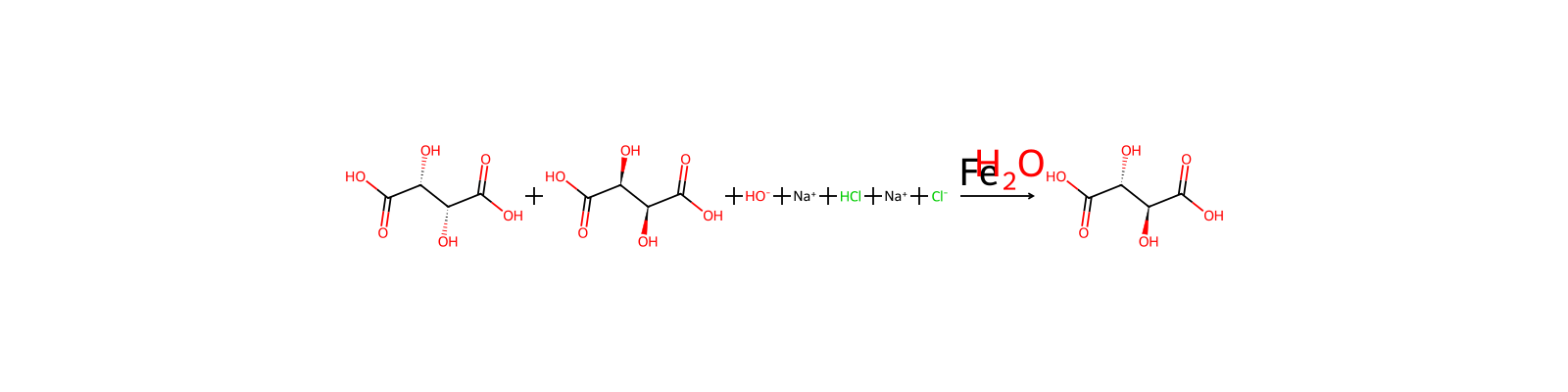
PreparationThe tartrates used in commerce are obtained as a by-product of wine manufacture and have the L(+) configuration. Produced from argols or wine lees, which are formed in the manufacture of wine by extracting the potassium acid tartrate, transforming this into the calcium salt and then acidifying with dilute sulfuric acid; also by oxidation of d-glucose with nitric acid. The dl-tartaric acid is obtained by boiling the d-tartaric acid with an aqueous solution of NaOH or by oxidation of fumaric acid. The l- and the meso-tartaric acid are also known, but are less important.
Related reactions
12 records



Compound notes
Loading…