
Basic information
- CAS
189453-10-9- Standard SMILES
C/C1=C/C[C@@H](/C(C)=C/c2csc(C)n2)OC(=O)C[C@H](O)C(C)(C)C(=O)[C@H](C)[C@@H](O)[C@@H](C)CCC1- InChIKey
XOZIUKBZLSUILX-GIQCAXHBSA-N- Molecular formula
- C27H41NO5S
- Average molar mass
- 491.7 g/mol
- Monoisotopic mass
- 491.27054441
Overview
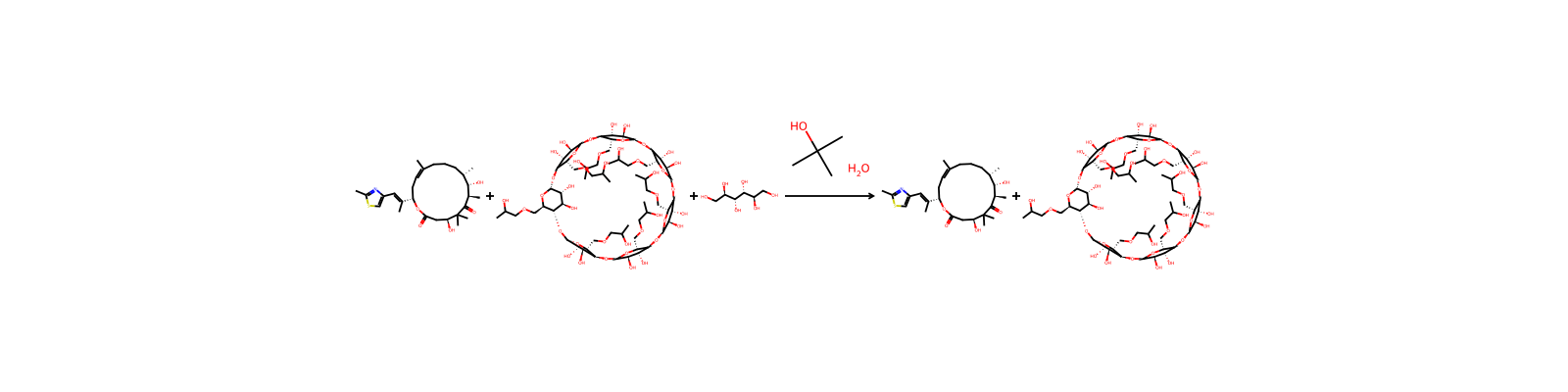
Epothilone D is an epithilone that is epithilone C in which the hydrogen at position 13 of the oxacyclohexadec-13-ene-2,6-dione macrocycle has been replaced by a methyl group. It has a role as a microtubule-stabilising agent.
Names & identifiers
- Preferred name
- Epothilone D
- IUPAC
- (4S,7R,8S,9S,13Z,16S)-4,8-dihydroxy-5,5,7,9,13-pentamethyl-16-[(E)-1-(2-methyl-1,3-thiazol-4-yl)prop-1-en-2-yl]-1-oxacyclohexadec-13-ene-2,6-dione
- English name
- Epothilone D
- Molecular formula
- C27H41NO5S
- Molecular weight
- 491.68
Names & synonyms
Epothilone D189453-10-9Desoxyepothilone b(-)-Desoxyepothilone BKOS-86212,13-Desoxyepothilone B(-)-Epothilone DEpothilon DNSC-703147KOS 86212,13-Deoxyepothilone BEpothiolone D
Show more names
Epo DCS-1161Ebomycin12,13-Deoxyepo13-Desoxyepothilone BEpothilone D (KOS-862)
DEpoB cpdNSC 703147T0358E0YUFEpothilone B, desoxy12,13-desoxyepothilone b, cisKOS862Oxacyclohexadec-13-ene-2,6-dione, 4,8-dihydroxy-5,5,7,9,13-pentamethyl-16-[(1E)-1-methyl-2-(2-methyl-4-thiazolyl)ethenyl]-, (4S,7R,8S,9S,13Z,16S)-R1492
Database identifiers
- CAS
189453-10-9- PubChem CID
- 447865
- DTXSID
DTXSID70880053- ChEMBL
CHEMBL96172- ChEBI
CHEBI:29579- UNII
- T0358E0YUF
Properties
Computed structural properties
- XLogP
- 5
- Topological polar surface area
- 125 Ų
- Hydrogen bond donors
- 2
- Hydrogen bond acceptors
- 7
- Rotatable bonds
- 2
- Heavy atoms
- 34
- Formal charge
- 0
- Complexity
- 777
Experimental & physicochemical properties
LipidsPolyketides [PK] -> Macrolides and lactone polyketides [PK04]
Physicochemical properties
- Melting point
- 63 · 63-66°C
- alpha
- 22 · D22 -61.3° (c = 2.5 in methanol)
- Boiling point
- 663.7 · 663.7±55.0 °C(Predicted)
- Density
- 1.084 · 1.084±0.06 g/cm3(Predicted)
- storage temp.
- -20 °C · -20°C Freezer
- solubility
- Soluble in DMSO
- form
- solid
- pka
- 13.47 · 13.47±0.70(Predicted)
- color
- white to off-white
- InChIKey
- XOZIUKBZLSUILX-GIQCAXHBSA-N
- SMILES
- O1[C@H](/C(/C)=C/C2=CSC(C)=N2)CC=C(C)CCC[C@H](C)[C@H](O)[C@@H](C)C(=O)C(C)(C)[C@@H](O)CC1=O |t:13|
- NCI Dictionary of Cancer Terms
- -862 · epothilone D; KOS-862
- FDA UNII
- 358 E0YUF · T0358E0YUF
- NCI Drug Dictionary
- epothilone D
Safety & regulation
Hazard information
Regulatory Information
Oxacyclohexadec-13-ene-2,6-dione, 4,8-dihydroxy-5,5,7,9,13-pentamethyl-16-(1E)-1-methyl-2-(2-methyl-4-thiazolyl)ethenyl-, (4S,7R,8S,9S,13Z,16S)-: Does not have an individual approval but may be used as a component in a product covered by a group standard. It is not approved for use as a chemical in its own right.
Chemistry & industry
Pharmacology
ATC Code
L - Antineoplastic and immunomodulating agents
QL - Antineoplastic and immunomodulating agents
Mechanism of ActionThe principal mechanism of the epothilone class is inhibition of microtubule function. Microtubules are essential to cell division, and epothilones therefore stop cells from properly dividing.
MeSH Pharmacological ClassificationAgents that interact with TUBULIN to inhibit or promote polymerization of MICROTUBULES.
Applications
DescriptionEpothilones are microtubule-stabilizing agents with potential anti-neoplastic actions. They are natural macrolides that have high potency in both taxane-sensitive and taxane-resistant models. Epothilone D is a desoxy form of epothilone B (Item No. 10924) that inhibits the growth of a variety of cancer cells both in vitro (IC50 values range from 0.97 to 21 nM) and in mice. Epothilone D is brain penetrant and reduces neurodegeneration in aged tau transgenic mice. Effects include improved axonal transport, decreased tau neuropathology, and reduced hippocampal neuron loss. Epothilone D also rescues microtubule defects and attenuates nigrostriatal degeneration in a mouse model of Parkinson’s disease.
UsesEpothilones are polyketide natural products that inhibit cancer cells by a mechanism similar to paclitaxel, and also are effective against paclitaxel-resistant tumours. Epothilone D is in phase I clinical testing of in patients with advanced solid tumours. Epothilone D is a cytotoxic macrolide that stabilises malignant cells'' microtubules and arrests mitosis, a characteristic it shares with other epothilones. They bind to the same hepatic sites as does paclitaxel (Taxol) in a 1:1 stoichiometric ratio of a, b-tubulin heterodimers.
Preparation methods
PreparationBio-fermentation method Culture medium:CNST medium: KNO3 0.05%, Na2HPO4 0.025%, MgSO4·7H2O 0.1%, FeC3 0.001%, agar 2%, trace element solution 1 mL/L, pH 7.2. Autoclaved at 1×10⁵ Pa for 20 min. M26 medium:Potato starch 8.0 g/L, soybean peptone 2.0 g/L, glucose 2.0 g/L, yeast powder 2.0 g/L, MgSO4·7H2O 1.0 g/L, CaCl2 1.0 g/L, EDTA-Fe3+ 1 mL/L, trace elements 1 mL/L, pH adjusted to 7.2 with KOH. Initial Fermentation Medium:Dextrin 0.3%, sucrose 0.07%, glucose 0.02%, soybean meal 0.17%, magnesium sulfate heptahydrate 0.17%, anhydrous calcium chloride 0.3%, EDTA-Fe3+ 2 mL/L, trace elements (TE) 0.5 mL/L, pH 7.2, resin XAD-16 2%. Autoclaved at 1×10⁵ Pa for 20 min. Cultivation Method> Seed Culture:The inoculum preserved in solid slant medium was inoculated onto CNST plates containing sterilized filter paper. The plates were inverted and cultured at 30℃ for 5-7 days. Then, the culture was transferred to M26 medium in 50 mL/250 mL Erlenmeyer flasks and cultured on a shaker at 30℃ and 170 r/min for 72 h to obtain the seed culture for fermentation. Fermentation culture:The obtained seed liquid was inoculated into the fermentation medium at an inoculation rate of 5% (V/V) and cultured on a shaker. The fermentation system consisted of 300 mL Erlenmeyer flasks containing 50 mL of liquid. The culture was carried out on a shaker at 30℃ and 170 r/min for 5 days.
Upstream & downstream products
Downstream products
Suppliers100 total
南通飞宇生物科技有限公司0513-68819626 15152877458 · [email protected]
武汉英诺医药科技有限公司+86-027-59232304 15387063101 · [email protected]
成都超九八生物科技有限公司13348960310 13348960310 · [email protected]
咸宁深蓝生物医药研发有限公司18171815831 · [email protected]
湖北科乐精细化工有限公司027-59101668 19945030958 · [email protected]
湖南瑞威尔生物科技有限公司15608648206 13297919155 · [email protected]
湖北威德利化学试剂有限公司17771473825 13385289472 · [email protected]
大连美仑生物技术有限公司0411-62910999 13889544652 · [email protected]
安耐吉化学&3A(安徽泽升科技有限公司)021-58432009 400-005-6266 · [email protected]
安耐吉化学&3A(安徽泽升科技股份有限公司)400-0056266 · [email protected]
欧利希(湖北)医药科技有限公司17316404525 17316404525 · [email protected]
杭州辅润医药科技有限公司15658004993 · [email protected]
United Life Science020-82099279 18988941402 · [email protected]
InvivoChem中国13549236410 · [email protected]
MedBio脉铂医药021-69568360 18916172912 · [email protected]
銳迪國際科技有限公司18024082417 · [email protected]
上海梅凯科技有限公司021-68689288 15300790979 · [email protected]
MedChemexpress LLC021-58955995 · [email protected]
上海尺水药物研究有限公司[email protected] 13564957716 · [email protected]
Zhejiang J&C Biological Technology Co.,Limited+1-2135480471 · [email protected]
吉林中科研伸科技有限公司18143011203 · [email protected]
ChemeGen 中国18818260767 · [email protected]
金克隆(北京)生物技术有限公司400-910-1997 15330005590 · [email protected]
天津尚德药缘科技有限公司13132578992 · [email protected]
AdooQ BioScience, LLC+1 (866) 930-6790 · [email protected]
Wuhan NCE Biomedical Co.,Ltd.4000-027-021 |24 +86-13986109188 | +86-15623472865 | +81-08033611988
深圳振强药物研发有限公司0755-66853366 13670046396 · [email protected]
Shanghai Witofly Chemical Co.,Ltd[email protected]
湖南增达生物科技有限公司18274875143 18932421294 · [email protected]
广州爱纯医药科技有限公司020-39119399 18927568969 · [email protected]
上海石洋化工有限公司021-56795766 · [email protected]
湖南华腾制药有限公司400-8592883 · [email protected]
天津普西唐生物医药科技有限公司010-60605840 · [email protected]
上海寰川实业有限公司021-61478794 · [email protected]
常州翔龙医药科技有限公司18915873328 18915873328 · [email protected]
南京百鑫德诺生物科技有限公司025-58849295 · [email protected]
山东集润生物医药科技有限公司0539-0539-8613587 17661611089 · [email protected]
青岛海智微元生物科技有限公司18317699790 18317699790 · [email protected]
凯试(上海)科技有限公司021-50135380 · [email protected]
池州凯隆进出口贸易有限公司[email protected]
上海楼岚生物科技有限公司021-52996696,15000506266 15000506266
AN PharmaTech Co Ltd86(21)68097365 · [email protected]
杭州六可生物科技有限公司+86-0571-86912261 +86-15658003402 · [email protected]
TargetMol中国(陶术生物)021-021-33632979 15002134094 · [email protected]
BOC Sciences16314854226; +8616314854226 · [email protected]
湖北威德利化学科技有限公司027-83989310 18627915365
武汉峰耀同辉化学制品有限公司027-87466205 15377579727 · [email protected]
艾吉析科技(上海)有限公司17721401538;17717235263 17721401538 · [email protected]
南通全益生物科技有限公司0513-66337626 18051384581 · [email protected]
上海阿拉丁生化科技股份有限公司6206333 13167063860 · [email protected]
Additional notes
DefinitionChEBI: An epithilone that is epithilone C in which the hydrogen at position 13 of the oxacyclohexadec-13-ene-2,6-dione macrocycle has been replaced by a methyl group.
Related reactions
23 records




Compound notes
Loading…