Basic information
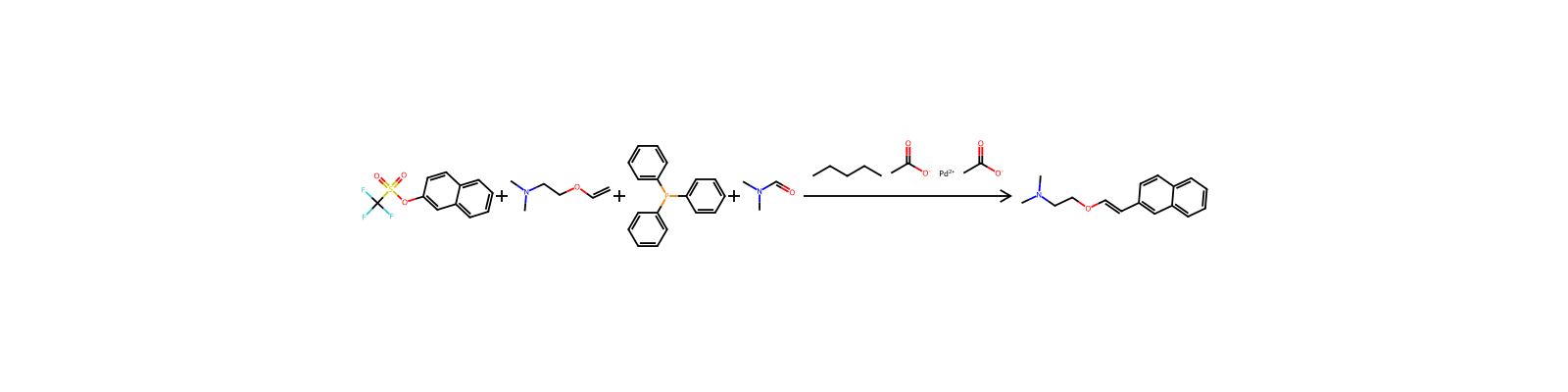
- Standard SMILES
O=S(=O)(Oc1ccc2ccccc2c1)C(F)(F)F- InChIKey
MDWRQYBWVTXIIJ-UHFFFAOYSA-N- Molecular formula
- C11H7F3O3S
- Average molar mass
- 276.23 g/mol
- Monoisotopic mass
- 276.00679974
Names & identifiers
- Preferred name
- 2-Naphthyl Trifluoromethanesulfonate
- IUPAC
- naphthalen-2-yl trifluoromethanesulfonate
- English name
- 2-Naphthyl triflate
- Molecular formula
- C11H7F3O3S
- Molecular weight
- 276.23
Names & synonyms
2-Naphthyl trifluoromethanesulfonate3857-83-8DTXSID10404111RefChem:264238DTXCID10354965624-190-5naphthalen-2-yl trifluoromethanesulfonate2-Naphthyl triflateMFCD001923412-Naphthyltriflate2-naphthyltrifluoromethanesulfonateSCHEMBL1713420
Show more names
2-Naphthol trifluoromethanesulfonate2-NaphthylTrifluoromethanesulfonate>2-(Trifluoromethylsulfonyloxy)naphthalene2-naphthyltrifluoromethylsulfonylacidesterTrifluoromethanesulfonic acid 2-naphtyl esterTrifluoromethanesulfonic acid 2-naphthalenyl esterTrifluoromethanesulfonic acid naphthalene-2-yl ester
BS-229412-Naphthyl trifluoromethanesulfonate, 97%T724092- naphthyl triflate2-naphthyltrifluoromethTrifluoromethanesulfonic Acid 2-Naphthyl EsterA873815SCHEMBL29839512
Database identifiers
- CAS
3857-83-8- PubChem CID
- 4546341
- DTXSID
DTXSID10404111- EC Number
- 624-190-5
- Nikkaji
- J376.927E
Properties
Computed structural properties
- XLogP
- 4.2
- Topological polar surface area
- 51.8 Ų
- Hydrogen bond donors
- 0
- Hydrogen bond acceptors
- 6
- Rotatable bonds
- 2
- Heavy atoms
- 18
- Formal charge
- 0
- Complexity
- 385
Physicochemical properties
- Melting point
- 30 · 30-32 °C(lit.)
- Boiling point
- 87 °C/0.2mmHg · 87°C/0.2mmHg(lit.)
- Density
- 1.493 · 1.493±0.06 g/cm3(Predicted)
- Flash point
- 230 °F · >230 °F
- storage temp.
- Sealed in dry,Room Temperature
- form
- Solid
- color
- White to orange
- InChI
- InChI=1S/C11H7F3O3S/c12-11(13,14)18(15,16)17-10-6-5-8-3-1-2-4-9(8)7-10/h1-7H
- InChIKey
- MDWRQYBWVTXIIJ-UHFFFAOYSA-N
- SMILES
- C(F)(F)(F)S(OC1=CC=C2C(=C1)C=CC=C2)(=O)=O
- UNSPSC Code
- 12352100 · 12352100
- NACRES
- 22 · NA.22
- Symbol(GHS)
- 5 · GHS05
- Signal word
- Danger
- Hazard statements
- 314 · H314-H318
- Precautionary statements
- 280 · P280-P305+P351+P338-P310-P260h-P301+P330+P331-P303+P361+P353-P405-P501a
- PPE
- 3 · Eyeshields, Faceshields, Gloves, type P3 (EN 143) respirator cartridges
- Hazard Codes
- C
- Risk Statements
- 34 · 34
- Safety Statements
- 22 · 22-26-27-36/37/39-45
- RIDADR
- 3261 · UN 3261 8/PG 2
- WGK Germany
- 3 · 3
- HazardClass
- 8 · 8
- HS Code
- 29049090 · 29049090
- Storage Class
- 8 A · 8A - Combustible corrosive hazardous materials
- Hazard Classifications
- 1 Skin · Eye Dam. 1Skin Corr. 1B
Safety & regulation
GHS classification
GHS Classification
Danger
H314 (97.5%): Causes severe skin burns and eye damage [Danger Skin corrosion/irritation]
P260, P264, P264+P265, P280, P301+P330+P331, P302+P361+P354, P304+P340, P305+P354+P338, P316, P317, P321, P363, P405, and P501 (click each P-code to see the statement)
Aggregated GHS information provided per 40 reports by companies from 2 notifications to the ECHA C&L Inventory. Each notification may be associated with multiple companies.
Hazard information
Hazard Classes and CategoriesSkin Corr. 1B (97.5%)
Safety data
- PPE
- Eyeshields, Faceshields, Gloves, type P3 (EN 143) respirator cartridges
- wgk
- 3
- ridadr
- UN 3261 8/PG 2
- hs_code
- 29049090
- risk_code
- 34
- Signal word
- Danger
- Symbol(GHS)
- GHS05
- hazard_code
- C
- safety_code
- 22-26-27-36/37/39-45
- hazard_class
- 8
- Storage Class
- 8A - Combustible corrosive hazardous materials
- Hazard statements
- H314-H318
- Hazard Classifications
- Eye Dam. 1Skin Corr. 1B
- Precautionary statements
- P280-P305+P351+P338-P310-P260h-P301+P330+P331-P303+P361+P353-P405-P501a
Chemistry & industry
Applications
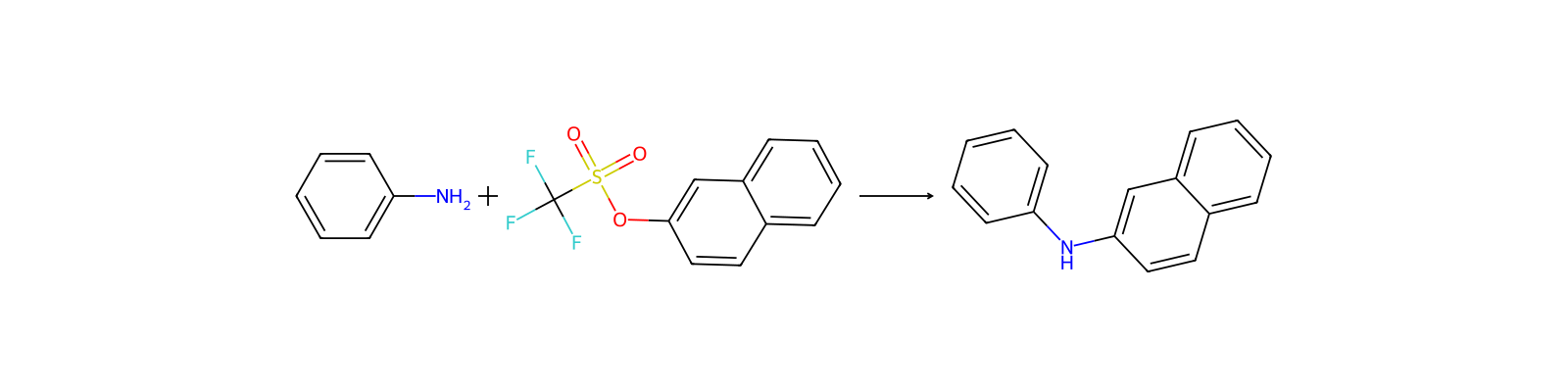
Uses2-Naphthyl trifluoromethanesulfonate (2-naphthyl triflate) may be used as an arylating agent in the arylation of 1-(methoxycarbonyl)-2,5-dihydropyrrole by Heck reaction. It may be used as a substrate for coupling with Reformatsky reagent BrZnCH(CH3)(COOtC4H9) in the presence of “reduced” dichlorobis(1,1-diphenylphosphino)ferrocene catalyst.
General Description2-Naphthyl trifluoromethanesulfonate (2-naphthyl triflate) is an aryl triflate. Its ruthenium-catalyzed conversion to 2-bromonaphthalene has been reported.
Suppliers50 total
上海康恩博医药科技有限公司17510465506 · [email protected]
梯希爱(上海)化成工业发展有限公司021-67121386 · [email protected]
北京福源坊科技有限公司010-57903446 15869909019 · [email protected]
Hebei Chuanghai Biotechnology Co., Ltd+86-17732866630 · [email protected]
常州新氟化学有限公司13275212658 · [email protected]
苏州市森菲达化工有限公司18796480002 18796480002 · [email protected]
上海仲因实业有限公司2537653158 16621191650 · [email protected]
Dayang Chem (Hangzhou) Co.,Ltd.+86-0571-88938639 17705817739 · [email protected]
毕佳索(上海毕得医药科技股份有限公司)400-6005915 · [email protected]
阿法埃莎(中国)化学有限公司400-6106006 · [email protected]
安耐吉化学&3A(安徽泽升科技股份有限公司)400-0056266 · [email protected]
Allfluoro Pharmaceutical Company Limited+86-400-0216110 +86-15958047586 · [email protected]
梯希爱(上海)化工贸易有限公司021-61109150 · [email protected]
上海瀚鸿科技股份有限公司021-54306202 13764082696 · [email protected]
常州市华阳科技有限公司+8615250961469 · [email protected]
烟台正信新材料科技有限公司13854547682 13854547682 · [email protected]
山东李比希生物医药科技有限公司15318973357; 15318973357 · [email protected]
宝鸡缔都医药化工有限公司029-81145305 17791533577 · [email protected]
天津希恩思生化科技有限公司400 638 7771 · [email protected]
北京伊诺凯科技有限公司15652467323 · [email protected]
TCI AMERICA800-4238616 · [email protected]
TOKYO CHEMICAL INDUSTRY CO., LTD.03-36680489 · [email protected]
TCI Europe320-37350700 · [email protected]
成都麦卡希化工有限公司028-85632863 18108198598 · [email protected]
PT CHEM GROUP LIMITED+86-85511178; +86-85511178 · [email protected]
上海毕得医药科技股份有限公司400-164-7117 18317119277 · [email protected]
北京福源坊科技有限公司010-57903446 15869909019 · [email protected]
上海鑫圭生物科技有限公司15121041756 · [email protected]
Sigma-Aldrich西格玛奥德里奇(上海)贸易有限公司021-61415566 800-8193336 · [email protected]
南兴化工(江苏)有限公司0512-66387035 18662433356 · [email protected]
九鼎化学(上海)科技有限公司4009209199 · [email protected]
广东翁江化学试剂有限公司0751-2886766 13927870850 · [email protected]
山东领海生物科技有限公司15092083467 · [email protected]
安阳鸿蒙新材料有限公司19588588067 · [email protected]
上海阿拉丁生化科技股份有限公司6206333 13167063860 · [email protected]
上海源叶生物科技有限公司13636370518 · [email protected]
上海麦克林生化科技股份有限公司50706066 15221275939 · [email protected]
山东西亚化学有限公司4009903999 13395398332 · [email protected]
烟台盛凯伦化学科技有限公司13356901049 · [email protected]
广州市金华大化学试剂有限公司020-84383047 · [email protected]
山东小野化学股份有限公司0539-6362799 20)
上海贤鼎生物科技有限公司021-021-52271985 17721149837 · [email protected]
合肥钼凯医药科技有限公司18130062233 · [email protected]
烟台博运生物科技有限公司13793517650 13793517650 · [email protected]
杭州洁汉化工有限公司+86-571-86217390; +8618058761490 · [email protected]
江苏艾康生物医药研发有限公司025-58859352 15955137747 · [email protected]
天津希恩思生化科技有限公司400-6387771-6039 18920764717 · [email protected]
武汉赢元贝商贸有限公司86-13349903920 13349903920 · [email protected]
career henan chemical co+86-0371-86658258 · [email protected]
TCI Chemicals (India) Pvt. Ltd.[email protected]
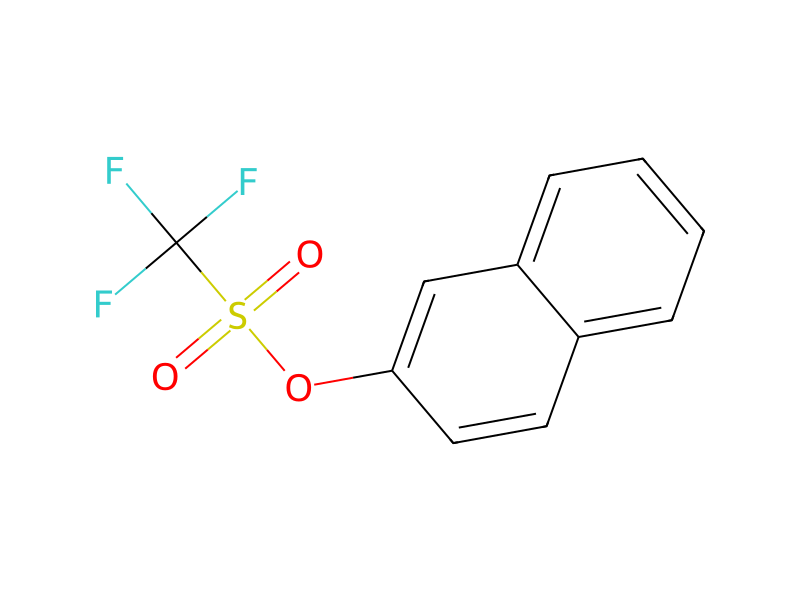
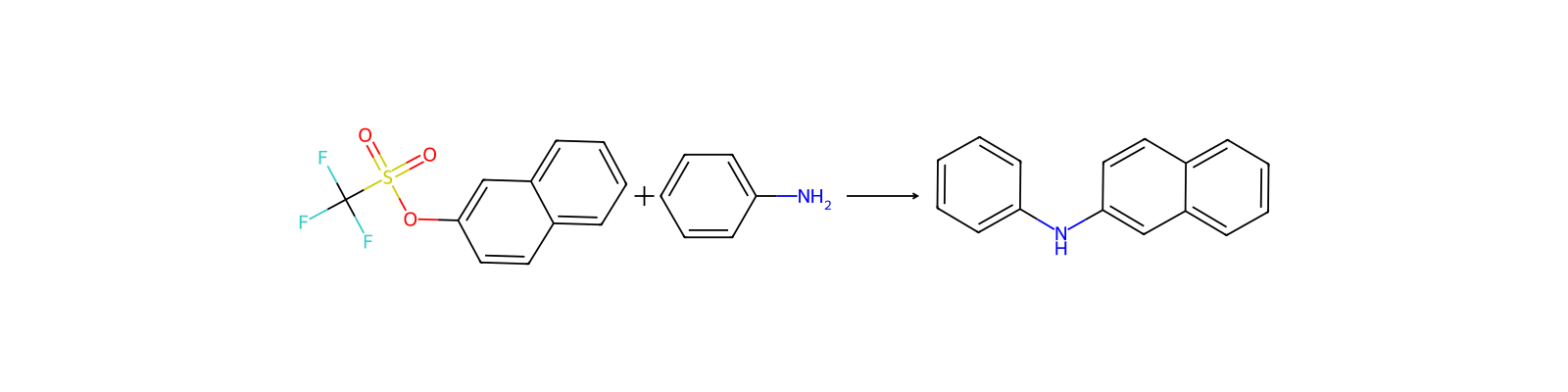
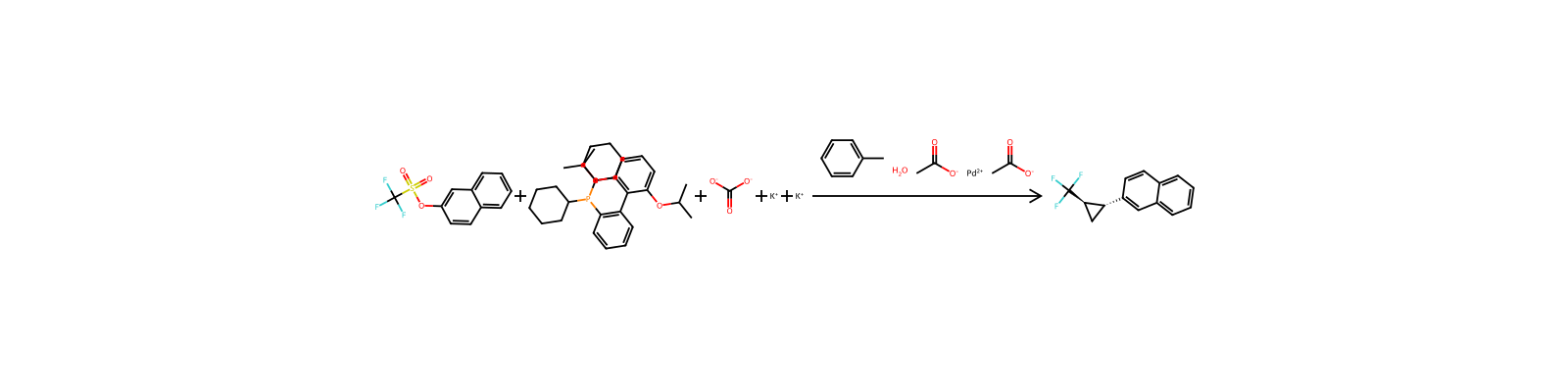
Related reactions
11 records




Linked notes
Loading…