

Basic information
- CAS
35654-56-9- Standard SMILES
COc1cc2nccc(Cl)c2cc1OC- InChIKey
WRVHQEYBCDPZEU-UHFFFAOYSA-N- Molecular formula
- C11H10ClNO2
- Average molar mass
- 223.65 g/mol
- Monoisotopic mass
- 223.04000624
Names & identifiers
- Preferred name
- 4-Chloro-6,7-dimethoxyquinoline
- IUPAC
- 4-chloro-6,7-dimethoxyquinoline
- English name
- 4-chloro-6,7-dimethoxyquinoline
- Molecular formula
- C11H10ClNO2
- Molecular weight
- 223.66
Names & synonyms
4-Chloro-6,7-dimethoxyquinoline35654-56-9DTXSID30332684RefChem:98475DTXCID20283777676-028-84-Chloro-6,7-dimethoxy-quinolineMFCD077784376,7-Dimethoxy-4-chloroquinoline4-chloro-6,7-dimethoxy quinolineQUINOLINE, 4-CHLORO-6,7-DIMETHOXY-CS-D1175
Show more names
4-Chloro-6,7-dimethoxyquioline4-CHLORO-67-DIMETHOXYQUINOLINEoro-6,7-dimethoxyquinoLCabozantinib Impurity 71Cabozantinib Chloro Analog4-Chloro-6,7-dimethoxy-quinolin
AKOS005188230PB30954C2938BCP26870A6221JPZ3QT9MF3SCHEMBL359988orb3143830
Database identifiers
- CAS
35654-56-9- PubChem CID
- 459610
- DTXSID
DTXSID30332684- UNII
- JPZ3QT9MF3
- EC Number
- 109-055-6、676-028-8
- Nikkaji
- J3.764.890F
Properties
Computed structural properties
- XLogP
- 2.8
- Topological polar surface area
- 31.4 Ų
- Hydrogen bond donors
- 0
- Hydrogen bond acceptors
- 3
- Rotatable bonds
- 2
- Heavy atoms
- 15
- Formal charge
- 0
- Complexity
- 215
Physicochemical properties
- Melting point
- 132 to · 132.0 to 136.0 °C
- Boiling point
- 325.2 · 325.2±37.0 °C(Predicted)
- Density
- 1.265 · 1.265±0.06 g/cm3(Predicted)
- storage temp.
- Keep in dark place,Sealed in dry,Room Temperature
- solubility
- DMSO (Slightly), Methanol (Slightly)
- form
- Solid
- pka
- 3.95 · 3.95±0.30(Predicted)
- color
- Pale Brown to Light Brown
- InChI
- InChI=1S/C11H10ClNO2/c1-14-10-5-7-8(12)3-4-13-9(7)6-11(10)15-2/h3-6H,1-2H3
- InChIKey
- WRVHQEYBCDPZEU-UHFFFAOYSA-N
- SMILES
- N1C2C(=CC(OC)=C(OC)C=2)C(Cl)=CC=1
- CAS DataBase Reference
- 35654 · 35654-56-9(CAS DataBase Reference)
- UNSPSC Code
- 12352200 · 12352200
- NACRES
- 21 · NA.21
- Symbol(GHS)
- 7 · GHS07
- Signal word
- Warning
- Hazard statements
- 319 · H319-H315-H335
- Precautionary statements
- 264 · P264-P280-P302+P352-P321-P332+P313-P362-P264-P280-P305+P351+P338-P337+P313P
- Hazard Codes
- T
- Risk Statements
- 25 · 25
- Safety Statements
- 45 · 45-24/25
- RIDADR
- 2811 · UN2811
- WGK Germany
- 3 · WGK 3
- HazardClass
- IRRITANT
- HS Code
- 29334900 · 29334900
- Storage Class
- 6.1 C · 6.1C - Combustible acute toxic Cat.3toxic compounds or compounds which causing chronic effects
- Hazard Classifications
- 3 Oral · Acute Tox. 3 Oral
Safety & regulation
GHS classification
GHS Classification
Warning
H315 (98%): Causes skin irritation [Warning Skin corrosion/irritation]
P261, P264, P264+P265, P271, P280, P302+P352, P304+P340, P305+P351+P338, P319, P321, P332+P317, P337+P317, P362+P364, P403+P233, P405, and P501 (click each P-code to see the statement)
Aggregated GHS information provided per 51 reports by companies from 5 notifications to the ECHA C&L Inventory. Each notification may be associated with multiple companies.
Danger
H301 (100%): Toxic if swallowed [Danger Acute toxicity, oral]
Hazard information
Hazard Classes and Categories
Skin Irrit. 2 (98%)
Acute Tox. 3 (100%)
Safety data
- wgk
- WGK 3
- ridadr
- UN2811
- hs_code
- 29334900
- risk_code
- 25
- Signal word
- Warning
- Symbol(GHS)
- GHS07
- hazard_code
- T
- safety_code
- 45-24/25
- hazard_class
- IRRITANT
- Storage Class
- 6.1C - Combustible acute toxic Cat.3toxic compounds or compounds which causing chronic effects
- Hazard statements
- H319-H315-H335
- Hazard Classifications
- Acute Tox. 3 Oral
- Precautionary statements
- P264-P280-P302+P352-P321-P332+P313-P362-P264-P280-P305+P351+P338-P337+P313P
Chemistry & industry
Applications
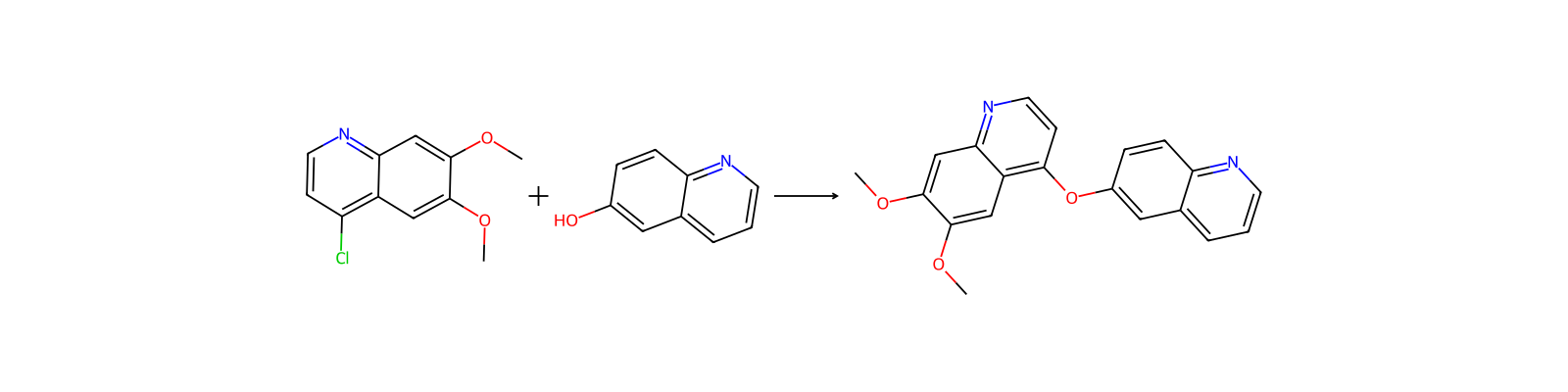
Uses4-Chloro-6,7-dimethoxyquinoline, can be used as an intermediate for the synthesis of various pharmaceutical and biologically active compounds. It is used for the preparation of Tivozanib (T447205), and Cabozantinib (C051500), acting as anticancer agents.
Upstream & downstream products
Upstream raw materials
Suppliers100 total
杭州创引化工科技有限公司0571-87086220 13516718938 · [email protected]
梯希爱(上海)化成工业发展有限公司021-67121386 · [email protected]
上海宇之诚医药科技有限公司13361818591 · [email protected]
T&W GROUP021-61551611 13296011611 · [email protected]
韶远科技(上海)有限公司021-50795510 4000665055 · [email protected]
北京华威锐科化工有限公司0757-86329057 18934348241 · [email protected]
江苏弘和药物研发有限公司5108538618 · [email protected]
安耐吉化学&3A(安徽泽升科技股份有限公司)400-0056266 · [email protected]
武汉凯威斯科技有限公司86-027-67849912 · [email protected]
上海恩诺生物科技有限公司+86 (21) 6435-5022
上海瀚鸿科技股份有限公司021-54306202 13764082696 · [email protected]
China Kouting Group Limited+86 (21) 5811-6473 5811-6475 · [email protected]
上海泰坦科技股份有限公司400-6009262 15618770481 · [email protected]
上海隆盛化工有限公司58099637 13585536065 · [email protected]
南京爱珂医药科技有限公司025-58395930 · [email protected]
上海瀚香生物科技有限公司177-54423994 17754423994 · [email protected]
北京科富瑞德科技发展有限责任公司+86-010-60279497 +86-15646567669 · [email protected]
湖南汇百侍生物科技有限公司0731-85526065 13308475853 · [email protected]
青岛凯亚隆医药科技有限公司053288191853 13061484198
上海乔木化学科技有限公司021-60451683 15021268886 · [email protected]
武汉海正工贸发展有限公司027-8866 0053/88660577/88660578
苏州岚云医药科技有限公司2332782371 · [email protected]
安徽实特医药科技有限公司086-21-50829787 13621628489 · [email protected]
天津科创医药中间体技术生产力促进有限公司022-60116533 13207668525 · [email protected]
南京精瑞久安生物技术有限公司025-58196018 800028039 · [email protected]
南京诺利斯医药科技有限公司13901585132 · [email protected]
上海健超生物科技有限公司150-2103-5486 18017383231 · [email protected]
信实生物医药(上海)有限公司+86-021-50720296 · [email protected]
TCI AMERICA800-4238616 · [email protected]
TOKYO CHEMICAL INDUSTRY CO., LTD.03-36680489 · [email protected]
TCI Europe320-37350700 · [email protected]
卡迪亚医药科技有限公司0371-86615086 18203638366 0371-86159066 13526786601
深圳振强药物研发有限公司0755-66853366 13670046396 · [email protected]
上海仁曲医药科技有限公司18171398856 2968382473 · [email protected]
上海偕腾生物科技有限公司+86-021-58975553 · [email protected]
随州市红旗化工有限公司0722-3257376 13026100080;13235518175 · [email protected]
深圳康特腾科技有限公司86-0755-86635001 · [email protected]
上海睿升化工科技有限公司+86-021-50935922
湖北鑫源顺医药化工有限公司13971561712, 13995564702, 027-50664929 · [email protected]
上海将来实业股份有限公司400-0066400 13621662912 · [email protected]
苏州月朗星稀化学有限公司0512-62857507 · [email protected]
上海毕得医药科技股份有限公司400-164-7117 18317119277 · [email protected]
重庆普瑞生物医药科技有限公司023-89130144 18523560356 · [email protected]
上海石洋化工有限公司021-56795766 · [email protected]
雷丁试剂0510-85629785 18013409632 · [email protected]
嘉兴诺华化工有限公司18957373295
上海御略医药科技有限公司021-60345187 13671753212 · [email protected]
上海安奕康生物科技有限公司021-021-20956531 15121039011 · [email protected]
上海寰川实业有限公司021-61478794 · [email protected]
江苏艾康生物医药研发有限公司025-66028182 17714375163 · [email protected]
Related reactions
499 records






Compound notes
Loading…