
Oxatomide

Basic information
- CAS
60607-34-3- Standard SMILES
O=c1[nH]c2ccccc2n1CCCN1CCN(C(c2ccccc2)c2ccccc2)CC1- InChIKey
BAINIUMDFURPJM-UHFFFAOYSA-N- Molecular formula
- C27H30N4O
- Average molar mass
- 426.6 g/mol
- Monoisotopic mass
- 426.24196158
Overview
Oxatomide is a member of the class of benzimidazoles that is 1,3-dihydro-2H-benzimidazol-2-one substituted by a 3-[4-(diphenylmethyl)piperazin-1-yl]propyl group at position 1. It is an anti-allergic drug. It has a role as a geroprotector, a H1-receptor antagonist, a serotonergic antagonist, an anti-allergic agent and an anti-inflammatory agent. It is a member of benzimidazoles, a N-alkylpiperazine and a diarylmethane.
Names & identifiers
- Preferred name
- Oxatomide
- IUPAC
- 3-[3-(4-benzhydrylpiperazin-1-yl)propyl]-1H-benzimidazol-2-one
- English name
- Oxatomide
- Molecular formula
- C27H30N4O
- Molecular weight
- 426.55
Names & synonyms
oxatomide60607-34-3TinsetCeltectOxatimideOxatomidaOxatomidumKW-4354CobionaDastenR-35443DTXSID4045181
Show more names
TinseTruxar35443CenacertFensedyl
1-[3-[4-(Diphenylmethyl)-1-piperazinyl]propyl]-1,3-dihydro-2H-benzimidazol-2-oneR 35,443J31IL9Z2EENSC-309710CHEBI:319431-(3-(4-(Diphenylmethyl)-1-piperazinyl)propyl)-1,3-dihydro-2H-benzimidazol-2-one1-(3-(4-(Diphenylmethyl)-1-piperazinyl)propyl)-2-benzimidazolinone2H-Benzimidazol-2-one, 1-(3-(4-(diphenylmethyl)-1-piperazinyl)propyl)-1,3-dihydro-
Database identifiers
- CAS
60607-34-3- PubChem CID
- 4615
- DTXSID
DTXSID4045181- ChEMBL
CHEMBL13828- ChEBI
CHEBI:31943- UNII
- J31IL9Z2EE
- EC Number
- 262-320-9
- Nikkaji
- J18.379B
Properties
Computed structural properties
- XLogP
- 4.1
- Topological polar surface area
- 38.8 Ų
- Hydrogen bond donors
- 1
- Hydrogen bond acceptors
- 3
- Rotatable bonds
- 7
- Heavy atoms
- 32
- Formal charge
- 0
- Complexity
- 574
Experimental & physicochemical properties
DrugsPharmaceuticals -> Listed in ZINC15
LogP2.73
Physicochemical properties
- Melting point
- 153.6 C · 153.60C
- Boiling point
- 541.98 °C · 541.98°C (rough estimate)
- Density
- 1.1239 · 1.1239 (rough estimate)
- refractive index
- 1.6 · 1.6000 (estimate)
- storage temp.
- Refrigerator
- solubility
- DMSO: soluble
- form
- White solid.
- pka
- 12.2 · 12.20±0.30(Predicted)
- color
- white
- InChI
- 1S/C27H30N4O/c32-27-28-24-14-7-8-15-25(24)31(27)17-9-16-29-18-20-30(21-19-29)26(22-10-3-1-4-11-22)23-12-5-2-6-13-23/h1-8,10-15,26H,9,16-21H2,(H,28,32)
- InChIKey
- BAINIUMDFURPJM-UHFFFAOYSA-N
Safety & regulation
Safety information is for reference only and does not replace the supplier’s Safety Data Sheet (SDS), applicable regulations, or professional assessment.
GHS classification
GHS Classification
Warning
H302 (100%): Harmful if swallowed [Warning Acute toxicity, oral]
P264, P270, P301+P317, P330, and P501 (click each P-code to see the statement)
Aggregated GHS information provided per 46 reports by companies from 1 notifications to the ECHA C&L Inventory.
Hazard information
Other Safety InformationIMAP assessments - 2H-Benzimidazol-2-one, 1-[3-[4-(diphenylmethyl)-1-piperazinyl]propyl]-1,3-dihydro-: Environment tier I assessment
Hazard Classes and CategoriesAcute Tox. 4 (100%)
Toxicology
Drug Induced Liver Injury
Drug-Induced Liver Injury Severity and Toxicity (DILIst)
Oxatomide
DILI Positive
DOI:10.1016/j.drudis.2019.09.022
Safety data
- PPE
- dust mask type N95 (US), Eyeshields, Gloves
- wgk
- 3
- rtecs
- DE2276000
- Toxicity
- LD50 in guinea pigs, mice, rats (mg/kg): 320, >2560, >2560 orally; 23, 27, 30 i.v. (Richards)
- risk_code
- 22-36/37/38
- Signal word
- Warning
- Symbol(GHS)
- GHS07
- hazard_code
- Xn,Xi
Chemistry & industry
Pharmacology
ATC Code
R - Respiratory system
QR - Respiratory system
MeSH Pharmacological Classification
Drugs that selectively bind to but do not activate histamine H1 receptors, thereby blocking the actions of endogenous histamine. Included here are the classical antihistaminics that antagonize or prevent the action of histamine mainly in immediate hypersensitivity. They act in the bronchi, capillaries, and some other smooth muscles, and are used to prevent or allay motion sickness, seasonal rhinitis, and allergic dermatitis and to induce somnolence. The effects of blocking central nervous system H1 receptors are not as well understood.
Agents that are used to treat allergic reactions. Most of these drugs act by preventing the release of inflammatory mediators or inhibiting the actions of released mediators on their target cells. (From AMA Drug Evaluations Annual, 1994, p475)
Drugs that are used to treat asthma.
Metabolite PathwaysOxatomide H1-Antihistamine Action
Applications
UsesOrally active anti-allergic agent; related structurally to cinnarizine and having a novel biphasic mode of action.
UsesInhibits the release and actions of leukotrienes
Upstream & downstream products
Upstream raw materials
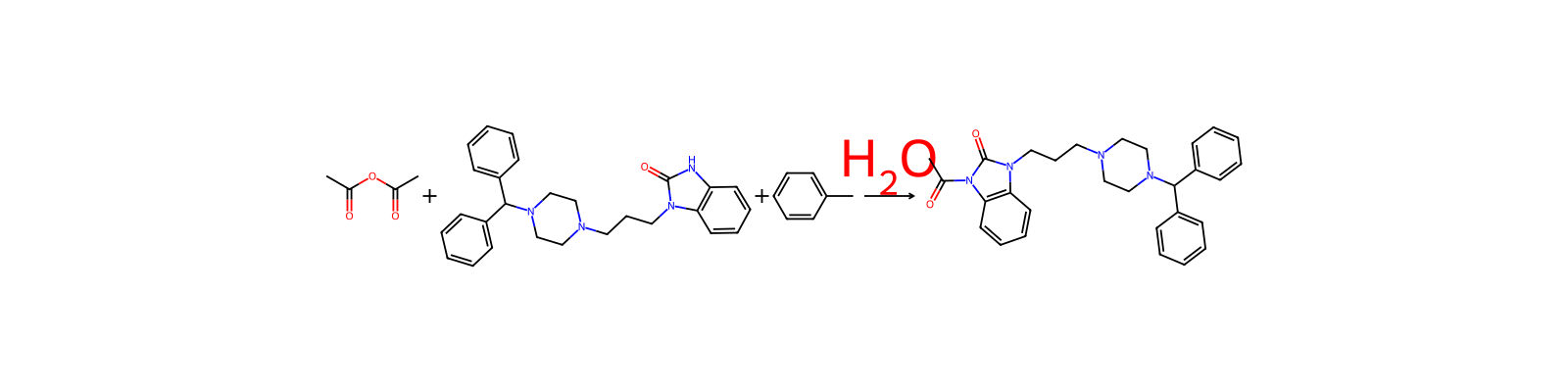
Related reactions
22 records




Compound notes
Loading…