

Basic information
- Standard SMILES
C#CCN(C)Cc1ccccc1- InChIKey
DPWPWRLQFGFJFI-UHFFFAOYSA-N- Molecular formula
- C11H13N
- Average molar mass
- 159.23 g/mol
- Monoisotopic mass
- 159.10479942
Overview
Pargyline is an aromatic amine.
Names & identifiers
- Preferred name
- Pargyline
- IUPAC
- N-benzyl-N-methylprop-2-yn-1-amine
- English name
- Pargyline
- Molecular formula
- C11H13N
- Molecular weight
- 159.23
Names & synonyms
pargyline555-57-7N-Methyl-N-propargylbenzylaminePargylamineEudatinParagylineSupirdylN-Methyl-N-2-propynylbenzylaminePargilinaPargylinumBenzenemethanamine, N-methyl-N-2-propynyl-benzyl(methyl)(prop-2-yn-1-yl)amine
Show more names
MO 911A 19120EutonylPargylin
9MV14S8G3EDTXSID3023423Hydrochloride, PargylineRefChem:65904DTXCID903423C02KC01209-101-6N-benzyl-N-methylprop-2-yn-1-amine
Database identifiers
- CAS
555-57-7- PubChem CID
- 4688
- DTXSID
DTXSID3023423- ChEMBL
CHEMBL673- ChEBI
CHEBI:7930- UNII
- 9MV14S8G3E
- EC Number
- 209-101-6
- Nikkaji
- J6.471H
Properties
Computed structural properties
- XLogP
- 2.1
- Topological polar surface area
- 3.2 Ų
- Hydrogen bond donors
- 0
- Hydrogen bond acceptors
- 1
- Rotatable bonds
- 3
- Heavy atoms
- 12
- Formal charge
- 0
- Complexity
- 159
Experimental & physicochemical properties
DrugsPharmaceuticals -> Listed in ZINC15
Solubility9.98e-02 g/L
Physical DescriptionSolid
Collision Cross Section133.56 Ų [M+H]+ [CCS Type: TW; Method: calibrated with polyalanine and drug standards]
Physicochemical properties
- Melting point
- 15 · 15-20 °C
- Boiling point
- 86 · 86-88 °C4 mm Hg(lit.)
- Density
- 0.944 g/mL · 0.944 g/mL at 25 °C(lit.)
- refractive index
- 20 · n20/D 1.522(lit.)
- Flash point
- 183 °F · 183 °F
- storage temp.
- -20 °C · Store at -20°C
- solubility
- Soluble in DMSO
- form
- Liquid
- pka
- 6.9 · pKa 6.9 (Uncertain)
- color
- Clear yellow
- Merck
- 14 · 14,7038
- InChI
- 1S/C11H13N/c1-3-9-12(2)10-11-7-5-4-6-8-11/h1,4-8H,9-10H2,2H3
- InChIKey
- DPWPWRLQFGFJFI-UHFFFAOYSA-N
- SMILES
- CN(CC#C)Cc1ccccc1
- EWG's Food Scores
- 1 · 1
- FDA UNII
- 9 MV14S8G3E · 9MV14S8G3E
- ATC code
- 2 KC01 · C02KC01
- UNSPSC Code
- 12352100 · 12352100
- NACRES
- 22 · NA.22
- Symbol(GHS)
- 6 · GHS06
- Signal word
- Danger
- Hazard statements
- 301 · H301+H311+H331-H315-H319-H335
- Precautionary statements
- 261 · P261-P280-P301+P310-P302+P352+P312-P304+P340+P311-P305+P351+P338
- target organs
- Respiratory system
- PPE
- Eyeshields, Faceshields, Gloves, type ABEK (EN14387) respirator filter
- Hazard Codes
- T
- Risk Statements
- 23 · 23/24/25-36/37/38-22
- Safety Statements
- 26 · 26-36/37/39-45-23
- RIDADR
- 2810 · UN 2810 6.1/PG 3
- WGK Germany
- 3 · 3
- RTECS
- 6475000 · DP6475000
- HazardClass
- 6.1 · 6.1(b)
- PackingGroup
- III
- HS Code
- 29214900 · 29214900
- Storage Class
- 6.1 C · 6.1C - Combustible acute toxic Cat.3toxic compounds or compounds which causing chronic effects
- Hazard Classifications
- 3 OralEye · Acute Tox. 3 OralEye Irrit. 2Skin Irrit. 2STOT SE 3
Safety & regulation
GHS classification
GHS Classification
Danger
H301 (100%): Toxic if swallowed [Danger Acute toxicity, oral]
P261, P262, P264, P264+P265, P270, P271, P280, P301+P316, P302+P352, P304+P340, P305+P351+P338, P316, P319, P321, P330, P332+P317, P337+P317, P361+P364, P362+P364, P403+P233, P405, and P501 (click each P-code to see the statement)
Aggregated GHS information provided per 41 reports by companies from 4 notifications to the ECHA C&L Inventory. Each notification may be associated with multiple companies.
Hazard information
Hazard Classes and CategoriesAcute Tox. 3 (100%)
Toxicology
Drug Induced Liver Injury
Drug-Induced Liver Injury Severity and Toxicity (DILIst)
pargyline
DILI Negative
DOI:10.1016/j.drudis.2019.09.022
Safety data
- PPE
- Eyeshields, Faceshields, Gloves, type ABEK (EN14387) respirator filter
- wgk
- 3
- rtecs
- DP6475000
- ridadr
- UN 2810 6.1/PG 3
- hs_code
- 29214900
- risk_code
- 23/24/25-36/37/38-22
- Signal word
- Danger
- Symbol(GHS)
- GHS06
- hazard_code
- T
- safety_code
- 26-36/37/39-45-23
- hazard_class
- 6.1(b)
- Storage Class
- 6.1C - Combustible acute toxic Cat.3toxic compounds or compounds which causing chronic effects
- packing_group
- III
- target organs
- Respiratory system
- Hazard statements
- H301+H311+H331-H315-H319-H335
- Hazard Classifications
- Acute Tox. 3 OralEye Irrit. 2Skin Irrit. 2STOT SE 3
- Precautionary statements
- P261-P280-P301+P310-P302+P352+P312-P304+P340+P311-P305+P351+P338
Chemistry & industry
Pharmacology
ATC Code
C - Cardiovascular system
QC - Cardiovascular system
Pharmacodynamics
Pargyline is a monoamine oxidase B (MAO-B) inhibitor with antihypertensive properties. Patients taking pargyline must avoid concurrent consumption of tyramine-containing foods such as bleu cheese and beer, as this can lead to a hypertensive crisis.
Mechanism of Action
MAOIs act by inhibiting the activity of monoamine oxidase, thus preventing the breakdown of monoamine neurotransmitters and thereby increasing their availability. There are two isoforms of monoamine oxidase, MAO-A and MAO-B. MAO-A preferentially deaminates serotonin, melatonin, epinephrine and norepinephrine. MAO-B preferentially deaminates phenylethylamine and trace amines. Pargyline functions by inhibiting the metabolism of catecholamines and tyramine within presynaptic nerve terminals. Catecholamines cause general physiological changes that prepare the body for physical activity (fight-or-flight response). Some typical effects are increases in heart rate, blood pressure, blood glucose levels, and a general reaction of the sympathetic nervous system.
MeSH Pharmacological Classification
Drugs used in the treatment of acute or chronic vascular HYPERTENSION regardless of pharmacological mechanism. Among the antihypertensive agents are DIURETICS; (especially DIURETICS, THIAZIDE); ADRENERGIC BETA-ANTAGONISTS; ADRENERGIC ALPHA-ANTAGONISTS; ANGIOTENSIN-CONVERTING ENZYME INHIBITORS; CALCIUM CHANNEL BLOCKERS; GANGLIONIC BLOCKERS; and VASODILATOR AGENTS.
A chemically heterogeneous group of drugs that have in common the ability to block oxidative deamination of naturally occurring monoamines. (From Gilman, et al., Goodman and Gilman's The Pharmacological Basis of Therapeutics, 8th ed, p414)
Cellular LocationsCytoplasm
Uses & manufacturing
Use ClassificationPharmaceuticals -> Nervous System -> Analgesics
Applications
Usesanalgesic
Upstream & downstream products
Upstream raw materials
Suppliers50 total
郑州阿尔法化工有限公司+86-18530059196 · [email protected]
湖北威德利化学试剂有限公司181-6332-1995 18062128043 · [email protected]
上海腾准生物科技有限公司19821570922 · [email protected]
上海毕得医药科技股份有限公司400-1647117 13681763483 · [email protected]
郑州鸿晟医药科技有限公司0371-55695890 15637198702 · [email protected]
Syntechem Co.,Ltd[email protected]
上海迈瑞尔生化科技有限公司4006356688 18621169109 · [email protected]
北京索莱宝科技有限公司010-50973130 17801761073 · [email protected]
湖北威德利化学试剂有限公司17771473825 13385289472 · [email protected]
上海颖心实验室设备有限公司021-59178156 17002132182 · [email protected]
Hangzhou Sage Chemical Co., Ltd.+86057186818502 13588463833 · [email protected]
安耐吉化学&3A(安徽泽升科技有限公司)021-58432009 400-005-6266 · [email protected]
銳迪國際科技有限公司18024082417 · [email protected]
MedChemexpress LLC021-58955995 · [email protected]
湖北广奥生物科技有限公司027-02702759223056 18162699093 · [email protected]
天津狄克特科技有限公司22-58627059 13920586291 · [email protected]
BOC Sciences1-631-485-4226; 16314854226 · [email protected]
湖北扬信医药科技有限公司0714-3999001 19171453112 · [email protected]
ChemeGen 中国18818260767 · [email protected]
玛雅试剂+86 (573) 82222445 (0)18006601000 452520369 · [email protected]
赛默飞世尔科技(中国)有限公司800-810-5118 · [email protected]
TCI AMERICA800-4238616 · [email protected]
TOKYO CHEMICAL INDUSTRY CO., LTD.03-36680489 · [email protected]
TCI Europe320-37350700 · [email protected]
成都麦卡希化工有限公司028-85632863 18108198598 · [email protected]
上海喀露蓝科技有限公司18149758185 18149758185 · [email protected]
上海毕得医药科技股份有限公司400-164-7117 18317119277 · [email protected]
天津普西唐生物医药科技有限公司010-60605840 · [email protected]
上海麦克林生化科技股份有限公司15221275939 15221275939 · [email protected]
Sigma-Aldrich西格玛奥德里奇(上海)贸易有限公司021-61415566 800-8193336 · [email protected]
上海陶术生物科技股份有限公司+1-781-999-5354; +1-00000000000 · [email protected]
九鼎化学(上海)科技有限公司4009209199 · [email protected]
无锡敏华生物医药科技有限公司0510-0510-66903969 13961776301 · [email protected]
湖北魏氏化学试剂股份有限公司13125137732 18686406941
上海阿拉丁生化科技股份有限公司6206333 13167063860 · [email protected]
陕西缔都医药化工有限公司029-029-81120477 17792793610 · [email protected]
风咏生物(AbMole)021-10000000 13000000000 · [email protected]
上海珞珐生化科技有限公司021-51111890 15317326293 · [email protected]
陕西缔都医药化工有限公司+86-29-81139210 +86-17392587031 · [email protected]
上海源叶生物科技有限公司13636370518 · [email protected]
上海陶术生物科技股份有限公司13564774135 · [email protected]
湖北威德利化学试剂有限公司15871722230 · [email protected]
湖北威德利化学试剂有限公司13429867250 13429867250
威尔曼医药集团有限公司15807197853 18971451745 · [email protected]
杭州洁汉化工有限公司+86-571-86217390; +8618058761490 · [email protected]
Musechem+1-800-259-7612 · [email protected]
江苏艾康生物医药研发有限公司025-58851090 13913916777 · [email protected]
梯希爱(上海)化成工业发展有限公司021-67121386, 800-988-0390 · [email protected]
TCI Chemicals (India) Pvt. Ltd.[email protected]
Aladdin Scientific[email protected]
Additional notes
DefinitionChEBI: Pargyline is an aromatic amine.
Related reactions
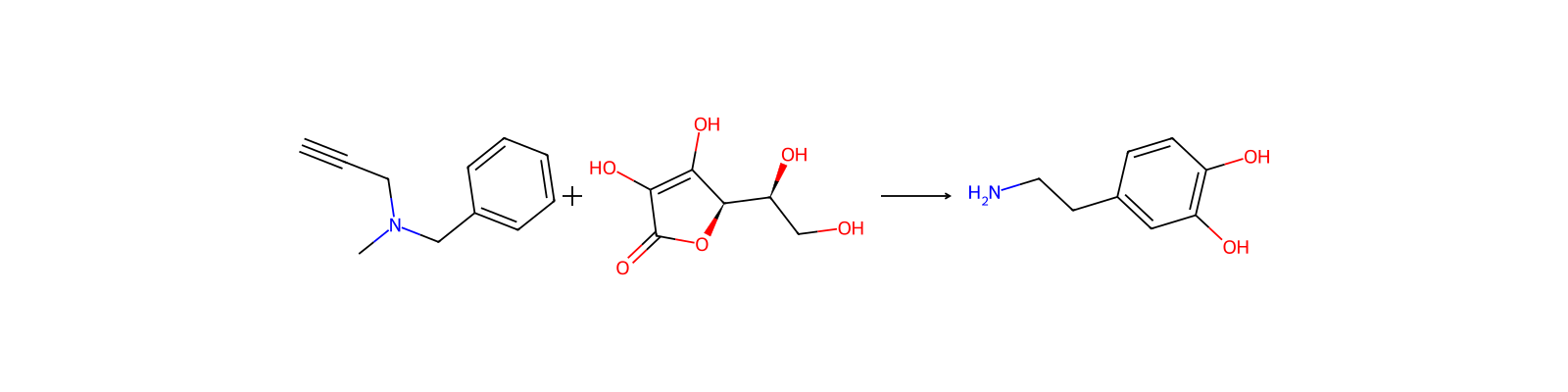
22 records




Linked notes
Loading…