

Basic information
- CAS
23288-49-5- Standard SMILES
CC(C)(Sc1cc(C(C)(C)C)c(O)c(C(C)(C)C)c1)Sc1cc(C(C)(C)C)c(O)c(C(C)(C)C)c1- InChIKey
FYPMFJGVHOHGLL-UHFFFAOYSA-N- Molecular formula
- C31H48O2S2
- Average molar mass
- 516.8 g/mol
- Monoisotopic mass
- 516.30957278
Overview
Probucol is a dithioketal that is propane-2,2-dithiol in which the hydrogens attached to both sulfur atoms are replaced by 3,5-di-tert-butyl-4-hydroxyphenyl groups. An anticholesteremic drug with antioxidant and anti-inflammatory properties, it is used to treat high levels of cholesterol in blood. It has a role as an antioxidant, an anti-inflammatory drug, a cardiovascular drug, an antilipemic drug and an anticholesteremic drug. It is a polyphenol and a dithioketal.
Names & identifiers
- Preferred name
- Probucol
- IUPAC
- 2,6-ditert-butyl-4-[2-(3,5-ditert-butyl-4-hydroxyphenyl)sulfanylpropan-2-ylsulfanyl]phenol
- English name
- Probucol
- Molecular formula
- C31H48O2S2
- Molecular weight
- 516.84
Names & synonyms
probucol23288-49-5LorelcoBiphenabidBisphenabidBisbidLurselleDH-581SinlestalProbucolumDH 581Acetone bis(3,5-di-tert-butyl-4-hydroxyphenyl) mercaptole
Show more names
Probucol-d6LorelcLipoMalProbuco.PHENBUTOL
4,4'-(Isopropylidenedithio)bis(2,6-di-tert-butylphenol)DTXSID20454402,6-ditert-butyl-4-[2-(3,5-ditert-butyl-4-hydroxyphenyl)sulfanylpropan-2-ylsulfanyl]phenolDH581P3CTH044XJNSC-86225Phenol, 4,4'-[(1-methylethylidene)bis(thio)]bis[2,6-bis(1,1-dimethylethyl)-NSC-652160
Database identifiers
- CAS
23288-49-5- PubChem CID
- 4912
- DTXSID
DTXSID2045440- ChEMBL
CHEMBL608- ChEBI
CHEBI:8427- UNII
- P3CTH044XJ
- EC Number
- 245-560-9
- Nikkaji
- J20.410B
Properties
Computed structural properties
- XLogP
- 11.3
- Topological polar surface area
- 91.1 Ų
- Hydrogen bond donors
- 2
- Hydrogen bond acceptors
- 4
- Rotatable bonds
- 8
- Heavy atoms
- 35
- Formal charge
- 0
- Complexity
- 583
Experimental & physicochemical properties
Drugs
Pharmaceuticals -> Listed in ZINC15
Pharmaceuticals -> Antilipidemics
Solubility4.18e-05 g/L
Human Drugs
FDA approved drugs -> Active ingredient
FDA approved drugs -> Active ingredient
Endocrine DisruptorsPotential endocrine disrupting compound
Melting Point125 °C
Physical DescriptionSolid
Collision Cross Section216.78 Ų [M+K]+ [CCS Type: TW; Method: calibrated with polyalanine and drug standards]
Physicochemical properties
- Melting point
- 126 · 126-128°C
- Boiling point
- 571.58 °C · 571.58°C (rough estimate)
- Density
- 1.0008 · 1.0008 (rough estimate)
- refractive index
- 1.5341 · 1.5341 (estimate)
- storage temp.
- Keep in dark place,Sealed in dry,Room Temperature
- solubility
- Chloroform (Slightly), Ethyl Acetate (Slightly)
- form
- Solid
- pka
- 10.27 · 10.27±0.70(Predicted)
- color
- White to Off-White
- Merck
- 14 · 14,7755
- Major Application
- forensics and toxicologypharmaceutical (small molecule)
- InChI
- InChI=1S/C31H48O2S2/c1-27(2,3)21-15-19(16-22(25(21)32)28(4,5)6)34-31(13,14)35-20-17-23(29(7,8)9)26(33)24(18-20)30(10,11)12/h15-18,32-33H,1-14H3
- InChIKey
- FYPMFJGVHOHGLL-UHFFFAOYSA-N
- SMILES
- C(SC1=CC(C(C)(C)C)=C(O)C(C(C)(C)C)=C1)(SC1=CC(C(C)(C)C)=C(O)C(C(C)(C)C)=C1)(C)C
- CAS DataBase Reference
- 23288 · 23288-49-5(CAS DataBase Reference)
- FDA UNII
- 3 CTH044XJ · P3CTH044XJ
- ATC code
- 10 AX02 · C10AX02
- UNSPSC Code
- 41116107 · 41116107
- NACRES
- 24 · NA.24
- Symbol(GHS)
- 7 · GHS07
- Signal word
- Warning
- Hazard statements
- 302 · H302
- Precautionary statements
- 280 · P280-P305+P351+P338
- PPE
- 95 · Eyeshields, Gloves, type N95 (US)
- WGK Germany
- 2 · 2
- RTECS
- 3705000 · AL3705000
- HS Code
- 2930902000 · 2930902000
- Storage Class
- 11 · 11 - Combustible Solids
Safety & regulation
GHS classification
GHS Classification
Warning
H315 (100%): Causes skin irritation [Warning Skin corrosion/irritation]
P261, P264, P264+P265, P271, P280, P302+P352, P304+P340, P305+P351+P338, P319, P321, P332+P317, P337+P317, P362+P364, P403+P233, P405, and P501 (click each P-code to see the statement)
The GHS information provided by 1 company from 1 notification to the ECHA C&L Inventory.
Hazard information
Other Safety InformationIMAP assessments - Phenol, 4,4'-[(1-methylethylidene)bis(thio)]bis[2,6-bis(1,1-dimethylethyl)-: Environment tier I assessment
Hazard Classes and CategoriesSkin Irrit. 2 (100%)
Toxicology
Drug Induced Liver Injury
Drug-Induced Liver Injury Severity and Toxicity (DILIst)
probucol
DILI Negative
Oral
DOI:10.1016/j.drudis.2019.09.022
Safety data
- PPE
- Eyeshields, Gloves, type N95 (US)
- wgk
- 2
- rtecs
- AL3705000
- hs_code
- 2930902000
- Signal word
- Warning
- Symbol(GHS)
- GHS07
- Storage Class
- 11 - Combustible Solids
- Hazard statements
- H302
- Precautionary statements
- P280-P305+P351+P338
Chemistry & industry
Pharmacology
ATC Code
C - Cardiovascular system
QC - Cardiovascular system
Pharmacodynamics
Probucol lowers cholesterol levels by increasing LDL (low-density lipoprotein) breakdown. Additionally, probucol may inhibit cholesterol synthesis and delay cholesterol absorption. Probucol is a powerful antioxidant drug normally used to prevent vascular disease caused by the free radicals in the body.
Mechanism of Action
Probucol lowers serum cholesterol by increasing the fractional rate of low-density lipoprotein (LDL) catabolism in the final metabolic pathway for cholesterol elimination from the body. This drug may also act to inhibit the initial stages of cholesterol synthesis and act to inhibit the absorption of cholesterol from the diet. Recent information suggests that probucol may inhibit the oxidation and tissue deposition of LDL cholesterol, thereby inhibiting atherogenesis. It appears to inhibits ABCA1-mediated cellular lipid efflux.
Biological Half-LifeRanges from 12 hours to more than 500 hours, the longest half-life probably being in adipose tissue.
MeSH Pharmacological Classification
Substances used to lower plasma CHOLESTEROL levels.
Naturally occurring or synthetic substances that inhibit or retard oxidation reactions. They counteract the damaging effects of oxidation in animal tissues.
Absorption, Distribution and ExcretionAbsorption from the gastrointestinal tract is limited and variable (about 7%).
Cellular LocationsCytoplasm
Applications
DescriptionProbucol is a kind of bis-phenol antioxidant with anti-hyperlipidemic activity. It had been initially developed for the treatment of coronary artery disease. However, its clinical trials were stopped after people found that it could lower the HDL and LDL cholesterol in patients of a history of heart disease. Probucol exerts its effect through accelerating the fractional rate of low-density (LDL) catabolism which is in the final pathway of cholesterol elimination inside the body. It may also inhibit the early stage of cholesterol biosynthesis and dietary cholesterol absorption.
Usesantihyperlipidemic
UsesProbucol is an antilipemic.
Usesanti-hyperlipoproteinemic
UsesAn antioxidant, anti-inflammatory, and hypocholesterolemic agent which inhibits atherogenesis in murine models.
General DescriptionProbucol, 4,4' -[(1-methylethylidene)bis(thio)]bis[2,6-bis(1,1-dimethylethyl)phenol], DH-581(Lorelco), is a chemical agent that was developed for the plasticsand rubber industry in the 1960s. The probucol moleculehas two tertiary butylphenol groups linked by a dithiopropylidenebridge, giving it a high lipophilic character with strongantioxidant properties. In humans, it causes reduction of bothliver and serum cholesterol levels, but it does not alter plasmatriglycerides. It reduces LDL and (to a lesser extent) HDLlevels by a unique mechanism that is still not clearly delineated.The reduction of HDL may be caused by the ability ofprobucol to inhibit the synthesis of apoprotein A-1, a majorprotein component of HDL. It is effective at reducing levelsof LDL and is used in hyperlipoproteinemias characterized byelevated LDL levels.
Upstream & downstream products
Upstream raw materials
Suppliers100 total
国药集团化学试剂有限公司86-21-63210123 · [email protected]
梯希爱(上海)化成工业发展有限公司021-67121386 · [email protected]
上海阿拉丁生化科技股份有限公司400-6206333 13167063860 · [email protected]
成都彼样生物科技有限公司18108052721 · [email protected]
合肥翰刚医药科技有限公司+8618062405514 · [email protected]
湖北金梭生物科技有限公司00123456789 · [email protected]
湖北海克斯生化有限公司18696113233
重庆康洲智通医药科技有限公司173-08362167 17308362167 · [email protected]
LGM Pharma1-(800)-881-8210 · [email protected]
上海迈瑞尔生化科技有限公司4006356688 18621169109 · [email protected]
武汉易泰科技有限公司上海分公司18930552037 · [email protected]
大连美仑生物技术有限公司0411-62910999 13889544652 · [email protected]
上海相辉医药科技有限公司13761987713 · [email protected]
嘉兴市艾森化工有限公司0573-85285100 18627885956 · [email protected]
Pure Chemistry Scientific Inc.001-857-928-2050 or 1-888-588-9418 · [email protected]
MedChemexpress LLC021-58955995 · [email protected]
贵州迪大科技有限责任公司0851-8475-2296 18096062265 · [email protected]
孝感深远化工有限公司15527621225; 15527621225 · [email protected]
大赛璐药物手性技术(上海)有限公司021-50460086-9 15921403865 · [email protected]
斯百全化学(上海)有限公司021-021-021-67601398-809-809-809 15221380277 · [email protected]
AdooQ BioScience, LLC+1 (866) 930-6790 · [email protected]
上海遐瑞医药科技有限公司+86 21 61551611
TOKYO CHEMICAL INDUSTRY CO., LTD.03-36680489 · [email protected]
深圳振强药物研发有限公司0755-66853366 13670046396 · [email protected]
南京生利德生物科技有限公司025-57798810 18652991625 · [email protected]
湖北威德利化学试剂有限公司186-02735115 18602735115 · [email protected]
上海喀露蓝科技有限公司18149758185 18149758185 · [email protected]
深圳菲斯生物科技有限公司0755-83725350 13380397412 · [email protected]
上海笛柏生物科技有限公司400-008-9730,021-54359730 400-008-9730 · [email protected]
北京汤普森生物科技有限公司+86-13439059536 +86-15201677815 · [email protected]
上海麦克林生化科技股份有限公司15221275939 15221275939 · [email protected]
上海永叶生物科技有限公司86-021-61559134 15921386130 · [email protected]
南京百鑫德诺生物科技有限公司025-58849295 · [email protected]
凯试(上海)科技有限公司021-50135380 · [email protected]
湖北巨胜科技有限公司027-59599241 18871490274 · [email protected]
武汉森威尔世纪化工有限公司027-86652399 · [email protected]
TargetMol中国(陶术生物)021-021-33632979 15002134094 · [email protected]
上海陶术生物科技股份有限公司+1-781-999-5354; +1-00000000000 · [email protected]
九鼎化学(上海)科技有限公司4009209199 · [email protected]
湖北威德利化学科技有限公司027-83989310 18627915365
湖北威德利化学试剂有限公司18327179646 · [email protected]
武汉鑫儒化工有限公司15927387915 15337108568
安耐吉化学&3A(安徽泽升科技股份有限公司)400-0056266 · [email protected]
上海珞珐生化科技有限公司021-51111890 15317326293 · [email protected]
EMMX Biotechnology LLC888-539-0666 · [email protected]
陕西缔都医药化工有限公司+86-29-81139210 +86-17392587031 · [email protected]
上海思言生物科技有限公司021-50908862,442785678,326799392 18721037013 · [email protected]
南京熙朗化工产品有限公司18936048580 · [email protected]
郑州阿尔法化工有限公司0371-53778726 18003825608 · [email protected]
湖北猫尔沃生物医药有限公司[email protected]
Additional notes
DefinitionChEBI: A dithioketal that is propane-2,2-dithiol in which the hydrogens attached to both sulfur atoms are replaced by 3,5-di-tert-butyl-4-hydroxyphenyl groups. An anticholesteremic drug with antioxidant and anti-inflammatory properties, it is used to treat high l vels of cholesterol in blood.
Related reactions
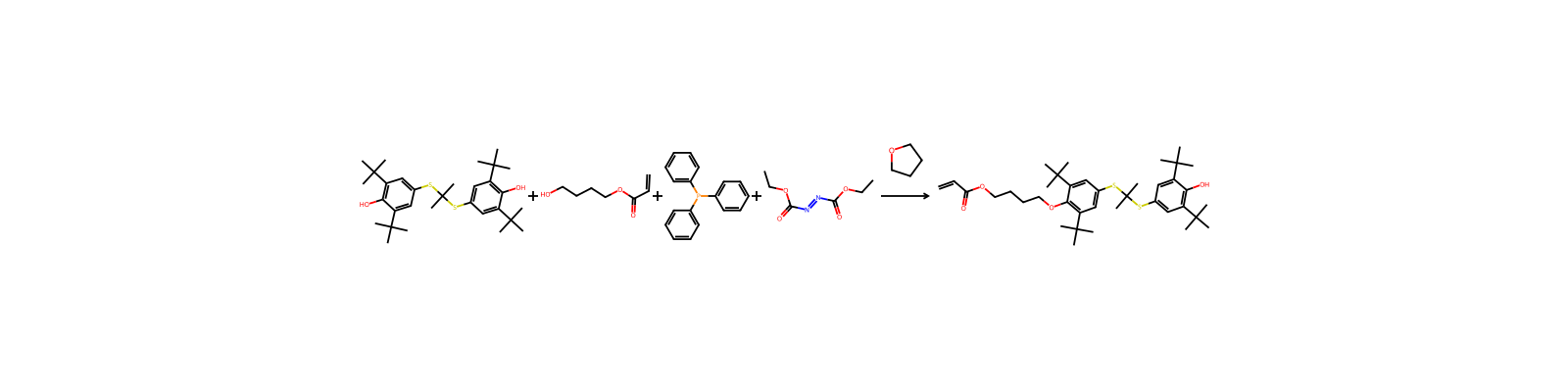
16 records



Compound notes
Loading…