HomeMCPWorkbenchSkills
HomeWorkbenchNotificationsMe
llms.txt · MCP GuidePrivacy Policy · Terms of Service · Supportv1.8.3
  1. Home
  2. /Compound

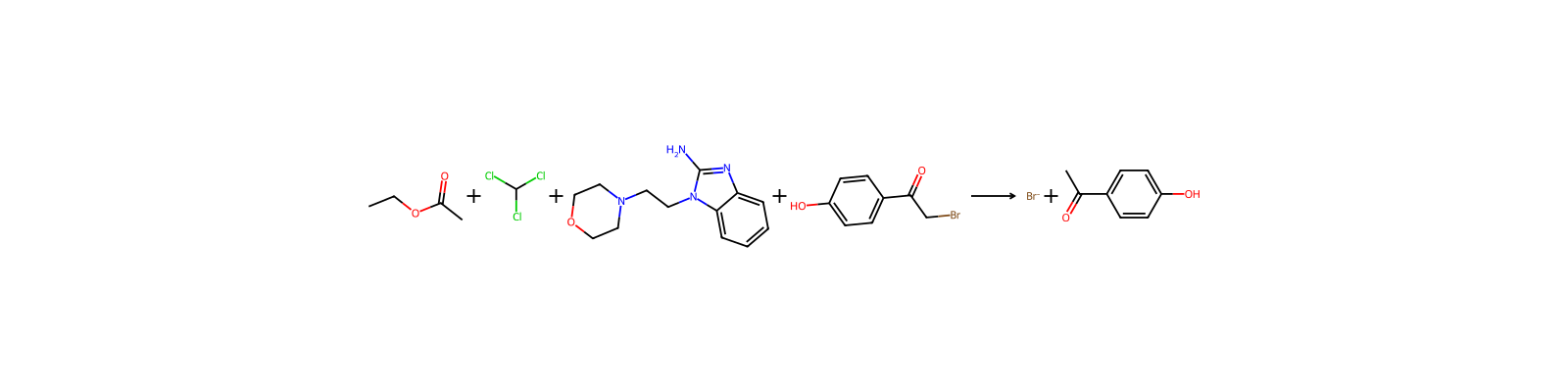
2-Bromo-1-(4-hydroxyphenyl)ethanone

HCID 4964
New reaction
Print
Basic informationOverviewNames & identifiersPropertiesSafety & regulationChemistry & industryRelated reactionsCompound notes
Substructure searchFind similar structures

Basic information

CAS
2491-38-5
Standard SMILES
O=C(CBr)c1ccc(O)cc1
InChIKey
LJYOFQHKEWTQRH-UHFFFAOYSA-N
Molecular formula
C8H7BrO2
Average molar mass
215.04 g/mol
Monoisotopic mass
213.96294

Overview

electrochemical active reagent

Names & identifiers

Preferred name
2-Bromo-1-(4-hydroxyphenyl)ethanone
IUPAC
2-bromo-1-(4-hydroxyphenyl)ethanone
English name
2-Bromo-4'-hydroxyacetophenone
Molecular formula
C8H7BrO2
Molecular weight
215.04

Names & synonyms

2491-38-52-bromo-1-(4-hydroxyphenyl)ethanone2-Bromo-4-hydroxyacetophenoneEthanone, 2-bromo-1-(4-hydroxyphenyl)-Busan 90DTXSID40345766H0QU4I6BA1-(4-Hydroxyphenyl)-2-bromoethanoneDTXCID2014576RefChem:4665594-HBE2-BROMO-4'-HYDROXYACETOPHENONE
Show more names
BHAPBUSAN90BUSAN1130Butrol 1130SHP-1 Inhibitor II4-HYDROXYPHENACYL BR4-(Bromoacetyl)phenol(+)-alpha-isolupanine
2-Bromo-1-(4-hydroxyphenyl)ethan-1-one4-Hydroxyphenacyl bromideptp inhibitor ialpha-Bromo-4-hydroxyacetophenone168693-83-22-Bromo-4/'-hydroxyacetophenoneMFCD00072424CHEMBL102952

Database identifiers

CAS
2491-38-5
PubChem CID
4964
DTXSID
DTXSID4034576
ChEMBL
CHEMBL102952
UNII
6H0QU4I6BA
EC Number
219-655-0
Nikkaji
J7.592B

Properties

Computed structural properties

XLogP
2.4
Topological polar surface area
37.3 Ų
Hydrogen bond donors
1
Hydrogen bond acceptors
2
Rotatable bonds
2
Heavy atoms
11
Formal charge
0
Complexity
139

Experimental & physicochemical properties

Chemical ClassesOther Uses -> Biocides/Disinfectants
Endocrine DisruptorsPotential endocrine disrupting compound
Vapor Pressure0.000011 [mmHg]
Food Contact SubstancesFCS -> FDA Inventory of Food Contact Substances Listed in 21 CFR
Physical DescriptionReddish-brown odorless liquid; [Reference #1]

Physicochemical properties

Melting point
123 · 123-126°C
Boiling point
338.7 · 338.7±17.0 °C(Predicted)
Density
1.622 · 1.622±0.06 g/cm3(Predicted)
storage temp.
2 · Inert atmosphere,2-8°C
solubility
Chloroform (Slightly), Methanol (Slightly)
form
White powder
pka
7.69 · 7.69±0.15(Predicted)
color
White to Light Beige
Sensitive
Lachrymatory
BRN
1865388 · 1865388
Stability
Hygroscopic
InChI
InChI=1S/C8H7BrO2/c9-5-8(11)6-1-3-7(10)4-2-6/h1-4,10H,5H2
InChIKey
LJYOFQHKEWTQRH-UHFFFAOYSA-N
SMILES
C(=O)(C1=CC=C(O)C=C1)CBr
FDA 21 CFR
176.17 · 176.170; 176.300
Indirect Additives used in Food Contact Substances
2 · 2-BROMO-4'-HYDROXYACETOPHENONE
CAS DataBase Reference
2491 · 2491-38-5(CAS DataBase Reference)
FDA UNII
6 H0QU4I6BA · 6H0QU4I6BA
EPA Substance Registry System
2 · 2-Bromo-4-hydroxyacetophenone (2491-38-5)
UNSPSC Code
12352200 · 12352200
NACRES
21 · NA.21
Symbol(GHS)
7 · GHS07
Signal word
Warning
Hazard statements
302 · H302-H319
Precautionary statements
264 · P264-P270-P280-P301+P312-P305+P351+P338-P337+P313
Hazard Codes
C,Xn
Risk Statements
22 · 22-36
Safety Statements
26 · 26
RIDADR
1760 · 1760
WGK Germany
1 · 1
RTECS
5982000 · AM5982000
Hazard Note
Corrosive/Lachrymatory/Keep Cold
HazardClass
8 · 8
PackingGroup
III
HS Code
2914790090 · 2914790090
Storage Class
11 · 11 - Combustible Solids
Hazard Classifications
4 OralEye · Acute Tox. 4 OralEye Irrit. 2

Safety & regulation

Safety information is for reference only and does not replace the supplier’s Safety Data Sheet (SDS), applicable regulations, or professional assessment.

GHS classification

GHS Classification · 4 items

Warning

H302 (97.2%): Harmful if swallowed [Warning Acute toxicity, oral]

P264, P264+P265, P270, P280, P301+P317, P305+P351+P338, P330, P337+P317, and P501 (click each P-code to see the statement)

Aggregated GHS information provided per 72 reports by companies from 4 notifications to the ECHA C&L Inventory. Each notification may be associated with multiple companies.

Hazard information

Regulatory Information · 2 items

Chemical: Ethanone, 2-bromo-1-(4-hydroxyphenyl)-

Ethanone, 2-bromo-1-(4-hydroxyphenyl)-: Does not have an individual approval but may be used as a component in a product covered by a group standard. It is not approved for use as a chemical in its own right.

Hazards Summary · 1 item

Erythema and edema progressing to subcutaneous hemorrhage, eschar, scabbing, necrosis, and exfoliation were observed in 21 day dermal study of rabbits (no systemic toxicity observed); No evidence of developmental toxicity; [Reference #1] After a spill of this slimicide at a papermill, workers developed recurrent allergic contact dermatitis. [Kanerva, p. 1761]

Hazard Classes and CategoriesAcute Tox. 4 (97.2%)

Toxicology

Adverse EffectsSkin Sensitizer - An agent that can induce an allergic reaction in the skin.
Toxicity DataLC50 (rat) = 190 mg/m3/4hr

Safety data

wgk
1
rtecs
AM5982000
ridadr
1760
hs_code
2914790090
risk_code
22-36
Signal word
Warning
Symbol(GHS)
GHS07
hazard_code
C,Xn
hazard_note
Corrosive/Lachrymatory/Keep Cold
safety_code
26
hazard_class
8
Storage Class
11 - Combustible Solids
packing_group
III
Hazard statements
H302-H319
Hazard Classifications
Acute Tox. 4 OralEye Irrit. 2
Precautionary statements
P264-P270-P280-P301+P312-P305+P351+P338-P337+P313

Chemistry & industry

Uses & manufacturing

Uses · 2 items

Used as microbiocide/microbiostat for control of slime forming bacteria and fungi in water cooling systems, oil recovery drilling muds and secondary injection water, pulp and paper water systems, adhesives, coatings, latex paints, and wet-end additives, and industrial processing chemicals; [Reference #1]

Petroleum Production and Refining [Category: Industry]

Applications · 2 items

DescriptionPTP Inhibitor I is a cell-permeable, protein tyrosine phosphatase (PTP) inhibitor that covalently blocks the catalytic domain of the Src homology region 2 domain-containing phosphatase (SHP-1(ΔSH2)) with a Ki value of 43 μM and PTP1B with a Ki value of 42 μM. SHP-1 and PTP1B both have known roles in regulating insulin signaling as well as myeloid and lymphoid cell differentiation, making inhibitors of these phosphatases of interest in diabetes, cancer, allergy, and inflammation research.

UsesA covalent inhibitor of protein tyrosine phosphatases (PTPs)

Preparation methods

PreparationAlso obtained by reaction of pyridinium hydrobromide perbromide with 4-hydroxyacetophenone in THF at r.t. for 3 h.

Upstream & downstream products

Upstream raw materials

2-Bromo-2′-hydroxyacetophenoneBromoacetyl bromideAnisole

Downstream products

4-Hydroxyphenylacetone4-(Bromoacetyl)-phenyl benzoate2-aMino-1-(4-hydroxyphenyl)ethanone hydrochloride2-Bromo-4'-hydroxy-3'-nitroacetophenone4-Quinoxalin-2-ylphenol

Related reactions

248 records
New reaction record
HRID 8356 reaction equation
HRID 8356As product
HRID 8383 reaction equation
HRID 8383As product
HRID 8384 reaction equation
HRID 8384As reactant
HRID 10787 reaction equation
HRID 10787As product
HRID 54695 reaction equation
HRID 54695As reactant
HRID 114530 reaction equation
HRID 114530As reactant
HRID 140358 reaction equation
HRID 140358As reactant
HRID 141663 reaction equation
HRID 141663As reactant
PreviousPage 1 of 31

Compound notes

On this pageBasic informationOverviewNames & identifiersPropertiesSafety & regulationChemistry & industryRelated reactionsCompound notes